

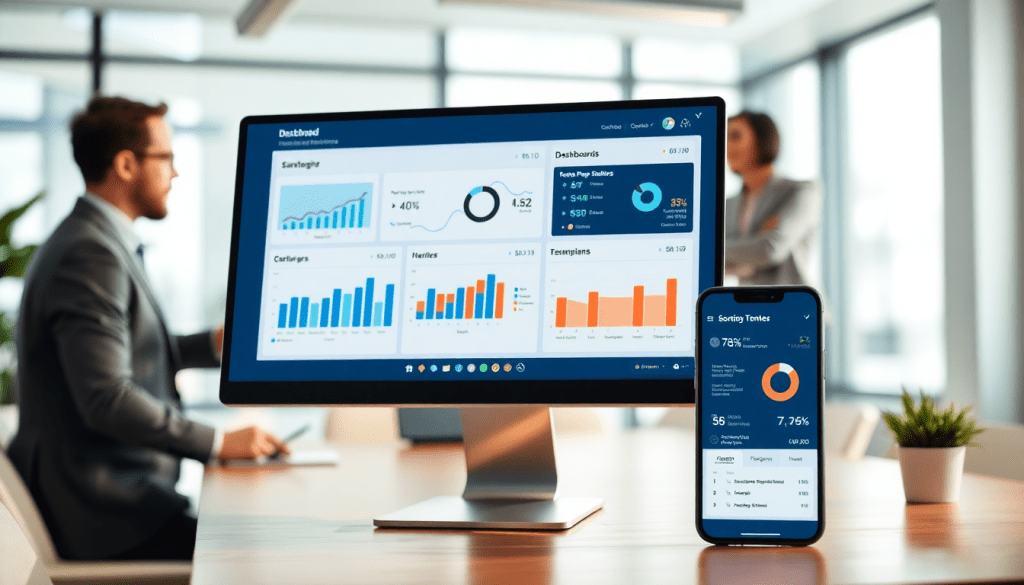
White-Label Marketing Dashboard for Agencies: Customizable, Branded Reporting
Delivering clear, professional, and on-brand reporting to clients is a critical part of any agency’s value. A white-label marketing dashboard helps agencies unify cross-channel data, automate client reporting, and present insights under their own brand—without the hassle of building a system from scratch. In this guide, you’ll discover how a white-label marketing dashboard can transform your agency’s operations, client relationships, and reporting workflows.
What is a White-Label Marketing Dashboard for Agencies?
A white-label marketing dashboard is a reporting and analytics platform that agencies can fully brand as their own—delivering clients a seamless, professional experience without revealing any third-party software. Unlike standard dashboards, which typically display the software provider’s logos, colors, and user interface, a white-label solution allows agencies to customize visual elements (logos, color schemes, and even custom domains) so clients see only the agency’s brand at every touchpoint.
What truly sets white-label dashboards apart is their agency-centric design. Core features include the ability to manage multiple clients from a single interface, assign role-based access, and provide each client with a secure, personalized portal. These dashboards are built to integrate with a wide range of marketing channels—social, search, display, email, and more—so agencies can pull all campaign data into one unified view. This not only streamlines reporting but also ensures agencies can deliver comprehensive, cross-channel analytics to every client.
For agencies aiming to deliver sophisticated reporting without heavy IT investment, white-label dashboards offer a turnkey solution: automated data aggregation, drag-and-drop visualizations, customizable metrics, and client-ready reports—all under the agency’s brand. To see how these capabilities enable deeper client analytics and reporting flexibility, check out this deep dive on custom client analytics.
Why Agencies and Clients Love White-Label Dashboards
A white-label marketing dashboard isn’t just a reporting tool—it’s a strategic advantage that benefits both agencies and their clients. Here’s how:
🚀 Automate Reporting, Save Hours Every Month
Manual reporting drains time and resources. With a white-label dashboard:
- Automated data pulls from all your marketing channels—no more copy-pasting from platforms.
- Centralized analytics for every client, campaign, and channel.
- Dozens of hours saved per analyst, freeing your team to focus on strategy and creative work.
| Task | Manual Effort (hrs/month) | With Automation (hrs/month) |
|---|---|---|
| Data Collection | 20 | 2 |
| Report Building | 15 | 1 |
| QA & Distribution | 10 | 1 |
| Total | 45 | 4 |
🌟 Impress Clients With Your Own Branded Portal
Your dashboard, your brand:
- Custom logo, colors, and messaging—clients see your agency, not a third-party tool.
- Consistent, professional experience every time clients log in.
- One source of truth for marketing performance strengthens client loyalty and retention.
💬 Keep Clients in the Loop—Effortlessly
Transparent communication is built in:
- Customizable dashboards: Show high-level KPIs or dive deep into specific channels—tailored to each client’s needs.
- Real-time data access: Clients see the latest results without waiting for the next report.
- Open dialogue: Eliminate email ping-pong with on-demand, always-up-to-date reporting.
📈 Make Data Actionable, Drive Better Results
It’s not just about tracking—it’s about improving:
- Monitor performance across all campaigns and channels in one place.
- Spot trends and opportunities quickly.
- Surface insights and recommend adjustments proactively.
- Prove ROI and demonstrate your agency’s value as a strategic partner.
In Short
A well-executed white-label dashboard streamlines operations, delights clients, and delivers transparency. The results? Happier clients, stronger relationships, and growth for your agency.
Essential Features to Look For in an Agency Reporting Platform
Selecting the right white-label marketing dashboard is pivotal for agencies aiming to deliver professional, scalable, and insightful client reporting. The best platforms go far beyond basic data display, empowering agencies to streamline workflows, elevate their brand, and showcase real marketing value. Here are the essential features every agency should prioritize:
1. Customizable Client Dashboards
An effective platform must enable agencies to build personalized dashboards tailored to each client’s goals and KPIs. Look for intuitive drag-and-drop interfaces, flexible widget layouts, and the ability to segment data by campaign, channel, geography, or business unit. Custom dashboards ensure your clients see the metrics that matter most to them—without unnecessary clutter.
2. Branded Analytics Software and White-Label KPI Reports
A true white-label solution lets your agency’s brand shine through at every client touchpoint. That means custom logos, color palettes, and domain masking, as well as branded report templates and client portals. With fully white-labeled reporting, agencies reinforce their value and professionalism, deepening client trust.
3. Robust Integration Capabilities
Seamless integration with a wide array of marketing, advertising, and business platforms is non-negotiable. Your dashboard should connect to all major ad channels (Google, Meta, LinkedIn, etc.), analytics tools, CRM systems, and even offline data sources. This unified data aggregation enables comprehensive cross-channel reporting and analysis—which is critical for agencies managing complex, multichannel campaigns.
4. Advanced Data Visualization
Insightful, easy-to-understand visualizations help clients grasp campaign performance at a glance. Choose a platform that offers a variety of chart types, interactive graphs, and filters so clients can explore their data in meaningful ways. Automated visualization of KPIs accelerates decision-making and drives smarter marketing strategies.
5. Automated and Scheduled Reporting
Manual reporting is time-consuming and error-prone, especially as your agency scales. The ideal platform offers automated report generation and scheduling, allowing you to deliver timely, consistent updates to clients without repetitive work. This feature alone can save dozens of hours per analyst each month.
6. Multi-Client and Role-Based Management
As your agency grows, so does the complexity of managing multiple clients—often with unique requirements and access levels. Look for platforms that support multi-client hierarchies, granular role-based permissions, and easy onboarding, making it simple to scale your reporting operations securely.
For a deeper dive into these must-have features and how they empower agency operations, check out this feature-focused post. And to see how a platform like TapClicks delivers on these essentials—while offering the flexibility to unify data, reporting, and workflow at scale—visit TapClicks.
How Customizable Client Dashboards Drive Agency Growth
Customizable client dashboards aren’t just a “nice to have”—they’re a catalyst for agency growth and client satisfaction. By tailoring dashboards to the unique needs of each client or vertical, agencies can deliver more relevant insights, demonstrate expertise, and deepen their value proposition.
Tailored Dashboards for Unique Client Needs
Every client has distinct goals, KPIs, and reporting priorities. With a customizable dashboard, agencies can adapt layouts, visualizations, and data sources to fit each client’s business objectives—whether it’s granular local SEO tracking for a multi-location retailer or ROAS breakdowns for a fast-growing e-commerce brand. This flexibility helps agencies serve a diverse portfolio without sacrificing quality or efficiency.
Automated Data Visualization & Marketing Automation
Manual data wrangling is a thing of the past. Today’s white-label platforms like TapClicks offer drag-and-drop dashboards that pull in real-time data from all major marketing channels. Automated data visualization not only saves hours of analyst time but also ensures that clients receive up-to-date, easy-to-digest insights. Built-in marketing automation features—such as scheduled reporting and AI-driven insights—further streamline workflows, allowing agencies to focus on strategy and client service rather than repetitive tasks.
Use Cases: Multi-Location Reporting, Campaign Snapshots, and More
Consider an agency managing campaigns for a franchise brand with dozens of locations nationwide. With customizable dashboards, the agency can create a master template, then deploy location-specific views—each branded and tailored to regional managers’ needs. Or, for clients running multi-channel campaigns, dashboards can highlight cross-channel performance and budget pacing at a glance, making it easy to spot optimization opportunities.
Whether it’s delivering high-level executive summaries for C-suite stakeholders or detailed performance snapshots for marketing managers, customizable dashboards empower agencies to deliver the right information, to the right person, at the right time. This precision drives better decision-making, stronger client relationships, and, ultimately, agency growth. For a deeper look at how agencies can leverage these features, check out this deep dive on custom client analytics.
How to Simplify Agency Reporting with Automation
Manual reporting can drain hours from your team each week—and leave you open to errors. Automated reporting and data visualization flip this script, letting your agency focus on strategy and client relationships instead of repetitive work.
Why Automated Reporting Changes the Game
Here’s what modern reporting automation delivers:
- Fewer Errors: No more copy-paste mistakes or inconsistent metrics.
- Time Savings: Reports update themselves, freeing up your team.
- Scalable Operations: Manage dozens (or hundreds) of clients without extra hires.
- Professionalism: Deliver white-label, branded analytics to each client.
What Does the Automated Workflow Look Like?
A typical automated reporting workflow with a platform like TapClicks might look like this:
- Integrate Data Sources: Connect all your marketing channels (ad platforms, analytics tools, CRMs, etc.).
- Customize Dashboards: Tailor performance dashboards for each client’s KPIs.
- Set Up Scheduled Reports: Define how often you want reports generated and delivered (daily, weekly, monthly).
- Automate Delivery: Reports and dashboards are sent to clients or stakeholders automatically, with your agency branding.
- Real-Time Updates: Dashboards refresh with the latest data, so clients always see up-to-date insights.
See It at a Glance: Manual vs. Automated Reporting
| Manual Reporting | Automated Reporting | |
|---|---|---|
| Time Spent | High (hours/week) | Minimal (minutes/week) |
| Error Risk | High | Low |
| Scalability | Difficult | Effortless |
| Branding | Inconsistent | Always on-brand |
| Client Access | Delayed | Instant, self-serve |
Tips for Getting Started
- Start small: Automate reporting for a handful of clients first.
- Use templates: Leverage pre-built dashboard templates for faster setup.
- Iterate: Refine KPIs and visualizations based on client feedback.
- Educate clients: Show clients how to access and interpret dashboards.
The Bottom Line
With solutions like TapClicks, agencies unlock true scalability—delivering consistent, professional analytics to every client, every time. Automation is more than a time-saver; it’s a growth engine for your agency.
Branding and Client Experience: The Power of a White-Label Solution
For agencies, the client experience isn’t just about delivering results—it’s about delivering them in a way that feels uniquely yours. A white-label marketing dashboard lets your agency present analytics, reports, and insights under your brand, not a third-party provider’s. This consistent branding across every client touchpoint—login screens, dashboards, reports, and even automated emails—reinforces your agency’s professionalism and value at every interaction.
Customizable portals are at the heart of this experience. With a robust white-label platform, you can tailor the client login page with your agency’s logo, color palette, and messaging. This level of personalization ensures that clients feel immersed in your agency’s ecosystem, not a generic tool. Some platforms even allow for deeper customizations, like branded domains or tailored user permissions, so every client gets a portal experience relevant to their needs.
Leveraging branded analytics software amplifies your perceived value in several ways. First, it positions your agency as a technology-forward partner invested in transparency and data-driven results. Second, it boosts trust—clients see your brand every time they access their data, reinforcing your role as the orchestrator of their marketing success. Finally, it differentiates your agency in a crowded market, where slick, professional reporting is often the deciding factor for client retention and referrals.
To maximize these benefits, consider these tips:
- Align dashboard visuals with your brand guidelines: Use consistent colors, logos, and fonts across all reports and portals.
- Customize report templates: Make sure every automated or scheduled report is branded, from the cover page to the data visualizations inside.
- Personalize the client journey: Tailor the onboarding and login experience for each client segment, making every interaction feel intentional.
- Highlight your expertise: Use custom insights and commentary to contextualize analytics, showcasing your unique value.
With a solution like TapClicks, agencies can deliver a seamless, branded client experience at scale—ensuring that every data-driven touchpoint strengthens the agency-client relationship and sets your agency apart.
Real-World Results: Case Studies & Success Stories
The transformative impact of white-label marketing dashboards isn’t just theoretical—agencies across the globe are seeing measurable gains in efficiency, client satisfaction, and bottom-line results. By adopting a flexible, customizable platform, agencies have streamlined their reporting workflows and elevated the client experience, leading to tangible business growth.
One agency, for example, leveraged a white-label dashboard to consolidate multi-channel marketing data for over 100 clients. Before implementation, the team spent countless hours manually assembling reports. With automation and branded analytics, reporting cycles were reduced from days to just hours each month. This newfound efficiency allowed the agency to reallocate resources toward strategic planning and campaign optimization, resulting in a 20% increase in client retention.
Another success story comes from a digital marketing firm managing campaigns for dozens of local businesses. By customizing dashboard views to match each client’s branding and KPIs, the agency delivered a cohesive, professional client portal experience. Clients could log in at any time to monitor results, track spend, and understand campaign performance—fostering trust and transparency. The agency reported higher client satisfaction scores and faster decision-making, leading to increased upsell opportunities and revenue growth.
For more detailed examples, see this custom client reporting case study, which outlines how streamlined reporting and actionable insights helped agencies boost performance and improve client relationships.
These real-world outcomes underscore the value of adopting a scalable, white-label solution. Agencies that invest in modern reporting tools aren’t just saving time—they’re building a reputation for professionalism, responsiveness, and data-driven results. To learn more about how a unified marketing operations platform can drive your agency’s success, explore TapClicks’ solutions.
Choosing the Right White-Label Dashboard for Your Agency
Selecting the best white-label marketing dashboard can be a game-changer for your agency’s efficiency, client satisfaction, and long-term growth. With so many options on the market, it's crucial to approach the decision strategically. Here’s a practical checklist to guide your evaluation and ensure you invest in a platform that truly fits your agency’s needs.
White-Label Dashboard Evaluation Checklist
-
Branding & Customization
- Can you fully white-label the dashboard, including logos, color schemes, and custom domains?
- Is the client portal experience consistent with your agency’s brand at every touchpoint?
-
Integration & Data Sources
- Does the platform support all your current and future marketing channels (Google Ads, Facebook, programmatic, CRM, etc.)?
- Are there pre-built connectors or flexible options for custom data integrations?
-
Multi-Client & Multi-Location Management
- How easily can you set up, manage, and report on multiple clients or locations from a single interface?
- Is there robust support for permissioning and role-based access?
-
Automated Reporting & Scheduling
- Can you automate recurring reports and dashboard updates for clients?
- Does the platform support scheduled email delivery and real-time performance alerts?
-
Analytics & Insights
- Are there advanced visualization tools and AI-driven insights to help clients understand campaign performance?
- Does the platform offer actionable recommendations, not just raw data?
-
Scalability & Performance
- Will the platform handle growth—hundreds of clients, large datasets, and high report volumes—without slowing down?
- Is there evidence of successful high-volume agency deployments?
-
Client Experience
- How intuitive and mobile-friendly is the client-facing portal?
- Can you customize login experiences and communication touchpoints?
-
Support, Training & Onboarding
- What onboarding and training resources are available for your team?
- Is support responsive, knowledgeable, and available in your time zone?
-
Pricing & Contracts
- Is the pricing model transparent, and does it align with your agency’s scale and growth plans?
- Are there hidden fees for additional users, clients, or integrations?
Smart Questions to Ask Vendors
- What does your integration roadmap look like for new marketing platforms?
- How do you handle custom data sources or non-standard APIs?
- Can you provide references from agencies of similar size and vertical?
- What is your typical implementation timeline for agencies with X number of clients?
- How do you ensure data security and compliance with client confidentiality?
Next Steps: Demo, Trial, or Pilot
Once you’ve narrowed your options, request a live demo tailored to your agency’s workflows and priorities. Many leading platforms, like TapClicks, offer free trials or pilot programs—take advantage of these to test real integrations and reporting scenarios with your own data. Involve both technical and account teams in the process to ensure the platform meets practical day-to-day needs as well as strategic goals.
The right white-label dashboard isn’t just a reporting tool—it’s a growth engine. By following this checklist and asking the right questions, your agency can confidently choose a solution that elevates client service, streamlines operations, and sets the stage for scalable success.
Start Automating Your Marketing Data Today!
No Credit Card Required.

