

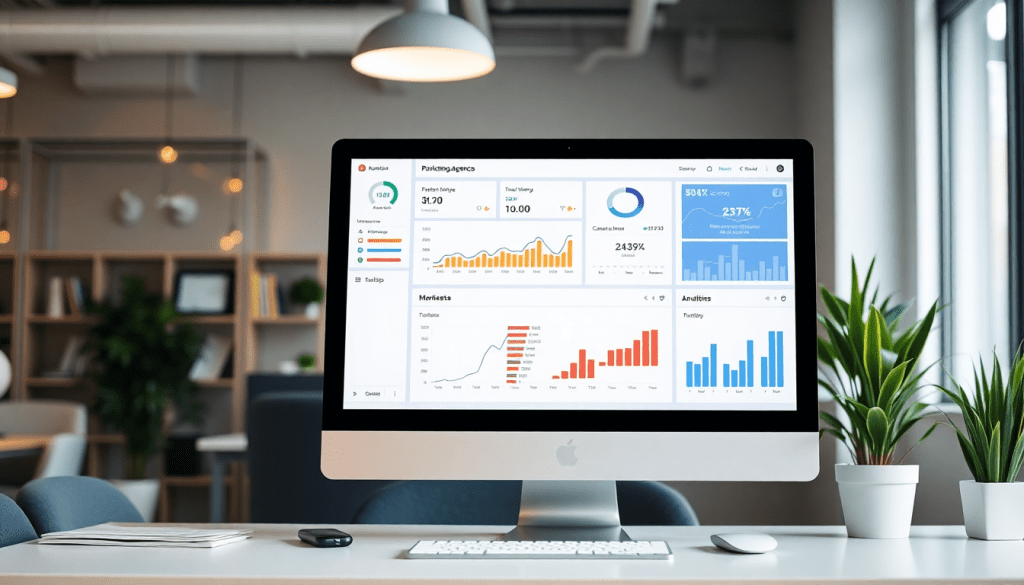
White-Label Marketing Dashboard for Agencies: Customizable & Branded
Delivering clear, real-time, and fully branded analytics is now a baseline expectation for modern agencies. A white-label marketing dashboard gives you the power to present campaign performance, KPIs, and spend—across every channel—in a way that feels truly your own. From automated reporting to customizable client portals, the right solution helps your team save time, reduce errors, and deepen client trust. This guide explores how agencies can use a white-label dashboard to streamline reporting, reinforce their brand, and scale their operations with efficiency.
What is a White-Label Marketing Dashboard for Agencies?
A white-label marketing dashboard is a fully customizable analytics platform designed for agencies that want to present campaign performance, KPIs, and ROI data under their own brand. Unlike generic reporting tools that simply display data in a vendor-branded interface, a white-label dashboard allows agencies to apply their logos, color schemes, and brand voice throughout the client experience. This ensures that every touchpoint—from login screens to automated reports—feels like a seamless extension of the agency itself.
For agencies, this distinction is more than cosmetic. Basic dashboards may provide raw data or simple visualizations, but they often force clients to interact with unfamiliar or third-party branding. In contrast, fully branded, customizable dashboards empower agencies to control the narrative, reinforce their unique value proposition, and deliver a polished, professional experience at every stage of client communication.
Branding consistency is crucial in agency-client relationships. When all analytics, reports, and client portals reflect the agency’s identity, it builds trust, demonstrates professionalism, and subtly reinforces the agency’s role as a strategic partner. In a crowded marketplace, this level of polish can be a key differentiator—helping agencies stand out, foster client loyalty, and win new business on the strength of both results and presentation.
Ultimately, a white-label dashboard is not just a reporting tool—it’s an extension of your agency’s brand promise, delivering data-driven insights in a way that’s uniquely yours. For agencies aiming to scale, streamline reporting, and deepen client relationships, investing in a customizable, branded analytics platform is now table stakes. To learn more about how TapClicks empowers agencies with white-label solutions, visit TapClicks.
Key Benefits: Why Agencies Need a White-Label Analytics Platform
Agencies today face mounting pressure to prove results, move quickly, and deliver a seamless branded experience to every client. Traditional reporting methods—often involving manual data collection, spreadsheet wrangling, and generic dashboards—can sap hours of productivity and leave room for costly errors. This is where a white-label marketing dashboard transforms agency operations.
Solving Pain Points: Manual Reporting, Branding, and Scalability
Manual reporting is not just tedious; it’s a bottleneck that limits how many clients an agency can serve and how quickly insights are delivered. White-label dashboards automate the collection, visualization, and distribution of performance data across all marketing channels. By consolidating campaign data into a single, branded portal, agencies eliminate repetitive tasks and ensure consistency in every report. This scalability means agencies can onboard new clients or expand services without adding reporting overhead.
Time Savings and Error Reduction
With automated data visualization, agencies can turn hours of manual work into minutes. Reports are updated in real time, reducing the risk of outdated or incorrect information. This automation not only frees up valuable analyst time but also minimizes the likelihood of human error—leading to more accurate, reliable client reporting.
Improved Client Experience, Transparency, and Retention
Clients today expect on-demand access to their campaign performance and clear, branded reports that reinforce the agency’s value. A white-label dashboard enhances transparency by delivering real-time analytics within a portal that carries the agency’s logo, colors, and messaging. This branded experience builds trust and positions the agency as a true strategic partner. The result? Higher client satisfaction, stronger retention, and more referrals.
To see a deeper dive into how marketing dashboard automation can dramatically boost agency reporting efficiency, check out this in-depth guide.
By addressing common pain points and elevating the client experience, a white-label analytics platform empowers agencies to grow faster, serve better, and stand out in a crowded market.
What Makes a Dashboard Stand Out for Agencies?
A white-label marketing dashboard is more than just a reporting tool—it’s a true extension of your agency’s brand and a powerful lever for client retention. The right set of features can turn routine reporting into a differentiator that wins new business and delights existing clients.
Personalization That Puts Clients First
Customizable Client Dashboards
Make every client feel like your only client by tailoring dashboards to their unique needs. Look for features like:
- Drag-and-drop widgets
- Custom date ranges
- Selectable, goal-driven KPIs
- Visual themes to match client branding
When your dashboards reflect client priorities—whether that's paid media ROI, SEO growth, or social engagement—they deliver insights that matter.
Your Brand Front and Center
Branded Analytics Software
A true white-label experience means:
- Custom logos and color schemes
- Personalized domain URLs
- Branded email reports
With every touchpoint feeling cohesive and “owned” by your agency, you reinforce trust and professionalism—never looking like you’re just reselling a third-party tool.
Automation That Saves Time (and Stress)
White-Label KPI Reports & Marketing Automation
Let automation do the heavy lifting:
- Schedule and send branded KPI reports directly to clients
- Set up recurring insights, performance alerts, or executive summaries
- Eliminate manual data pulls and tedious formatting
This means your analysts spend less time on repetitive tasks and more time delivering strategic value.
Always-On Access for Clients
Secure, Interactive Client Portals
Give clients what they expect—real-time, self-serve access to their campaign data with:
- Secure, role-based logins
- Interactive dashboards for drilling into performance
- Feedback and collaboration tools built in
Transparency and collaboration improve, while status-update requests (and emails) go way down.
One Dashboard, Every Channel
Unified Cross-Channel Reporting
No more stitching together spreadsheets. The best platforms aggregate all your data—social, search, display, email, and more—into a single, unified view, helping clients see the big picture and your team avoid manual busywork.
Quick-Glance Feature Checklist
| Feature Category | Why It Matters | What to Look For |
|---|---|---|
| Customization | Tailored insights for each client | Widgets, KPIs, themes |
| Branding | Reinforces your agency identity | Logos, colors, domains, email style |
| Automation | Saves time, reduces errors | Scheduling, alerts, auto-summaries |
| Client Portal | Improves collaboration, transparency | Secure access, feedback tools |
| Cross-Channel Reporting | Shows complete marketing performance, saves consolidation | Multi-channel data, unified view |
For agencies looking to scale efficiently and deliver premium value, these features aren’t just nice-to-have—they’re mission critical.
Platforms like TapClicks make deep customization, automation, and branding simple, so your team can deliver high-impact analytics as a seamless extension of your agency.
How to Implement a White-Label Dashboard Platform
Rolling out a white-label marketing dashboard doesn’t have to be daunting—especially when you follow a clear, step-by-step implementation plan. Here’s how agencies can efficiently onboard a new dashboard platform and ensure both internal teams and clients get maximum value from day one:
1. Data Integration
Start by connecting your marketing, advertising, and business data sources. Leading white-label solutions, like TapClicks, offer thousands of pre-built connectors and smart integration tools, making it easy to import data from Google Ads, Facebook, CRM systems, and more. This unified data foundation is essential for accurate reporting and cross-channel insights.
2. Branding Setup
Next, customize the dashboard environment to reflect your agency’s brand. Upload your logo, set brand colors, and tailor the login portal and report templates with your agency’s visual identity. A fully branded interface ensures every client touchpoint reinforces your professionalism and value.
3. Template Creation
Build reusable dashboard templates for your most common campaign types or client verticals. This step saves time on future onboarding and ensures reporting consistency across your client base. Most white-label dashboards offer drag-and-drop report builders, so you can tailor views, select KPIs, and add branded elements without coding.
4. Client Access Configuration
Set up secure, role-based access for your clients. Granular permissions let you control what data each client or stakeholder can view—whether that’s a CMO who needs a high-level overview or a specialist who wants detailed channel analytics. Consider enabling interactive client portals, so clients can explore metrics in real time without risking data integrity.
5. Internal Training and Client Rollout
Before going live, train your internal teams on dashboard management, template usage, and troubleshooting. Create quick-start guides or video walkthroughs to accelerate adoption. When rolling out to clients, schedule personalized onboarding sessions to demonstrate the branded dashboard, answer questions, and highlight self-service features.
6. Integrate with Other Martech Tools
Maximize your agency’s efficiency by connecting your white-label dashboard to the rest of your marketing technology stack. Look for solutions that support integrations with CRM platforms, email marketing tools, and workflow automation software. This ensures seamless data flow and amplifies the power of your reporting ecosystem.
By following these steps, agencies can ensure a smooth transition to a white-label analytics platform—streamlining operations, reinforcing branding, and delivering a modern, professional experience that differentiates your agency in a crowded market.
Comparing Solutions: What Sets TapClicks Apart
When it comes to choosing a white-label marketing dashboard for agencies, the landscape is crowded with options like Funnel.io, Adverity, Agency Analytics, and NinjaCat. But not all platforms are created equal—especially for agencies managing large volumes of clients, channels, and campaigns. Here’s how TapClicks stands out from the rest.
1. Unmatched Scalability and Flexibility
Many dashboards promise scalability, but TapClicks is purpose-built for agencies and media companies handling hundreds or even thousands of clients. Its infrastructure easily supports massive volumes of data, custom dashboards, and automated reports—without a dip in performance or responsiveness. Unlike lighter-weight tools that may struggle as your business grows, TapClicks was designed to be the marketing OS for high-volume users, adapting to your agency’s evolving needs.
2. Deep Customization and White-Label Branding
While basic competitors offer simple logo swaps or color changes, TapClicks provides a fully customizable environment. Agencies can create branded client portals, custom dashboard templates, and white-label KPI reports that look and feel entirely their own. This level of branding reinforces your agency’s value and professionalism with every client interaction, making TapClicks much more than a generic reporting tool.
3. Powerful AI-Driven Insights and Automation
TapClicks goes beyond static data visualization. Its AI features—like SmartPilot and TapInsights—automatically analyze campaign performance, surface actionable insights, and even generate predictive recommendations. The SmartEmail function can deliver curated, branded insights directly to stakeholders’ inboxes, increasing transparency and keeping clients proactively informed. These AI capabilities move TapClicks from a reporting dashboard to a true strategic partner for your agency.
4. Automated, Error-Reducing Reporting Workflows
TapClicks streamlines every aspect of reporting: from automated ETL/ELT data pipelines and drag-and-drop dashboards to scheduled, branded report delivery. This automation reduces manual workloads and reporting errors, freeing up your analysts to focus on strategy rather than repetitive data tasks. Agencies typically save dozens of hours per month per analyst with TapClicks compared to more manual platforms.
5. Connectivity and Integration Power
With over 10,000 built-in marketing, advertising, and business connectors, TapClicks easily unifies all your cross-channel data—no matter how complex your client mix. Flexible data enrichment, blending, and normalization tools ensure your dashboards are always accurate and actionable.
For a detailed, side-by-side breakdown, check out the TapClicks vs. Funnel.io guide, which highlights key differences in automation, customization, and long-term agency value.
Ready to explore TapClicks? See how its unified platform, AI-driven insights, and robust white-label customization can transform your agency’s reporting and client experience at TapClicks.com.
Real-World Examples: How Agencies Deliver Performance Tracking at Scale
Agencies managing dozens—or even hundreds—of client accounts know the pain of manual reporting and scattered analytics. As demands grow, white-label marketing dashboards become critical for delivering unified, actionable insights—efficiently and under your agency’s own brand.
How Agencies Are Using White-Label Dashboards
Multi-Location Retail Agency: Real-Time, Branded Reporting for Every Franchise
- Challenge: Reporting for 80+ franchise locations, each needing custom insights.
- Solution:
- Centralized dashboard aggregates Google Ads, Facebook, and in-store promotion data.
- Each franchise gets a branded portal with real-time KPIs for their campaigns.
- Impact:
- 60% reduction in manual reporting time.
- Higher client satisfaction—franchise owners have transparent, self-service data access.
Boutique Digital Marketing Firm: Consistent Analytics for B2B SaaS Clients
- Challenge: Tracking LinkedIn, email, and PPC across dozens of B2B SaaS clients.
- Solution:
- White-label dashboards with customizable templates.
- Automated, scheduled reporting—delivering analytics every week.
- Impact:
- Fewer communication errors.
- Clients are more engaged, using interactive dashboards to request data-driven optimizations.
Enterprise Media Company: Unified Analytics for Hundreds of High-Value Clients
- Challenge: Consolidating cross-channel performance for a large enterprise portfolio.
- Solution:
- Automated ETL pipelines pipe multi-channel data into branded portals.
- Analysts focus on interpreting data and surfacing insights—not wrangling spreadsheets.
- Impact:
- Clients receive visually compelling, unified dashboards.
- Faster, more informed decision-making and benchmarking.
What Agencies Gain—At a Glance
| Benefit | How It Helps Agencies & Clients |
|---|---|
| Efficiency | 50–60% less time spent on manual reporting |
| Client Retention | Seamless, professional experience strengthens relationships |
| Faster Onboarding | New clients get access to branded dashboards instantly |
| Deeper Insights | Analysts spend more time on strategy, less on data prep |
| Self-Service Access | Clients view real-time KPIs and request optimizations easily |
What Clients Say
- “No more juggling multiple logins or deciphering generic reports.”
- “We love being able to see our campaign performance in real time.”
- “The branded dashboard feels like an extension of our own team.”
Ready to see what’s possible?
For a deeper dive into successful agency strategies, check out the TapClicks dashboard guide and software overview.
With the right platform, you’ll scale operations, strengthen relationships, and drive measurable results—just like these real-world examples.
Best Practices for Maximizing Value with White-Label Dashboards
To fully unlock the benefits of your white-label marketing dashboard, it’s crucial to move beyond basic setup and embrace ongoing optimization, strategic client engagement, and process automation. Here are proven best practices agencies should adopt to ensure their dashboard delivers continuous value:
1. Continuously Refine and Personalize Dashboards
Don’t treat your client dashboards as static assets. Regularly review and update layouts, KPIs, and visualizations based on evolving client goals and feedback. Tailor each dashboard’s look and feel to match your agency’s (and your client’s) brand guidelines—consistent logo placement, colors, and messaging reinforce professionalism and brand recall during every client interaction.
2. Maintain Data Accuracy and Trust
Data integrity is the foundation of client trust. Implement automated data integrations to minimize manual entry and reduce the risk of errors. Schedule routine audits to verify that all connectors are functioning and that the displayed data aligns with source systems. Tools like TapClicks allow you to set up automated alerts if data sources encounter issues, so you can proactively resolve them before clients notice discrepancies.
3. Automate Reporting and Insights—But Keep It Actionable
Take full advantage of your dashboard’s automation features by scheduling recurring report deliveries and leveraging AI-powered insight summaries. This not only saves hours of manual work but also ensures clients receive timely, actionable updates. However, don’t rely solely on automation—review AI-generated recommendations to contextualize them for your clients, highlighting what matters most for their business objectives.
4. Foster Ongoing Client Engagement
Encourage clients to interact with their custom portal dashboards rather than passively receiving reports. Offer short training sessions or “dashboard tours” to showcase self-service analytics features. Use client meetings to walk through live dashboards, answer questions, and collaboratively explore new insights. This positions your agency as a strategic partner, not just a service provider.
5. Standardize Branding Across All Touchpoints
Every piece of analytics your agency delivers—be it dashboards, PDF reports, or emailed insights—should feature consistent branding. Use dashboard templates and centralized asset libraries to ensure all team members adhere to approved styles and voice. This consistency strengthens your agency’s identity and sets you apart from competitors using generic, off-the-shelf reporting solutions.
6. Leverage Marketing Automation for Even Greater Efficiency
Integrate your white-label dashboard with other martech and workflow automation tools to streamline campaign setup, approvals, and reporting. For example, TapClicks users can automate the entire journey: from campaign order intake through to multi-channel performance reporting, all inside a single platform. This level of automation not only saves time but also ensures a seamless, error-free client experience.
By following these best practices, agencies can maximize the ROI of their white-label dashboards—delivering branded, reliable, and insightful reporting that drives client retention and agency growth. To see how a unified solution like TapClicks can help you put these strategies into action, visit TapClicks.
Conclusion
A white-label marketing dashboard is more than just a reporting tool—it’s a strategic asset for agencies seeking to amplify their brand, streamline operations, and deliver a superior client experience. By automating complex reporting tasks, enabling deep customization, and presenting data in a way that’s both transparent and visually on-brand, agencies can dramatically reduce manual workload while reinforcing their unique value to clients.
The right white-label solution empowers agencies to scale their services, minimize errors, and provide clients with real-time insights that drive better business decisions. As the expectations for modern marketing analytics continue to rise, now is the time for agencies to re-evaluate their current reporting processes. Upgrading to a robust, customizable dashboard not only saves hours of manual work, but also strengthens client trust and retention through consistent, branded communications.
Ready to see the difference a leading agency analytics platform can make for your team and your clients? Take the next step: request a demo or start a free trial with TapClicks to experience first-hand how seamless, scalable, and fully branded reporting can transform your agency’s operations.
Start Automating Your Marketing Data Today!
No Credit Card Required.

