

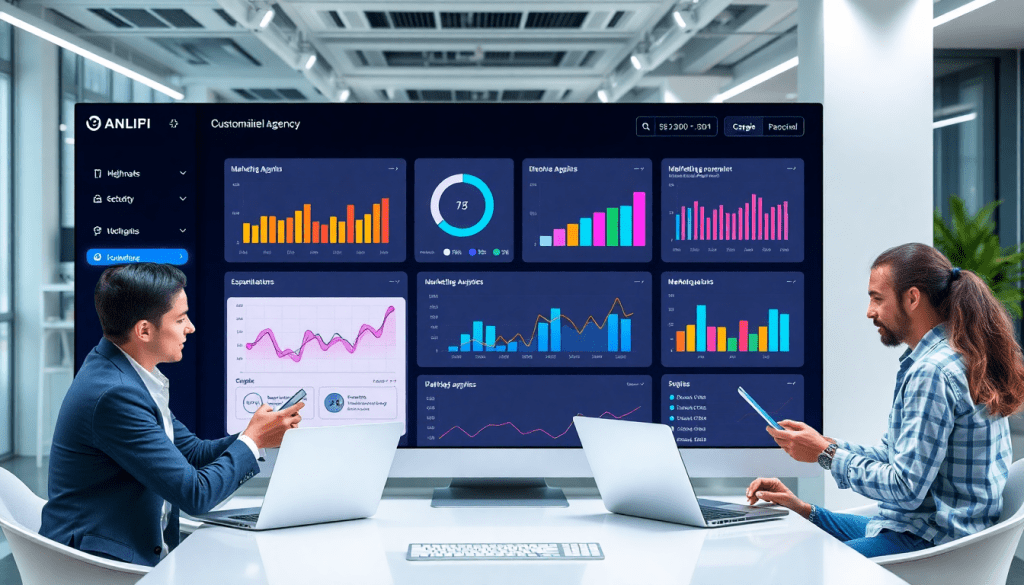
White-Label Marketing Dashboard for Agencies: Custom Reporting
Offering clients clear, branded, and automated reporting is no longer a luxury for agencies—it’s the expectation. A white-label marketing dashboard lets agencies deliver real-time, professional analytics under their own brand, strengthening client trust and streamlining operations. This guide walks through the practical advantages, essential features, and smart implementation strategies for agencies looking to level up with a custom reporting platform.
What is a White-Label Marketing Dashboard for Agencies?
A white-label marketing dashboard is a fully customizable analytics platform that agencies can brand as their own, providing clients with seamless, real-time access to campaign performance data—all under the agency’s unique identity. Unlike standard dashboards, which display the tool provider’s logos and interface, a white-label solution allows agencies to apply their own branding, from logos and color schemes to domain names and report templates. This means every client interaction reinforces the agency’s professionalism and value, not a third-party vendor’s.
The main functions of a white-label dashboard for agencies are data integration, visualization, and automated reporting. These platforms pull in marketing data from multiple sources—such as ad networks, social media, email platforms, and CRMs—then blend, normalize, and present it in intuitive dashboards. Agencies can create custom views for each client, automate scheduled reporting, and even grant clients secure, role-based access to their own dashboards. This streamlines client communication, saves analysts hours each month, and gives clients on-demand visibility into the metrics that matter most.
White-label dashboards differ from standard analytics tools in two crucial ways: branding and flexibility. Standard dashboards are generic and often lack the customization agencies need to stand out in a crowded market. By contrast, a white-label solution empowers agencies to deliver a bespoke analytics experience—whether servicing a handful of boutique clients or managing hundreds of multi-channel campaigns for enterprise brands.
Key use cases span agencies of all sizes and specialties:
- Boutique digital agencies can impress clients with polished, branded dashboards and automated reports, building trust and saving time on manual data wrangling.
- Multi-location and franchise agencies benefit from the ability to roll up and drill down across locations, tailoring dashboard views to each client’s unique needs.
- Large-scale media companies and holding groups use white-label dashboards to centralize reporting for hundreds of clients, streamline their operations, and provide self-serve access for both internal teams and clients.
To see how agencies use these platforms to elevate client analytics, check out this custom client analytics overview for real-world examples and strategies.
Why Agencies Need Branded Analytics and Customizable Client Dashboards
In today’s competitive landscape, agencies must do more than just deliver campaign results—they need to present data in a way that reinforces their value and professionalism. A white-label agency reporting platform is critical for client retention because it transforms raw numbers into polished, agency-branded insights that clients can understand and trust.
Customizable client dashboards directly enhance the client experience by giving each client a tailored view of the metrics that matter most to them. Instead of generic reports, clients receive real-time access to interactive dashboards, complete with their agency’s logos, colors, and terminology. This not only streamlines communication but also demonstrates a commitment to transparency and personalized service.
Branded analytics software also sets agencies apart in a crowded marketplace. By delivering reports and dashboards under their own brand, agencies reinforce their expertise and build lasting client relationships. Automated, visually compelling dashboards save account managers time while providing clients with the clarity and confidence they expect.
Ultimately, a white-label solution is more than a reporting tool—it’s a strategic asset for agencies seeking to grow and differentiate. For a deeper dive into the advantages of custom client reporting, explore this guide to white-label reporting advantages.
Essential Features of a White-Label KPI Reporting Solution
A truly effective white-label marketing dashboard empowers agencies to present data and insights as their own, driving client satisfaction and operational efficiency. To deliver this, your KPI reporting solution must go beyond basic charting—here are the essential features every agency should look for:
1. Custom Branding
Your dashboard should seamlessly reflect your agency’s identity. This means not only adding your logo and color palette, but also customizing login screens, report templates, and even notification emails. The goal: ensure every client interaction feels uniquely yours, building brand equity with every view.
2. Drag-and-Drop Widgets
Agencies serve clients with diverse needs. A flexible dashboard offers drag-and-drop widgets, allowing you to tailor reports for each client—whether they care most about paid search, organic social, or local SEO. With intuitive widget libraries, you can create new dashboards in minutes, adapting to shifting campaign priorities without technical bottlenecks.
3. Scheduled Reports and Automation
Manual reporting is a thing of the past. Leading white-label KPI solutions provide robust scheduling tools, so you can automate delivery of daily, weekly, or monthly reports. This not only saves your team hours of repetitive work, but also ensures clients always receive timely, up-to-date insights—improving transparency and trust.
4. Role-Based Access Control
Security and client confidentiality are critical. A sophisticated dashboard allows you to define who can see what data—whether it’s account managers, executives, or external stakeholders. Role-based access ensures that sensitive information is only visible to authorized users, while still enabling collaboration and self-service analytics for clients.
5. Automated Data Visualization
Data storytelling is at the heart of client reporting. The right solution automatically transforms raw performance data into compelling, easy-to-understand charts, graphs, and infographics—no manual intervention required. This not only streamlines agency workflows but also empowers clients to grasp campaign impact at a glance.
6. Cross-Channel Integration
Modern agencies juggle data from paid, owned, and earned media across dozens of platforms. Your white-label dashboard should integrate with all major marketing and advertising channels (social, search, programmatic, CRM, analytics, and more), blending disparate data sources into a unified, actionable view. Compatibility with your preferred tools and platforms is a must to eliminate data silos.
For a deeper dive into the practical benefits and use cases, explore this custom client analytics overview. And if you’re evaluating options, platforms like TapClicks stand out for their scalable, agency-ready approach to automation, branding, and seamless data integration—helping agencies deliver professional, personalized analytics at scale.
Automating Cross-Channel Performance Tracking for Clients
One of the most powerful advantages of a white-label marketing dashboard is its ability to centralize and automate performance tracking across all of your clients’ marketing channels. Instead of juggling multiple platform logins or manually piecing together campaign data from disparate sources, agencies can offer clients a single, unified view that updates in real time—branded with the agency’s own look and feel.
Centralized Data, Unified Insights
A leading white-label dashboard connects seamlessly to dozens (or even thousands) of marketing, advertising, and analytics sources—think Google Ads, Facebook, Instagram, LinkedIn, programmatic display, SEO tools, email marketing platforms, and beyond. This centralization eliminates data silos and ensures that every stakeholder, from account managers to clients themselves, has access to holistic, up-to-date campaign performance metrics in one place. This not only reduces reporting errors and time spent on manual data pulls, but also empowers agencies to surface cross-channel insights that would otherwise remain hidden.
Marketing Automation for Agencies: Reports, Alerts, and AI-Powered Insights
Automation is at the heart of modern agency operations. White-label dashboards allow agencies to set up recurring reports that are sent to clients on a schedule—daily, weekly, or monthly—without any manual intervention. These reports reflect the latest performance data and can be fully customized with agency branding and commentary.
Beyond scheduled reporting, advanced dashboards can trigger real-time alerts when campaigns hit key milestones or when anomalies are detected—such as sudden drops in website traffic, overspending on ad budgets, or spikes in conversion rates. Some platforms, like TapClicks, go a step further with AI-driven agents that automatically analyze performance data, summarize actionable insights, and even send SmartEmail notifications to clients or internal teams. This level of automation helps agencies proactively address issues, optimize campaigns, and demonstrate value—all while saving countless hours.
Diverse Campaigns, One Reporting Experience
Whether your agency manages paid search for a local restaurant chain, multi-channel branding for a national retailer, or influencer campaigns for e-commerce startups, the right dashboard adapts to your workflow. Use cases include:
- Multi-Location Campaigns: Instantly compare performance across different regions or storefronts.
- Cross-Platform Attribution: Visualize how paid, organic, and social channels contribute to overall ROI.
- Client-Specific Customization: Tailor dashboards and reports to each client’s goals, KPIs, and preferred metrics.
With automated cross-channel performance tracking, agencies not only improve operational efficiency but also deliver a premium, data-driven experience that keeps clients informed and engaged—cementing the agency’s role as a strategic partner.
Creating a Client Portal Dashboard: How to Give Clients Secure, Branded, and Collaborative Access
A client portal dashboard serves as a digital command center for agencies and their clients. It goes beyond simply displaying data—it gives clients real-time visibility into their marketing performance, fosters collaboration, and puts your agency’s brand front and center.
What Is a Client Portal Dashboard?
- A secure, web-based interface where clients log in to:
- View campaign performance
- Access up-to-date reports
- Interact with agency teams
- White-labeled: Fully branded with your agency’s colors, logo, and style
- Configurable: Custom views, metrics, and layouts for each client or team
Why Security and Controlled Access Matter
Protecting sensitive marketing and budget data is non-negotiable. Here’s how a robust portal like TapClicks keeps your clients’ information safe:
- Multi-level authentication (e.g., SSO, 2FA)
- Role-based permissions
- Restrict access by user, role, or team
- Clients only see their own data—never another client’s
- Granular sharing controls
- Share specific dashboards, reports, or datasets as needed
Benefits:
✅ Meets all privacy and compliance requirements
✅ Builds trust—your agency is seen as a secure, professional partner
✅ Reduces risk of data leaks or miscommunication
Customizing the Dashboard Experience
Every client is different. Leading dashboards allow you to personalize each view:
| Customization Option | What It Enables |
|---|---|
| Drag-and-drop widgets | Build dashboards tailored to client KPIs |
| Branded themes & logos | Reinforce your agency or client branding |
| Adjustable layouts | Executive summaries or deep dives as needed |
| Interactive charts & filters | Let clients explore data, drill into details |
Tip:
Set up saved views for different stakeholders—executives, marketing leads, or field teams—so everyone gets the insights they care about.
Making Collaboration Effortless
A modern client portal is more than just a report repository—it’s a workspace for agency-client teamwork.
- Built-in messaging: Keep feedback and questions tied to specific reports or data points
- Comment threads: Track discussions and approvals in one place
- File sharing: Upload assets, creative, or supporting docs securely
- Automated notifications: With options like TapClicks’ SmartEmail, stakeholders get timely updates and insights—no more inbox overload
Result:
Faster decision-making, fewer missed updates, and a seamless, transparent client experience.
The Big Picture: Why Invest in a Client Portal Dashboard?
- Delivers real-time visibility and control to clients
- Streamlines agency operations—no more manual report distribution
- Differentiates your agency with a branded, premium experience
- Drives retention and trust through secure, transparent collaboration
A well-designed client portal dashboard isn’t just a reporting tool—it’s a cornerstone for long-term agency-client success.
Implementing an Agency Analytics White-Label Solution
Rolling out a white-label marketing dashboard is a game-changer for agencies seeking to elevate their client experience and operational efficiency. But achieving a seamless launch—and ensuring long-term success—requires a strategic approach. Here’s how agencies can evaluate, set up, and launch a custom reporting solution that delivers both immediate and lasting value.
1. Evaluate Your Agency’s Needs and Goals
Start by defining your agency’s reporting requirements. Consider the number of clients you serve, the diversity of marketing channels you manage, and the level of customization your clients expect. Prioritize features like custom branding, automated report scheduling, role-based permissions, and robust data integration. Comparing solution capabilities side by side will help you identify which platform aligns best with your workflow and client portfolio. For more strategic guidance, review these customizable branded dashboard strategies.
2. Plan for a Smooth Setup and Migration
Once you’ve selected your white-label dashboard, outline a migration plan for your existing data and workflows. Most platforms, such as TapClicks, offer comprehensive onboarding resources—including data connector libraries, templated dashboards, and step-by-step migration guides. Design your dashboard layouts to reflect your agency’s brand and your clients’ unique needs. Ensuring data accuracy and visual consistency at this stage will pay dividends in client trust and satisfaction.
3. Onboard Internal Teams and Clients
A successful rollout hinges on clear communication and thorough training. Begin by educating your internal teams: walk them through dashboard features, reporting automation, and support protocols. For clients, offer interactive demos and provide simple user guides tailored to their access level. Emphasize how the new dashboard enhances transparency, streamlines collaboration, and brings real-time insights to their fingertips.
4. Overcome Common Launch Challenges
Agencies often encounter hurdles such as data integration hiccups, resistance to change, or confusion over new processes. Address these proactively by leveraging vendor support, starting with a pilot group of clients, and gathering early feedback. Set up automated alerts to catch data discrepancies and establish a direct support channel for quick troubleshooting.
5. Iterate and Optimize Post-Launch
After going live, monitor usage metrics and solicit feedback from both internal teams and clients. Use these insights to fine-tune dashboard layouts, add new data sources, or adjust reporting cadences. Continuous iteration ensures your white-label solution evolves alongside your clients’ expectations and the fast-changing marketing landscape.
Implementing an agency analytics white-label solution is more than just a technical deployment—it’s a strategic opportunity to differentiate your agency and deepen client relationships. With thoughtful planning, training, and ongoing optimization, your white-label dashboard becomes a powerful asset for growth.
How to Prove Your Agency’s Value With Smart Reporting
Getting beyond surface-level metrics is essential for agencies that want to retain clients and grow relationships. The key? Show clients the numbers that matter to their business and deliver them in a format that’s transparent, automated, and always on-brand.
What Should You Be Tracking? Start With These Metrics
Every client’s goals are different, but here’s a quick breakdown of the KPIs that most effectively showcase your impact:
- Lead Generation & Conversion Rates
Directly tie marketing spend to new leads and conversions. - Cost Per Acquisition (CPA)
Highlight your success in driving down acquisition costs over time. - Return on Ad Spend (ROAS)
Show clients how much revenue is being generated for every dollar spent. - Engagement Metrics
Go beyond vanity metrics—track meaningful interactions across social, search, and email. - Custom Client Goals
Use flexible dashboards to highlight unique objectives (brand awareness, sales velocity, etc.).
Pro tip: With TapClicks, you can easily tailor dashboards and reports for each client, so it’s always relevant and personalized.
Automate to Elevate: Save Time and Build Trust
Manual reporting is a drain on resources—and leaves room for error. Here’s how automation changes the game:
- Automated, Branded Reports
No more scrambling to assemble numbers. Schedule reports to go out regularly, branded with your agency’s look. - Live Dashboards
Give clients on-demand access to real-time data. - Centralized Client Portals
Let clients log in and drill down into the details themselves, anytime.
With TapClicks, you not only save hours every week—you position your agency as a proactive, transparent partner (not just a vendor).
Keep Improving: Make Reporting a Two-Way Street
Don’t treat dashboards as “set it and forget it.” Instead:
- Ask for Feedback
- Are the metrics still relevant?
- Is the dashboard easy to use?
- Are the insights helping drive action?
- Refine and Optimize
- Adjust widgets, layouts, and data sources based on client input.
- Use analytics to see what clients engage with most.
- Proactively Suggest Enhancements
- Bring new ideas to the table—show that you’re invested in their growth.
Bottom Line: Reporting Is Your Agency’s Brand Experience
When you use a white-label dashboard like TapClicks, you’re not just sharing numbers—you’re delivering:
| Benefit | What It Means for Clients |
|---|---|
| Actionable Insights | Easy-to-understand data tied to goals |
| Transparency | No surprises—clients see real results |
| Brand Consistency | Every touchpoint reinforces your agency |
Smart reporting isn’t just about metrics—it’s about creating a reporting experience that clients love and rely on.
Choosing the Right Platform: What Sets Leading Solutions Apart
Selecting the right white-label marketing dashboard can make or break an agency’s ability to deliver value at scale. Amid a crowded field of analytics tools, the true leaders stand out by offering not just data visualization, but a robust, future-ready foundation tailored to high-volume agency needs.
Scalability and Performance
Agencies must ensure their chosen platform can handle rapid growth, whether that means onboarding dozens—or thousands—of new clients and campaigns. The best solutions are built for scale, reliably supporting hundreds of dashboards, automated reports, and user logins without lag or compromise. For example, TapClicks is engineered for enterprise-grade performance, making it a top choice for agencies managing large and diverse client portfolios.
Seamless Integrations
A leading white-label dashboard isn’t just a siloed reporting tool—it’s the central hub for all marketing data. Look for platforms with extensive native connectors to all major ad, analytics, and CRM channels, plus support for custom data sources. This ensures your team can unify paid, organic, and offline metrics for comprehensive cross-channel analysis. Integration flexibility is vital for agencies that serve clients with varied martech stacks.
Custom Branding and Client Experience
A true white-label platform allows deep customization: agency logos, color palettes, URLs, and even custom email domains. Beyond aesthetics, the user experience should be intuitive for both agency staff and clients, with role-based access, customizable views, and interactive dashboards that make insights easy to find and act on.
Automation and Advanced Insights
Modern agencies need more than static dashboards—they need automation. Top solutions deliver scheduled reports, AI-driven insights, and smart notifications, so teams and clients are always in the loop on campaign performance and opportunities. TapClicks, for example, leverages AI Agents to surface actionable recommendations and automate recurring reporting workflows, saving analysts dozens of hours each month.
Support, Security, and Innovation
Ongoing success depends on responsive support, robust security features (like SSO, audit logs, and granular permissions), and a clear roadmap for platform enhancements. Evaluate whether vendors offer dedicated onboarding, training, and proactive account management to help your agency get the most from your investment.
Agency Evaluation Checklist:
When comparing white-label analytics platforms, use this quick checklist:
- Can the platform scale with your client and reporting volume?
- Does it offer 100+ native integrations and support for custom sources?
- Are white-labeling and client portal customization deep and flexible?
- How robust are its automation, AI insights, and scheduled reporting?
- What enterprise-grade security and compliance features are in place?
- Is the vendor committed to ongoing innovation and strong customer support?
By focusing on these criteria and exploring platforms like TapClicks, agencies can confidently select a solution that not only meets today’s demands but positions them for long-term growth and differentiation.
Start Automating Your Marketing Data Today!
No Credit Card Required.

