

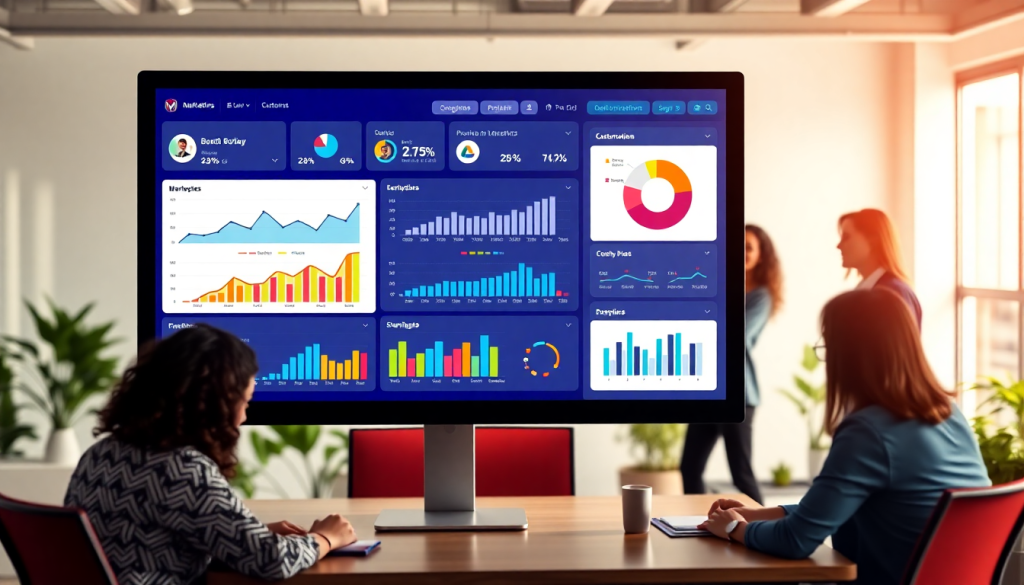
White-Label Marketing Dashboard for Agencies: Custom Client Reporting
For agencies managing multiple clients and campaigns, reporting can quickly become a time-consuming, manual process. White-label marketing dashboards solve this by centralizing marketing data, automating performance tracking, and delivering branded, customizable reports—all under your agency’s name. With the right platform, agencies can streamline analytics, enhance client satisfaction, and scale operations without sacrificing personalization or professionalism. This guide walks through the features, benefits, and best practices for choosing and implementing a white-label marketing dashboard designed specifically for agencies.
What Is a White-Label Marketing Dashboard for Agencies?
A white-label marketing dashboard lets agencies deliver client reporting and analytics under their own brand—no third-party logos, no confusing interfaces.
What Makes a Dashboard "White-Label"?
With a white-label dashboard, agencies can:
- Apply their own branding
Add your logo, color palette, and even use a custom domain. - Present seamless client experiences
Clients see your agency’s name and style—not a software vendor’s. - Control the narrative
Reporting, insights, and performance data are delivered as an integrated part of your services.
Why Agencies Choose White-Label Dashboards
Here’s how agencies benefit from going white-label:
- Centralize All Marketing Data
Pull in results from paid media, SEO, social, email, and more. - Automate Reporting
No more manual spreadsheets or endless slide decks. - Save Time for Strategy
Free up hours for account management and campaign planning. - Own the Client Relationship
Clients see analytics as part of your agency—not a third-party tool.
| Feature | Standard Dashboard | White-Label Dashboard |
|---|---|---|
| Agency branding | ✗ | ✓ |
| Custom domain | ✗ | ✓ |
| Multi-client management | Limited | Robust |
| Fully tailored reporting | Minimal | Extensive |
| Underlying tech provider shown | ✓ | ✗ |
Why the Distinction Matters
- Standard dashboards: Fine for in-house teams or basic reporting—but lack flexibility, scale, and branding control.
- White-label dashboards: Essential for agencies who want to customize, scale, and build trust with clients.
With a white-label dashboard, your agency becomes the source of truth—no outside tools, just your expertise.
Want to learn more?
Explore the full breakdown here: White-Label Marketing Dashboard for Agencies: Custom Client Reporting
Core Features of an Agency Reporting Platform
The foundation of an effective white-label marketing dashboard lies in its feature set—tools purpose-built to help agencies deliver seamless, branded reporting at scale. At a minimum, a robust agency reporting platform should offer customizable client dashboards, branded analytics software, white-label KPI reports, and a secure client portal dashboard.
Customizable Client Dashboards allow agencies to tailor the analytics experience to each client’s unique goals, KPIs, and branding. With drag-and-drop interfaces and modular widgets, agencies can display the metrics that matter most—whether it’s paid search conversions, social engagement, or multi-channel attribution—ensuring every client feels prioritized and understood.
Branded Analytics Software is another essential. By white-labeling the entire analytics experience, agencies can present insights and reports that reinforce their own brand identity. This includes customizing logos, color schemes, domains, and even the look and feel of the reporting interface, so clients always associate the value of analytics with your agency.
White-Label KPI Reports drive efficiency by automating recurring performance summaries in your agency’s branding. Scheduled or on-demand, these reports can be customized for each client, consolidating data from all integrated channels while maintaining a polished, client-ready appearance.
A secure Client Portal Dashboard transforms the client experience, providing 24/7 access to real-time data, historical trends, and downloadable reports—all behind your agency’s branded login page. With role-based access controls, agencies can manage permissions and ensure each stakeholder only sees the data relevant to them.
Automated data visualization is the connective tissue that ties these features together. By turning raw data into actionable, visually engaging insights, agencies can dramatically reduce time spent on manual reporting. Automated cross-channel reporting empowers agency teams to scale effortlessly, delivering hundreds of dashboards and reports without sacrificing accuracy or customization.
When these core capabilities come together, agencies are equipped to support scalable growth, improve client retention, and differentiate themselves in a crowded marketplace. For a deeper dive into building a truly custom analytics experience for your clients, check out this guide to Custom Client Analytics.
Why Customizable Client Dashboards Are a Game-Changer
Customizable dashboards are more than just a reporting tool—they’re a strategic differentiator for modern agencies. By giving each client a tailored, transparent view of their marketing performance, agencies can build stronger relationships, prove value, and drive retention.
What Makes Custom Dashboards Invaluable?
Here’s how customizable dashboards elevate your agency’s client experience:
-
Tailored Reporting:
- Highlight the metrics, channels, and KPIs each client cares about most.
- Serve granular lead attribution for data-driven B2B marketers.
- Provide high-level overviews for executives who want the big picture.
-
Role-Based Access:
- Control who sees what—clients, account managers, and creative teams each get a personalized view.
- Protect sensitive data while ensuring relevant transparency.
-
Effortless Multi-Client Management:
- Seamlessly switch between dozens (or hundreds) of client accounts without losing context.
- Maintain consistency in reporting while allowing for deep customization.
-
Widget-Level Customization:
- Personalize dashboards down to specific charts, widgets, and data sources.
- Surface insights directly aligned to each client’s business objectives.
The Impact: Trust, Transparency, and Retention
Custom dashboards aren’t just pretty interfaces—they:
- Make communication with clients clearer and more impactful.
- Demonstrate your agency’s deep understanding of each client’s unique needs.
- Build trust and transparency, laying the groundwork for long-term partnerships.
Want to see what next-level reporting looks like?
Check out our guide to Custom Client Reports.
Or, discover how TapClicks unifies multi-client dashboards, role-based access, and deep customization—learn more at TapClicks.
Branded Analytics Software: Elevate Your Agency’s Image
Consistent branding is more than just a visual touch—it’s a powerful tool for building trust and distinguishing your agency in a competitive marketplace. When your analytics and reporting software is fully branded, every touchpoint with your clients reinforces your agency’s professionalism and credibility. Rather than sending clients generic reports or dashboards that bear the software provider’s logo, branded analytics software allows agencies to present data and insights as their own, creating a seamless client experience from campaign launch to results review.
Branded analytics software empowers agencies to control every aspect of their client-facing environment. Customizable elements go well beyond simply uploading a logo. Agencies can apply their color schemes, typography, and even custom domain names, ensuring clients never feel like they’re interacting with a third-party tool. This level of polish extends to report templates, login screens, and dashboards—every piece of the reporting process reflects your agency’s identity.
For example, an agency may use branded dashboards that greet clients with their company’s logo, employ consistent brand colors throughout charts and graphs, and display reports from a custom URL (e.g., reports.youragency.com). Even automated email alerts and scheduled reports can be formatted with agency-branded headers and footers, reinforcing your professionalism at every stage.
This attention to branding doesn’t just enhance aesthetics; it strengthens client loyalty. Clients are more likely to see your agency as a strategic, professional partner when every analytics interaction feels cohesive and tailored. In a landscape where agencies often compete on expertise and service, branded analytics software is a subtle but significant differentiator.
To see how a robust, white-label platform can transform your agency’s reporting and brand presence, explore the features of TapClicks at https://www.tapclicks.com/.
Automated Data Visualization for Agencies
Manual reporting is a notorious pain point for agencies—pulling data from multiple sources, reconciling inconsistencies, and building out visualizations can eat up dozens of hours each month. Automated data visualization is a game-changer, eliminating tedious manual work and drastically reducing the risk of human error. By centralizing data feeds and automatically transforming raw numbers into intuitive charts, graphs, and dashboards, agencies can spend less time wrangling spreadsheets and more time delivering insights to clients.
Real-time performance tracking is another major advantage. With automated dashboards, clients gain instant access to up-to-date campaign metrics across all channels. This empowers them to make faster, data-driven decisions and eliminates the lag between campaign activity and reporting. For agencies, it means fewer urgent requests and greater transparency—clients can log in any time to view how their campaigns are performing.
Perhaps most importantly, automated visualizations make complex data accessible and actionable. Instead of overwhelming clients with endless tables, agencies can present key KPIs, trends, and opportunities in clear, branded visual formats. This not only helps clients understand the story behind their numbers, but also positions the agency as a strategic partner focused on outcomes, not just activity. For a deeper look at how customizable dashboards and automated reporting can transform your agency’s workflow, explore TapClicks’ white-label marketing dashboard capabilities.
Marketing Automation for Agencies: Streamlining Reporting and Insights
Integrating marketing automation tools with your white-label dashboard is a game-changer for modern agencies. By connecting automated marketing solutions to your reporting platform, you create a seamless workflow that reduces manual effort, increases data accuracy, and delivers insights at lightning speed.
One of the key advantages of marketing automation is the ability to schedule recurring reports and client updates without lifting a finger. Instead of spending hours each week pulling data and formatting presentations, agencies can set up automated report scheduling. This ensures clients always receive the latest performance metrics—branded with your agency’s logo and color palette—on a regular cadence. Automated scheduling not only saves significant time but also demonstrates reliability and professionalism to your clients.
Alerts and real-time notifications are another powerful aspect of automation within white-label dashboards. Agencies can configure custom alerts for important campaign milestones, budget thresholds, or sudden performance changes. These automated prompts help account teams react quickly, address issues proactively, and keep clients informed—often before they even notice a fluctuation themselves.
Perhaps most transformative is the role of automated insights. Modern white-label marketing dashboards, like TapClicks, leverage AI and smart analytics to surface meaningful trends and recommendations directly within the client portal. Instead of sifting through raw data, agencies and clients receive digestible, actionable insights—highlighting what’s working, what needs attention, and where to optimize next. This not only elevates the strategic value agencies provide but also fosters more engaged and data-driven client relationships.
In short, marketing automation empowers agencies to deliver faster, smarter, and more consistent reporting. With less time spent on repetitive tasks and more focus on strategy, agencies can scale their operations, strengthen client trust, and drive better campaign results—all while maintaining the polished, branded experience that sets them apart.
Performance Tracking for Clients: Proving ROI and Value
For agencies, the ability to clearly demonstrate marketing ROI is the foundation of long-term client relationships. A powerful white-label marketing dashboard brings together data from all campaign channels—search, social, display, email, and more—so agencies can provide clients with a holistic, transparent view of their marketing performance. This cross-channel reporting goes beyond surface-level metrics, enabling agencies to show exactly how every campaign contributes to client goals.
Best Practices for KPI Selection and Display
Choosing the right KPIs for each client is crucial. Not every client needs the same metrics, so the best dashboards offer flexibility to tailor reports to what matters most—be it lead generation, conversion rates, cost per acquisition, or brand awareness. By leveraging customizable widgets and dynamic data filters, agencies can surface the insights that resonate with each client’s unique objectives. Presenting these KPIs in intuitive, visually engaging formats—such as trend graphs, funnel visualizations, and interactive scorecards—makes complex performance data easy to interpret at a glance.
Data Transparency and Storytelling
Transparency isn’t just about sharing numbers—it’s about weaving a narrative that connects marketing activities to business outcomes. White-label dashboards excel at this by allowing agencies to annotate performance trends, highlight wins, and proactively address challenges within the report itself. This storytelling approach builds trust, fosters collaboration, and positions the agency as a strategic partner rather than just a vendor.
Ultimately, when agencies harness advanced performance tracking and reporting tools, they empower clients with clarity and confidence—proving the value of every dollar spent and strengthening agency-client partnerships. For more on customizing reports to client needs, see Custom Client Reports.
Choosing the Right Agency Analytics White-Label Solution
Selecting the best white-label marketing dashboard for your agency is a strategic decision that directly impacts your workflow, client satisfaction, and scalability. Here are the key criteria to evaluate:
1. Flexibility and Customization:
Look for a dashboard that offers deep customization—allowing you to tailor everything from data widgets to branded visuals, custom domains, and user access levels. This ensures you present insights in a way that matches your agency’s unique processes and each client’s individual needs.
2. Integration Options:
A truly valuable platform connects seamlessly with all the marketing, advertising, and business tools your clients use. Ensure the solution supports robust data integration (ideally with thousands of connectors) and can blend data across channels for a unified view. For example, platforms like TapClicks provide an extensive ecosystem of connectors, making it easy to unify disparate data sources.
3. Scalability:
Agencies grow, and so should your dashboard. The right solution should handle reporting for dozens—or even thousands—of clients and campaigns without performance bottlenecks. Look for features like multi-client management, automated report scheduling, and role-based access that make it easy to scale as your portfolio expands.
4. Support and Onboarding:
Transitioning to a new dashboard should be smooth for both your team and your clients. Prioritize vendors with responsive customer support, comprehensive onboarding resources, and ongoing training. White-glove migration services and in-app guidance can help minimize disruption and ensure everyone gets up to speed quickly.
5. Workflow and Collaboration:
Beyond reporting, the best dashboards streamline operations by integrating campaign order management, workflow automation, and collaboration tools. This consolidation reduces manual work, increases accuracy, and helps teams stay aligned across sales, operations, and client services.
Tips for Onboarding Clients and Ensuring a Smooth Transition:
- Communicate proactively: Let clients know about upcoming changes and how the new dashboard will improve their experience.
- Brand the experience: Leverage white-label features to make the dashboard feel like a seamless extension of your agency.
- Provide training: Offer personalized walkthroughs or resource guides for clients to boost adoption and confidence.
- Gather feedback: After rollout, solicit feedback to fine-tune dashboards and demonstrate your commitment to continuous improvement.
By weighing these factors and planning a thoughtful client onboarding process, agencies can maximize the value of their investment in a white-label analytics platform and deliver a truly differentiated reporting experience.
Conclusion
A white-label marketing dashboard is a transformative asset for agencies seeking to elevate their client reporting, streamline analytics, and reinforce their own brand identity. By centralizing data, automating performance tracking, and delivering fully branded, customizable reports, agencies can free up valuable time, boost operational efficiency, and deliver an exceptional client experience—all while maintaining complete control over how insights are presented.
Choosing the right platform isn’t just about ticking boxes for features; it’s about finding a solution that fits your agency’s unique workflow, integrates seamlessly with your existing tools, and scales effortlessly as your client roster grows. Prioritizing robust customization, automated reporting, and professional branding will ensure your agency stands out and retains clients in a competitive landscape.
Ready to see how a unified, white-label reporting solution can transform your agency’s operations? Take the next step and explore a TapClicks demo to experience firsthand the power of modern agency reporting.
Start Automating Your Marketing Data Today!
No Credit Card Required.

