

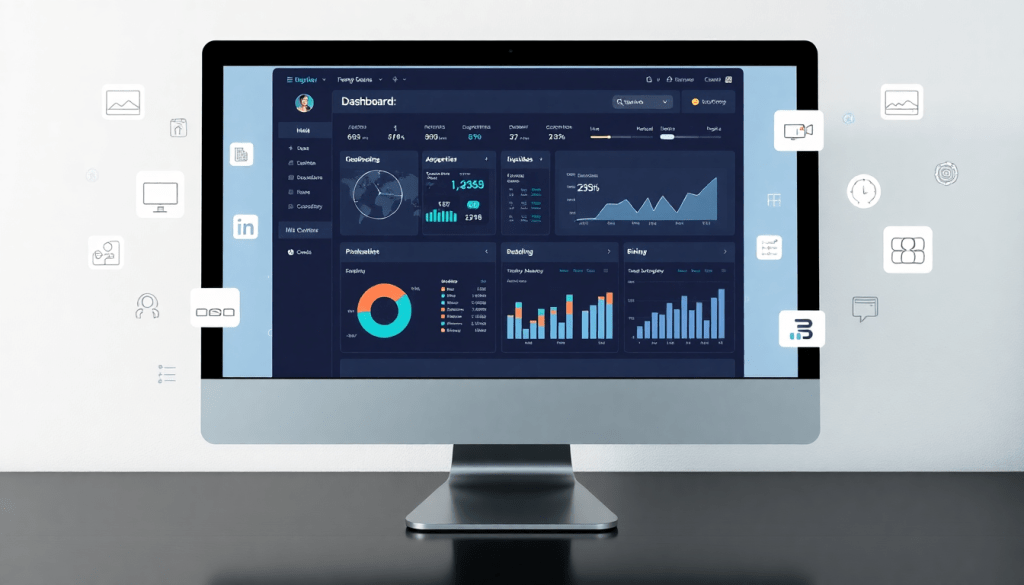
White-Label Marketing Dashboard for Agencies: Custom Client Reports
Agencies today are expected to deliver fast, transparent, and insightful reporting across a growing list of marketing channels. A white-label marketing dashboard lets you meet those demands with scalable, branded client experiences, streamlined data workflows, and automated analytics. This guide unpacks what makes a great agency reporting platform, how customizable dashboards help you stand out, and why a unified, white-label solution like TapClicks can transform your agency’s client relationships and operational efficiency.
What Is a White-Label Marketing Dashboard for Agencies?
A white-label marketing dashboard is a fully customizable analytics platform that agencies can brand as their own, offering clients a seamless reporting experience under the agency’s identity. Unlike standard analytics tools that display the provider’s logos and visual styles, a white-label dashboard allows agencies to tailor everything—from colors and logos to report templates and client-facing portals. The result: agencies deliver professional, branded analytics while clients see only the agency’s identity, never the underlying technology vendor.
For agencies, the distinction between white-label and generic analytics solutions is crucial. Generic tools may offer robust data visualization and reporting, but they often lack the flexibility to be branded or to deliver a truly personalized client experience. This can dilute your agency’s value proposition, making it harder to differentiate from competitors. In contrast, a white-label solution puts your brand front and center, enabling you to reinforce your expertise, build client trust, and provide a unified experience across all touchpoints.
The benefits go beyond branding. White-label dashboards are designed with agencies’ workflows in mind—providing client-specific portals, customizable access controls, and the ability to automate recurring reports. This not only enhances transparency and professionalism but also streamlines your operations, freeing your team from the burden of manual data wrangling and report generation.
To see how leading solutions deliver these advantages, take a look at TapClicks’ comprehensive overview of the best marketing reporting software. You’ll discover how the right white-label dashboard can transform both your agency’s client relationships and its internal efficiency.
Core Features of a Modern Agency Reporting Platform
To thrive in today’s hyper-competitive marketing landscape, agencies need more than just basic analytics—they need a robust, scalable reporting platform designed around the realities of multi-client, multi-channel operations. The best white-label marketing dashboards empower agencies with a suite of must-have features that ensure both operational efficiency and client satisfaction.
Multi-Channel Integrations:
A modern agency dashboard should seamlessly pull data from every platform your clients use—search, social, programmatic, email, and beyond. With solutions like TapClicks, agencies gain access to thousands of pre-built data connectors, enabling real-time integration with Google Ads, Facebook, LinkedIn, and more. This unified approach eliminates data silos and manual uploads, letting your team and clients see the full marketing picture at a glance.
Branded Analytics and Customization:
White-label dashboards allow agencies to fully customize the client experience—from logos and color schemes to personalized login portals. This not only reinforces your agency’s brand but also creates a seamless, professional experience for your clients. Customizable widgets, layouts, and themes let you deliver insights in your clients’ preferred formats, making analytics more accessible and actionable.
Role-Based Access and Permissions:
Security and clarity are paramount when managing sensitive client data. Role-based access ensures that account teams, executives, and clients only see the data relevant to them. This granular control streamlines collaboration, reduces risk, and supports compliance requirements—an essential feature for agencies juggling dozens or even hundreds of clients.
Automated and Scheduled Reporting:
Gone are the days of manually assembling reports each week or month. Leading agency dashboards enable you to automate report generation and delivery on customizable schedules. Clients receive timely, branded updates directly in their inbox, while your team reclaims hours that can be spent on strategic work rather than data wrangling.
Automated Data Visualization:
Agencies need more than static tables—they need dynamic graphs, charts, and scorecards that highlight trends, anomalies, and opportunities. Automated data visualization tools help agency teams and clients quickly interpret campaign performance, spot optimization opportunities, and make data-driven decisions with confidence.
Custom Client Dashboards:
Every client is unique, and so are their marketing goals. Modern platforms let agencies build custom dashboards—tailoring views, KPIs, and data sources for each client or even individual stakeholders. This personalization not only enhances the client experience but also deepens client-agency relationships by delivering insights that matter most to each business.
By combining these core features, a white-label marketing dashboard transforms agency operations—from unifying fragmented data to delivering polished, branded insights at scale. The result: happier clients, more efficient teams, and a powerful differentiator in a crowded agency market.
Why Customizable Client Dashboards Matter
For agencies, the true power of a white-label marketing dashboard lies in its ability to deliver tailored, relevant insights to every client. Customizable dashboards move beyond generic, one-size-fits-all reporting—they empower agencies to create focused views that speak directly to each client’s unique goals, KPIs, and campaign structure.
Making Data Relevant and Actionable:
Clients don’t want to sift through mountains of irrelevant metrics. With a customizable dashboard, agencies can prioritize the data that matters most to each client—whether that’s multi-location performance for a retail brand, granular paid search results for an eCommerce client, or social engagement trends for a nonprofit. By filtering and organizing information according to the client’s needs, agencies help clients zero in on actionable insights—not just raw data.
Real-World Use Cases:
Consider a multi-service agency managing campaigns for dozens of local businesses. With a customizable dashboard, each business owner receives a unique view: one might monitor Google Ads conversions and Facebook reach, while another tracks call leads from local SEO. Agencies can even create executive summary dashboards for C-level stakeholders and detailed, channel-by-channel breakdowns for marketing managers—all from the same unified platform.
Flexible Widgets, Branding, and Templates:
Customization also means agencies can mix and match widgets—charts, maps, tables, or goal trackers—to visualize data in the most impactful way. Robust white-label solutions like TapClicks allow full branding control, enabling agencies to embed logos, color palettes, and custom domain URLs. Pre-built and reusable report templates speed up delivery, while drag-and-drop editors let agencies quickly adapt dashboards to new campaigns or evolving client priorities.
Ultimately, customizable client dashboards transform reporting from a static obligation into an interactive, value-driving experience. They foster better client conversations, more meaningful decision-making, and deeper partnership—ensuring your agency stands out not just for data, but for the clarity and strategic focus you deliver.
Branding & White-Label KPI Reports: Standing Out in a Crowded Market
In today’s competitive agency landscape, the ability to deliver branded, white-label KPI reports is more than a nice-to-have—it’s a strategic differentiator. Agencies aren’t just competing on campaign results; they’re also competing on client experience and perceived value. A white-label analytics platform empowers your agency to deliver client-facing dashboards and reports that feature your logo, colors, and messaging, reinforcing your brand every time clients check their metrics or receive an update.
Branded analytics software signals professionalism and reliability. When clients log in to a portal or receive a report that looks and feels like an extension of your agency, it instills confidence and trust. Instead of generic, third-party dashboards, your clients experience a seamless, customized reporting environment that aligns with your agency’s identity. This white-label approach is especially powerful for agencies managing multiple clients or brands, as it allows you to deliver tailored portals for each, supporting unique branding requirements at scale.
Transparency is another key advantage. White-label KPI reports foster open communication by making performance data accessible, clear, and visually consistent. Clients know exactly where their campaigns stand and can attribute results directly to your efforts. This transparency not only strengthens your relationships but also supports client retention—when clients see your brand consistently associated with clear, value-driven insights, they’re more likely to view your agency as an indispensable partner.
For example, a digital marketing agency might use white-label dashboards to provide each client with their own branded portal, complete with customized widgets and report templates that highlight KPIs relevant to their business objectives. A retail client could see real-time foot traffic and conversion data, while a B2B client might focus on lead generation and pipeline metrics. In both cases, the agency’s branding is front and center, and the reporting experience is tailored, intuitive, and memorable.
Ultimately, branded, white-label KPI reports go beyond just aesthetics—they’re a vehicle for agency growth. By consistently reinforcing your value, building trust, and differentiating your services, you set your agency apart in a crowded marketplace. To see how TapClicks enables agencies to deliver fully branded, client-ready analytics at scale, visit TapClicks.
How Automation Frees Up Your Agency from Manual Reporting
For agencies handling dozens—or even hundreds—of client accounts, reporting can quickly become a time sink. Manual data collection, consolidation, and presentation eats up valuable hours and is prone to human error. Automation changes the game, letting your team focus on high-impact strategy instead of tedious data wrangling.
What Does Marketing Automation Really Do?
With a modern platform like TapClicks, automation takes over the most repetitive and error-prone tasks:
- Data Collection: Automatically pulls data from all your marketing, advertising, and analytics channels (no more manual downloads).
- Data Transformation: Cleans, blends, and formats data for consistency across sources.
- Scheduled Reporting: Delivers regular, branded reports directly to clients’ inboxes or client portals.
- Dashboard Updates: Keeps your dashboards current with live data, so stakeholders always see the latest numbers.
Real-World Impact: More Time, Less Stress
Let’s break down the difference automation can make for agency teams:
| Manual Reporting Tasks | Automated with TapClicks |
|---|---|
| Downloading spreadsheets weekly | Data pulls happen automatically, 24/7 |
| Copy-pasting into slide decks | Customizable dashboards update in real time |
| Chasing the latest numbers | Clients always see fresh, accurate data |
| Risk of human error | Consistency and accuracy at scale |
| 10+ hours/week per analyst | 50+ hours/month saved per analyst |
Key Benefits of Automating Reporting
- Scalability: Manage more clients without adding headcount.
- Consistency: Standardized templates and branded elements ensure every report looks professional.
- Transparency: Automated delivery builds client trust—no more delays or missing reports.
- Capacity for Strategy: Free your analysts to focus on campaign optimization, not formatting slides.
Pro Tips for Agencies Embracing Automation
- Set up scheduled reports for daily, weekly, or monthly delivery based on client needs.
- Use white-label dashboards to showcase your agency’s brand on every report.
- Define role-based access so clients, account managers, and execs see what matters most to them.
- Regularly review your automated workflows to ensure they align with evolving client KPIs.
Want to see real examples? Dive deeper into how dashboard automation boosts agency reporting efficiency.
By automating your reporting workflow, your agency positions itself for scalable growth, streamlined operations, and happier clients—without burning out your team.
Cross-Channel Reporting & Performance Tracking for Clients
In today’s fragmented marketing landscape, clients expect agencies to deliver a holistic view of campaign performance across search, social, display, video, email, and beyond. A unified, white-label marketing dashboard empowers agencies to consolidate data from all major marketing channels—Google Ads, Facebook, LinkedIn, programmatic DSPs, CRMs, and more—into a single, actionable client portal. This seamless aggregation isn’t just a convenience; it’s a game-changer for both agency teams and their clients.
By integrating cross-channel data, agencies eliminate data silos and manual spreadsheet wrangling, ensuring every stakeholder sees the complete picture. For instance, a retail client can view paid search ROI, social media engagement, and email conversion rates side by side, while a B2B client can track lead generation performance from LinkedIn, Google, and HubSpot in one place. TapClicks’ advanced data integration capabilities let agencies connect thousands of data sources and visualize them through customizable dashboards—no more logging into multiple platforms or reconciling inconsistent metrics.
The business benefits of streamlined cross-channel reporting are immediate. Agencies can surface trends and insights faster, allocate budget more effectively, and respond to performance issues in real-time. Automated dashboards update as fresh data flows in, powering always-on reporting and eliminating the delays of manual report generation. For example, campaign managers can set up real-time alerts when a KPI dips below a threshold, or instantly share insights with clients through scheduled, branded reports.
Ultimately, cross-channel dashboards foster transparency and trust. Clients gain 24/7 access to the metrics that matter most to them, in a format tailored to their goals and branding. Agencies, in turn, have more time to focus on optimization and strategy—delivering greater value and stronger results. With a unified reporting platform like TapClicks, agencies can confidently track multi-channel campaigns, prove ROI, and optimize performance at scale, all while providing a seamless, client-first experience.
Comparing Agency Analytics White-Label Solutions
When evaluating white-label marketing dashboards, agencies face a crowded field of vendors—each promising to streamline client reporting and maximize operational efficiency. To make an informed choice, let’s compare several leading platforms: TapClicks, Funnel.io, and Agency Analytics, focusing on the features that matter most for high-performing agencies.
TapClicks stands out for its unified, enterprise-ready approach. With over 10,000 marketing, advertising, and business data connectors, TapClicks offers deeper integration than most competitors. Its automated ETL/ELT pipelines enable seamless data extraction, transformation, and loading—either into TapClicks itself or external BI tools. Agencies benefit from robust white-labeling: fully branded dashboards, scheduled automated reporting, and flexible client portals that scale to thousands of dashboards and reports. What truly differentiates TapClicks is its AI-powered analytics (via SmartPilot and TapInsights), which surface actionable insights, predictive benchmarks, and optimization recommendations—going beyond simple data visualization. Workflow automation (TapOrders/TapWorkflow) further reduces manual overhead, supporting collaboration across sales, ops, and fulfillment teams.
Funnel.io is renowned for its data integration capabilities, providing a strong “data pipe” for aggregating marketing data from hundreds of sources. While it excels at data normalization and exporting cleaned data to BI tools like Tableau or Google Data Studio, Funnel.io’s reporting and dashboarding features are relatively lightweight. Agencies often need to pair Funnel.io with separate visualization tools, resulting in a more fragmented stack and potential branding limitations for client-facing deliverables. Automation is strong on the data movement side, but less robust for end-to-end client reporting or analytics.
Agency Analytics is a popular choice for small to mid-sized agencies seeking simplicity and quick setup. Its dashboard builder is intuitive, with a solid selection of pre-built integrations and white-label options. However, Agency Analytics may struggle at enterprise scale—handling thousands of clients or complex cross-channel datasets can be challenging. Advanced features like AI insights, workflow automation, or deep ETL/ELT customization are limited compared to enterprise platforms.
For a detailed breakdown, see TapClicks’ comparison of dashboard automation platforms.
Key Differentiators to Consider:
- Scale: TapClicks is designed for agencies and media companies managing hundreds (or thousands) of clients, while Agency Analytics is best suited for smaller portfolios.
- Automation: TapClicks automates not just data pulls but also report generation, insight summaries (SmartEmail), and workflow collaboration.
- Integration Depth: TapClicks and Funnel.io both offer extensive connectors, but TapClicks also streamlines reporting and analytics in one environment.
- AI & Insights: TapClicks is unique in surfacing actionable insights, predictive recommendations, and automated performance scoring—features missing from most competitors.
Ultimately, the right white-label reporting solution depends on your agency’s client volume, integration needs, and appetite for advanced analytics. Agencies seeking a scalable, unified platform with robust branding and automation should explore TapClicks as a comprehensive solution.
Choosing the Right Client Portal Dashboard for Your Agency
Selecting the ideal white-label client portal dashboard is pivotal for agencies aiming to deliver exceptional reporting, streamline operations, and scale client relationships. The right solution should not only reflect your agency’s brand but also simplify complex data workflows and empower both your team and your clients with actionable insights. Here’s a practical checklist to guide your decision-making:
1. Scalability:
Can the platform easily support your current and future client volume? Look for solutions that handle hundreds (or thousands) of dashboards, users, and scheduled reports without performance drops—crucial for fast-growing agencies or those serving multi-location brands.
2. Data Integration Depth:
Does the dashboard offer direct integrations with all the marketing and advertising platforms your clients use? Verify that it supports a wide array of connectors (Google Ads, Facebook, programmatic, SEO, CRM, email, and more) and provides flexible import tools for custom data sources.
3. Customization & Branding:
Ensure that the solution provides extensive white-labeling options—custom logos, colors, domain, and fully branded report templates—so every client interaction reinforces your agency’s value. Check for flexible dashboard widgets and the ability to tailor KPI views for each client.
4. Automation & Efficiency:
Prioritize platforms with robust automation—scheduled reporting, recurring client communications, and auto-refreshed dashboards. This reduces your team’s manual workload and minimizes the risk of errors or reporting delays.
5. Ease of Use:
Both your team and your clients should find the platform intuitive. Look for drag-and-drop dashboard builders, straightforward navigation, and clear data visualization tools. Role-based access is also important for managing permissions securely.
6. AI & Insights:
Evaluate tools that offer automated insights, predictive analytics, and recommendations, helping your agency shift from reactive reporting to proactive strategy.
7. Support & Onboarding:
Responsive support is vital, especially during implementation and onboarding. Assess what training, documentation, and customer success resources are available to help your agency get the most value from the platform.
8. Security & Compliance:
Confirm the platform’s data security standards, privacy compliance, and reliability—especially if you serve clients in regulated industries or manage sensitive business data.
9. Trial & Demo Availability:
Before making a commitment, request a personalized demo or take advantage of a trial period. This hands-on experience is invaluable for evaluating real-world usability and ensuring the solution aligns with your agency’s workflows.
Choosing a white-label dashboard that fits your agency’s unique needs will set the foundation for stronger client relationships, more efficient reporting, and scalable growth. To see how a leading solution can transform your agency’s operations, consider starting with a TapClicks demo.
Start Automating Your Marketing Data Today!
No Credit Card Required.

