

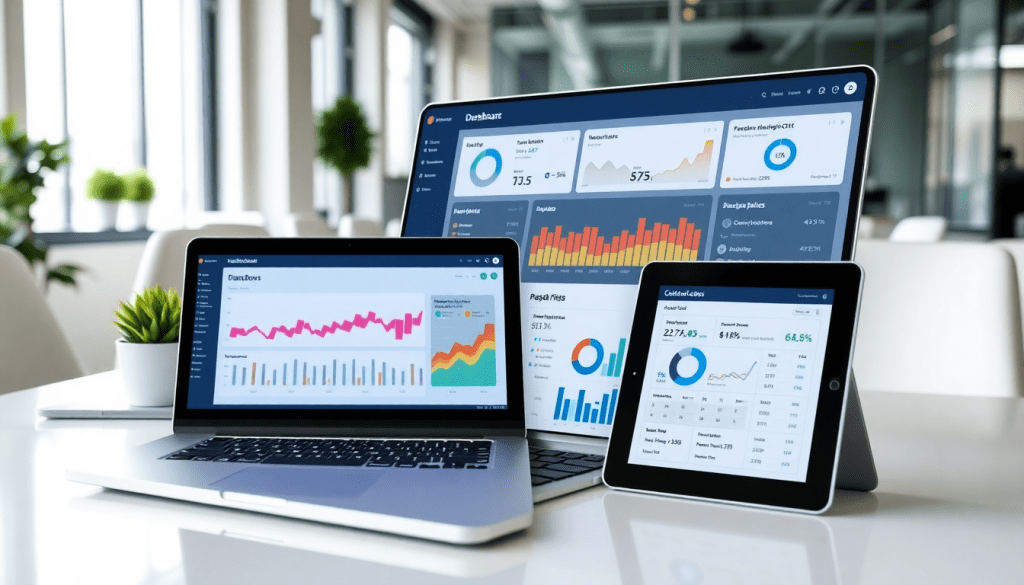
White-Label Marketing Dashboard for Agencies: Custom Client Reporting
Agencies juggle the demands of multiple clients, each needing clear, branded, and timely reporting. A white-label marketing dashboard streamlines this process, allowing agencies to deliver custom, professional analytics under their own brand. From automated data visualization to cross-channel reporting, these platforms simplify client communication, boost your agency’s credibility, and make performance tracking effortless. Here’s how a white-label dashboard can transform your agency’s client reporting—and what to look for in the best solutions.
White-Label Marketing Dashboards: Giving Agencies Their Own Branded Edge
A white-label marketing dashboard is much more than a reporting tool—it’s a way for agencies to deliver a seamless, branded analytics experience to their clients, without ever showing the name of the underlying technology provider.
What Sets a White-Label Dashboard Apart?
Here’s how a white-label dashboard stands out from generic reporting solutions:
- Your Brand, Front and Center:
- Custom logos, color palettes, and even your agency’s domain (URL)
- Tailored report templates that match your identity
- Automated, Hassle-Free Reporting:
- Schedule reports to go out to clients automatically—no more manual exports or email chains
- Flexible Customization:
- Drag-and-drop builder for dashboards and reports
- Personalize analytics and visualizations for each client, campaign, or channel
- Unified Data, All in One Place:
- Connect paid media, SEO, social, email, and more
- Cross-channel views highlight what’s working (and what isn’t) for each client
- Secure, Role-Based Access:
- Give the right people the right views—clients, account managers, execs
- Efficient Multi-Client Management:
- Manage hundreds of client dashboards from a single master interface
- Easily clone, update, or archive as your portfolio grows
Why Agencies Love White-Label Dashboards
- Streamlined Operations:
Automate client reporting and minimize manual errors. - Professional Presentation:
Impress clients with polished, on-brand analytics. - Scalable Value:
Deliver insights at scale—whether you have 5 clients or 500.
Pro Tip:
Look for dashboards that integrate seamlessly with your data sources and offer robust customization. This ensures your agency’s unique value shines through every report.
Want to learn more?
Check out this deep dive on white-label marketing dashboards for agencies.
Why Agencies Need Customizable Client Dashboards
In today’s competitive agency landscape, your brand isn’t just your logo—it’s the experience your clients have at every touchpoint, including how they view their campaign results. Customizable dashboards empower agencies to reinforce their unique branding, ensuring every client interaction feels professional, cohesive, and trusted. Instead of settling for off-the-shelf analytics tools that look generic, a white-label dashboard lets you tailor every detail, from logos and color schemes to data views and report layouts, so clients see your agency—not the third-party vendor—at the heart of their success.
This level of customization does more than polish your image. It strengthens client relationships by providing clarity and transparency in reporting. When clients log in to a portal that looks and feels like an extension of your agency, it signals that you’re invested in their business and attentive to their unique needs. Customizable dashboards also allow agencies to adapt reporting formats, metrics, and data visualizations to match each client’s goals, industry, or level of expertise—whether it’s a high-level executive summary or a deep-dive analytics snapshot.
Ultimately, the flexibility to shape reporting for each client demonstrates a commitment to partnership and results. It helps agencies stand out, win client trust, and reduce the friction of back-and-forth communications. For a deeper look at how custom client reports elevate agency service and efficiency, explore this resource on customizable client reporting.
Key Features of a Top Agency Reporting Platform
Selecting the right white-label marketing dashboard is crucial for agencies striving to deliver seamless, professional, and scalable client reporting. The best platforms share a core set of features that address the day-to-day challenges agency teams face—making it easier to manage multiple clients, enhance brand presence, and reduce manual workloads. Here’s what to look for:
1. Drag-and-Drop Widgets for Custom Dashboards
A user-friendly, drag-and-drop dashboard builder is essential. It empowers agencies to assemble custom reports tailored to each client’s unique marketing objectives, whether it’s highlighting PPC performance, SEO rankings, or social engagement. This flexibility means you can deliver insights that matter—presented in a way that resonates with each audience.
2. Custom Branding and White-Labeling
A platform that offers deep white-labeling ensures every report and portal reflects your agency’s identity—not a third-party vendor’s. You should be able to easily add your logo, brand colors, and even custom domain URLs, making every touchpoint reinforce your brand’s value and professionalism.
3. Automated Data Pulls and Real-Time Updates
Manual data collection is time-consuming and prone to error. Top reporting platforms connect to a wide range of marketing data sources—think Google Ads, Facebook, LinkedIn, and more—to automatically pull and refresh data. This not only ensures accuracy but also allows your team to focus on analysis and strategy, not spreadsheets.
4. Multi-Client Management at Scale
Managing dozens—or even hundreds—of clients becomes effortless with a dashboard built for scale. Look for features like client folders, bulk editing, and templated reporting, which streamline onboarding and ongoing management. Centralized oversight also means you can quickly identify trends or issues across your entire book of business.
5. Role-Based Access Controls
Security and collaboration go hand in hand. With role-based access, you can ensure team members and clients only see the data relevant to them. This is especially valuable for agencies with layered teams, or those serving clients with multiple stakeholders.
6. Automated Data Visualization and KPI Reporting
Automated data visualization tools translate complex metrics into intuitive charts, tables, and graphs, reducing the need for manual formatting. The ability to generate white-label KPI reports and interactive dashboards means clients always have instant access to their most important performance indicators.
7. Secure Client Portal Dashboard
A dedicated, branded client portal is a must-have. This centralized hub gives clients 24/7 access to their reports, campaign updates, and analytics—improving transparency and reducing the need for ad hoc report requests.
For agencies committed to delivering best-in-class client experiences, these features are non-negotiable. Platforms like TapClicks exemplify this approach, combining powerful automation, deep customization, and robust scalability—so agencies can focus on delivering value, not wrangling data.
Benefits of Branded Analytics Software for Agencies
A white-label marketing dashboard isn’t just a technical convenience—it’s a strategic asset that elevates your agency’s brand, client relationships, and operational efficiency. Here’s how branded analytics software delivers real impact:
1. Boosts Agency Credibility and Client Retention
When your reports and dashboards are fully branded—bearing your agency’s logo, colors, and messaging—every client interaction reinforces your professionalism and expertise. Rather than sending clients off to a third-party tool, you provide a seamless, branded analytics experience that makes your agency indispensable. This level of polish and ownership not only impresses clients but also instills greater trust, making them more likely to stick with your agency long-term.
2. Unlocks Major Time Savings with Marketing Automation
Manual data collection, spreadsheet wrangling, and repetitive report formatting drain agency resources. Branded analytics platforms, like those offered by TapClicks, automate these processes by connecting to thousands of marketing and advertising data sources, pulling fresh data into custom templates, and scheduling regular report delivery. The result? Your team reclaims valuable hours each month—time that can be reinvested into strategy, optimization, and client service rather than tedious reporting chores.
3. Centralizes Client Communication with a Unified Portal
A centralized client portal dashboard gives your clients on-demand access to the KPIs and campaign metrics that matter most—under your agency’s banner. This self-serve transparency not only reduces one-off requests but also positions your agency as a proactive, data-driven partner. Clients can view performance updates, trends, and insights at their convenience, fostering more collaborative and informed relationships.
In short, branded analytics software transforms reporting from a back-office task into a powerful extension of your agency’s value proposition. By automating delivery, unifying client communication, and putting your brand front and center, white-label dashboards help you stand out in a crowded market—while saving time and supporting client growth.
Automating Cross-Channel Reporting and Performance Tracking
Agencies today manage campaigns across a dizzying array of channels—search, social, display, programmatic, email, and more. Each platform generates its own set of metrics, formats, and reporting schedules, making it a constant challenge to bring everything together into a coherent, actionable view for clients. Manual data aggregation not only eats up valuable time but also increases the risk of errors and reporting delays, undermining the agency’s value proposition.
This is where automation within a white-label marketing dashboard becomes transformative. By automatically pulling data from every connected marketing channel, these platforms unify disparate sources into a single, branded dashboard. Instead of wrestling with spreadsheets or toggling between native ad managers, agencies can present clients with real-time, consolidated views of campaign performance—tailored to each client’s unique goals and KPIs.
Automated cross-channel reporting also empowers agencies to deliver advanced analytics at scale. With features like scheduled reports, customizable visualizations, and multi-client management, agencies can provide consistent, timely insights for dozens or even hundreds of clients simultaneously. This level of automation not only improves internal efficiency but also enhances the client experience, enabling faster optimization and more proactive campaign management.
When it comes to performance tracking, automation ensures that key metrics—such as conversions, ROAS, impressions, and engagement—are continuously monitored and surfaced through intuitive dashboards. Clients get a holistic understanding of their marketing investments and can drill down into channel-level or campaign-level detail as needed. For agencies, automated alerts and AI-driven insights further streamline performance management, helping teams identify opportunities and address issues before they impact results.
For a deeper dive into how these platforms power unified, scalable reporting, check out this overview of custom analytics for agencies. By leveraging automation, agencies can focus less on manual data wrangling and more on delivering strategic value to their clients—turning data complexity into a competitive advantage.
How to Choose the Right Agency Analytics White-Label Solution
Selecting the right white-label analytics platform is a game-changer for agencies—impacting client satisfaction, operational efficiency, and your ability to scale. Here’s a practical guide to help you make the best choice.
What to Look for in Your Next Platform
1. Will It Grow With You?
- Can the platform handle hundreds or thousands of dashboards and clients—now and as you expand?
- Is it proven to support high-volume operations without lag or downtime?
- Look for real-world case studies or testimonials from fast-growing agencies.
2. Does It Connect to Everything You Need?
- Supports all your key marketing, ad, and business data sources (think Google Ads, Facebook, LinkedIn, CRMs, etc.).
- Offers automated ETL/ELT pipelines and data enrichment tools for easy blending and normalization.
- Bonus: Custom connectors for those “hard-to-reach” data sources.
3. Will Your Team and Clients Actually Use It?
- Drag-and-drop dashboard building and simple navigation.
- Customizable templates for rapid deployment.
- Minimal training required—intuitive enough for clients to self-serve.
4. Is Security Built In?
- Role-based access controls for different user types.
- Data encryption and audit trails to track who does what.
- Industry-standard compliance certifications (SOC 2, GDPR, etc.).
5. Can You Rely on Their Support?
- Dedicated onboarding and responsive help desk.
- Access to agency-specific resources and active user communities.
- Test their support: reach out with a technical question and see how they respond.
6. Transparent Pricing and Customization
- Clear, scalable pricing—no hidden fees.
- Flexible contracts and modular add-ons to tailor the platform to your workflow.
Why White-Label Matters More Than You Think
| Feature | White-Label Analytics | Generic Dashboards |
|---|---|---|
| Branding | Full agency branding (logos, colors) | Limited or vendor-branded |
| Domain Experience | Custom domains for client access | Vendor URLs |
| Automation | Advanced, client-level automation | Usually basic or manual |
| Multi-Client Management | Designed for agencies at scale | Often single-account focused |
| Custom Reporting | Deep customization per client | One-size-fits-all templates |
Takeaway:
A true white-label platform makes your agency the hero—clients see your brand, not a third-party vendor. That means a more professional experience and deeper client trust.
Your Agency’s Platform Vetting Checklist
- Request a tailored demo that aligns with your agency’s workflows.
- Reach out to references or read through agency-focused case studies.
- Test integrations with your most important data sources.
- Review reporting automation and the quality of branded outputs.
- Evaluate support by contacting the help desk with a real question.
Going Beyond the Basics
Choosing a white-label solution is about more than ticking boxes—it’s about finding a partner invested in your agency’s growth. Platforms like TapClicks stand out with:
- An extensive integration library,
- Scalable, high-performance infrastructure,
- Automation built for agencies,
- And a laser focus on helping you deliver a seamless branded experience.
Bottom line:
Take your time to vet thoroughly. The right platform doesn’t just make reporting easier—it elevates your agency’s reputation and strengthens your client relationships.
Real-World Use Cases: White-Label Dashboards in Action
The true impact of a white-label marketing dashboard is best seen in how real agencies put these tools to work for their clients—and for their internal teams. Here are several examples that illustrate how leading agencies are leveraging white-label dashboards to streamline operations, enhance client relationships, and drive measurable results.
1. Streamlining Multi-Client Reporting
A mid-sized digital agency managing dozens of clients across retail, healthcare, and finance was drowning in manual reporting. Each month, analysts spent hours exporting data from multiple platforms—Google Ads, Facebook, programmatic display—and then formatting the results for each client’s unique needs. By adopting a white-label dashboard with automated data integration and drag-and-drop report customization, the agency slashed reporting time by over 50%. Now, clients receive on-brand, interactive dashboards updated in real-time, and agency analysts focus on campaign optimization instead of spreadsheet wrangling.
2. Delivering Tailored Insights for Diverse Clients
An agency specializing in franchise marketing needed to deliver both national and local performance views for each franchisee—while keeping data secure and access role-based. With a robust white-label dashboard, the agency delivers personalized portals to each franchise owner, branded as the agency’s own platform. One dashboard surfaces high-level KPIs; another zooms into hyper-local PPC and social results. The flexibility to customize widgets and visualizations means every franchisee gets the insights that matter most, improving client satisfaction and retention. For more on how agencies are customizing client analytics, see these custom analytics examples.
3. Enhancing Collaboration and Transparency
A fast-growing media agency wanted to break down silos between its sales, account management, and fulfillment teams. By centralizing campaign orders, project workflows, and performance tracking within a single white-label dashboard, the agency improved internal collaboration and ensured all stakeholders—internal and client-side—were working from the same up-to-date data. Clients appreciated the transparent, always-on access to campaign results, leading to better communication and more strategic upsell conversations.
4. Client Feedback and Measurable Impact
Agencies consistently report that branded dashboards improve the client experience. One TapClicks user shared, “Clients love logging into a dashboard that looks and feels like an extension of our agency. They trust the data, and we spend far less time fielding questions or troubleshooting reports.” Another noted a sharp uptick in client renewals and upsells after introducing automated, white-labeled performance summaries.
To explore more real-world success stories and see how white-label dashboards can transform your agency’s operations, visit TapClicks.
Getting Started with a White-Label Marketing Dashboard
Implementing a white-label marketing dashboard in your agency can revolutionize your client reporting and operational efficiency. Here’s a simple step-by-step guide to get started and ensure a smooth rollout:
1. Assess Your Reporting Needs
Begin by evaluating your agency’s current reporting process. Identify which data sources you need to connect (e.g., Google Ads, Facebook, programmatic platforms), the volume of clients, and the types of reports you deliver. This assessment will help you select a platform that matches your scale and technical requirements.
2. Select the Right White-Label Dashboard
Choose a solution that supports robust branding, multi-client management, automated data pulls, and customization. Look for platforms that allow you to easily embed your agency logo, use your color palette, and create unique dashboards for each client. Scalability and integration capabilities are key—your solution should grow with your agency.
3. Set Up Your Platform and Integrate Data Sources
After selecting your dashboard provider, connect your marketing channels and data sources. Most platforms offer guided onboarding and template dashboards to simplify this process. Map your data fields, set up automated imports, and test your integrations to ensure accuracy.
4. Customize and Brand Your Dashboards
Design dashboards that reflect your agency’s identity. Add your branding elements, create custom widgets, and tailor reports to each client’s KPIs. Leverage templates to standardize reporting, but provide enough flexibility to address unique client goals and preferences.
5. Onboard Clients and Train Your Team
Communicate with your clients about the new reporting experience. Offer a walkthrough of their dedicated portal, highlight how to navigate dashboards, and set expectations for automated report delivery. Internally, train your team on dashboard management, troubleshooting, and best practices for data visualization.
6. Automate Reporting and Schedule Insights
Set up automated report schedules—weekly, monthly, or custom intervals—so clients receive timely updates without manual intervention. Use AI-powered features to surface key insights, highlights, and recommendations, further demonstrating your agency’s value.
7. Gather Feedback and Optimize
After launch, collect feedback from both clients and internal users. Continuously refine your dashboards and reporting processes to ensure they meet evolving needs and drive client satisfaction.
Ready to transform your agency’s reporting and client experience? Request a demo or get started with TapClicks to see how a unified, white-label marketing dashboard can help you scale, automate, and impress your clients from day one.
Start Automating Your Marketing Data Today!
No Credit Card Required.

