

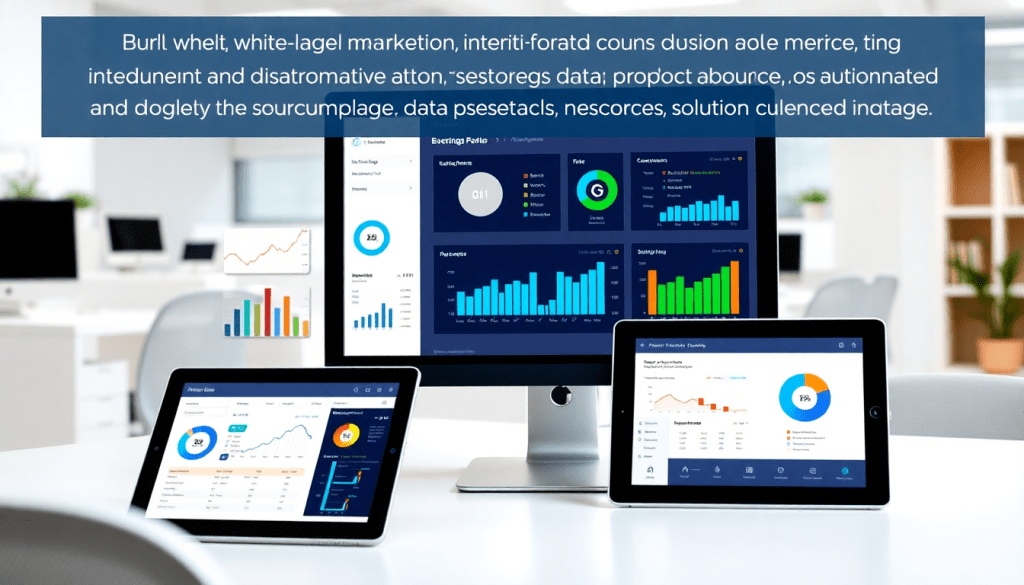
White-Label Marketing Dashboard for Agencies: Custom Client Reporting
Selecting the right white-label marketing dashboard can transform how agencies deliver value, streamline operations, and impress clients. Instead of juggling multiple analytics tools and manual spreadsheets, agencies can use a unified, branded platform to automate data pulls, create custom dashboards, and provide clients with real-time performance insights. This guide breaks down the must-have features, top benefits, and smart implementation strategies for agencies seeking to elevate their reporting and client experience.
Why Agencies Need a White-Label Marketing Dashboard
Agencies today are under immense pressure to prove their value, deliver results quickly, and manage growing client expectations—all while juggling a dizzying array of marketing channels and platforms. The traditional approach of cobbling together performance reports from disparate analytics tools, channel dashboards, and spreadsheets is not only time-consuming but also prone to errors and inconsistencies. This fragmented reporting process often leads to delayed insights, misaligned metrics, and a lack of transparency for clients, undermining both agency efficiency and client trust.
Enter the unified, branded analytics software: a game-changer for agency workflows. By centralizing data from every channel into a single, customizable platform, agencies can automate tedious data pulls, simplify cross-channel comparisons, and provide clients with on-demand access to real-time insights. A white-label agency reporting platform takes this a step further, allowing agencies to deliver these capabilities under their own brand—strengthening client relationships and setting themselves apart in a competitive market.
With a white-label marketing dashboard, agencies aren’t just offering another reporting tool; they’re delivering a cohesive, professional client experience that showcases their expertise and commitment to transparency. This not only saves hours of manual work but also positions the agency as a strategic partner, capable of scaling operations and supporting more clients without sacrificing quality. For a foundational overview of what a white-label marketing dashboard entails and why it’s becoming essential for modern agencies, check out "What Is a White-Label Marketing Dashboard?".
Bringing reporting, branding, and automation together in one platform, a white-label dashboard empowers agencies to grow efficiently, retain clients longer, and continuously demonstrate ROI—key ingredients for agency success in today’s results-driven landscape.
Core Features of a White-Label Dashboard Solution
The backbone of any effective white-label marketing dashboard lies in its feature set—enabling agencies to deliver seamless, value-driven reporting at scale. At a minimum, the right solution should offer customizable client dashboards that allow agencies to tailor the look, feel, and content for each client relationship. This includes drag-and-drop modules, flexible layouts, and the ability to spotlight the metrics that matter most—whether it's website conversions, ad spend, or social engagement.
Automated data visualization is another standout feature, turning complex datasets into clear, actionable charts and graphs in real time. By automating these visualizations, agencies can drastically reduce manual reporting time while ensuring clients always have access to the latest performance insights.
White-label KPI reports are essential for reinforcing the agency’s brand and value proposition. These reports must be fully brandable—logo, color palette, custom headers—so clients always see the agency’s identity front and center, never that of a third-party vendor. Advanced solutions also support cross-channel reporting, unifying data from paid search, social, display, SEO, and more, all in a single view. This holistic approach empowers agencies to provide strategic recommendations and demonstrate ROI across the entire marketing mix.
A robust client portal dashboard is equally important. This self-service portal gives clients secure, role-based access to their performance data, fostering transparency, trust, and collaboration. Agencies benefit from granular user permissions, allowing them to manage hundreds of clients and users with ease—assigning who sees what, and when.
Finally, flexible integrations are non-negotiable. Leading dashboards connect natively to thousands of marketing, advertising, and business data sources—eliminating manual exports and ensuring data flows effortlessly from campaigns to client reports.
For a deeper dive into these must-have features and how they drive retention and client satisfaction, check out "Customizable & Branded Dashboards". These capabilities make the difference between standard reporting and a truly differentiated, agency-branded analytics experience.
Customization and Branding: Making Client Reporting Your Own
A true white-label dashboard isn’t just about hiding a vendor’s logo—it’s about making every client touchpoint an extension of your agency’s brand. Customization and branding are where agencies can truly differentiate themselves, turning routine reporting into a powerful client retention tool.
With leading white-label marketing dashboards, agencies can seamlessly tailor the platform’s appearance to reflect their identity. This starts with the basics: adding your agency’s logo, applying brand colors, and setting a custom domain so clients log in to a branded portal—not a generic vendor site. These seemingly small details add up, reinforcing trust and professionalism every time a client checks their data.
But advanced branded analytics software goes further. Agencies can design custom report templates that speak directly to each client’s goals, using personalized layouts, terminology, and visualizations. For example, a digital agency might create a monthly “Executive Summary” template with key KPIs and campaign highlights, while a media company could offer interactive dashboards with drill-downs into channel-specific performance. These tailored experiences help clients focus on what matters most to them, while giving agencies the flexibility to showcase their unique value.
Offering a fully branded client portal isn’t just about aesthetics—it’s a strategic advantage. Clients enjoy a consistent, agency-first experience that positions your team as an extension of their own. This deepens client relationships, boosts perceived value, and helps your agency stand out in a crowded marketplace.
To see real-world examples and a more comprehensive feature breakdown, check out "Customizable & Branded Dashboards". For agencies looking to elevate their client reporting and cement their brand at every stage, robust customization options are essential. To learn how TapClicks empowers agencies with powerful white-label capabilities and flexible branding, visit TapClicks.
Automating Data Collection and Visualization
One of the most transformative advantages of a white-label marketing dashboard is the automation of data collection and visualization. Instead of spending hours manually aggregating campaign results from disparate sources, agencies can leverage automation to pull in data from ad platforms, social channels, CRM systems, and more—streamlining the entire reporting process.
At the heart of this automation are ETL/ELT pipelines (Extract, Transform, Load/Extract, Load, Transform). These pipelines enable agencies to automatically ingest raw marketing data, clean and normalize it, and load it into their reporting dashboard—all without manual intervention. For agencies managing multiple clients and campaigns, this means consistent, up-to-date performance data with far less risk of human error.
Automated data visualization takes things a step further by transforming complex datasets into intuitive charts, graphs, and tables—instantly and accurately. Agencies can set up dashboards that refresh in real-time or on a set schedule, ensuring both internal teams and clients always have access to the latest insights. This not only saves countless hours on report building but also empowers agencies to deliver more responsive, data-driven recommendations.
The result? Agencies spend less time wrangling spreadsheets and more time acting on insights. Automated data workflows free up analysts for higher-value tasks, reduce the turnaround time for client reports, and boost overall accuracy. This level of efficiency and reliability is crucial for agencies looking to scale their operations and deliver a premium client experience.
To see how leading solutions enable this kind of efficiency, check out the "Top White-Label Dashboard Solutions", which compares platforms built to automate and elevate agency reporting at scale.
Performance Tracking and Cross-Channel Reporting
For agencies, the ability to track performance across multiple marketing channels isn’t just a “nice-to-have”—it’s essential for demonstrating value and optimizing client campaigns. Today’s marketing landscape is fragmented by nature: clients run ads on Google, maintain organic strategies on Facebook and Instagram, invest in programmatic, and analyze SEO, email, and more. Manually piecing together results from dozens of disparate platforms is time-consuming and prone to errors. This is precisely where agency analytics white-label solutions prove indispensable.
A robust white-label dashboard unifies all these data sources into a single, cohesive view. By integrating with thousands of marketing and advertising platforms, agency teams can automatically pull in campaign data, ad spend, lead volume, conversion rates, and other critical metrics—no more toggling between tabs or exporting endless CSVs. This unified approach allows agencies to present clients with clear, holistic insights into what’s working, what isn’t, and where budgets can be optimized.
Cross-channel agency reporting is the backbone of strategic analysis. With a consolidated dashboard, agencies can compare performance across paid search, paid social, display, email, organic, and more. This enables deeper understanding of attribution, reveals trends that might be missed in siloed reports, and empowers agencies to make data-driven recommendations. For example, if a client’s Facebook ads are driving more conversions at a lower cost than Google Ads, that insight is instantly visible in a unified dashboard.
Sample KPIs agencies can track and visualize within a white-label dashboard include:
- Total spend by channel
- Impressions, clicks, and conversions per platform
- Cost per lead (CPL) and cost per acquisition (CPA)
- Return on ad spend (ROAS)
- Engagement metrics (likes, shares, comments, video views)
- Organic vs. paid traffic breakdown
- Multi-touch attribution and assisted conversions
By providing clients with automated, up-to-date cross-channel dashboards, agencies elevate their role from simple reporting to strategic partnership. Want to see how top solutions handle performance tracking and cross-channel reporting? Explore side-by-side platform comparisons in this guide to the Top White-Label Dashboard Solutions.
Client Portal Dashboards: Elevating Client Experience
A standout feature of any top-tier white-label marketing dashboard is the client portal dashboard—a real-time, branded hub where clients can monitor their marketing performance without waiting for manual reports. These self-service portals offer more than just convenience: they foster transparency, build trust, and transform how agencies communicate results with clients.
Real-time, self-service access empowers clients to view up-to-date campaign data, performance metrics, and KPIs anytime, from anywhere. This immediacy means clients no longer have to email account managers for the latest numbers or wonder about campaign progress in between meetings. Instead, they get a transparent window into their marketing investments, which can significantly increase their confidence in the agency’s work.
Beyond transparency, client portal dashboards are a catalyst for deeper collaboration. Agencies can use these portals to share notes, provide context around results, and even facilitate approvals or feedback on campaign assets within the same interface. Centralizing communication and approvals in the dashboard streamlines workflows, reduces email clutter, and ensures everyone stays on the same page.
A robust client portal also supports ongoing communication. Agencies can schedule automated updates, push custom insights, or highlight key achievements directly in the dashboard, reinforcing the agency’s value at every step. This proactive communication helps agencies become strategic partners in their clients’ success, not just data providers.
For a closer look at how leading platforms deliver these capabilities and how client portal dashboards compare across the market, see the "Top White-Label Dashboard Solutions" overview. With the right portal in place, agencies can provide a premium, interactive reporting experience that strengthens relationships and drives client loyalty.
Implementation Tips: Best Practices for Agencies
Rolling out a white-label marketing dashboard is a strategic move that can redefine how agencies deliver value—when executed thoughtfully. Here’s a step-by-step guide to ensure a smooth implementation, maximize adoption, and unlock the full benefits of your new branded reporting platform.
1. Define Your Client Reporting Objectives
Before onboarding clients, clarify what success looks like. Identify key KPIs for each client, preferred reporting formats, and which stakeholders need access. This groundwork ensures your dashboards and reports are purpose-built, rather than generic.
2. Customize Your Dashboard Environment
Take full advantage of the customization features: upload your agency logo, align colors and fonts to your brand, and set a custom domain for the client portal. Prepare branded report templates for various service tiers or client segments, ensuring a consistent, professional experience.
3. Set Up Data Integrations and Automation
Connect all relevant marketing, advertising, and analytics platforms using your dashboard’s integration tools. For platforms like TapClicks, utilize automated ETL/ELT pipelines to streamline data ingestion, transformation, and normalization—minimizing manual intervention and data silos.
4. Pilot with Internal Teams First
Before inviting clients, run a pilot with internal teams. Test data flows, user permissions, automated scheduling, and dashboard navigation. Collect feedback to fine-tune the setup and documentation.
5. Onboard Clients with Structured Training
Host onboarding sessions for each client, walking them through dashboard features, navigation, and how to interpret their custom reports. Provide quick-start guides or video tutorials for self-service support. Emphasize the advantages of real-time data and automated insights.
6. Communicate Early and Often
Keep clients informed at each step—announcement, rollout, and ongoing optimization. Proactively highlight new features, report enhancements, or areas for collaborative feedback. Transparency builds trust and encourages portal adoption.
7. Leverage Automation for Efficiency
Automate recurring reports, campaign updates, and KPI alerts wherever possible. Use scheduled emails and notifications to keep clients engaged without manual follow-up. Don’t underutilize automation—freeing up analyst time is a core value of these platforms.
8. Monitor Usage and Iterate
Track how clients interact with their dashboards (logins, report downloads, feature usage). Solicit feedback regularly and adjust layouts, visualizations, or data sources to better meet their needs. Continuous improvement drives satisfaction and retention.
Common Pitfalls to Avoid:
- Overcomplicating Reports: Stick to actionable KPIs and clear visualizations—avoid data overload.
- Neglecting Client Training: Don’t assume clients are dashboard-savvy; hands-on support is critical.
- Underusing Automation: Manual processes defeat the purpose—set up automations early.
- Ignoring Security and Permissions: Carefully manage user roles to protect sensitive data.
By following these best practices, agencies can ensure a successful dashboard rollout that delights clients, streamlines internal workflows, and positions the agency as a modern, data-driven partner.
Finding the Perfect White-Label Analytics Solution for Your Agency
Navigating the crowded landscape of analytics platforms? Here’s a practical guide to help you zero in on a solution that supports your agency’s growth, keeps clients delighted, and sets you up for long-term success.
What Should Your Analytics Platform Deliver?
🚀 Scalability Without Stress
- Handles hundreds—if not thousands—of dashboards and users
- Seamless performance even as your client roster grows
- Multi-client management:
- Role-based access controls
- Granular permissions for teams and clients
🔗 Integrations That Just Work
- Broad connector library (TapClicks offers 10,000+!)
- Supports marketing, advertising, and business data sources
- Automates data pulls, reducing manual work and errors
🎨 Branding That’s Truly Yours
- Fully customizable dashboards and reports
- White-label features:
- Custom domain
- Agency logo & color palette
- Branded report templates
- Keeps your agency front-and-center for every client interaction
🤖 Automation & AI-Powered Insights
- Automated ETL/ELT pipelines, so your team spends less time on repetitive data tasks
- AI-driven features:
- Predictive modeling
- Budget pacing
- Automated, actionable insight summaries
- Frees up your team to focus on strategy, not spreadsheets
📚 Support That Sets You Up for Success
- Responsive, knowledgeable support teams
- Thorough onboarding and training materials
- Access to user communities and resource hubs
📊 Reporting Flexibility & Visualization Options
- Drag-and-drop dashboard builders for fast setup
- Customizable reports for each client’s needs
- Wide range of visualization styles for both generalists and data pros
Quick Platform Comparison
Here’s a snapshot of what to look for—and how TapClicks stacks up:
| Feature | TapClicks | Other Solutions |
|---|---|---|
| Connectors | 10,000+ | Few hundred–few thousand |
| Custom Branding | Full | Varies |
| Automation/AI | Advanced | Basic–Moderate |
| Scalability | Enterprise-grade | Often limited |
| Support/Onboarding | Dedicated + Resources | Varies |
Want to dig deeper? See our full comparison guide.
Why Your Choice Pays Off
Choosing a robust, automated white-label platform is about more than reporting—it’s about:
- Saving time: Agencies often reclaim 50+ analyst hours per month
- Reducing errors: Automation cuts manual mistakes
- Delighting clients: Branded, real-time insights strengthen retention and trust
Bottom line: The right platform isn’t just a reporting tool—it’s your agency’s growth engine. Set your team and your clients up for scalable, data-driven success.
Start Automating Your Marketing Data Today!
No Credit Card Required.

