

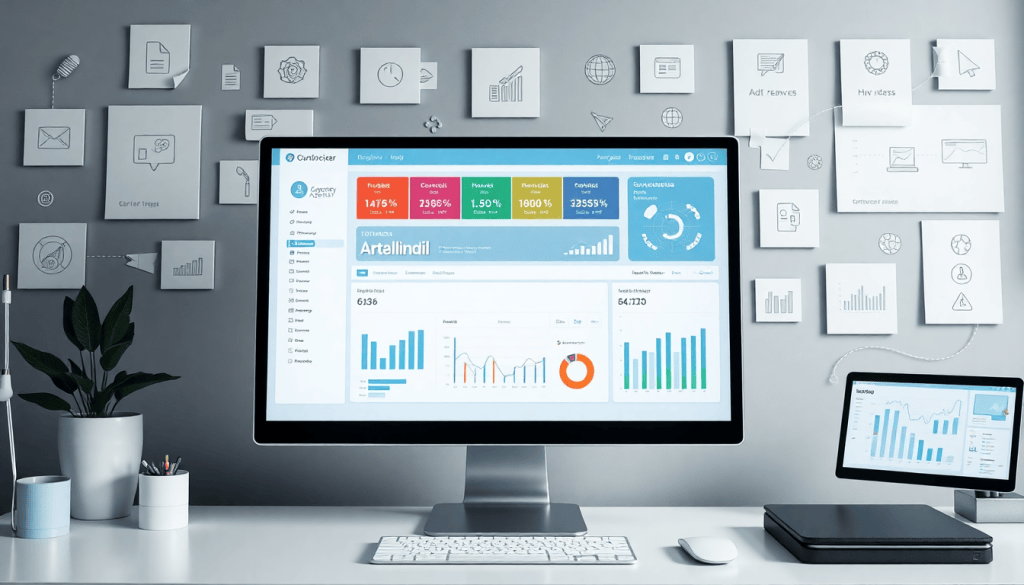
White-Label Marketing Dashboard for Agencies: Custom Client Reporting
Agencies today need reporting solutions that do more than just display data—they need tools that help them deliver value, streamline operations, and reinforce their brand. A white-label marketing dashboard gives agencies the power to provide clients with transparent, on-demand analytics in a fully branded environment. From automated data visualizations to customizable KPI reports, these platforms are transforming how agencies deliver results and insights across channels.
Why Agencies Need a White-Label Marketing Dashboard
Generic, non-branded reporting tools fall short for agencies striving to differentiate themselves in a crowded marketplace. While standard dashboards may provide the basics—data aggregation and visualization—they lack the ability to showcase an agency’s unique identity or adapt to each client’s needs. This limitation can make agencies appear interchangeable, reducing their perceived value and diminishing client loyalty over time.
Today’s clients expect more than just periodic spreadsheets or generic charts. They demand real-time access to their campaign performance, transparent reporting, and a seamless, professional experience that reinforces their decision to partner with your agency. A lack of branded, customizable reporting can lead to confusion, missed insights, and even erode trust—especially when clients are spending substantial budgets and want to see clear, tangible results.
A white-label marketing dashboard changes the equation. By allowing agencies to deliver analytics and insights under their own brand, these platforms strengthen client relationships on multiple fronts:
- Professionalism: Branded dashboards present data in a polished, cohesive environment, underscoring the agency’s commitment to quality and attention to detail.
- Transparency: Clients can access live campaign performance data, fostering openness and reducing the back-and-forth of manual reporting.
- Value Delivery: Agencies can highlight strategic wins and tailor metrics to client priorities, making it clear how their efforts drive business outcomes.
Ultimately, a white-label dashboard isn’t just a reporting tool—it’s a powerful vehicle for agency growth, client retention, and brand elevation. For agencies ready to move beyond cookie-cutter solutions, adopting a white-label reporting platform like TapClicks can be a game-changer, setting the stage for deeper trust and long-term success.
What Makes a Reporting Platform Truly Agency-Ready?
A modern agency reporting platform isn’t just a place to dump numbers. It’s the engine room that powers your agency’s client relationships, efficiency, and growth. Let’s break down what separates best-in-class solutions from the rest:
Give Clients the Experience They Expect
Personalized Dashboards for Every Client
- Tailor layouts to each client’s goals, industry, or specific campaigns
- Adjust widgets, KPIs, and data sources per account
- Control permissions so every stakeholder sees what matters to them
- Customize branding—logos, colors, and messaging included
Checklist for Personalization:
- Can I create multiple dashboard templates?
- Are permissions and access fully customizable?
- Does the platform support my agency’s branding?
Bring Data to Life Instantly
Automated Data Visualization
- Drag-and-drop dashboard builders make setup a breeze
- Real-time data feeds keep everyone up to date
- Interactive charts and graphs turn raw numbers into actionable insights
- Schedule white-labeled reports to land in client inboxes automatically
| Feature | Benefit |
|---|---|
| Real-Time Updates | Immediate performance feedback |
| Scheduled Reports | Saves hours of manual work |
| White-Labeling | Reinforces your agency’s brand |
Keep Your Agency Front and Center
Branded Analytics Software
- Every report and dashboard reflects your agency’s identity
- Client portals feel like your own product—not a generic third-party tool
- Consistent branding builds trust and professionalism
Never Struggle with Data Integration Again
Seamless Data Unification
- Connect to 10,000+ marketing, ad, and CRM sources
- Use automated ETL/ELT to blend and normalize data
- Enable cross-channel and multi-client reporting—all in one place
Why This Matters
Choosing a robust white-label analytics platform means you can:
- Deliver transparent, on-demand insights to clients
- Spend less time wrangling data, more time delivering strategy
- Scale your agency with confidence
With these features, your reporting platform becomes a true extension of your agency—fueling growth, streamlining operations, and impressing every client, every time.
Customizable Client Dashboards: Personalizing the Client Experience
Standing out in today’s agency landscape means delivering more than just data—clients expect insights tailored to their unique goals, KPIs, and business realities. That’s where customizable client dashboards come in.
Why Personalization Matters
Custom dashboards are more than a nice-to-have; they’re a competitive necessity. Here’s why agencies are making the switch:
- Client-Centric Reporting: Each client, vertical, or campaign demands its own view—retailers want foot traffic and conversion metrics, while B2B clients prioritize lead generation and pipeline velocity.
- Stronger Partnerships: By aligning analytics with what matters most to your client, you show commitment to their success and foster deeper trust.
What You Can Customize
Modern white-label dashboards (like those powered by TapClicks) offer a wide range of options:
- Branding: Add your agency’s or client’s logo, color palette, and custom domain for a fully branded experience.
- Layout: Arrange widgets, charts, and tables to emphasize the KPIs that matter most.
- Data Sources: Connect only the platforms and channels relevant to each client, from Google Analytics to Facebook Ads.
- User Permissions: Control which team members or client contacts see specific dashboards or metrics, ensuring data privacy and relevance.
| Feature | Benefit | Example Use Case |
|---|---|---|
| Custom Branding | Reinforces trust and professionalism | Client portal with their logo |
| Widget Selection | Focuses on actionable metrics | Retail: foot traffic; B2B: leads |
| Role-Based Access | Keeps sensitive data secure | Sales sees pipeline, execs see ROI |
How It Impacts Client Relationships
Personalized dashboards pay off in several ways:
- Transparency: Clients have real-time, self-serve access to their performance data via a secure, branded client portal dashboard.
- Engagement: Interactive dashboards make it easier for clients to explore data and ask smarter questions.
- Retention: Clients are more likely to stick with an agency that demonstrates a deep understanding of their business.
A Checklist for Agencies Looking to Level Up
- Can you modify dashboard layouts for each client?
- Is your branding front and center in every client report?
- Can you set role-based permissions for client teams?
- Do your dashboards pull from all relevant data sources?
- Are clients able to access their data securely and on-demand?
Bottom line:
Customizable client dashboards turn standard reporting into a dynamic, client-first experience—helping agencies not just meet, but anticipate, evolving client needs. Investing in robust dashboard personalization is investing in longer, stronger client relationships.
Why Branded Analytics Matter for Client Relationships
A branded analytics platform isn’t just about good looks—it’s about trust, loyalty, and setting your agency apart. When clients see your logo, colors, and messaging woven through every dashboard and report, you’re telling them: “We’re invested in your success, and we’re here for the long haul.”
How Branding Builds Trust
A cohesive, customized analytics experience offers several advantages:
- Instant Recognition: Your agency’s brand is always front and center, reinforcing your identity with every login and report.
- Perception of Expertise: Branded platforms signal professionalism and attention to detail.
- Emotional Connection: Clients are more likely to trust and engage with a platform that feels purpose-built for them.
The Client Experience: Vendor vs. Partner
Consider the difference:
| Generic Analytics | Agency-Branded Analytics |
|---|---|
| Feels like a third-party tool | Feels like an extension of your agency |
| Little to no customization | Tailored with logos, colors, and client messages |
| Weakens brand loyalty | Reinforces your value and expertise |
When your analytics environment looks and feels like part of your agency, clients see you as a strategic partner—not just a vendor.
Action Steps: Make Your Brand Unmissable
Want to make the most of your branded analytics software? Here’s how:
- Brand Every Touchpoint
- Add your logo, color palette, and messaging to dashboards, login screens, and automated reports.
- Customize the Client Portal
- Use white-label features for client-specific logos, welcome messages, and custom domains.
- Need inspiration? Check out this client portal dashboard example.
- Maintain Consistency
- Align your analytics’ look and feel with your website, proposals, and client communications.
- Encourage Client Engagement
- Invite clients to interact directly with your dashboards—let them see your value in action.
The TapClicks Advantage
Platforms like TapClicks make it easy to deliver a seamless, fully branded analytics experience. With robust white-label options, you can ensure every client interaction is an extension of your agency’s brand—helping you stand out in a crowded market and drive client satisfaction, loyalty, and upsell opportunities.
Streamlining Agency Operations with Marketing Automation
For agencies managing dozens—or even hundreds—of clients, operational efficiency is no longer a luxury; it’s a necessity. That’s where marketing automation within a white-label dashboard truly delivers transformative value. Automation features such as scheduled reporting, automated data pulls, and real-time alerts not only free up valuable hours but also ensure accuracy and consistency across all client deliverables.
Instead of spending countless hours every week gathering data from disparate channels and manually building reports, agencies can leverage automation to handle these repetitive tasks seamlessly. With features like scheduled reporting, agencies can automatically send out branded, customized reports to clients at regular intervals—daily, weekly, or monthly—without lifting a finger. Automated data pulls ensure that dashboards always display the latest performance metrics, eliminating the risk of outdated or inconsistent data making its way into client communications.
Alerts and notifications provide another layer of operational efficiency. Agencies can set up threshold-based alerts so that teams are notified immediately if a campaign’s performance drops or exceeds expectations. This enables proactive account management, allowing agencies to address issues or capitalize on opportunities before clients even notice.
Marketing automation for agencies also shifts the team’s focus from data wrangling to high-value strategic work. Instead of getting bogged down reconciling spreadsheets and responding to one-off client requests, account managers and analysts can dedicate more time to analyzing trends, optimizing campaigns, and delivering insights that truly move the needle for clients.
Integration is another key advantage. Leading white-label dashboards easily connect with other agency tools—such as project management systems, CRM platforms, and billing software—streamlining the entire workflow from order management to fulfillment. For example, the TapClicks marketing operations platform unifies data integration, reporting, analytics, and workflow, so agencies can automate the entire reporting pipeline and connect it directly to the rest of their tech stack. This holistic approach reduces silos, minimizes manual handoffs, and supports seamless collaboration across teams.
Ultimately, by embracing automation within their white-label dashboard, agencies can scale their reporting operations, improve client satisfaction, and empower teams to focus on what matters most: delivering strategic value and driving results.
Advanced Performance Tracking and Cross-Channel Reporting
In today’s fragmented digital landscape, agencies can’t afford to view marketing performance in silos. Clients expect their agency partners to not only track KPIs across every channel—search, social, display, programmatic, email, and more—but also to synthesize those insights into a single, actionable view. That’s why advanced performance tracking and cross-channel reporting have become non-negotiable for agency success.
The best white-label dashboards consolidate data from every campaign and platform, transforming raw numbers into automated data visualizations that reveal both high-level trends and granular outcomes. Instead of manually assembling spreadsheets from Google Ads, Facebook, TikTok, and Mailchimp, agencies can leverage automated integrations to pull in real-time data, visualize it through customizable widgets, and surface insights that drive smarter decisions.
For example, a multi-location agency running an omnichannel campaign can set up a unified dashboard displaying impressions, clicks, conversions, and spend by channel—side by side. Automated visualizations make it easy to spot which platforms are over- or underperforming against benchmarks, while cross-channel attribution models clarify how efforts work together to influence results.
This holistic view empowers account teams to proactively optimize campaigns, reallocate budgets on the fly, and communicate ROI to clients in a way that’s both transparent and compelling. Instead of overwhelming clients with disconnected reports, agencies can deliver a single, branded client portal dashboard that tells the complete performance story.
Ultimately, advanced cross-channel reporting isn’t just a technical upgrade—it’s a strategic advantage. By turning multi-channel complexity into clear, actionable insights, agencies position themselves as indispensable partners, capable of guiding clients through the ever-evolving digital landscape with confidence and clarity. To see how unified performance tracking powers better client outcomes, visit TapClicks.
How to Choose the Right White-Label Dashboard Solution
Selecting the ideal white-label dashboard isn’t just about ticking boxes—it’s about finding a platform that fits your agency’s unique workflow, client base, and growth trajectory. Here’s what to consider as you navigate the crowded vendor landscape:
1. Scalability and Performance
As your agency takes on more clients and campaigns, your reporting platform must scale without sacrificing speed or reliability. Look for solutions that support hundreds (or thousands) of dashboards, automated reports, and complex data integrations. High-volume agencies should prioritize platforms proven to handle enterprise-level workloads, such as TapClicks, which is built for scale and multi-client environments.
2. Ease of Use and Customization
A white-label dashboard should empower your team—not slow them down. Drag-and-drop dashboard builders, flexible widgets, and intuitive navigation are must-haves. Consider how easily you can tailor the look, layout, and branding for each client—down to logos, color schemes, and custom domains. Some tools, like TapClicks, offer deep customization so every report feels uniquely yours.
3. Integration Capabilities
Modern agencies juggle dozens of marketing tools and ad platforms. Your dashboard solution should seamlessly integrate with all major data sources—search, social, display, email, and more. Bonus points for platforms with robust API support and pre-built connectors (think 10,000+ options), which streamline onboarding and ongoing management.
4. Automation and Workflow
Automated data pulls, scheduled reports, and instant alerts are vital for saving time and preventing manual errors. Evaluate how each platform handles automation and whether it can tie into your broader workflow, including project management, client approvals, and billing.
5. Support and Training
Responsive customer support and comprehensive onboarding resources make a world of difference—especially when migrating clients or troubleshooting complex integrations. Prioritize vendors known for hands-on support, detailed documentation, and regular product updates.
Must-Have vs. Nice-to-Have Features
For smaller agencies, essentials might include basic white-labeling, simple report scheduling, and core integrations with Google Ads, Facebook, and analytics platforms. Larger or more advanced agencies may require role-based permissions, multi-location reporting, AI-driven insights, and advanced workflow automation.
To see how leading platforms stack up, explore the in-depth feature guide on white-label dashboards for agencies—and consider starting with a demo or trial to test real-world fit. By focusing on these criteria, your agency can confidently select a solution that delivers value to both your team and your clients.
Getting Started: Implementation Tips and Next Steps
Rolling out a white-label marketing dashboard doesn’t have to be daunting. With the right approach, agencies can quickly enhance their client reporting and internal workflows. Here’s a practical checklist to guide your implementation:
1. Define Your Goals and Success Metrics
Before onboarding any new platform, clarify what you want to achieve—whether it’s reducing reporting time, improving client transparency, or offering new analytics services. Establish clear KPIs to measure success as you roll out the dashboard.
2. Audit and Consolidate Data Sources
Identify all the marketing platforms, advertising channels, and business systems your agency and clients use. A robust dashboard like TapClicks supports thousands of connectors, making it easier to pull in all necessary data for unified reporting.
3. Customize Branding and User Access
Set up your agency’s branding—logos, color schemes, and custom domains—across dashboards and reports. Configure user permissions to ensure clients and internal teams have tailored access to relevant data and features.
4. Automate Reporting and Alerts
Leverage automation to schedule client reports, set up real-time alerts, and streamline data updates. This frees your team from repetitive tasks, letting them focus on higher-value strategy and service.
5. Train Your Teams and Clients
Invest in onboarding sessions for internal users to master the dashboard’s features. Offer training resources or walkthroughs for clients so they can navigate their custom portal confidently. The more comfortable everyone is, the faster you’ll realize the benefits.
6. Pilot, Gather Feedback, and Iterate
Start with a core group of clients or campaigns to pilot the platform. Gather feedback, refine dashboard layouts and reports, then scale up to your full client roster.
Next Steps:
- Trial a white-label dashboard with a few clients to test workflows and gather input.
- Request a personalized demo to explore advanced features and integrations.
- Deepen your knowledge by exploring best practices and real-world examples on the TapClicks blog.
By following these steps, agencies can maximize the value of their white-label dashboard investment—unlocking efficiency, professionalism, and deeper client trust from day one.
Start Automating Your Marketing Data Today!
No Credit Card Required.

