

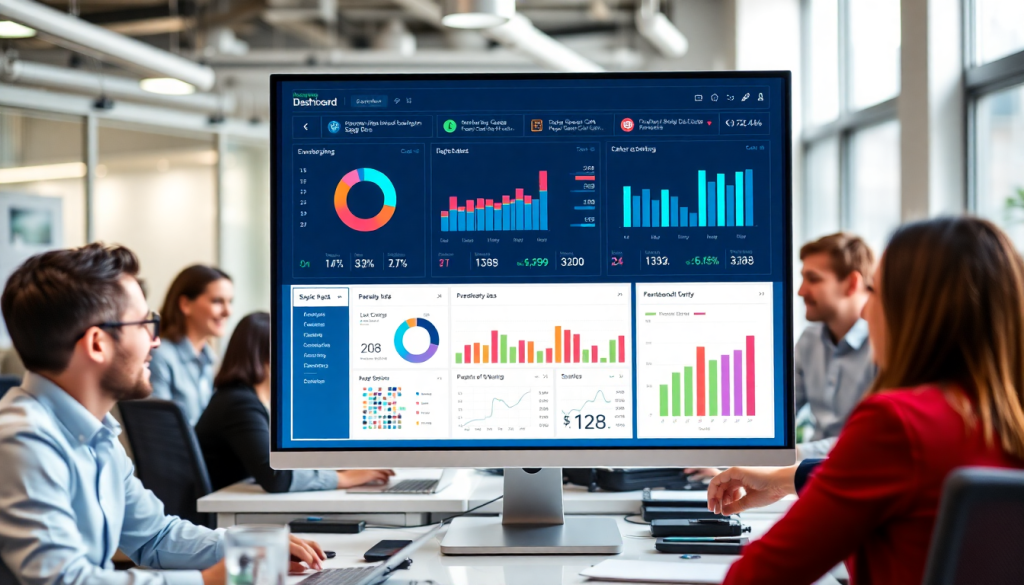
White-Label Marketing Dashboard for Agencies: Custom Client Reporting
Agencies that manage dozens or hundreds of client campaigns need more than just data—they need a streamlined way to deliver branded, actionable insights at scale. A white-label marketing dashboard empowers agencies to present customized analytics and KPI reports under their own brand, creating a seamless experience for clients while reducing manual reporting workloads. This guide explores how agencies can leverage white-label platforms to automate data visualization, simplify cross-channel reporting, and elevate the client experience.
Why Agencies Need a White-Label Marketing Dashboard
For agencies juggling dozens or even hundreds of client campaigns, reporting can quickly become a logistical nightmare. Each client demands timely insights, customized branding, and clear proof of performance—often across a maze of marketing channels. Traditional reporting methods, such as manual spreadsheet updates or piecemeal dashboards, are not only time-consuming but also prone to human error and inconsistent presentation. This complexity can overwhelm even the most organized teams, leading to bottlenecks, delayed insights, and a less-than-polished client experience.
This is where a white-label marketing dashboard becomes a game-changer. By allowing agencies to deliver analytics and reports fully branded as their own, these platforms ensure that every client touchpoint feels cohesive and professional. White-label dashboards empower agencies to automate the collection and visualization of campaign data, drastically reducing the hours spent on repetitive reporting tasks. With automated workflows, agencies can reallocate valuable analyst time to higher-impact activities like strategy development and optimization.
Beyond efficiency and branding, scalability is a core benefit. As your agency grows, onboarding new clients or scaling up reporting for enterprise accounts becomes seamless—no need to reinvent reporting processes or build dashboards from scratch each time. The ability to present unified, real-time insights under your agency’s brand not only wows clients but also fosters deeper trust and loyalty. In a competitive market, this level of service is a powerful differentiator that supports both client retention and long-term agency growth.
Ultimately, adopting a white-label marketing dashboard is about more than aesthetics—it’s a strategic move that streamlines operations, drives efficiency, and amplifies your agency’s value. For a deeper dive into how custom client analytics can transform agency reporting, check out White-Label Marketing Dashboard for Agencies: Custom Client Analytics.
Key Features of a White-Label Agency Reporting Platform
To maximize client satisfaction and streamline agency operations, a top-tier white-label marketing dashboard must deliver a powerful mix of customization, automation, and collaboration. Here’s what agencies should look for when evaluating a white-label reporting platform:
Customizable Client Dashboards
Every client wants to see their own story in the data. Essential white-label platforms let agencies build unique dashboards for each client, tailoring layouts, widgets, and KPIs to individual goals. This personalization not only reinforces the agency’s brand but also demonstrates an understanding of what matters most to each client.
Automated Data Visualization
Manual reporting drains resources and introduces errors. The best white-label dashboards automate data collection and visualization across all marketing channels, pulling in campaign data and presenting it in clear, interactive charts and graphs. This automation ensures clients always have up-to-date insights without analyst intervention.
Branded Analytics Software
A white-label platform should be fully brandable—from logos and color schemes to custom domains—so clients experience a seamless, agency-branded interface. This enhances professionalism and reinforces trust, making the agency’s value visible at every interaction.
White-Label KPI Reports
Automated, branded reports are a must-have. Agencies can schedule delivery of client-specific KPI summaries, performance overviews, and campaign insights, all under their own branding. This not only saves time but also elevates the perceived value of the agency’s work.
Cross-Channel Data Integration
Modern campaigns span paid search, social media, programmatic, SEO, and more. Leading platforms, like TapClicks, support robust cross-channel data integration—aggregating metrics from thousands of sources into a single, unified dashboard. This holistic view powers smarter strategy and client conversations.
Client Portal Dashboards for Real-Time Access
Granting clients secure, real-time access to their own data portal fosters transparency and collaboration. These portals enable clients to explore performance, drill into metrics, and ask informed questions, all within a branded environment. Agencies can control permissions, ensuring each client only sees relevant information.
For a deeper dive into the capabilities and business value of custom client reporting, see Custom Client Reporting. By focusing on these core features, agencies can deliver superior client experiences—while saving time and scaling their operations for growth.
How Customizable Client Dashboards Enhance Agency Value
A one-size-fits-all approach rarely satisfies clients who expect insights tailored to their unique goals and marketing strategies. Customizable client dashboards are a game-changer for agencies, enabling the delivery of reporting experiences that are as distinct as each client’s brand and objectives. With the ability to tailor dashboards, agencies can surface the metrics that matter most—whether that’s lead volume for a local business, ROAS for an ecommerce brand, or engagement rates for a national franchise—ensuring every client sees their own definition of success.
This flexibility isn’t just about aesthetics. When agencies configure dashboards to align with specific KPIs, campaign types, or reporting cadences, clients feel understood and valued. The result: stronger relationships, higher satisfaction, and improved retention rates. For example, agencies can use drag-and-drop widgets to highlight different data sources, create custom report layouts for various stakeholders, or set up automated notifications that alert clients to important performance shifts in real time.
Beyond metrics, customization extends to branding. Consistent use of agency or client logos, color schemes, and personalized domains reinforces brand identity and makes every dashboard interaction seamless. Clients perceive the reporting portal as an extension of the agency’s professionalism—not a generic third-party tool.
Ultimately, a customizable dashboard not only enables data-driven conversations but also gives agencies a competitive edge. By delivering reporting that’s visually engaging, actionable, and fully aligned with client priorities, agencies demonstrate their commitment to partnership and results. To see how you can deliver this level of tailored reporting at scale, explore the capabilities of TapClicks’ unified platform for agencies.
Automating Data Visualization and Performance Tracking
Manual reporting is one of the most time-consuming tasks for agency teams, especially when managing data across dozens of platforms and hundreds of client campaigns. Automated data visualization transforms this process by instantly turning raw marketing data into clear, interactive dashboards—no spreadsheet wrangling required. With a white-label platform, agencies can set up automated data pipelines that refresh dashboards in real time, ensuring every client always sees the latest performance metrics.
This automation not only streamlines agency workflows but also significantly reduces the risk of manual errors that can slip in with copy-paste processes. By removing repetitive tasks, analysts can focus on higher-value work—like interpreting insights and optimizing campaigns—rather than building reports from scratch. As a result, agencies often reclaim dozens of hours each month per analyst, making it possible to scale client reporting without growing the team.
Real-time performance tracking is another critical advantage. Clients can log into their branded dashboard at any time to monitor spend, conversions, and KPIs across all channels. This immediacy empowers proactive decision-making; agencies and clients alike can spot trends, address issues, and capitalize on opportunities as they arise rather than waiting for end-of-month summaries.
Platforms like TapClicks take this a step further by layering in AI-driven insights and automated notification tools that flag anomalies or surface optimization opportunities. This means agencies can deliver not just data, but actionable recommendations—positioning themselves as strategic partners rather than just service providers.
For a closer look at how automated reporting elevates agency-client relationships, check out this overview on Custom Client Reports.
Cross-Channel Reporting: Unifying All Your Agency’s Data
Today’s agencies rarely run campaigns in just one channel. To truly drive results for clients, teams must orchestrate paid search, paid social, SEO, display, email, and more—all at once. This complexity makes cross-channel agency reporting not just a convenience, but a necessity. Cross-channel reporting empowers agencies to consolidate campaign data from every platform into a single, unified view, making it far easier to monitor performance, identify trends, and optimize strategy.
A white-label marketing dashboard is purpose-built for this challenge. Instead of juggling multiple logins and spreadsheet exports, agencies can pull in data from all major ad and marketing platforms—Google Ads, Facebook, LinkedIn, programmatic, email suites, analytics tools, and more—directly into one branded portal. This consolidated view allows both agency teams and clients to see the full picture of campaign performance across every channel, without the noise or confusion of fragmented reports.
Unified analytics offer a clear advantage: they provide context. When all your data is side by side, it’s easier to spot which channels are driving the most conversions, where budget shifts could yield better ROI, and how different tactics interact throughout the customer journey. This holistic view is essential for strategic decision-making and for demonstrating value to clients who expect proactive insights, not just raw data.
Integration capabilities are a key differentiator in any white-label platform. Leading solutions, such as TapClicks, boast thousands of direct data connectors—including Google, Meta, LinkedIn, programmatic networks, and SEO suites—so agencies can automate ingestion, normalization, and visualization of cross-channel campaign metrics. This seamless integration not only saves time but ensures reports are always up to date, accurate, and client-ready.
By leveraging cross-channel reporting within a white-label dashboard, agencies can finally deliver on the promise of unified marketing analytics—showing clients exactly how every dollar is working across their entire marketing mix.
Branded Analytics: Delivering a Seamless Client Experience
Branded analytics software is more than just a cosmetic upgrade—it’s a strategic asset that elevates your agency’s professionalism and creates a lasting impression on clients. By delivering reports, dashboards, and analytics under your agency’s own brand, you reinforce your value proposition at every client interaction. This white-label approach ensures that the insights and performance data clients see are directly associated with your agency’s expertise, not a third-party vendor.
White-labeling plays a crucial role in building trust and differentiation. When clients log in to a dashboard hosted on your custom domain, see your agency’s logo, and receive communications that are both timely and personalized, it reinforces your agency’s credibility. This seamless experience removes any friction or confusion that can occur when clients interact with generic, vendor-branded platforms. In an industry where relationships and reputation drive retention, the ability to fully brand the analytics experience sets your agency apart from competitors.
Customization options extend well beyond logos and color schemes. Leading white-label solutions allow agencies to tailor everything from the client portal’s URL to automated email notifications and report templates. This level of control means you can align every touchpoint with your agency’s brand guidelines, ensuring consistency whether clients are viewing a live dashboard, downloading a PDF report, or receiving a performance summary via email.
The impact on agency reputation is significant. Clients perceive branded analytics as a sign of operational maturity and commitment to transparency. This not only fosters loyalty but also increases the likelihood of referrals—clients are more inclined to recommend an agency that delivers a polished, unified experience. By leveraging branded analytics, agencies can transform data delivery into a memorable, value-driven part of the client relationship. To learn more about how a unified platform can power branded client reporting at scale, visit TapClicks.
Choosing the Right Agency Analytics White-Label Solution
Selecting a white-label reporting platform isn’t just a technical decision—it’s a strategic investment in your agency’s efficiency, scalability, and client satisfaction. Here’s how to tackle the evaluation process with confidence.
What to Look for in a White-Label Reporting Platform
Scalability:
- Can the platform handle your current and future client load?
- Does it support hundreds (or thousands) of dashboards and reports without lag?
- Is automated report generation across multiple accounts seamless?
Integrations:
- Does the platform offer extensive data integration?
- Look for support for 10,000+ connectors, automated ETL/ELT pipelines, and flexible custom data feeds.
- Are key marketing, advertising, and business data sources included?
Customization & Branding:
- Can you use your agency’s domain, logo, and custom color schemes?
- Are client-facing emails and analytics interfaces fully brandable?
- Does the platform deliver a seamless, branded client experience?
Ease of Use:
- Are there drag-and-drop dashboard builders and intuitive report templates?
- Can both your team and your clients easily navigate and surface insights?
- Is the learning curve minimal?
Automation & Workflow:
- Are scheduled reports, AI-powered insights, and role-based access available?
- Does the platform streamline collaboration between sales, ops, and fulfillment teams?
- Can workflows be customized to fit your agency’s processes?
Support & Training:
- Is onboarding robust and hands-on?
- Are live chat, knowledge bases, and dedicated account managers available?
- What ongoing training resources are provided?
TapClicks vs. Other Solutions: What Sets It Apart?
Why Agencies Choose TapClicks:
| Feature | TapClicks | Funnel.io / Supermetrics | Agency Analytics / NinjaCat |
|---|---|---|---|
| Scalability | Enterprise-grade, high-volume | Data aggregation only | SMB-focused, smaller scale |
| Customization & Branding | Deep, fully white-labeled | Limited | Moderate |
| AI-Driven Insights | Yes (automated/predictive) | No | No or basic |
| Workflow & Order Management | Centralized, collaborative | Not included | Limited |
| Flexible Data Handling | Source of truth or BI integration | Data pipe only | Less flexible |
Key Takeaway:
TapClicks unifies data integration, reporting, workflow, and AI-driven insights—making it a true “marketing OS” for agencies looking to scale and differentiate. Competitors may offer one or two pieces, but rarely the whole package at enterprise scale.
Steps for a Smooth Rollout
-
Pilot First:
Start with a handful of key accounts to test workflows and reporting. -
Leverage Onboarding:
Use vendor training and support to get your team up to speed quickly. -
Standardize, Then Customize:
Build core dashboard templates, but leave room for client-specific tweaks. -
Communicate Changes:
Proactively share new capabilities with clients to increase adoption and satisfaction.
Future-Proofing Your Agency
As client needs and the marketing landscape evolve, your platform should too. Make sure your white-label solution:
- Regularly adds new features (e.g., TapClicks’ AdFlo unit and AI agents)
- Keeps up with new data sources and privacy regulations
- Supports advanced reporting demands as your agency grows
Your white-label dashboard shouldn’t just keep up—it should help you lead.
Conclusion: The Future of Agency Reporting and Analytics
As client expectations rise and the digital landscape becomes increasingly complex, agencies need more than spreadsheets and static reports—they need a scalable, unified solution that keeps them ahead of the curve. Adopting a white-label marketing dashboard empowers agencies to deliver real-time, branded analytics that not only streamline operations but also foster stronger client relationships through transparency, efficiency, and customization.
The core benefits are clear: with automated data integration, customizable dashboards, and seamless cross-channel reporting, agencies can reduce manual workloads, improve accuracy, and unlock actionable insights for every client. This positions your agency as a true strategic partner, capable of proactive optimization and clear communication—key factors in client retention and growth.
Now is the time to evaluate your reporting workflows and consider how a white-label solution like TapClicks can transform your agency’s analytics. Whether you’re managing ten clients or a thousand, the right platform will scale with you, support your brand identity, and deliver the insights that matter. Ready to elevate your agency’s client experience? Book a demo or start a free trial today to see how streamlined, branded reporting can drive your agency’s future success.
Start Automating Your Marketing Data Today!
No Credit Card Required.

