

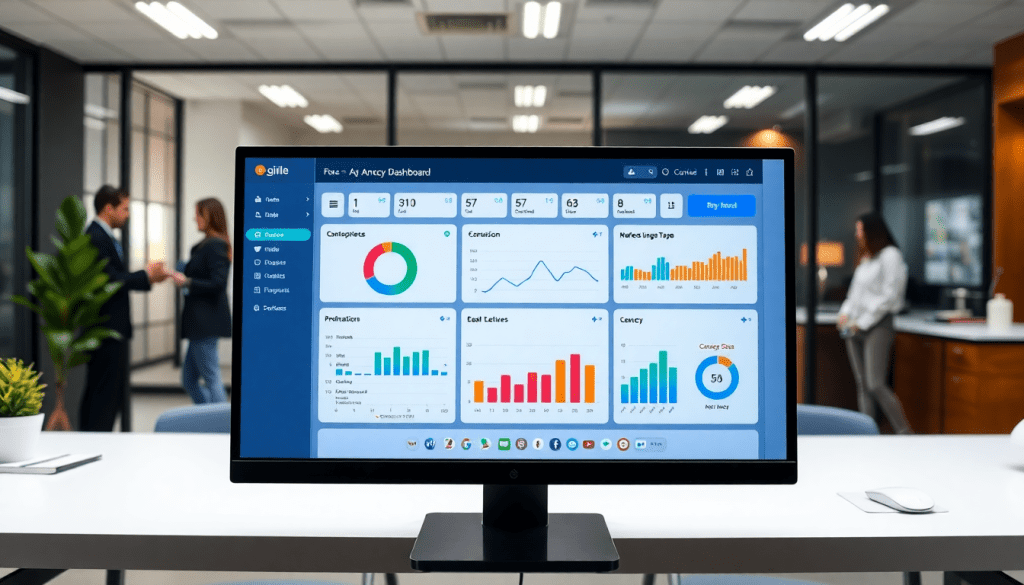
White-Label Marketing Dashboard for Agencies: Custom Analytics
Delivering transparent, data-driven results to clients is a non-negotiable for modern agencies. But juggling multiple platforms, wrangling data from dozens of sources, and maintaining a consistent brand experience can quickly become overwhelming. A white-label marketing dashboard gives agencies the power to unify campaign data, automate reporting, and provide clients with a seamless, branded analytics experience—all while saving hours of manual work. This guide explores how customizable dashboards transform agency workflows, set agencies apart, and deepen client trust.
What is a White-Label Marketing Dashboard for Agencies?
A white-label marketing dashboard is a customizable analytics platform that agencies can brand as their own and use to deliver campaign performance data directly to clients. Unlike standard dashboards—where the software vendor’s branding and interface dominate—a white-label solution allows agencies to tailor the look, feel, and even the domain name of the dashboard to match their own brand identity. This means that when clients log in, they see the agency’s logo, brand colors, and custom messaging, not a third-party tool.
At its core, a white-label dashboard aggregates data from diverse marketing channels—like Google Ads, Facebook, SEO tools, and more—into unified, interactive reports. Agencies can then present these insights through branded dashboards, automated email summaries, or scheduled PDF reports, all without revealing the underlying software provider. This helps agencies streamline their reporting, reduce manual work, and provide clients with a seamless analytics experience under the agency’s own banner.
The distinction between standard dashboards and white-label analytics software is significant. With a standard dashboard, agencies are limited in how much they can customize the client experience, often resulting in a fragmented or generic presentation that can dilute the agency’s value proposition. In contrast, a white-label solution offers complete control over the client interface—enabling agencies to reinforce their professionalism and expertise at every touchpoint.
For agencies, white-labeling is not just a cosmetic upgrade—it’s an essential tool for building lasting client relationships. Clients are more likely to trust and stay loyal to agencies that deliver a polished, consistent, and branded experience. White-label dashboards also make it easier to scale reporting across multiple clients and verticals, ensuring that every client receives insights tailored to their unique needs, all under the agency’s trusted brand.
To dive deeper, check out this detailed overview: What is a White-Label Marketing Dashboard?.
Core Features of Leading Agency Reporting Platforms
When evaluating white-label dashboards for agencies, the most effective platforms deliver a suite of features designed to streamline reporting, empower customization, and scale effortlessly with agency growth. Here’s what top-tier solutions offer:
Customizable Client Dashboards
A hallmark of leading platforms is the ability to create tailored dashboards for each client. Agencies can configure the look, feel, and structure of every dashboard to match their client’s brand identity—logos, color schemes, and custom domains—ensuring a polished, agency-branded analytics experience. This not only presents a unified front but also deepens client trust and satisfaction.
Automated Data Visualization for Agencies
Manual data wrangling is a productivity killer. The best platforms automate the collection, transformation, and visualization of marketing data from all relevant channels—search, social, display, CRM, and more. Drag-and-drop widgets, smart charts, and templated reports make it easy for agencies to highlight what matters most to each client, without spending hours on repetitive tasks.
Cross-Channel Reporting
Modern marketing is multi-faceted. Agencies need to aggregate insights from paid, owned, and earned channels into a single view. Robust white-label dashboards support seamless cross-channel reporting, allowing users to blend data from thousands of sources. This unified approach provides a holistic picture of campaign performance and makes it easier to identify trends, optimize spend, and prove ROI.
KPI Tracking
Agencies and clients alike depend on clear, actionable performance metrics. Leading platforms let agencies define, track, and visualize custom KPIs tailored to each campaign or client objective. Whether it’s lead volume, conversion rate, cost per acquisition, or brand engagement, KPI widgets and goal-tracking modules keep everyone aligned and focused on outcomes.
Centralized Client Portal Dashboard
A single, secure portal for all client accounts is essential for both agency efficiency and client self-service. Centralized portals allow clients to log in, review their performance dashboards, access historical reports, and collaborate on campaign strategy—all within a branded, easy-to-navigate environment. Agencies benefit by reducing ad hoc data requests and supporting more proactive client communication.
Scalability, Integration, and Security
High-volume agencies need tools that can handle hundreds (or thousands) of clients, seamlessly integrate with current martech stacks, and safeguard sensitive client data. The best platforms feature robust APIs, automated data pipelines, and enterprise-grade security protocols to ensure smooth operations even as agencies expand.
TapClicks: The Benchmark for Agency Reporting Solutions
TapClicks stands out as an agency analytics white-label solution, offering all the must-have features above—plus powerful AI-driven insights, workflow automation, and unrivaled scalability. With 10,000+ data connectors, drag-and-drop dashboards, and a flexible, secure client portal, TapClicks empowers agencies to deliver transparent, value-driven reporting at scale. To learn more about how TapClicks can transform your agency’s reporting, visit TapClicks.
By prioritizing these core features, agencies can provide exceptional, branded analytics experiences that drive results and foster long-term client relationships.
Benefits of Customizable Client Dashboards
Customizable client dashboards are the linchpin of a superior agency-client experience, directly impacting satisfaction, retention, and the agency’s perceived value. When agencies can tailor analytics environments to each client’s unique brand, goals, and KPIs, they deliver more than just data—they deliver actionable, relevant insights that foster trust and loyalty.
Enhanced Client Experience and Retention
A one-size-fits-all dashboard often falls short in today’s diverse marketing landscape. Custom dashboards empower agencies to adapt layouts, data views, and reporting intervals to each client’s preferences. For example, an eCommerce brand may prioritize real-time sales and ROI metrics, while a B2B client might focus on lead quality, pipeline velocity, and account-based engagement. By ensuring that every client sees only the most relevant data, agencies make insights more accessible and valuable, reducing friction and increasing satisfaction.
Dashboard Branding and Layout Flexibility
White-label platforms like TapClicks take customization further by enabling agencies to fully brand the dashboard—logos, color schemes, and even custom domain URLs—creating a seamless extension of the agency’s identity. This not only reinforces professionalism but also strengthens the agency-client relationship by presenting insights in a familiar, trusted context. Flexible layouts allow agencies to highlight priority metrics, create bespoke views for different stakeholder roles, and integrate third-party widgets or notes for added context.
Tailored KPI Reports for Diverse Needs
Every client has distinct success metrics. With customizable dashboards, agencies can curate KPI reports for each client, focusing on the analytics that matter most to them. This could mean building executive summaries for C-level stakeholders, granular channel performance for marketing teams, or location-based breakdowns for multi-location brands. Such flexibility is essential for agencies managing clients across a variety of industries or verticals, as it ensures reporting is always relevant and actionable.
In short, customization is not just a feature—it’s a strategic advantage. Agencies that leverage highly customizable dashboards set themselves apart by offering personalized, value-driven services that meet the evolving needs of every client they serve.
How Agencies Can Automate Reporting and Data Visualization
Manual reporting is a notorious time sink for agencies. Each campaign and client demands pulling data from multiple platforms, wrangling spreadsheets, and assembling presentations that are often outdated before they’re even delivered. The solution? Automation—turning reporting from a weekly headache into a seamless, scalable workflow.
Why Manual Reporting Drains Your Resources
Let’s break down the pain points:
- Multiple Platforms: Google Ads, Facebook, LinkedIn, and more—each with its own login and data export process.
- Spreadsheet Chaos: Copy-pasting, reformatting, and reconciling inconsistent metrics.
- Presentation Overload: Building custom slides and PDFs that are obsolete within hours.
- Human Error: Mistakes slip in easily when data is handled manually.
How Automation Changes the Game
Here’s how a platform like TapClicks transforms agency reporting:
1. Unified Data Integration
- Access 10,000+ pre-built connectors for marketing, ad, and business platforms.
- Automatically pull in campaign data—no more logging into accounts one by one.
- Blend multi-channel and multi-client data into a single analytics environment.
2. Set-and-Forget Reporting
- Build dynamic dashboards and KPI scorecards for each client.
- Schedule automated delivery of custom reports—daily, weekly, or monthly.
- Ensure every report is consistent, branded, and up-to-date.
3. Real-Time, Self-Serve Analytics
- Clients can log in anytime to view the latest campaign results and ROI.
- Spot trends and performance shifts across channels instantly.
- Reduce the back-and-forth requests for updates.
What This Means for Your Agency
By automating your reporting workflows, you:
- Save time: Eliminate dozens of hours per week spent on manual tasks.
- Reduce errors: Automated data flows mean more reliable, accurate reporting.
- Scale effortlessly: Manage hundreds of clients without scaling your reporting team.
- Focus on strategy: Free up staff to work on optimization and client value, not data wrangling.
At a Glance: Automated Reporting with TapClicks
| Manual Process | Automated with TapClicks |
|---|---|
| Export data from each platform | Data syncs automatically via connectors |
| Build Excel reports every week | Dashboards and reports update in real time |
| Email PDFs manually | Reports delivered on a set schedule |
| Fix errors after client review | Consistent, accurate data every time |
Ready to leave manual reporting behind? Automation isn’t just about saving time—it’s the foundation for scalable, high-quality client service.
Branded Analytics Software: Building Trust and Loyalty
For agencies, every client touchpoint is an opportunity to reinforce credibility and showcase value. Branded analytics software transforms routine reporting into a powerful extension of your agency’s identity, cementing your reputation as a strategic partner rather than just a service provider. By delivering white-label KPI reports and dashboards under your own logo, color palette, and messaging, you ensure every client interaction feels consistent, polished, and uniquely yours.
A branded analytics experience instills confidence—clients see their results presented in a familiar, agency-branded environment, rather than a third-party tool. This not only elevates perceived professionalism but also positions your agency as the trusted source for all marketing insights. Branded dashboards allow you to highlight what matters most to your clients, tailoring visuals and summaries to their goals while keeping your agency front and center.
Moreover, white-label reporting isn’t just about aesthetics. It signals that your agency invests in scalable, enterprise-grade solutions to serve clients better. A customized analytics portal creates a seamless workflow, reduces confusion, and builds loyalty by demonstrating that you take data transparency and client relationships seriously.
To see how customizable branded dashboards enhance trust and agency-client alignment, explore this in-depth guide: Customizable Branded Dashboards. And for agencies looking to deliver a consistently branded analytics experience at scale, solutions like TapClicks offer robust tools to automate reporting, personalize dashboards, and reinforce your agency’s unique value proposition every step of the way.
Performance Tracking for Clients: What Matters Most
To deliver true value, agencies must go beyond surface-level reporting and focus on the metrics that drive business outcomes for their clients. Identifying—and consistently surfacing—the right performance indicators is crucial for building trust and demonstrating ROI.
Essential Metrics and KPIs for Agencies
The most impactful client dashboards prioritize clarity and relevance. While every client’s goals are unique, agencies should ensure their white-label dashboards track core metrics such as:
- Lead Generation & Conversions: Track form fills, sign-ups, calls, and purchases to directly tie marketing activities to tangible results.
- Cost Metrics: Monitor cost per lead (CPL), cost per acquisition (CPA), and overall campaign spend for transparency and budget alignment.
- Channel Performance: Break down traffic, engagement, and conversions across paid search, paid social, organic, email, and offline channels.
- Engagement Metrics: Highlight metrics like click-through rates (CTR), bounce rates, and time on site to identify where audiences are most engaged.
- Return on Investment (ROI): Summarize ROI or ROAS (return on ad spend) to demonstrate efficiency and strategy effectiveness.
Providing Ongoing Transparency with Client Portal Dashboards
A modern client portal dashboard puts these KPIs front and center, updated in real time. Clients gain 24/7 access to their campaign performance, eliminating black-box reporting and fostering a culture of openness. Scheduled reports and interactive dashboards automate routine check-ins, freeing up agency teams to focus on strategy and optimization.
Holistic Insights Through Cross-Channel Agency Reporting
Today’s marketing landscape is multi-channel by default. The best agency dashboards unify data from search, social, display, email, and even offline campaigns, blending it into a single, coherent view. This cross-channel reporting enables clients to see how each tactic contributes to broader goals and reveals actionable insights—like how paid efforts impact organic performance, or which channel mix delivers the lowest cost per acquisition.
By combining transparent access, actionable KPIs, and unified cross-channel reporting, agencies can move beyond reporting what happened and start showing clients why it matters—cementing their role as a strategic partner, not just a vendor.
How to Choose the Right Agency Analytics White-Label Solution
Choosing a white-label analytics platform isn’t just about dashboards—it’s about empowering your agency to deliver seamless, data-driven client experiences at scale. Here’s how to zero in on the right solution, broken down into practical checkpoints and comparison highlights.
What Should Your Platform Do?
Key Requirements Checklist
-
Connect Every Data Source
- Integrates with ad platforms, CRM, web analytics, offline data, and more.
- Look for platforms like TapClicks with 10,000+ connectors and custom integration capabilities.
-
Scale As You Grow
- Supports dozens to thousands of clients.
- Offers multi-client management, automated reporting, and role-based access.
- Example: TapClicks handles thousands of dashboards and reports simultaneously.
-
Keep It User-Friendly
- Drag-and-drop dashboard builders.
- Automated report scheduling.
- Easy onboarding—no IT bottlenecks required.
-
Deliver Reliable Support
- Rapid, knowledgeable assistance for onboarding and troubleshooting.
- Access to robust training, documentation, and ongoing technical support.
-
Offer Transparent Pricing
- Clear models (per client, user, or data source).
- Watch for hidden costs (API fees, add-ons).
How Does TapClicks Compare?
| Feature | TapClicks | Funnel.io | Adverity | Agency Analytics | NinjaCat |
|---|---|---|---|---|---|
| Integrations | 10,000+ | ~500 | Hundreds | Dozens | Dozens |
| White-Labeling | Full portal | Limited | Limited | Yes | Yes |
| AI Insights | Yes | No | Yes (limited) | No | No |
| Workflow Automation | Built-in | None | None | Basic | Basic |
| Scale | Enterprise | SMB-Enterprise | Enterprise | SMB | SMB |
| Data Export/BI | Yes | Yes | Yes | No | No |
Why TapClicks?
- Unified data + branded dashboards + workflow tools in one place
- AI-powered insights and recommendations
- Extensible for future growth: pipe data into Power BI, Tableau, etc.
Tips for Your Evaluation Process
-
See a Custom Demo
Bring real use cases and ask vendors to show your data in action. -
Test Branding & Customization
Try rebranding dashboards and tailoring reports for client-specific needs. -
Automate a Real Report
Set up scheduled delivery—see how fast and easy it is. -
Engage the Team
Loop in analytics and client service teams; they’ll notice different pros and cons. -
Probe Support Quality
Submit a support ticket during your trial to check responsiveness.
Final Thoughts
By focusing on deep integrations, flexible branding, automation, and AI insights, agencies can ensure their analytics platform isn’t just a reporting tool—but a true growth engine.
TapClicks delivers all that and more, making it a top choice for agencies ready to scale and differentiate in a crowded market.
Getting Started: Steps to Implement a White-Label Dashboard
Launching a white-label marketing dashboard may seem daunting, but a structured approach makes onboarding and rollout seamless. Here’s a step-by-step outline to guide agencies from initial setup to client adoption—while ensuring your team and clients get the most out of your new analytics platform.
1. Define Requirements and Objectives
Start by gathering input from stakeholders—account managers, analysts, and clients—to map out your core needs. Identify which data sources (ad platforms, social, CRM, web analytics) you’ll need to integrate, what KPIs matter most to your clients, and how you want your brand represented throughout the dashboard.
2. Select and Configure Your Platform
Choose a white-label analytics solution that fits your requirements for scalability, integration, and customization. With a robust platform like TapClicks, agencies can tap into 10,000+ data connectors, handle multi-client management, and fully brand the dashboard environment.
3. Customize Branding and Layout
Leverage the platform’s white-label capabilities to align the dashboard with your agency’s identity. Upload your logo, apply brand colors and fonts, and configure user interfaces to ensure a consistent experience for every client. Tailor dashboard layouts to highlight the metrics and views that matter most to each client segment.
4. Integrate Data Sources and Automate Flows
Connect all necessary marketing, advertising, and business data sources using the platform’s built-in connectors and ETL tools. Set up automated data pulls and refresh schedules to ensure real-time accuracy. Use data enrichment and normalization features to blend cross-channel data into unified, actionable insights.
5. Build and Test Custom Dashboards
Create sample dashboards for various client types or verticals. Configure widgets, KPI trackers, and automated reports. Test these dashboards internally to ensure data accuracy, visualization clarity, and ease of navigation. Solicit feedback from client-facing teams to refine the setup.
6. Train Your Teams
Conduct hands-on training sessions for account managers, analysts, and support staff. Focus on how to use the dashboard, interpret visualizations, and leverage automated reporting features. Prepare internal documentation and quick-start guides tailored to your agency’s workflows.
7. Pilot with Select Clients
Before a full rollout, onboard a pilot group of clients. Walk them through the dashboard, gather feedback on usability and value, and address any concerns. Use this feedback to fine-tune both the dashboard configuration and your onboarding process.
8. Full Client Rollout and Ongoing Support
With lessons learned from the pilot, roll out the dashboard to your broader client base. Provide onboarding sessions, self-serve resources, and dedicated support contacts. Monitor adoption rates and usage patterns, and keep iterating on your dashboard setup as client needs evolve.
By following these steps, agencies can launch a white-label dashboard that not only streamlines internal workflows, but also elevates the client experience—positioning your agency as a transparent, data-driven partner.
Start Automating Your Marketing Data Today!
No Credit Card Required.

