

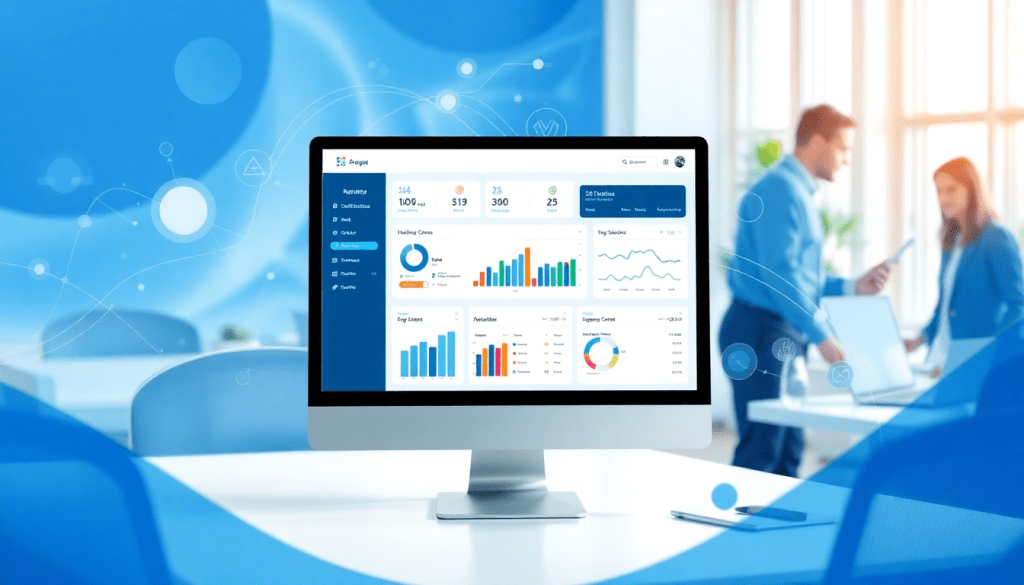
White-Label Marketing Dashboard for Agencies: Custom Analytics
A white-label marketing dashboard gives agencies the power to deliver polished, fully branded analytics experiences to their clients—without building software from scratch. These platforms streamline data aggregation, reporting, and visualization across every campaign and channel. By automating performance tracking and offering customizable client dashboards, agency teams can focus on delivering insight and value, not wrangling spreadsheets. This guide explores what makes a great agency reporting platform, how white-label analytics software can elevate your client relationships, and what to look for when choosing a solution.
What Is a White-Label Marketing Dashboard for Agencies?
A white-label marketing dashboard for agencies is a powerful analytics platform that lets agencies present campaign results, performance metrics, and insights to clients under their own brand. Unlike generic analytics tools, a white-label dashboard is fully customizable—agencies can tailor the interface, logos, colors, and even the domain, so every client interaction reinforces the agency’s brand, not a third-party vendor.
At its core, a white-label marketing dashboard serves as a centralized hub for aggregating, visualizing, and reporting on marketing data from multiple channels and platforms. Agencies can automate data collection from sources like Google Ads, Facebook, programmatic platforms, and more, then transform that data into clear, actionable reports for clients—without manual spreadsheet work or cobbling together disparate tools.
What sets a white-label solution apart from standard analytics dashboards is the seamless combination of data unification and branding control. As highlighted in TapClicks’ overview, these dashboards empower agencies to deliver a polished, client-ready analytics experience that looks and feels like their own proprietary offering. This sense of ownership is critical: when clients log in to view their performance data, they see the agency’s brand front and center, deepening trust and positioning the agency as a strategic partner—rather than just a service provider relaying someone else’s software.
Ultimately, a white-label marketing dashboard isn’t just about reporting; it’s about agency differentiation and elevating the client experience through branded, insightful analytics that drive business forward. To see how this works in practice, visit the TapClicks platform and explore their white-label dashboard capabilities.
Why Agencies Need Customizable Client Dashboards
In today’s competitive digital landscape, the ability to tailor analytics dashboards to each client’s unique needs is a major differentiator for modern agencies. Customizable client dashboards are more than just a convenience—they’re a strategic asset that empowers agencies to deliver targeted insights, demonstrate transparency, and reinforce their value with every engagement.
Tailoring Insights to Each Client
No two clients are alike. Whether you’re serving a multi-location retail chain, a fast-moving e-commerce brand, or a B2B tech startup, every client comes with distinct goals, KPIs, and reporting preferences. Customizable dashboards allow agencies to surface the most relevant metrics for each client, whether that’s high-level ROI summaries for executives or granular channel performance for marketing managers. This flexibility means clients see exactly what matters to them—no more sifting through generic, one-size-fits-all reports.
Building Trust Through Transparency
When clients can access real-time data in a dashboard that’s been thoughtfully organized around their objectives, it fosters trust and transparency. They no longer have to wait for end-of-month reporting cycles or rely solely on static PDF exports. Instead, they gain on-demand visibility into campaign performance, budget pacing, and opportunities for optimization. This open flow of information positions your agency as a true partner, not just a vendor.
Strengthening Agency-Client Relationships with Branding
A customizable dashboard isn’t just about the data—it’s also a powerful branding tool. By embedding your agency’s logo, colors, and messaging within the analytics environment, you create a seamless, professional experience that reinforces your agency’s value at every touchpoint. Personalized portals signal to clients that you’re invested in their success and attentive to their brand identity. Over time, this level of service helps drive loyalty, retention, and referrals.
For a deeper dive into how branded dashboards can directly support agency growth and client satisfaction, explore this comprehensive guide.
The Bottom Line
Customizable client dashboards give agencies the flexibility to deliver insight on the client’s terms, the transparency to build lasting partnerships, and the branding power to stand out in a crowded market. As agencies scale and client expectations rise, these personalized analytics experiences become not just a “nice to have,” but a must-have for sustainable growth.
Key Features of a Top Agency Reporting Platform
Choosing the right white-label marketing dashboard can make all the difference in how efficiently your agency operates and how your clients perceive your value. Here are the essential features that define a top-tier agency reporting platform:
1. Cross-Channel Reporting:
A must-have for any modern agency, cross-channel reporting lets you unify data from all your clients’ marketing and advertising platforms—think Google Ads, Facebook, programmatic, SEO tools, and beyond. With a robust dashboard, you can aggregate and compare data across channels in real time, helping clients understand the full impact of their campaigns and make smarter decisions.
2. Automated Data Visualization:
Manual reporting is time-consuming and error-prone. Automated data visualization transforms raw numbers into easy-to-understand charts, graphs, and tables—without the risk of spreadsheet mistakes. This not only saves your team hours each week but also ensures clients always have access to up-to-date, visually engaging insights.
3. White-Label KPI Reports:
The ability to deliver fully customized, branded reports is a game-changer for agency-client relationships. Top platforms allow you to apply your agency’s logo, color palette, and messaging to every report or dashboard. This reinforces your brand and presents your agency as a true strategic partner, not just another vendor.
4. Client Portal Dashboard:
A secure, self-serve client portal is crucial for transparency and efficiency. Clients can log in anytime to view campaign performance, download reports, or request support—without waiting on email updates. This 24/7 access improves trust and satisfaction, while reducing ad hoc reporting requests for your team.
5. Marketing Automation for Agencies:
Leading platforms incorporate workflow automation for repetitive tasks such as pulling data, scheduling reports, and sending campaign summaries. By automating these processes, agencies can dramatically reduce manual effort, minimize errors, and focus on delivering strategic value.
6. Role-Based Access and Multi-Client Management:
As agencies scale, managing permissions and organizing data across dozens or even hundreds of client accounts becomes critical. Advanced dashboards offer granular, role-based access controls, so each team member or client only sees the data relevant to them. Multi-client management tools streamline onboarding, reporting, and collaboration—key for growing agencies serving diverse portfolios.
The best agency reporting platforms, such as TapClicks, combine all of these capabilities into an integrated experience. By automating data aggregation, visualization, and client communication, agencies gain more time to focus on strategy, creativity, and client relationships—while delivering an analytics experience that truly sets them apart.
Branded Analytics Software: Standing Out with Your Data
Delivering analytics isn’t just about the numbers—it’s about the experience. Branded analytics software empowers agencies to present data in a way that reflects their unique identity, setting them apart from competitors who offer generic or vendor-branded dashboards. When your clients log in to view campaign performance, they’re greeted with your agency’s logo, color palette, and custom domain, reinforcing your brand at every touchpoint rather than someone else’s.
Creating a seamless branded analytics experience starts with thoughtful customization. Consistent use of your visual identity—logos, fonts, colors, and even custom report templates—ensures clients see your agency as the trusted source of truth for their marketing performance. Consider personalizing dashboard layouts for each client vertical, incorporating tailored KPIs, and using branded commentary or video summaries to add a human touch.
The impact of branded reporting goes beyond aesthetics. When clients receive analytics that look and feel like a natural extension of your agency, it increases their perception of professionalism, reliability, and attention to detail. These polished experiences help boost client retention, as your agency is seen as more invested in their business outcomes. Branded dashboards also open the door for upselling premium reporting packages or advanced analytics—services that further differentiate your agency in a crowded market.
Ultimately, branded analytics software doesn’t just make your data look good; it helps you build deeper relationships, foster loyalty, and create new revenue opportunities. For agencies ready to elevate their analytics offering—and their brand presence—solutions like TapClicks make it easy to deliver a cohesive, agency-first analytics experience at scale.
Automating Data Visualization & Performance Tracking for Clients
For agencies managing dozens—or even hundreds—of clients, manual reporting quickly becomes unsustainable. That’s where automated data visualization steps in, transforming sprawling marketing datasets into clear, actionable dashboards without the time drain of repetitive, hands-on work. By leveraging automated data visualization tools, agencies ensure that every client receives real-time, accurate views of campaign performance, without analysts having to build each report from scratch.
Automating these processes streamlines reporting workflows in several ways. First, data from all connected marketing channels—search, social, programmatic, email, and more—is automatically pulled into the dashboard. This not only eliminates the risk of human error from manual data entry, but also means that dashboards and reports are always up to date with the freshest available insights. Clients and account managers can log in at any time and see the most recent results, fostering transparency and eliminating the “reporting lag” that can erode client trust.
Performance tracking for clients also becomes more scalable with automation. Agencies can set up alerts or triggers for key metrics, ensuring that both their teams and clients are notified if budgets, conversions, or engagement rates deviate from expectations. With customizable visualizations, agencies can tailor each client’s dashboard to highlight what matters most to them—be it lead volume, ROAS, or channel-by-channel breakdowns—rather than settling for one-size-fits-all templates.
Best practices for implementing automated client reporting include standardizing dashboard templates with optional custom widgets, scheduling automated email summaries, and leveraging AI-powered insights to surface optimization opportunities. For example, TapClicks’ client reporting guide recommends using automation not just for pulling and visualizing data, but also for generating proactive, plain-English insights that help clients understand results at a glance.
Ultimately, by automating data visualization and performance tracking, agencies free up analysts and account managers to focus on strategic tasks—such as campaign optimization and relationship building—while delivering a consistently high-quality reporting experience that scales as the agency grows. To see how this looks in practice and get started with automation, explore more at TapClicks.
Cross-Channel Agency Reporting: Bringing All Your Data Together
In today’s fragmented marketing landscape, clients expect agencies to deliver unified insights across multiple platforms—paid search, social, display, email, video, and beyond. This is where cross-channel reporting becomes indispensable. Cross-channel reporting means aggregating campaign and performance data from all marketing channels into a single, coherent view. For agencies, this gives both their teams and their clients a comprehensive understanding of what’s driving results, revealing the interplay between channels and enabling smarter optimization.
However, unifying data across platforms is no small feat. Each channel—think Google Ads, Facebook, LinkedIn, programmatic, and email automation—has its own data structures, metrics, and refresh cycles. Manual aggregation is slow, error-prone, and unsustainable as client rosters grow. Add in the need for blending data from offline sources (like call tracking or in-store sales), and the challenge compounds.
The solution lies in leveraging a marketing operations platform with robust data integration capabilities. Leading agency reporting solutions—such as TapClicks—offer pre-built connectors to thousands of marketing and advertising platforms, automating the extraction, transformation, and normalization of disparate datasets. This approach enables agencies to deliver seamless, up-to-date analytics dashboards that capture the full marketing ecosystem for each client.
Holistic cross-channel analytics empower agencies to:
- Spot attribution opportunities: See how channels work together to drive conversions.
- Optimize spend and strategy: Identify under- and over-performing channels at a glance.
- Deliver transparency: Provide clients with a clear, unified source of truth.
By bringing all your data together, cross-channel reporting transforms scattered metrics into actionable insights—helping agencies prove value, refine strategies, and build lasting client relationships. For more on best practices and practical implementation, explore TapClicks’ client reporting guide.
Choosing the Right Agency Analytics White-Label Solution
Selecting the best white-label analytics platform for your agency is a strategic decision that will impact client satisfaction, operational efficiency, and your agency’s ability to scale. Here are the most important criteria—and smart questions to ask—when evaluating your options:
1. Ease of Use:
Is the dashboard intuitive for both your internal teams and your clients? Look for platforms that offer drag-and-drop report builders, simple customization, and minimal learning curve. Can you brand the platform without needing a developer? A user-friendly experience ensures faster adoption and fewer support headaches.
2. Integration Options:
Does the solution connect seamlessly to all the marketing, advertising, and business tools your agency and clients use? Ideally, the platform should offer a robust library of data connectors (think Facebook, Google Ads, LinkedIn, CRMs, and more) and allow for custom integrations where needed. Ask: How often is data refreshed, and can you automate ETL/ELT workflows?
3. Scalability:
Will the platform keep pace as you grow? Evaluate how easily it can accommodate more clients, campaigns, and users without performance hiccups. Multi-client management and role-based access are critical for agencies managing dozens or hundreds of brands.
4. Support and Training:
What kind of onboarding, documentation, and ongoing support does the vendor provide? Is there dedicated support for troubleshooting or custom needs? Ask for real-world case studies or references from agencies similar to yours.
5. Cost and ROI:
Compare transparent pricing models—are you charged per user, per client, or per data source? Does the platform reduce manual reporting hours enough to justify the investment? Balance up-front costs with long-term efficiency gains.
Smart Questions to Ask Vendors:
- How customizable is the white-labeling (logos, colors, domains, login pages)?
- Can I automate report delivery and insights to clients?
- How does your platform handle new data sources or changes in API connections?
- What SLAs and uptime guarantees do you offer?
- How do you protect client data and ensure compliance?
Comparing Popular Solutions:
While platforms like Funnel.io, Supermetrics, and Agency Analytics offer data aggregation or lightweight dashboards, TapClicks stands out for agencies needing unified scale, deep automation, and actionable AI-driven insights. With thousands of integrations, robust workflow tools, and advanced features like SmartEmail and AI Agents, TapClicks enables agencies to deliver polished, branded analytics experiences at scale—all without sacrificing flexibility or control.
Choosing the right white-label analytics solution comes down to your agency’s unique needs, but focusing on these core criteria will help you make an informed, future-proof investment.
Getting Started with White-Label Marketing Dashboards
Implementing a white-label marketing dashboard can feel daunting, but with the right approach, agencies can launch a branded analytics experience smoothly and quickly. Here’s a straightforward step-by-step process to get started:
1. Define Your Reporting Objectives
Begin by identifying what you and your clients need from the dashboard. Outline key KPIs, preferred data sources, and reporting cadences. Knowing your goals ensures a focused setup and meaningful client experience.
2. Choose and Configure Your White-Label Platform
Select a platform that fits your agency’s needs—prioritize solutions with robust integration options, intuitive customization, and strong support. For example, with TapClicks, you can leverage 10,000+ data connectors and flexible branding tools to ensure a seamless transition. Set up your agency’s logo, color scheme, and custom domain for a fully branded client portal.
3. Connect Data Sources and Build Dashboards
Integrate your clients’ data from advertising, social, SEO, and other channels. Use drag-and-drop dashboard builders to create tailored, client-specific views. Automate data imports and report scheduling to reduce manual effort and ensure up-to-date insights.
4. Establish Access Controls and Roles
Set up role-based permissions to protect sensitive information and deliver relevant insights to each user. This is especially important for agencies managing multiple clients or large teams.
5. Onboard Clients
Invite your clients to the portal with a guided walkthrough. Provide clear instructions and highlight key features—such as real-time campaign tracking, interactive reports, and scheduled email summaries. Consider hosting a live demo or recording a short welcome video to showcase the benefits.
6. Iterate and Optimize
Collect feedback from internal teams and clients to refine dashboard layouts, report templates, and automation workflows. Continually enhance the experience to align with evolving client needs and agency goals.
Ready to elevate your agency’s analytics? Explore more tips, best practices, and success stories on TapClicks’ white-label dashboard hub to make your rollout a success.
Start Automating Your Marketing Data Today!
No Credit Card Required.

