

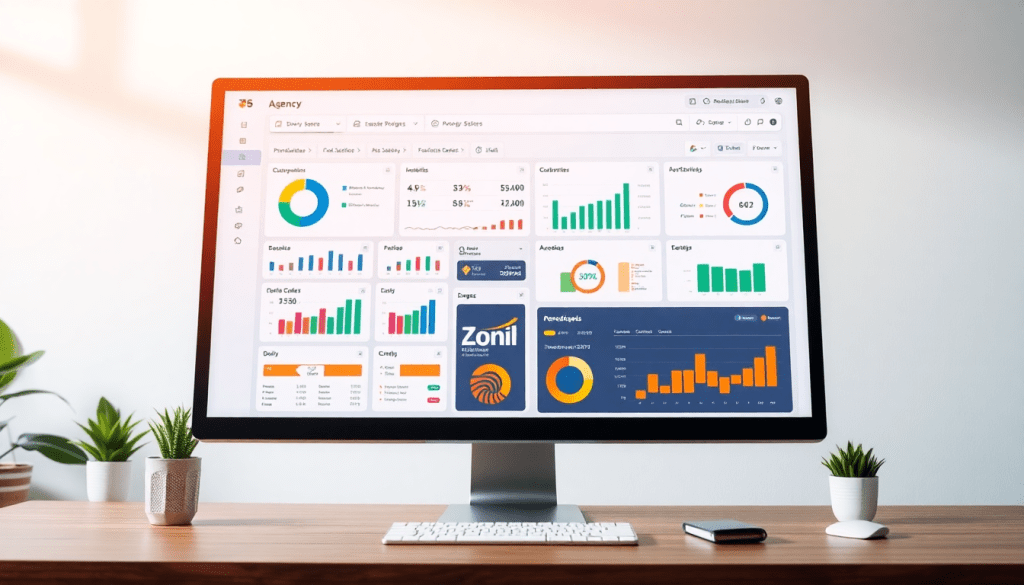
White-Label Marketing Dashboard for Agencies: Custom Branded Reporting
For agencies managing multiple clients and channels, delivering clear, impactful reports under your own brand is essential. A white-label marketing dashboard gives agencies the power to centralize client data, automate reporting, and present insights through fully branded, customizable dashboards. This guide unpacks the must-haves, benefits, and leading solutions for agencies looking to level up their client reporting experience.
What is a White-Label Marketing Dashboard for Agencies?
A white-label marketing dashboard is a reporting platform that agencies can fully brand as their own—from the login screen to the dashboards, reports, and even email notifications. Unlike standard reporting tools, which display the software provider’s branding and offer limited customization, a white-label dashboard empowers agencies to deliver a seamless, professional experience that reflects their identity at every client touchpoint.
Core features typically include customizable dashboards, automated data aggregation, cross-channel performance tracking, and the ability to present analytics in a way that’s tailored to each client’s goals. Agencies can add their logo, match color palettes, use custom domains, and build branded templates—ensuring every report and dashboard reinforces their value proposition.
The distinction from off-the-shelf reporting platforms is significant: white-label solutions allow agencies to “own” the client experience. This is crucial for building trust, demonstrating expertise, and fostering long-term relationships. When clients log in to review campaign results or receive automated insight emails, they see the agency’s brand—not a third-party tool—underscoring professionalism and consistency.
Ultimately, white-labeling isn’t just about aesthetics; it’s about agency credibility and client confidence. By controlling the reporting environment, agencies can differentiate themselves in a crowded market, reinforce their expertise, and ensure clients associate powerful analytics with their brand. For a deeper dive into what sets these dashboards apart, check out this in-depth overview.
Key Features of the Best Agency Reporting Platforms
When evaluating white-label marketing dashboards, agencies should prioritize platforms that deliver a robust set of features designed to streamline workflows and elevate client experiences. Here are the essential capabilities that set the best agency reporting platforms apart:
1. Customizable Client Dashboards
Top reporting solutions let agencies create fully branded environments tailored to each client’s needs. This includes flexible layouts, modular widgets, and the ability to showcase the most relevant KPIs for each campaign or channel. Customization extends to logos, color schemes, and even domain names—ensuring every dashboard reflects your agency’s branding and professionalism.
2. Automated Data Visualization
The best dashboards automate the collection, normalization, and visualization of marketing data. This means agencies can transform complex, cross-channel metrics into easy-to-understand graphs, tables, and charts—without manual effort. Automated visualizations boost clarity, eliminate reporting errors, and free up valuable analyst hours for strategy.
3. Real-Time KPI Tracking
Continuous, real-time tracking is critical for agencies managing dynamic campaigns. Leading platforms offer up-to-the-minute reporting on performance indicators such as spend, conversions, ROI, and more. This empowers both account teams and clients to monitor progress and act quickly when adjustments are needed.
4. Deep Cross-Channel Integrations
Modern agency reporting platforms integrate with dozens (or even thousands) of marketing, advertising, and analytics sources. Whether it’s Google Ads, Facebook, programmatic platforms, or offline channels, seamless integrations ensure agencies can unify all client performance data in one place, supporting holistic analysis and optimization.
5. Branded Analytics to Streamline Agency Workflows
Branded analytics software not only delivers a polished client experience but also supports agency operations behind the scenes. Role-based access controls, collaborative workspaces, and workflow automation tools help teams manage approvals, campaign fulfillment, and communication—all while maintaining a consistent look and feel across every client touchpoint.
6. Client Portal Dashboard for Real-Time Visibility
A dedicated client portal provides stakeholders with secure, self-service access to their data and reports. This transparency builds trust by allowing clients to check campaign results, download reports, and explore insights on their own schedule—minimizing back-and-forth requests and enhancing overall satisfaction.
In summary, the best white-label agency reporting platforms empower agencies to deliver high-impact, branded reporting at scale—while simplifying internal processes and deepening client relationships. For agencies seeking a unified solution with these capabilities, TapClicks offers an industry-leading platform designed to handle complex, multi-client reporting needs with ease.
Benefits of White-Label KPI Reports and Automated Data Visualization
Implementing automated data visualization within a white-label marketing dashboard delivers measurable advantages for agencies and their clients. Manual data collection and reporting are notoriously time-consuming, often leading to inconsistencies or human error. By automating these processes, agencies not only save dozens of hours per analyst each month but also ensure accuracy and timeliness across every client report. This time savings frees up teams to focus on strategy and campaign optimization, rather than wrestling with spreadsheets and data exports.
White-label KPI reports further amplify efficiency and professionalism. Agencies can present campaign performance, budget pacing, and ROI metrics in beautifully branded formats—complete with logos, custom color schemes, and tailored insights—reinforcing their value to clients at every touchpoint. With customizable templates and scheduled reporting, agencies deliver a consistent, polished experience that strengthens client trust and retention.
Marketing automation is the engine that powers this streamlined reporting workflow. From ingesting multi-channel data through robust integrations to auto-generating dashboards and distributing insights, agencies can scale their operations without sacrificing quality or personalization. For example, platforms like TapClicks centralize data from thousands of sources, automate the transformation and enrichment of datasets, and enable agencies to set up recurring white-label reports with minimal manual intervention.
Ultimately, the combination of automated visualization and white-label KPI reporting empowers agencies to deliver deeper, more actionable insights—faster—while elevating their brand and operational efficiency. This not only meets the rising expectations of modern clients but gives agencies a distinct competitive edge in an evolving digital landscape.
How to Customize Client Dashboards and Reports
Customization is at the heart of effective white-label reporting. The best agency dashboards empower you to present insights not only with your own branding, but also with tailored experiences for each client’s unique needs and industry vertical. Here’s how agencies can maximize the impact of customization:
1. Branding Options for a Seamless Client Experience
A standout white-label dashboard gives you full control over visual branding elements. You can upload your agency’s logo, apply custom color schemes that match your identity, and even set up a dedicated custom domain (e.g., reports.youragency.com) so clients see your brand—never the software provider’s. Flexible report templates let you standardize layouts, messaging, and visualizations across all accounts, ensuring a polished, professional look every time.
2. Customizable Dashboards for Every Client and Vertical
Client expectations—and KPIs—differ by industry, campaign type, and business goals. Leading platforms let you build dashboards with custom widgets, modules, and data visualizations to surface what matters most for each client. Whether you’re highlighting paid search ROI for an e-commerce brand, social engagement for a nonprofit, or location-based performance for a multi-site retailer, you can assemble dashboards that speak directly to the metrics your clients care about.
3. Advanced Personalization for Client Reporting
Customization doesn’t stop at aesthetics. Advanced agency reporting platforms enable dynamic filtering, role-based access, and the option to serve different report versions for stakeholders with varying needs—from C-level summaries to detailed channel breakdowns for marketing teams. Automated scheduling ensures that branded, tailored reports are delivered to the right people, at the right time, without manual intervention.
For a deep dive into strategies that make your client reporting stand out, explore these custom client reporting strategies.
With the right dashboard solution, customization becomes a powerful lever for agency differentiation, client satisfaction, and operational efficiency. To see what’s possible and how your agency can deliver a fully branded client experience, learn more about TapClicks and its robust white-label capabilities.
Performance Tracking and Cross-Channel Reporting for Agencies
In today’s fragmented marketing landscape, clients expect agencies to deliver a unified view of campaign performance—regardless of channel, platform, or data source. That’s where white-label dashboards shine: they empower agencies to provide transparent, comprehensive reporting across all digital, paid, organic, and even offline channels, all under the agency’s own brand.
The Need for Unified, Cross-Channel Reporting
Transparency is non-negotiable in client relationships. When agencies manage campaigns across platforms like Google Ads, Facebook, LinkedIn, programmatic display, SEO, email, and more, siloed reporting creates confusion and erodes trust. A white-label dashboard solves this by consolidating data from every source—paid search, paid social, organic, and offline conversions—into one clear, client-ready portal. This unified view allows both agency and client stakeholders to monitor KPIs and ROI in real time, eliminating data blind spots and improving decision-making.
Centralizing Multi-Platform Data with White-Label Dashboard Solutions
Modern white-label reporting solutions, such as TapClicks, offer deep integration libraries—sometimes with 10,000+ connectors—making it easy to automatically ingest and harmonize data from virtually any marketing platform. This centralization is more than just convenient; it’s crucial for accurate cross-channel insights. Agencies can set up dashboards that automatically blend Google Analytics traffic data with Facebook Ads spend, CRM lead tracking, and even offline sales from retail locations. The result: a single source of truth for client performance.
Examples of Cross-Channel Performance Tracking in Action
Consider an agency running a multi-location retail campaign. Using a white-label dashboard, they can visualize:
- Paid Media Performance: Real-time spend, impressions, clicks, and conversions from Google, Facebook, and programmatic platforms, side by side.
- Organic & SEO Impact: Traffic, rankings, and engagement from Google Search Console or Bing, integrated with paid data for holistic ROI analysis.
- Offline Channel Attribution: In-store sales or call tracking data synced with digital campaigns to close the attribution loop.
- Custom KPIs: Blended metrics like cost-per-acquisition (CPA) or return on ad spend (ROAS) calculated across all channels for executive-level reporting.
This level of integration means clients see not just isolated campaign stats, but the full picture of how each channel contributes to their business goals. Agencies, in turn, can quickly identify high-performing tactics, optimize spend across platforms, and demonstrate value with branded, automated reports.
By embracing white-label dashboards for cross-channel reporting, agencies unlock true transparency, actionable insights, and a competitive edge in client service.
Choosing the Right Agency Analytics White-Label Solution
Selecting the best white-label analytics platform is a pivotal decision for agencies striving to deliver seamless client experiences at scale. To ensure your investment pays off, keep the following criteria top of mind:
1. Scalability:
The ideal solution should handle growth with ease—whether you’re managing a handful of clients or hundreds. Evaluate how the platform manages multiple dashboards, user roles, and concurrent data streams. Check if reporting and dashboard creation remain efficient as your agency onboards more clients and campaigns.
2. Integrations:
Comprehensive data integration is critical. Look for platforms that connect with the marketing, advertising, and business tools your clients use most (Google Ads, Facebook, LinkedIn, CRMs, and more). The more connectors offered—and the deeper the integration—the less manual work your team will face.
3. Ease of Use:
An intuitive user interface is essential for both your team and your clients. Consider solutions with drag-and-drop dashboard builders, simple report scheduling, and easy customization for different client needs. Training time should be minimal; the platform should empower non-technical users to manage reporting with confidence.
4. Support and Service:
Responsive customer support can make or break your experience, especially during onboarding or when troubleshooting issues. Look for vendors that offer live support, comprehensive help centers, and dedicated account management.
To compare features and find the right fit for your agency, check out this overview of top white-label solutions. When vetting vendors, ask these critical questions:
- How many native integrations do you support, and can we build custom connectors?
- What are the limits on dashboards, users, and scheduled reports?
- How do you handle branding—can we use our own domain and fully customize the look and feel?
- What automation and AI capabilities are available for reporting and insights?
- What onboarding, training, and ongoing support do you provide?
Ultimately, the best white-label marketing dashboard will not only centralize your agency’s data and reporting but also strengthen your brand and client relationships—setting you up for long-term success.
Implementation Tips: Setting Up Your White-Label Dashboard
Rolling out a white-label marketing dashboard isn’t just about flipping a switch—it’s about laying the groundwork for scalable, seamless client reporting. Here’s a step-by-step roadmap to ensure your agency’s branded dashboard delivers value from day one:
1. Define Your Branding and Reporting Standards
Start by gathering your agency’s brand assets: logos, color palette, fonts, and any specific messaging guidelines. Map out your ideal dashboard layouts and report templates. Decide on custom domains or subdomains to reinforce your branding in client-facing portals.
2. Choose the Right Dashboard Solution
Select a platform that aligns with your current and future needs—think scalability, integration breadth, and customization options. Make sure your choice supports robust user permissions so you can tailor access for internal teams and clients.
3. Connect Your Data Sources
Integrate all the marketing, advertising, and business data sources your clients rely on. Platforms like TapClicks offer thousands of connectors for paid, organic, social, and offline channels, making it easy to automate data pipelines and ensure up-to-date reporting.
4. Customize Dashboards for Each Client
Leverage features that let you create unique dashboard views per client or vertical. Tailor KPIs, widgets, and visualizations to match each client’s goals. Use modular templates to speed up onboarding new accounts while maintaining consistency.
5. Automate Reporting and Insights
Set up automated schedules for report generation and delivery—daily, weekly, or monthly—so clients receive updates without manual intervention. Enable AI-powered insights or smart summaries to proactively surface key trends and recommendations.
6. Onboard Clients and Train Your Team
Develop a client onboarding playbook: introduce clients to their dashboards, guide them through navigation, and highlight self-service capabilities. Internally, provide training sessions for account managers and analysts to get the most out of the platform’s features and troubleshoot common issues.
7. Monitor Usage and Gather Feedback
Track which clients are engaging with their dashboards and reports. Solicit feedback regularly to identify opportunities for further customization or process improvements.
Common Challenges and How to Avoid Them:
- Data Integration Hiccups: Test all data connectors thoroughly before going live. Have a clear protocol for troubleshooting sync or mapping errors.
- Over-Complication: Resist the urge to overload dashboards with too many metrics. Focus on actionable KPIs and clear visualizations.
- Change Management: Involve your team early in the transition, communicate the benefits, and provide hands-on training to ensure adoption.
With a thoughtful implementation plan, your white-label dashboard can become a powerful differentiator that boosts client satisfaction, streamlines agency workflows, and strengthens your brand at every touchpoint.
Conclusion: Transforming Agency Reporting with White-Label Dashboards
A white-label marketing dashboard is more than just a reporting tool—it’s a game-changer for agencies determined to deliver value, efficiency, and brand consistency at scale. By centralizing multi-channel data, automating client reports, and presenting insights through fully branded dashboards, agencies elevate client trust and position themselves as true strategic partners. The advantages are clear: streamlined operations, fewer manual errors, faster turnaround times, and a reporting experience that reflects your agency’s professionalism and unique identity.
As the marketing landscape grows increasingly complex, leveraging a robust, flexible dashboard solution becomes essential. Agencies that embrace white-label dashboards not only save time, but also unlock new opportunities for growth, retention, and differentiation in a crowded marketplace.
Ready to transform your agency’s reporting and client experience? Explore leading solutions, compare features, and see how a customizable platform like TapClicks can help you deliver seamless, branded insights. Take the next step by requesting a demo or trialing a white-label dashboard to discover firsthand how it can streamline your workflow and delight your clients.
Start Automating Your Marketing Data Today!
No Credit Card Required.

