

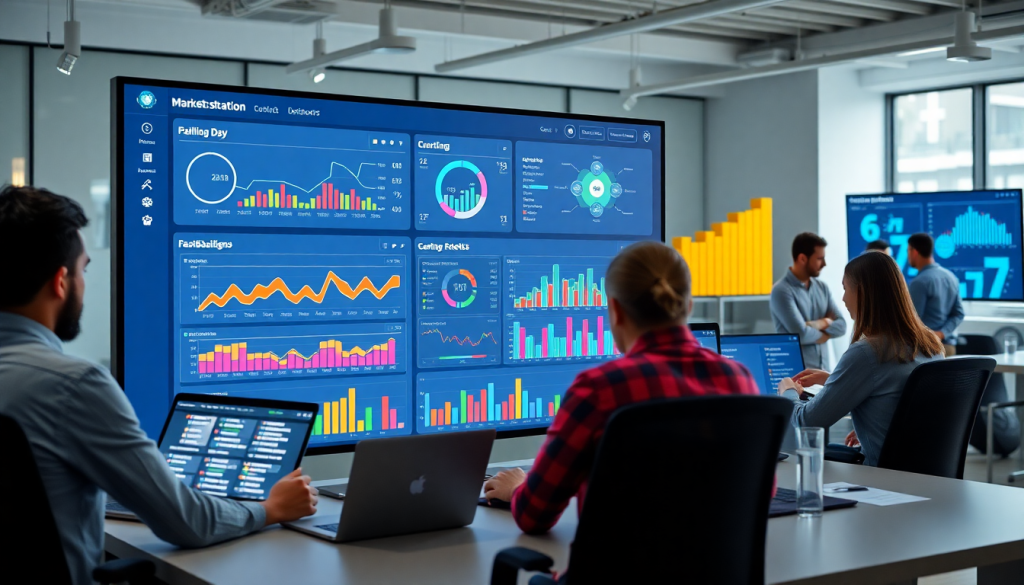
Performance Marketing Reporting Software for Automated Insights
Performance marketing teams are under constant pressure to prove ROI, optimize ad spend, and deliver clear, actionable results to stakeholders. With the surge in digital channels, managing campaign data, building reports, and surfacing insights have become more complex—and more critical—than ever. Performance marketing reporting software meets these challenges by automating campaign reporting and providing real-time analytics across every channel, all within a single platform. This guide explores what to look for in a performance analytics tool, how automation can supercharge your reporting workflow, and why an integrated dashboard is essential for modern digital advertising teams.
What is Performance Marketing Reporting Software?
Performance marketing reporting software is a specialized toolset designed to centralize, analyze, and visualize the complex data streams generated by digital advertising and paid media campaigns. At its core, this software automates the collection of campaign performance metrics—such as impressions, clicks, conversions, cost-per-acquisition, and return on ad spend (ROAS)—from multiple platforms like Google Ads, Facebook, programmatic networks, and more. By transforming raw data into actionable dashboards and reports, it empowers marketers to optimize campaigns, prove ROI, and deliver clear insights to stakeholders.
In today’s digital advertising landscape, where teams juggle numerous channels, ad formats, and audience segments, performance marketing reporting software serves as the operational backbone. It streamlines the process of gathering, normalizing, and blending data from disparate sources, ensuring that every stakeholder—from the CMO to account managers—has access to a single source of truth. This unified view is essential for both granular campaign optimization and high-level budget allocation decisions.
Typical users of performance marketing reporting software include digital agencies managing campaigns for multiple clients, in-house marketing teams at brands (especially those with multi-location or multi-product portfolios), and media companies overseeing ad operations at scale. These users rely on the software not just for reporting, but for advanced analytics, automated insights, and workflow efficiencies that would be impossible to achieve with spreadsheets or manual processes.
To explore how these platforms drive powerful marketing insights, see this guide on marketing analytics report software.
What Should a Great Performance Analytics Tool Actually Do for You?
When you’re shopping for performance marketing reporting software, don’t settle for basic data dumps or clunky spreadsheets. The right platform should empower your team to move quickly, act confidently, and prove value at every turn.
Here’s what to look for—broken down by the features that actually make a difference:
Automated Campaign Reporting: Stop Wasting Time
- No more manual exports. The best tools automatically collect, consolidate, and visualize your campaign data.
- Always up to date. Stakeholders get instant access to the latest numbers—no more chasing down reports or wrangling spreadsheets.
- Fewer errors. Automation reduces human mistakes and keeps everyone on the same page.
ROAS and Conversion Rate Analytics: Know What’s Working
- Granular, real-time ROAS. Instantly see which campaigns deliver the best bang for your buck.
- Conversion tracking out of the box. Whether it’s purchases, signups, or downloads, your tool should attribute actions to the right channels and campaigns.
- Data-driven optimization. Pinpoint what’s driving returns and shift spend where it matters most.
Cross-Channel Campaign Tracking: Everything in One Place
- All your platforms, unified. Google, Meta, LinkedIn, Amazon, programmatic, and more—analyze results across every channel from a single dashboard.
- See the big picture. Understand how campaigns interact, find synergies, and spot waste or new opportunities fast.
Real-Time Data Integration & Visualization: Stay Ahead of the Curve
- No lagging insights. Look for platforms that update in real time or near real time.
- Custom dashboards. Drag-and-drop, interactive charts, and automated alerts help you spot trends and outliers instantly.
- Effortless sharing. Make it easy to distribute insights to your team or clients—no extra busywork.
Unified Ad Spend & Optimization Dashboard: Bring It All Together
- Centralized controls. Manage spend, pacing, and performance for every channel from one place.
- Budget alignment. Set caps, monitor spend in real time, and keep marketing, sales, and finance on the same page.
- Agile adjustments. Make quick, data-driven changes to maximize ROI.
Quick Checklist: Does Your Platform Deliver?
| Must-Have Feature | Why It Matters |
|---|---|
| Automated Reporting | Frees up your team’s time |
| Real-Time Data Integration | Enables instant decision-making |
| Cross-Channel Analytics | Reveals the full impact of your efforts |
| ROAS & Conversion Tracking | Ties spend directly to results |
| Unified Dashboard & Controls | Ensures alignment and accountability |
Bottom line:
With these capabilities, your team isn’t just collecting data—you’re turning it into action. Want to see how it all comes together? Explore the TapClicks marketing operations platform for automated reporting, unified dashboards, and cross-channel insights built to scale with you.
Automating Campaign Reporting: Why It Matters
For performance marketing teams, time is always of the essence. Manual reporting not only eats into valuable hours but also introduces the risk of human error, inconsistent data, and delayed insights. That’s why automating campaign reporting has become a game-changer for agencies and in-house marketers alike.
Automated reporting tools streamline the entire reporting workflow—collecting data from multiple sources, transforming and normalizing it, and delivering up-to-date dashboards and reports without manual intervention. This automation saves analysts and account managers dozens of hours each month, allowing them to focus on strategy, optimization, and client service rather than repetitive data pulls and spreadsheet wrangling.
Let’s consider a typical agency scenario: Each week, the team must compile campaign results from Google Ads, Facebook, LinkedIn, and programmatic display for every client. Without automation, this means logging into multiple platforms, exporting CSVs, merging files, and formatting reports—often late into the night before a client call. With automated reporting, these workflows are transformed. Scheduled reports can be generated and delivered directly to clients or internal stakeholders, ensuring that everyone always has access to the latest performance metrics. Internal dashboards are refreshed in real time, supporting agile decision-making and rapid optimization.
Automation also enables increased reporting frequency—daily, weekly, or even hourly—without increasing the workload. This means teams can spot trends, address underperforming campaigns, and share wins with clients far more quickly. As shown in this detailed overview of digital marketing analytics software, platforms like TapClicks take this a step further, offering AI-powered insights and smart notifications that surface key findings automatically, so marketers never miss an opportunity or risk.
In summary, automating campaign reporting is about more than efficiency; it’s about empowering marketing operations with fast, reliable, and actionable data, enabling better results for clients and stakeholders every step of the way.
Optimizing Ad Spend with a Centralized Dashboard
In the fast-paced world of digital advertising, a centralized paid media dashboard is no longer a luxury—it’s an operational necessity. By unifying campaign performance data from every channel into a single, real-time view, teams can monitor critical KPIs like ROAS, cost-per-acquisition, click-through rates, and budget pacing at a glance. This holistic visibility not only streamlines decision-making but also empowers marketers to react instantly to campaign fluctuations, ensuring budgets are allocated where they’ll drive the greatest impact.
One of the key advantages of a centralized dashboard is its ability to manage spend optimization dynamically. With all paid media data aggregated in real time, marketing teams can track budget pacing and adjust allocations proactively—preventing both over- and underspending. For example, if a display campaign is underdelivering while a social campaign is exceeding its ROAS targets, the dashboard makes it easy to shift budget accordingly, maximizing overall campaign ROI.
Cross-channel data blending takes spend optimization even further. Instead of relying on siloed reporting from individual ad platforms, a unified dashboard like TapClicks enables marketers to blend Google Ads, Meta, programmatic, and offline campaign data into a single, actionable dataset. This allows for granular budget reallocations based on true performance, rather than guesswork or lagging reports. Agencies and in-house teams can set up automated alerts for anomalies or pacing issues, ensuring that no dollar is left underperforming.
Consider a scenario where a retail brand is running simultaneous campaigns across search, social, and OTT. The centralized dashboard surfaces real-time, blended insights showing that paid search is driving more conversions at a lower CPA compared to OTT. With this intelligence, the marketing manager can instantly reallocate a portion of the OTT spend to search, boosting total campaign efficiency—without waiting for end-of-month reports.
Ultimately, a centralized dashboard not only simplifies spend management; it transforms it from a reactive process to a proactive, data-driven strategy. By connecting every channel and campaign in one place, performance teams gain the agility and insight needed to optimize budgets, demonstrate value, and outperform the competition.
Gaining Digital Advertising Insights Across Channels
In today’s multi-platform world, digital campaigns rarely succeed in isolation. Marketers run ads on Google, Facebook, TikTok, programmatic display, email, and a host of other channels—each with its own analytics, attribution models, and performance metrics. The challenge isn’t just collecting this data; it’s bringing it together to uncover the full story of campaign performance. This is where unified cross-channel campaign tracking becomes indispensable for performance marketing teams.
A unified analytics platform enables holistic performance analysis by aggregating data from every channel into a single, coherent view. Instead of toggling between disparate dashboards or exporting endless CSVs, marketers can instantly see how each channel contributes to overall goals like ROAS, conversions, or lead quality. This broad perspective is crucial for understanding the interplay between channels—for example, how social campaigns drive branded search or how display impressions support retargeting efforts.
Performance marketing automation further amplifies these insights by revealing trends and opportunities that siloed data would obscure. Automated analytics can surface correlations (like periods when Facebook spend boosts Google conversions), flag underperforming segments, or identify sudden drops in engagement. AI-driven insight engines—such as TapClicks’ SmartPilot—go a step further, proactively alerting teams to optimization opportunities, spend anomalies, or emerging audience patterns.
With these cross-channel insights in hand, teams can move beyond static reporting and take action in real time. Strategies to adjust and optimize campaigns mid-flight include reallocating budget to top-performing channels, pausing ads that deliver diminishing returns, or launching creative tests in response to audience shifts. For example, spotting a spike in engagement from a particular demographic on Instagram might prompt a quick creative refresh or an increased spend allocation—actions only possible when insights are delivered as campaigns unfold.
Ultimately, gaining unified insights across digital channels empowers marketers to maximize impact, minimize waste, and stay agile in a fast-moving environment. For a deeper dive into real-world automation and analytics, explore this guide on "digital marketing analytics software" to see how connected insights drive better campaign outcomes.
Reporting for Clients and Stakeholders: Customization & Scalability
For agencies, brands, and in-house teams alike, the ability to deliver tailored, professional reports is more than a value-add—it's a necessity. Clients expect performance marketing updates that speak directly to their KPIs, branding, and campaign goals. That's why leading performance marketing reporting software must offer robust customization and scalability options.
Branded, customizable client performance reports ensure that every deliverable reflects your agency’s or brand’s visual identity and narrative. Look for platforms that allow you to easily add client logos, custom color schemes, and personalized commentary, transforming standard analytics into polished, client-ready presentations. This not only enhances your credibility but also helps clients immediately see the metrics that matter most to them.
Scalability is equally critical, especially for agencies managing dozens or even hundreds of client accounts. Manual report generation quickly becomes unsustainable as your client base grows. Scalable reporting solutions automate repetitive tasks—such as pulling in cross-channel data, updating dashboards, and scheduling report deliveries—freeing up your team to focus on analysis and strategy. Leading platforms, like TapClicks, are purpose-built for high-volume reporting and can handle thousands of dashboards and reports simultaneously, ensuring you never miss a client deadline.
Automating report delivery is a game changer for stakeholder communication. With scheduled email dispatches and role-based access, you can ensure that the right insights reach the right people at the right time—whether it’s a weekly client summary, a daily campaign pulse for your internal team, or an executive overview for leadership. This not only boosts transparency but also builds trust and satisfaction with your clients.
For advanced strategies and tips on elevating your reporting efficiency, check out this guide on "marketing dashboard automation". By integrating customizable, scalable, and automated reporting into your workflow, you can deliver a superior client experience—while saving your team countless hours every month.
Comparing Top Platforms: What Sets the Best Tools Apart
When it comes to performance marketing reporting software, not all platforms are created equal. The best solutions go beyond simple dashboards—they unify data, automate complex reporting tasks, and surface actionable insights that drive smarter decision-making. Let’s take a closer look at how top platforms compare and what differentiates the leaders in this space.
Approaches to Analytics, Automation, and Reporting
Leading platforms like Funnel.io, Adverity, Agency Analytics, Datorama (Salesforce), Supermetrics, and NinjaCat each bring their own strengths to the table. Many focus on robust data pipelines, offering automated ETL processes to centralize marketing data from a variety of sources. Others emphasize user-friendly dashboards and scheduled report delivery, enabling agencies and brands to streamline client communication. However, while some solutions excel at connecting data, they may lack the depth of analytics or workflow automation needed to support high-volume, multi-channel operations.
What Makes TapClicks Stand Out
TapClicks sets itself apart by combining unified data integration, at-scale reporting, and AI-powered insights within a single, scalable platform. Here’s how:
- Unified Data Hub: TapClicks connects to over 10,000 marketing, advertising, and business data sources—bringing all your campaign data together, ready for cross-channel analysis and comparison.
- Scalability by Design: Built to handle thousands of dashboards and clients simultaneously, TapClicks is ideal for agencies and enterprise teams that need to manage complex, high-volume reporting without compromising performance.
- AI-Driven Insights: With features like SmartPilot and TapInsights, the platform doesn’t just visualize data—it proactively analyzes performance, flags anomalies, and delivers optimization recommendations through capabilities like SmartEmail.
- Flexible Workflows: TapClicks integrates order management, collaboration tools, and role-based access, empowering teams to automate everything from scheduled client reports to internal performance reviews.
Checklist: Evaluating Performance Marketing Reporting Software
When assessing performance marketing reporting platforms, use this checklist to ensure you’re choosing the right solution:
- Does it offer automated, multi-source data integration (not just manual uploads)?
- Can you customize and scale dashboards and reports for different clients or stakeholders?
- Are AI-driven insights and optimizations available, or is it just visualization?
- Does the platform support workflow automation—such as scheduled reporting and role-based access?
- How well does it handle cross-channel data blending for unified analytics?
- Is the solution built to scale with your business and adapt to new channels and metrics?
For a deeper dive into advanced reporting strategies, explore this guide on marketing dashboard automation.
Ultimately, the best performance marketing reporting software empowers teams to move faster, prove ROI, and uncover opportunities—backed by unified data, smart automation, and scalable operations.
Conclusion
In today’s data-driven marketing landscape, automated insights and reporting are no longer optional—they’re essential for success. Performance marketing teams that embrace automation can move faster, make smarter decisions, and prove ROI with clarity and confidence. With the right performance marketing reporting software, you can eliminate time-consuming manual tasks, gain real-time visibility across all your campaigns, and deliver actionable insights to both internal teams and clients.
If your current reporting process feels fragmented or time-intensive, now is the time to reassess. An integrated, automated solution not only streamlines your workflow but also empowers your team to focus on what matters most: optimizing campaigns and driving results.
The next step is simple—see the difference for yourself. Book a TapClicks demo or start a free trial to experience how unified data, automated insights, and customizable dashboards can transform your approach to performance marketing reporting.
Start Automating Your Marketing Data Today!
No Credit Card Required.

