

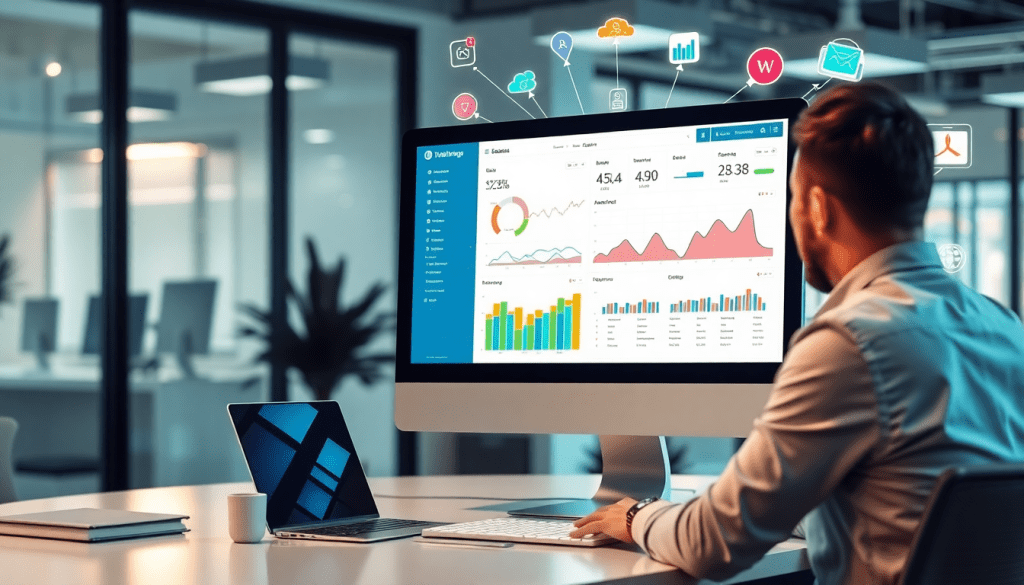
Performance Marketing Reporting Software: Boost Campaign ROI
Every marketer wants to measure, prove, and improve the return on investment (ROI) for their campaigns, but wrangling data from dozens of platforms often gets in the way. Performance marketing reporting software streamlines your analytics by centralizing data, automating campaign reporting, and surfacing actionable digital advertising insights—all so you can make smarter decisions, faster. This guide explores how the right performance analytics tool can optimize ROAS, enable seamless cross-channel tracking, and give you the clarity you need to drive sustained results for your brand or clients.
What Is Performance Marketing Reporting Software?
Performance marketing reporting software is a specialized platform designed to aggregate, analyze, and visualize data from various digital advertising channels—such as Google Ads, Facebook, LinkedIn, and more—so marketers can track campaign performance and optimize return on ad spend (ROAS). At its core, this software acts as the nerve center for paid media analytics, automating the collection and normalization of disparate data sources into unified, actionable dashboards.
Traditionally, marketers spent countless hours manually pulling spreadsheets, reconciling metrics, and preparing reports for stakeholders. This manual process was not only time-consuming but prone to errors and inconsistencies. The shift to automated campaign reporting has revolutionized the way teams manage and interpret performance data, enabling real-time insights, increased accuracy, and more agile campaign optimization.
Related terms you’ll often encounter include a performance analytics tool (the technology that powers in-depth campaign analysis), a paid media dashboard (the interface where you monitor key metrics across channels), and a ROAS tracking platform (software designed to measure and maximize return on ad spend). Modern tools like TapClicks combine all of these capabilities, empowering brands, agencies, and enterprise teams to move beyond simple reporting and into data-driven decision-making.
To see how leading solutions are transforming analytics, check out the "Marketing Analytics Report: TapClicks Software for Powerful Insights".
Key Features to Look For in a Performance Analytics Tool
Choosing the right performance marketing reporting software is about more than just collecting campaign data—it’s about empowering your team to act quickly, optimize confidently, and report results with clarity. Here are the vital features you should expect from any top-tier performance analytics tool:
1. Cross-Channel Campaign Tracking
Modern marketers rarely rely on a single channel. Your reporting platform must unify data from paid search, social, display, programmatic, and more, consolidating everything into a single source of truth. This holistic view eliminates silos, reduces manual data wrangling, and reveals how each channel contributes to overall ROI.
2. Automated, Real-Time Reporting and Dashboards
Manual reporting isn’t just tedious—it’s risky. Look for solutions that automate scheduled reporting and provide real-time dashboards so you can monitor performance as it happens. Automated workflows save hours every month, eliminate human error, and ensure stakeholders always have up-to-date insights.
3. Conversion Rate Analytics and Ad Spend Optimization
A great performance analytics tool should dig deeper than impressions and clicks. Conversion rate analytics help pinpoint which ads and channels are driving real business outcomes, while ad spend optimization dashboards let you track budget pacing, ROAS, and cost-per-acquisition. These features are essential for making data-backed decisions that maximize returns.
4. Client and Multi-Brand Performance Reporting
For agencies and companies managing multiple brands or locations, robust client reporting is key. The best tools offer customizable, branded report templates and secure, role-based access—allowing you to tailor insights and maintain data privacy for each client or stakeholder.
5. Customizability and Scalability
Every organization’s reporting needs are unique. Ensure your platform allows for custom metric calculations, dashboard layouts, and reporting schedules. As your business grows, your tool should seamlessly scale to support hundreds (or thousands) of campaigns and clients without sacrificing performance.
The right mix of these features enables marketers to transform raw data into actionable insights, streamline reporting, and drive better outcomes for their organizations. For a deeper dive into how advanced analytics platforms like TapClicks deliver on these essentials, check out the TapClicks homepage for more information.
Why Centralizing Your Campaign Data Matters More Than Ever
Modern marketing is everywhere—Google Ads, Meta, LinkedIn, TikTok, Amazon, and a dozen more platforms. Trying to keep up with campaign performance by logging into each tool, exporting spreadsheets, and reconciling metrics by hand? That’s a recipe for missed insights and wasted hours.
Here’s How Centralized, Cross-Channel Tracking Changes the Game
Without Centralization:
- Manual data pulls from every ad platform
- Inconsistent reporting formats and timing
- High risk of copy-paste errors and conflicting numbers
- Juggling endless spreadsheets and CSVs
With Unified Reporting Software:
- One dashboard, all your channels (Google, Meta, LinkedIn, TikTok, Amazon, etc.)
- Automated, up-to-date data feeds—no more manual exports
- Consistent, reliable metrics across every campaign
- Holistic view of what’s working, what’s not, and where to invest next
What You Gain by Centralizing Your Data
-
Time Savings:
Eliminate hours of manual work every week. Let the software handle data collection and consolidation. -
Accuracy:
Automated integration means fewer errors and discrepancies—your reports always match reality. -
Deeper Insights:
See how channels interact, identify top-performing audiences, and optimize spend with a true cross-channel lens. -
Client-Ready Visuals:
Instantly generate branded, easy-to-understand dashboards for agencies or multi-brand organizations—no more last-minute data wrangling.
Quick Checklist: Signs It’s Time to Centralize
- You’re exporting data from 3+ platforms weekly
- Reports contain conflicting numbers or errors
- It takes days, not hours, to answer campaign performance questions
- Clients or executives ask for unified insights you can’t deliver quickly
Why It Matters
Centralizing and automating your cross-channel campaign tracking isn’t just about convenience. It’s about empowering your team to make fast, data-driven decisions—and building trust with stakeholders through transparent, accurate reporting.
Want to see how this works in practice? Dive deeper in Unlocking Real-Time Marketing: The Power of Automated Data Collection for Brand Marketers.
Automated Campaign Reporting: Save Time and Eliminate Errors
Manual campaign reporting is a notorious drain on marketing teams. Sifting through ad platforms, exporting spreadsheets, and piecing together PowerPoints isn’t just tedious—it’s a recipe for delays, human error, and burnout. As the number of campaigns and channels grows, so does the risk of inconsistent data, missed deadlines, and reporting bottlenecks that frustrate both internal stakeholders and clients.
Performance marketing reporting software solves these pain points with automation. Instead of scrambling to pull numbers at the end of each week or month, automated platforms schedule recurring, branded, and fully customizable reports. Marketers can define reporting cadences—daily, weekly, or monthly—with just a few clicks, ensuring stakeholders always have the latest metrics at their fingertips. Custom branding and flexible templates keep every report client-ready, while granular filters allow teams to tailor data views for each campaign, channel, or location.
The impact on productivity is immediate and measurable. By eliminating repetitive manual steps, teams reclaim hours every week—freeing analysts and account managers to focus on optimization and strategy instead of data wrangling. Automated reports also minimize the risk of costly copy-paste errors and ensure that every client receives timely, consistent performance updates, boosting transparency and satisfaction.
To get the most from automated campaign reporting, follow these best practices:
- Standardize your reporting templates for consistent KPIs across clients or business units.
- Define clear roles and permissions so only approved users can modify report structures.
- Leverage scheduling and delivery tools to automate email distribution and stakeholder communications.
- Continuously audit your reporting workflows to ensure data sources remain connected and metrics reflect current campaign goals.
By implementing these practices, marketing teams can transform reporting from a headache into a strategic asset. Platforms like TapClicks offer robust automation tools that scale effortlessly, adapting to complex agency, brand, or enterprise needs—so you spend less time on busywork and more time driving results.
Ad Spend Optimization Dashboards and ROAS Tracking
Optimizing ad spend and maximizing return on ad spend (ROAS) are at the core of every data-driven marketer’s objectives. That’s where advanced ad spend optimization dashboards and dedicated ROAS tracking platforms come into play—they transform raw data into strategic action, ensuring every campaign dollar works harder for your business.
Dynamic Budget Pacing and Real-Time Alerts
Best-in-class performance marketing reporting software offers real-time budget pacing, allowing you to monitor actual spend versus planned budgets across all your channels. These dashboards visualize spend trends, flagging overspending or underspending before they become costly problems. With configurable performance alerts, you’re immediately notified if a campaign’s ROI drops or a channel’s cost-per-acquisition spikes, empowering you to course-correct in the moment rather than after the fact.
Predictive Analytics for Smarter Campaign Decisions
Modern ROAS tracking platforms go beyond static data—they harness AI-driven predictive analytics to forecast future performance based on historical trends and current pacing. By modeling potential outcomes, these tools help marketers proactively reallocate budgets, pause underperforming ads, or double down on high-converting channels. This level of foresight is critical in today’s fast-moving ad landscape, where waiting for end-of-month reports means missing opportunities.
Continuous Improvement and Granular Optimization
Ad spend dashboards break down performance by channel, creative, audience, and more, giving you the clarity needed to optimize at a granular level. Fine-tune targeting, shift spend between platforms, or test new ad formats with confidence, knowing your ROAS is being monitored and reported in real time. For agencies and multi-location brands, these dashboards can be customized to display performance by client, branch, or region—ensuring every stakeholder gets the insights that matter.
For more on precision targeting and campaign performance, explore "Boost Your Ad Targeting Strategies for Precision and Performance", which outlines how advanced analytics power smarter, more profitable campaigns.
By leveraging robust ad spend optimization dashboards and ROAS tracking, marketers unlock a continuous feedback loop—one that not only drives better decisions but also ensures long-term campaign growth and profitability. To see how unified dashboards and predictive analytics can reshape your marketing strategy, visit TapClicks.
Actionable Digital Advertising Insights for Better Results
In today’s fast-paced marketing environment, having data isn’t enough—what matters is transforming that data into action. Modern performance marketing reporting software leverages AI and advanced analytics to surface insights that would otherwise remain buried in spreadsheets or siloed platforms. These actionable insights empower marketers to optimize campaigns in real time, ensuring every dollar delivers maximum impact.
AI-driven analytics go beyond surface-level metrics, identifying trends, anomalies, and opportunities across your entire marketing mix. For example, with tools like TapClicks SmartPilot, AI agents actively scan your dashboards and datasets, automatically flagging underperforming channels or creative elements. Instead of waiting for monthly reports, teams receive proactive alerts—enabling immediate budget shifts, A/B tests, or audience targeting adjustments that can significantly improve ROAS.
Turning data into action starts with clear, visual insights. Imagine a dashboard that not only displays your conversion rates and cost per acquisition but also pinpoints which ad sets are driving incremental value and which are draining spend. With features like predictive modeling and performance benchmarking, marketers can confidently reallocate budgets, pause ineffective ads, and double down on high-performing strategies—often before competitors even notice the trend.
For agencies and multi-brand marketers, these insights are even more powerful at scale. Automated, AI-curated summaries (like those delivered by SmartEmail) keep both internal teams and clients informed, fostering transparency and trust. Brands can act quickly on recommendations to refine creative messaging, expand into new channels, or optimize bid strategies—all guided by evidence, not guesswork.
The result? Campaigns that are continuously optimized, budgets that go further, and teams that spend less time wrangling data and more time driving measurable results. That’s the true advantage of actionable digital advertising insights powered by leading platforms like TapClicks: turning analytics into a strategic asset that propels your growth.
Performance Marketing Automation: Scaling Success Across Teams
As marketing teams grow, the complexity of managing campaigns, data, and reporting multiplies—especially for agencies juggling dozens or hundreds of clients, or for brands with a national or global footprint. Performance marketing automation is the key to taming this complexity, enabling organizations to streamline workflows, boost collaboration, and scale their success without sacrificing precision or control.
At its core, performance marketing automation unifies campaign management and reporting into a seamless, repeatable process. For agencies, this means onboarding new clients and launching campaigns faster, while automating routine tasks like data pulls, performance updates, and report generation. Instead of manually cobbling together spreadsheets or hopping between platforms, teams can focus on strategy and optimization, confident that the underlying machinery is running smoothly.
Role-based access is a critical feature for both agencies and enterprise brands. By assigning permissions based on team member roles, organizations ensure that the right people have access to the right data—whether it’s a client viewing their own dashboard, or an analyst diving deep into multi-brand performance. This not only enhances security but also improves transparency and accountability.
Collaboration is also supercharged through shared dashboards, automated alerts, and integrated client portals. Account managers, media buyers, creatives, and clients can all work from the same unified data source, reducing miscommunication and enabling real-time decision-making. With customizable, branded client portals, agencies deliver a premium, self-serve reporting experience that builds trust and loyalty.
Perhaps most importantly, performance marketing automation is built to scale. Whether you’re managing dozens or thousands of campaigns, automation platforms like TapClicks empower teams to handle high volumes without missing deadlines or drowning in manual work. Automated workflows, scheduled reporting, and centralized campaign tracking mean you can grow your client roster—or expand your brand’s digital footprint—without adding headcount or compromising on quality.
In today’s fast-paced marketing landscape, the right automation platform isn’t just a nice-to-have—it’s the foundation for sustainable, scalable success across teams of any size.
Choosing the Right Performance Marketing Reporting Solution
Selecting the best performance marketing reporting software is a strategic decision that impacts your entire marketing operation. With a crowded field of tools, it’s crucial to focus on features and support that align with your organization’s goals, scale, and workflow. Here’s a practical checklist to guide your evaluation:
1. Integration Breadth and Depth:
Ensure the platform natively connects with all your key marketing, advertising, and business data sources—think Google Ads, Meta, LinkedIn, programmatic platforms, and more. Look for robust data connectors and the ability to blend cross-channel data without manual work.
2. Automated Reporting and Customization:
Can the tool automate scheduled, branded, and customizable reports for different audiences? For agencies and multi-brand teams, flexible white-label reporting is essential. Seek out drag-and-drop dashboards and the ability to tailor visualizations to client or stakeholder preferences.
3. Scalability and Performance:
Whether you’re managing 10 or 1,000 campaigns, the software should scale without slowing down. Evaluate how it handles multi-client, multi-location, or multi-brand scenarios, and whether it offers role-based access for secure collaboration.
4. Advanced Analytics and Insights:
Look for more than just dashboards. Leading platforms surface actionable insights, predictive analytics, and real-time budget pacing to help you optimize campaigns proactively. Built-in AI agents and automated recommendations can make a major difference.
5. Support and Onboarding:
Reliable onboarding, live support, and a knowledge base are critical, especially for complex operations or when transitioning from manual processes. Consider the vendor’s reputation for service and ongoing product innovation.
6. Workflow Automation:
Seamless workflow tools simplify campaign ordering, approvals, and fulfillment, reducing errors and freeing up your team to focus on strategy.
Comparing Needs: Brands vs. Agencies vs. Enterprise
- Brands (especially multi-location): Need unified analytics, budget controls, and clear performance views across all campaigns and regions.
- Agencies & Media Companies: Require scalable reporting, client portals, and the ability to manage hundreds of accounts with efficiency.
- Enterprise Teams: Often need deep integration with BI tools, CRMs, and finance systems, alongside customizable analytics.
Try Before You Buy:
Most top solutions offer a free trial or demo—take advantage of this to test integrations, dashboard flexibility, and reporting automation firsthand.
Ready to Dive Deeper?
Explore how TapClicks stands out with unified data integration, AI-powered insights, and scalable workflow tools. For a detailed look at its capabilities, check out the "Marketing Analytics Report: TapClicks Software for Powerful Insights", or learn how automated data collection transforms real-time decision-making in "Unlocking Real-Time Marketing: The Power of Automated Data Collection for Brand Marketers".
To see how TapClicks can unify your marketing operations and reporting, visit TapClicks for more information or to schedule a personalized demo.
Start Automating Your Marketing Data Today!
No Credit Card Required.

