

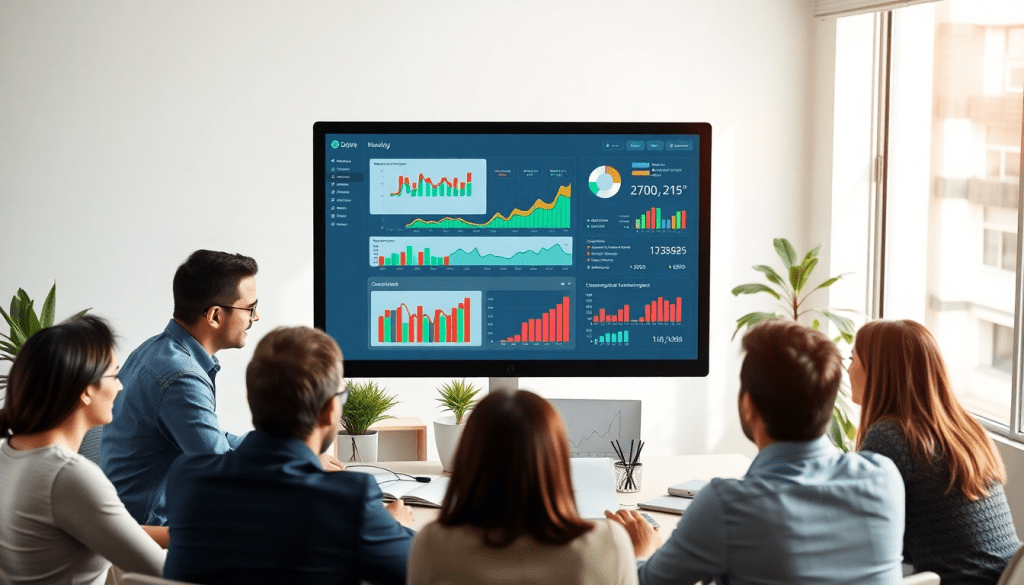
Performance Marketing Reporting Software: Boost Campaign Results
Performance marketing thrives on data-driven decisions, but wrangling campaign insights from multiple ad platforms can quickly overwhelm even seasoned marketers. Performance marketing reporting software brings order to that chaos, offering automated campaign reporting, ROAS tracking, and clear, actionable dashboards. This guide breaks down the essential features, strategic advantages, and best practices for choosing and using the right reporting solution—so you can optimize ad spend, improve conversion rates, and deliver client-ready reports that drive results.
What is Performance Marketing Reporting Software?
Performance marketing reporting software is designed to help agencies, brands, and marketing teams measure, analyze, and optimize their digital advertising efforts across multiple channels. It brings efficiency and clarity to the often complex world of performance marketing—where success is measured by results like clicks, conversions, ROAS (Return on Ad Spend), and customer acquisition costs.
Why Do Marketers Rely on Performance Reporting Tools?
Without the right software, marketers often face:
- Logging into each ad platform separately (Google Ads, Meta, LinkedIn, TikTok, etc.)
- Manual data exports and spreadsheet merges
- Time-consuming, error-prone reporting processes
Performance marketing reporting software solves these problems by:
- Consolidating Campaign Data
Aggregate all your paid media data—no more siloed logins or spreadsheets. - Normalizing & Visualizing Metrics
Automatically standardize and present data in a unified dashboard for easy comparison. - Accelerating Insights
Surface actionable trends and optimization opportunities in real time.
What Does This Look Like in Practice?
Let’s break down a typical workflow using a platform like TapClicks:
| Step | Without Reporting Software | With TapClicks |
|---|---|---|
| Data Collection | Manual logins to each ad platform | 10,000+ connectors auto-import data |
| Data Normalization | Merge/clean data in spreadsheets | Automated ETL pipelines handle it for you |
| Reporting | Build PowerPoints or PDFs by hand | Drag-and-drop dashboards & automated client reports |
| Insights | Sift through raw numbers | AI-powered insights and recommendations |
Why TapClicks?
TapClicks is a leading all-in-one marketing operations platform trusted by agencies and enterprise brands. Here’s why it stands out:
- Connects to 10,000+ marketing & advertising sources
- Automates ETL pipelines for seamless data flows
- Delivers customizable dashboards and branded reports
- AI-powered insights highlight what’s working (and what’s not)
- Robust workflow and order management for campaign ops
The Big Picture
Performance marketing reporting software is the backbone of any results-driven marketing operation.
It transforms raw, fragmented data into clear, actionable intelligence—empowering teams to make smarter decisions, optimize campaigns, and realize better outcomes.
Key Features to Look For
Selecting the right performance marketing reporting software is all about ensuring it has the essential features to deliver real value for your team and clients. Here’s what to prioritize:
Automated Campaign Reporting: The core of any top-tier solution is its ability to automatically collect, aggregate, and update campaign data from all your paid media platforms—Google Ads, Meta, LinkedIn, and more. This automation not only eliminates hours of manual work but also ensures your reports are always current and error-free.
ROAS Tracking Platforms: Robust reporting software should make it simple to track return on ad spend (ROAS) across campaigns and channels. Look for tools that provide granular breakdowns by channel, creative, and audience segment, enabling you to quickly spot which investments are driving the highest returns.
Conversion Rate Analytics: Understanding which campaigns and ads are converting is vital. The best platforms offer detailed conversion tracking and customizable analytics, helping you pinpoint what’s fueling results and where optimizations are needed.
Cross-Channel Campaign Tracking: Today’s marketing landscape is multi-channel by default. Your reporting software must unify performance data from search, social, display, video, and more into a single, coherent view. This cross-channel visibility is the foundation for accurate attribution and digital advertising insights.
Ad Spend Optimization Dashboard: To maximize ROI, you need a clear, real-time view of how every dollar is performing. Advanced solutions offer ad spend optimization dashboards that highlight budget pacing, performance anomalies, and opportunities to reallocate spend for better results.
Paid Media Dashboard for Granular Analysis: A customizable paid media dashboard is crucial for deep dives into individual platforms, campaigns, or even ad sets. Look for drag-and-drop interfaces, branded reporting options, and support for multi-client or multi-location analysis—especially if you’re an agency or enterprise marketer.
When evaluating platforms, solutions like TapClicks stand out for delivering these must-have features at scale. With unified dashboards, automated campaign reporting, and advanced analytics, you’ll be equipped to turn performance data into actionable insights that drive real business growth.
How Automated Campaign Reporting Saves Time and Reduces Errors
Manual campaign reporting is notorious for being labor-intensive and error-prone. Marketers tasked with collecting performance data from multiple ad platforms—then copying, pasting, and reformatting it into spreadsheets—can easily lose hours (or days) every month. Automated campaign reporting software eliminates these repetitive, manual steps by seamlessly pulling data from all your marketing channels into one unified dashboard.
By connecting directly to ad accounts and analytics platforms, automation tools instantly aggregate campaign metrics, update dashboards in real time, and generate scheduled reports without human intervention. This not only slashes the hours spent on data wrangling but also reduces the risk of mistakes that often occur with manual entry—like typos, broken formulas, or mismatched metrics. The result: your reports are always up-to-date, accurate, and ready for distribution to clients or stakeholders.
In addition to saving time and improving accuracy, automation empowers marketing teams to focus on what really matters—strategy and optimization. Instead of getting bogged down in spreadsheets, your analysts can devote more energy to uncovering insights and making impactful recommendations. For a deeper dive into how automation drives reporting efficiency, check out this marketing analytics report TapClicks software for powerful insights. With the right tools in place, you’ll move from reactive reporting to proactive performance management, accelerating growth for your clients and your agency.
Maximizing Insights with Performance Analytics Tools
Performance marketing is only as effective as the insights you can uncover—and act on. That’s where performance analytics tools come in, transforming streams of raw ad data into clear, actionable intelligence that marketers and agencies can use to optimize campaigns in real time.
At the core of these tools is the ability to track and analyze the metrics that truly matter. Key indicators like Return on Ad Spend (ROAS), click-through rates (CTR), cost per acquisition (CPA), and conversion rates are automatically collected from every connected channel. With a robust platform like TapClicks, you can easily monitor these metrics across Google Ads, Meta, programmatic display, and more—all from a single dashboard.
But numbers alone aren’t enough. The real advantage comes from visual dashboards that bring your performance data to life. Customizable reporting studios let you build client-ready dashboards that spotlight KPIs, trendlines, and pacing against goals. For internal teams, these visualizations make it easy to spot underperforming ads, identify budget opportunities, and diagnose campaign bottlenecks before they impact results.
Automated insights are another game-changer. AI-powered agents within TapClicks, for example, can scan your campaign data and automatically surface optimization opportunities—flagging shifts in ROAS, highlighting spikes in CPA, or suggesting budget reallocations. These insights are delivered directly to your inbox or shared with your team, ensuring everyone is working from the same up-to-the-minute intelligence.
In short, performance analytics tools take the guesswork out of digital marketing. They empower you to move beyond static spreadsheets and daily manual checks, replacing them with dynamic, always-on dashboards and proactive recommendations. This means faster reporting cycles, more impactful client presentations, and—most importantly—smarter decisions that drive measurable results.
To see how unified analytics and automated insights can accelerate your campaign performance, explore the full capabilities of TapClicks and discover what’s possible when data becomes your most powerful asset.
Cross-Channel Campaign Tracking: Why It Matters
In today’s fragmented digital landscape, performance marketers rarely rely on a single channel. Your campaigns likely span search, social, display, video, and even emerging formats like connected TV or influencer platforms. But managing each in isolation can lead to siloed insights and missed optimization opportunities. That’s why cross-channel campaign tracking has become a non-negotiable for agencies and brands aiming to maximize ROI.
Tracking performance across all your channels is crucial for understanding how different touchpoints work together to drive conversions. For example, a prospect might first see your brand on Instagram, click a retargeting ad on Google, and then finally convert after receiving an email. Without unified tracking, it’s nearly impossible to measure the true impact of each channel—or to accurately attribute revenue to the right marketing efforts.
This is where unified dashboards come in. By consolidating campaign data from all your platforms, these dashboards provide a holistic view of performance, revealing digital advertising insights that are invisible in platform-specific reports. You can quickly spot which channels are contributing most to your goals, identify underperforming tactics, and understand complex attribution paths with clarity. This approach not only streamlines your workflow but also empowers you to make data-backed decisions in real time.
Platforms like TapClicks make this cross-channel visibility possible at scale. With automated data integration and customizable dashboards, you get a single source of truth for all your marketing efforts—whether you’re running campaigns for a single brand or hundreds of clients. To see how agencies leverage unified dashboards to boost reporting efficiency and deliver more value to clients, check out this guide on marketing dashboard automation to boost agency reporting efficiency.
Ultimately, cross-channel campaign tracking isn’t just about convenience. It’s about unlocking the insights that drive smarter allocation of budget, better attribution, and bigger wins for your team and your clients.
Making Every Marketing Dollar Count: Smarter Ad Spend & ROAS Tracking
Maximizing marketing effectiveness isn’t just about collecting data—it’s about transforming that data into action. For performance marketers, the ability to see, compare, and optimize spend in real time is essential. Here’s how you can turn ad spend optimization and ROAS (Return on Ad Spend) tracking into your marketing superpower.
Why an Ad Spend Optimization Dashboard Matters
A centralized dashboard gives you:
- Real-time aggregation: Instantly see spend and performance across every active channel (search, social, display, etc.).
- Cross-channel clarity: Compare campaigns, platforms, creatives, and audiences side-by-side.
- Fast budget pivots: Quickly reallocate spend to the highest-performing channels or ads.
- Actionable insights: Spot underperformers before they drain your budget.
What Makes ROAS Tracking Essential
Traditional, siloed reports only tell part of the story. A unified ROAS platform brings all revenue and spend data together for a complete picture.
With consolidated ROAS tracking, you can:
- Measure true profitability of each campaign, not just clicks or impressions.
- Benchmark performance against your goals or industry standards.
- Identify top and bottom performers in a single view.
- Spot opportunities to shift budget for bigger impact.
The Power Combo: Layer Conversion Data for True Impact
To get beyond vanity metrics, combine ROAS tracking with deeper conversion analytics. Key metrics to add include:
| Metric | Why It Matters |
|---|---|
| Cost-per-Acquisition (CPA) | Measures actual customer acquisition cost |
| Conversion Rate | Reveals which ads drive real actions |
| Customer Lifetime Value | Shows long-term revenue potential |
With these insights, you can:
- See which ads actually drive revenue, not just traffic.
- Understand where your spend is working hardest.
- Make evidence-based budget decisions every week—not just at month’s end.
How TapClicks Makes This Effortless
TapClicks is built for scalable, data-driven marketing operations. Here’s how it helps you win:
- Automated data collection: No more manual pulls—see real-time data from every source.
- Unified dashboards: One login for all your spend, revenue, and performance metrics.
- AI-driven insights: Instantly surface trends, anomalies, and optimization opportunities.
- Fast, flexible reporting: Deliver the right view to every stakeholder—internal teams or clients.
Bottom Line:
Ad spend optimization and ROAS tracking aren’t just reporting chores—they’re the keys to smarter, more profitable marketing. With platforms like TapClicks, you can stop guessing, start knowing, and make every dollar work harder for your business.
Choosing the Right Performance Marketing Reporting Software
Selecting the ideal performance marketing reporting software can make or break your campaign efficiency and results. Here’s a practical checklist to guide your evaluation:
1. Scalability:
Can the platform grow with your needs? Whether you’re managing a handful of campaigns or hundreds of clients, ensure the software efficiently handles increased data volumes and reporting complexity without slowing down.
2. Integration Options:
Top solutions connect seamlessly with all major paid media platforms—think Google Ads, Meta, LinkedIn, Amazon, and beyond. Look for robust native integrations, plus the ability to build custom connectors for niche data sources.
3. Ease of Use:
An intuitive interface is crucial. Your team should be able to build, customize, and share dashboards without coding, and clients should easily access reports. Drag-and-drop editors, pre-built templates, and clear visualizations save time and reduce onboarding hurdles.
4. Automation Strength:
Automated data pulls and scheduled reporting are must-haves to eliminate manual work and minimize errors. Platforms like TapClicks further enhance this process through AI-powered insights and automated email summaries, so you can focus on strategy instead of spreadsheets.
5. Support for Client Performance Reports:
If you’re an agency or media company, client-facing features—such as branded dashboards, role-based access, and customizable report templates—are critical for delivering professional, client-ready insights.
When comparing options, distinguish between must-have features (like automated campaign reporting, robust integrations, and scalable dashboard management) versus nice-to-have additions (such as advanced AI agents, predictive models, or workflow automation). The right mix depends on your team’s sophistication, client base, and growth trajectory.
For a deeper dive into streamlining analytics and reporting, check out this guide on marketing dashboard automation to boost analytics reporting.
Ultimately, the best performance marketing reporting software will unify your data, accelerate insight delivery, and empower your team to drive better results—whether you’re an agency, brand, or enterprise. Ready to explore options? Discover more about TapClicks’ scalable, all-in-one platform at tapclicks.com.
Getting Started: Best Practices and Next Steps
Implementing performance marketing reporting software can transform how your team delivers insights and drives campaign results—but success hinges on a thoughtful rollout. Here’s how to get started and ensure your new tools deliver maximum value:
1. Prioritize a Strategic Onboarding
Begin with a clear onboarding plan that aligns your reporting software’s capabilities with your business goals. Map out which platforms, data sources, and campaigns need to be integrated first. Provide hands-on training for your team, focusing on automating existing manual processes and leveraging key features like ROAS tracking, conversion analytics, and scheduled report delivery. The smoother your onboarding, the faster you’ll see results.
2. Integrate Early, Iterate Often
Don’t wait for a “perfect” setup—start by connecting your highest-priority ad accounts (Google, Meta, programmatic, etc.) and build dashboards for your most critical KPIs. As your team gets familiar with the platform, continue to iterate: refine dashboard layouts, automate additional report types, and incorporate new data sources as needed. Regular feedback loops ensure your reporting evolves with your campaigns.
3. Review and Refine Reporting Processes Regularly
Performance marketing is dynamic, and so should be your reporting. Set a recurring cadence—monthly or quarterly—to review your reporting templates and workflows. Are you surfacing the right insights for decision-makers? Could additional automation or smarter visualizations save more analyst time? Use these reviews to fine-tune your approach, eliminate bottlenecks, and stay ahead of reporting needs.
4. See the Impact for Yourself
The best way to understand the benefits of top platforms is to try them out. Schedule demos or set up trial accounts with leading solutions like TapClicks, where you can experience first-hand how unified dashboards, automated insights, and AI-driven recommendations streamline your performance reporting. This hands-on approach helps you evaluate fit, uncover new efficiencies, and build a business case for wider adoption.
By following these best practices, marketers can seamlessly integrate performance marketing reporting software into their workflow, unlock deeper insights, and continually optimize campaign results.
Start Automating Your Marketing Data Today!
No Credit Card Required.

