

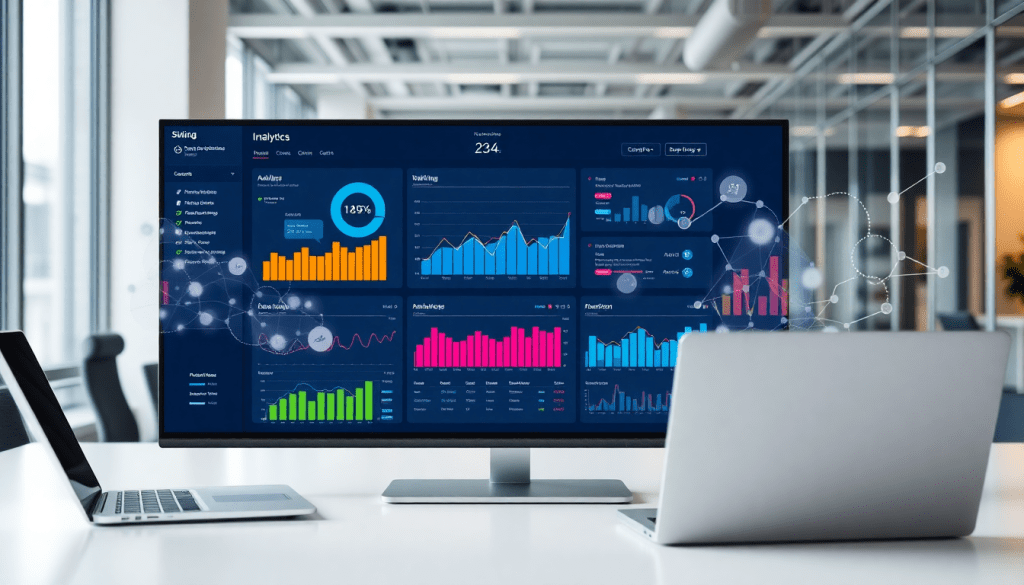
Performance Marketing Reporting Software: Automate Campaign Insights
Performance marketing reporting software is essential for agencies and brands aiming to drive better results with less manual effort. With automated campaign reporting, ROAS tracking, and robust analytics dashboards, teams can uncover actionable digital advertising insights, optimize ad spend, and deliver clear client performance reports—all in less time. This guide explores what to look for in performance marketing automation tools, how they empower smarter decision-making, and strategies for achieving cross-channel visibility and efficiency.
What is Performance Marketing Reporting Software?
Performance marketing reporting software is a specialized technology solution designed to automate, centralize, and elevate digital advertising analytics. At its core, this software aggregates data from paid media channels—such as search, social, display, and programmatic—then transforms that raw data into actionable insights through real-time dashboards and automated campaign reports.
For agencies, brands, and media teams, the manual process of collecting metrics, calculating return on ad spend (ROAS), and preparing client-ready performance reports is both time-consuming and error-prone. Siloed data from multiple platforms complicates measurement, leading to inefficiencies and missed optimization opportunities. Performance marketing reporting software solves these pain points by unifying data sources, automating repetitive reporting tasks, and providing a single source of truth for campaign performance.
Key capabilities of performance marketing reporting software include:
- Automated Campaign Reporting: Scheduled, branded reports that are generated without manual intervention, saving countless hours for analysts and account managers.
- ROAS Tracking: Real-time measurement of return on ad spend across channels, enabling marketers to quickly identify top-performing campaigns and optimize budget allocation.
- Cross-Channel Tracking: Unified views of performance data from all digital channels, allowing for holistic analysis and comparison.
- Performance Analytics: Advanced dashboards and visualization tools that surface trends, outliers, and opportunities for campaign improvement.
Modern platforms, like TapClicks, go beyond basic data integration by offering AI-powered insights and customizable reporting tailored to each client or business unit’s goals. To see how this level of automation and intelligence leads to better marketing outcomes, explore the "Marketing Analytics Report: TapClicks Software for Powerful Insights".
Key Features to Look For in a Performance Analytics Tool
Selecting the right performance marketing reporting software begins with understanding the features that will have the biggest impact on your team’s efficiency, insights, and client satisfaction. The best tools go beyond basic reporting—they provide intelligent, actionable analytics and effortless automation that empower marketers to drive measurable results.
Ad Spend Optimization Dashboards
A must-have for any performance analytics tool is a dynamic dashboard that visualizes ad spend and budget pacing in real time. These dashboards help marketers monitor spend across channels, identify overspending or underinvestment, and quickly reallocate budgets for maximum ROI. Look for solutions offering granular breakdowns by channel, campaign, or even creative, allowing you to drill down and act fast on emerging trends.
Conversion Rate Analytics and Paid Media Dashboards
Robust conversion analytics are essential for understanding campaign effectiveness. The right tool should track key metrics—such as click-through rates, cost per acquisition, and return on ad spend (ROAS)—across every paid media channel. Paid media dashboards that aggregate performance data from search, social, display, and programmatic campaigns provide a unified view, streamlining analysis and optimization.
Client Performance Reports
Delivering clear, compelling client reports is crucial for agencies and marketing teams. Top-tier software enables you to automate report creation, customize layouts, and add your branding, ensuring every report is client-ready and professional. Features like scheduled report delivery, interactive dashboards, and role-based access help agencies deliver insights faster and with less manual effort.
Integrations and Data Connectors
Seamless integration with major ad platforms (Google Ads, Facebook Ads, LinkedIn, TikTok, etc.) and analytics tools is non-negotiable. Look for platforms with a wide range of data connectors, so you can automatically pull campaign data from all sources—reducing manual data entry and the risk of errors. Advanced tools also support automated ETL/ELT pipelines, allowing you to blend and normalize data from multiple channels for holistic analysis.
Customizable and Branded Reporting
The ability to tailor dashboards and reports to your agency or client’s branding is more than a cosmetic perk—it enhances professionalism and builds trust. Choose software that offers white-labeling, drag-and-drop report builders, and flexible widget customization so you can highlight the metrics that matter most. This ensures stakeholders always see data presented in the most relevant and engaging way.
In short, when evaluating performance analytics tools, prioritize those that combine ad spend optimization, deep conversion analysis, automated and customizable reporting, and broad integration capabilities. These features are the foundation of a streamlined, insight-driven marketing operation—helping teams scale their impact while delivering exceptional value to clients.
Automating Campaign Reporting: Save Time, Reduce Errors
Automated campaign reporting is changing the game for marketing teams—eliminating manual grunt work and boosting both accuracy and speed. Let’s break down how automation works, why it matters, and what you can expect when you switch from spreadsheets to a unified platform like TapClicks.
How Automated Reporting Works
Instead of endless copy-paste and spreadsheet wrangling, automation tools:
-
Connect Directly to Your Data Sources
- Integrate with platforms like Google Ads, Facebook, LinkedIn, programmatic platforms, and more.
- Pull fresh data at scheduled intervals (hourly, daily, weekly).
-
Centralize and Standardize Your Data
- Aggregate campaign data into a single, secure location.
- Normalize and blend data for apples-to-apples reporting across channels.
-
Deliver Real-Time Dashboards and Reports
- Populate customizable dashboards and branded report templates.
- Auto-update metrics and visualizations in real time—no manual refresh needed.
The Impact on Your Workflow
Here’s what changes for your team:
- No more chasing down data from dozens of ad platforms.
- No more cleaning, merging, or double-checking Excel formulas.
- No more late-night scrambles to fix last-minute errors before client meetings.
Instead, you can:
- Schedule recurring reports for clients and stakeholders.
- Trust the numbers—automation eliminates human error from manual data handling.
- Free up analysts and account managers to focus on optimization, not admin.
Why Manual Reporting is Risky
Manual campaign reporting isn’t just a time sink—it’s a liability:
| Risk | Manual Reporting | Automated Reporting |
|---|---|---|
| Error Prone | High (copy-paste, formulas, missed updates) | Low (standardized, validated pipelines) |
| Time Consuming | 5-10+ hours/week/analyst | 1-2 hours/week/analyst |
| Scalability | Difficult (more clients = more work) | Effortless scaling |
| Data Freshness | Delayed (static exports) | Real-time/auto-updated |
The Bottom Line: More Time, Better Insights
- Agencies using automated reporting save up to 50 hours per analyst per month (source).
- Faster turnaround = quicker insights and more room for strategic work.
- Consistent, accurate reports build client trust and help you scale your business.
Ready to See It in Action?
Automated campaign reporting empowers your team to:
- Handle more clients and campaigns, with less effort.
- Deliver high-quality, error-free insights—every time.
Curious how a unified platform like TapClicks can transform your reporting process?
Explore a demo or start your free trial today.
ROAS Tracking and Ad Spend Optimization Dashboards
In today’s competitive digital advertising landscape, precise ROAS (Return on Ad Spend) tracking is non-negotiable for marketing teams that want to maximize every dollar. Accurate ROAS tracking platforms give agencies and brands clear visibility into which campaigns, channels, and creatives are truly driving profit, not just clicks or impressions. Without automated systems, this level of granular insight often gets lost in spreadsheets or delayed manual reports—leaving budgets vulnerable to waste and missed opportunities.
Ad spend optimization dashboards are a strategic upgrade for any performance marketing operation. These dashboards consolidate real-time spend, revenue, and conversion data across all platforms—Google, Facebook, LinkedIn, TikTok, and more—into a single, easy-to-navigate view. Instead of toggling between disparate ad manager screens or wrestling with CSV exports, teams gain an immediate understanding of which channels are over- or under-performing against their targets. This empowers marketers to proactively reallocate budgets, pause underperforming campaigns, and double down on high-ROI tactics—all without waiting for end-of-month reporting cycles.
The actionable insights surfaced by modern ROAS and optimization dashboards go far beyond surface-level metrics. For example, an intelligent dashboard might automatically flag campaigns with high spend but low conversions, recommend budget shifts based on predictive trends, or alert teams to sudden changes in CPA (cost per acquisition). With these data-driven nudges, marketers can make faster, more confident decisions supported by a single source of truth.
Solutions like TapClicks take this a step further by combining automated ROAS tracking and ad spend optimization with AI-powered insights and cross-channel analytics. The result is not just time saved on reporting, but a genuine increase in marketing effectiveness—helping agencies and brands unlock greater ROI from every campaign, every day.
Cross-Channel Campaign Tracking and Digital Advertising Insights
In today’s fragmented digital ecosystem, marketers run campaigns across numerous platforms—Google, Facebook, LinkedIn, programmatic networks, retail media, and more. Without unified tracking, performance data quickly becomes siloed, making it difficult to see the full picture or understand what’s truly driving results. This is where cross-channel campaign tracking within performance marketing reporting software becomes indispensable.
By aggregating data from all your advertising channels into a single, centralized dashboard, cross-channel tracking delivers holistic visibility into campaign effectiveness. Marketers can instantly compare performance across platforms, assess the interplay between channels, and spot trends that would otherwise be hidden by isolated reporting. This unified view not only streamlines monitoring but also makes it easier to attribute conversions, optimize budgets, and justify spend to stakeholders.
Consolidated digital advertising insights are especially valuable for multi-platform campaigns. With the right performance marketing automation tools, you gain real-time access to metrics like clicks, impressions, conversions, and ROAS across every channel—without manual effort or switching between disparate reports. Advanced solutions even normalize and enrich data from various sources, so you’re not comparing apples to oranges but instead working from a single source of truth.
Siloed data is one of the biggest barriers to effective campaign optimization. Manual data wrangling is time-consuming and prone to errors, often leading to delayed or incomplete insights. Performance marketing automation platforms, however, resolve these challenges by automating data collection, transformation, and visualization. As highlighted in Unlocking Real-Time Marketing: The Power of Automated Data Collection for Brand Marketers, automated cross-channel tracking empowers marketers to act quickly on emerging trends, allocate budget dynamically, and deliver more impactful results for clients and stakeholders.
Ultimately, cross-channel campaign tracking and automated digital advertising insights enable marketing teams to move from reactive reporting to proactive optimization—backed by a comprehensive, data-driven understanding of what works across the entire marketing mix.
Building and Delivering Client Performance Reports
Creating client-ready performance reports is more than a routine task—it’s your opportunity to demonstrate value, build trust, and spark action. Let’s break down how agencies and brands can craft reports that not only inform but truly impress.
Start with What Matters Most
How to Align Reports with Client Goals:
-
Identify key objectives
(e.g., lead generation, ROAS, site traffic, brand awareness) -
Highlight primary KPIs up front
Use visuals and concise narratives to tell a clear story. -
Stay focused
Avoid overwhelming clients—prioritize metrics that matter, and use annotations to explain trends or anomalies.
Make It Visual and Brand-Forward
Ways to Elevate the Client Experience:
- Use customizable dashboards to reinforce both your agency’s and the client’s branding.
- Maintain a consistent report structure each month or quarter.
- Leverage branded templates so clients immediately recognize their context.
| Branding Element | Why It Matters |
|---|---|
| Logos & Colors | Boosts professionalism & trust |
| Consistent Layout | Eases comprehension |
| Custom Metrics | Speaks to unique client needs |
Automate to Save Time—and Reduce Errors
Checklist for Automated Reporting:
- Set up integrations to pull data from all relevant sources.
- Schedule reports to send automatically (weekly, monthly, or custom cadence).
- Provide clients with always-on dashboard access for real-time visibility.
- Use role-based permissions to control who sees what.
Tip:
With TapClicks, you can manage hundreds of client reports and dashboards at once, freeing your team from repetitive manual work.
Turn Data Into Actionable Insights
How to Make Reports a Decision-Making Tool:
-
Add context and commentary:
Don’t just show the numbers—explain what’s driving results. -
Personalize insights:
Use automated or AI-generated highlights to tie performance to the client’s specific KPIs (e.g., if CPA is key, spotlight trends and causes). -
Offer recommendations:
Suggest where to increase investment, reallocate budget, or experiment with new tactics.
Streamline Your Workflow for Scale
Why Use Platforms Like TapClicks?
- Drag-and-drop dashboard builders for fast setup
- Multi-client management from a single portal
- Automated, scheduled reporting—no manual data pulls
- Role-based access for team and client collaboration
By combining automation, customization, and strategic insights, you’ll turn reporting from a monthly chore into a true competitive advantage.
Pro Tip:
Integrate your reporting with TapClicks’ AI-powered insights to ensure you’re not just reporting on what happened—but guiding clients on what to do next.
Choosing the Right Performance Marketing Reporting Platform
With a crowded landscape of performance marketing reporting solutions, selecting the right platform can make all the difference in your team’s efficiency and results. The best tools not only automate data collection and reporting but also scale with your business, adapt to your workflows, and turn complex campaign data into actionable insights.
Comparing Leading Solutions:
Platforms like Funnel.io, Adverity, Agency Analytics, Datorama (Salesforce), Supermetrics, and NinjaCat each offer data integration and reporting capabilities, but their depth and approach vary. Lightweight tools such as Agency Analytics and NinjaCat are easy to deploy but may fall short when scaling across hundreds of clients or integrating with custom data sources. Funnel.io and Supermetrics excel at piping data into BI tools but generally lack advanced analytics, workflow, and client-facing features.
Key Differentiators to Consider:
- Scalability: Can the platform handle hundreds or thousands of campaigns, dashboards, and clients without bogging down? Enterprise-grade solutions like TapClicks are purpose-built for high-volume agencies and brands, providing robust infrastructure for large-scale reporting and multi-client management.
- Flexibility: Look for customizable dashboards, branded reporting studios, and the ability to blend data from multiple channels, locations, or clients. The best platforms also allow you to export cleaned, enriched data to your existing BI stack if needed.
- Workflow Automation: Beyond dashboards, top-tier platforms include order management, role-based access, and workflow tools that streamline campaign launches, collaboration, and fulfillment.
- AI-Powered Insights: Modern solutions offer more than static reports—they use AI agents to surface optimization opportunities, generate automated summaries, and recommend budget adjustments, all of which save analysts significant time.
- Ease of Use: Intuitive drag-and-drop interfaces, prebuilt templates, and automated scheduling empower even non-technical users to create and deliver impactful reports.
Guidance for Evaluating Platforms:
- Assess Your Scale: How many clients, campaigns, and channels must you manage? Ensure your platform won’t hit bottlenecks as you grow.
- Map Your Workflows: Consider how reporting, analytics, and campaign management fit into your day-to-day. Choose a solution that streamlines—not complicates—your process.
- Prioritize Integration: Verify that the tool offers connectors for all your media platforms (search, social, display, programmatic, offline) and supports custom or proprietary data sources.
- Demo and Trial: Request demos or free trials to see real-world performance, gauge usability, and evaluate support resources.
Ultimately, the right performance marketing reporting platform should not only meet your current needs but also grow alongside your agency or brand, providing the automation, insight, and operational efficiency necessary to thrive in a competitive digital landscape.
Conclusion
Performance marketing reporting software is transforming the way agencies and brands manage, analyze, and optimize their advertising efforts. By automating campaign insights, streamlining reporting workflows, and centralizing data from every major platform, teams can eliminate manual errors, reclaim valuable hours, and deliver sharper, more actionable insights to clients. These tools not only boost internal efficiency but also empower marketers to make smarter, data-driven decisions that maximize ROI and fuel performance growth.
If your team is still relying on spreadsheets, siloed dashboards, or time-consuming manual processes, now is the perfect moment to reassess your approach. Modern reporting platforms bring together automated data collection, real-time analytics, and customizable client reporting—all crucial for staying competitive in today’s fast-paced digital landscape.
Ready to see the impact for yourself? Consider trialing a leading performance analytics platform or requesting a demo with TapClicks to explore how automation can revolutionize your marketing operations. Taking the next step toward unified, insight-driven reporting will pay dividends in both time saved and campaign results achieved.
Start Automating Your Marketing Data Today!
No Credit Card Required.

