

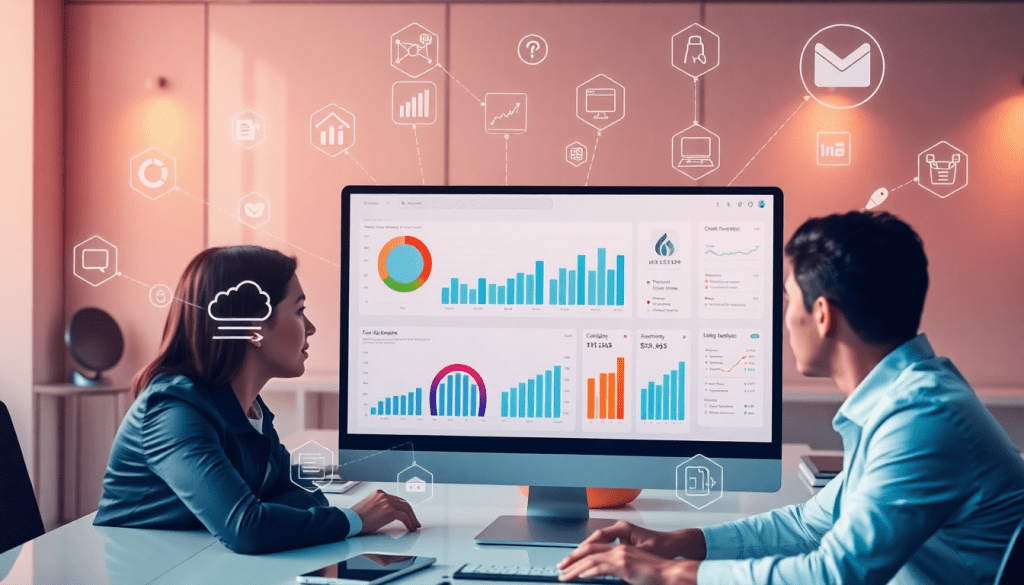
Performance Marketing Reporting Software: Automate Campaign Insights
Performance marketing teams need more than spreadsheets and manual updates to keep pace with today’s digital campaigns. Automated performance marketing reporting software brings all your advertising data—across search, social, display, and more—into a single platform for real-time analysis, effortless reporting, and actionable insights. With the right solution, agencies and brands can track ROAS, optimize ad spend, visualize performance, and deliver client-ready reports in just a few clicks. This guide explains what to look for in a performance marketing reporting platform, how automation transforms campaign reporting, and what features empower data-driven teams to drive better results at scale.
What Is Performance Marketing Reporting Software?
Performance marketing reporting software is a specialized digital tool that aggregates, analyzes, and visualizes data from a wide array of advertising channels—think search, social, display, video, and more—to help marketers track, measure, and optimize their campaigns. Unlike traditional spreadsheet-based tracking or simple dashboards, these platforms automate the process of collecting performance metrics, blending data from disparate sources, and presenting actionable insights in easy-to-understand formats.
At its core, performance marketing reporting software does three things exceptionally well:
- Data Integration: It automatically connects to dozens (or even thousands) of marketing platforms—such as Google Ads, Facebook, LinkedIn, programmatic ad platforms, and more—pulling in campaign data with no manual effort.
- Automated Reporting: It transforms raw data into real-time dashboards and scheduled, client-ready reports. Teams can visualize trends, compare channels, and share results without tedious copy-paste routines.
- Actionable Insights: Advanced tools go beyond static charts by surfacing optimization opportunities, benchmarking performance, and even recommending budget shifts.
There’s a major difference between basic dashboards and advanced, automated reporting platforms. Simple dashboards may display metrics from a single channel or require manual data uploads, limiting scale and accuracy. In contrast, automated reporting solutions provide cross-channel views, continuous data updates, and sophisticated analytics—empowering users to manage hundreds of campaigns or clients simultaneously, with far less effort.
The benefits are immediate and measurable: significant time savings (often reclaiming 50+ hours per analyst per month), improved data accuracy by eliminating manual errors, and the ability to scale reporting as your campaigns or client roster grows. To see how dashboard automation can dramatically boost efficiency for agencies and marketing teams, check out this guide on how dashboard automation boosts agency reporting efficiency.
In short, performance marketing reporting software is the backbone of scalable, data-driven digital advertising—moving teams from reactive, manual work to proactive optimization and smarter decision-making.
Key Features of Automated Campaign Reporting Tools
Choosing the right performance marketing reporting software hinges on understanding the features that separate basic dashboards from true automation powerhouses. Modern solutions like TapClicks are designed to streamline your entire reporting workflow, empowering teams to move beyond manual data wrangling and deliver actionable insights at scale.
At the core, must-have features include cross-channel campaign tracking, which consolidates data from search, social, display, and more into a single unified view. This eliminates silos, enabling marketers to compare performance and optimize spend across platforms in real time. Scheduled reports are another essential, allowing agencies and brands to automate client updates, internal reviews, and executive summaries—ensuring everyone receives the latest insights, without hours spent on repetitive tasks.
Real-time data sync is crucial for timely decision-making. With automated data integrations and live updating, teams can react instantly to shifts in performance, reallocating budget or adjusting creative before small issues become costly problems. Specialized modules elevate this further: ROAS tracking and conversion rate analytics provide granular visibility into what’s working, while budget pacing tools help teams stay on target, preventing overspend or missed opportunities.
For agencies and multi-client environments, white-label client performance reports and branded dashboards are invaluable. These features let you deliver professional, customized reporting experiences, complete with your client’s logo, color palette, and relevant KPIs—boosting client satisfaction and retention.
Want to visualize ROI at a glance? Explore how KPI dashboard visualization accelerates ROI insights and supports fast, data-driven decision making.
Ready to see how unified reporting and automation can transform your marketing operations? Learn more about TapClicks’ all-in-one marketing operations platform at tapclicks.com.
The Value of Performance Analytics Tools for Agencies and Brands
Performance analytics tools have become essential for both agencies and brand marketers who are tasked with managing ever-expanding digital campaigns across multiple platforms. For agencies, these tools represent a game-changer: they enable seamless management of dozens—or even hundreds—of client accounts from a single dashboard. Instead of juggling disparate data sources and creating one-off spreadsheets for each campaign, agencies can automate data collection and reporting, ensuring accuracy and freeing up more time for campaign strategy and optimization. This efficiency not only reduces manual effort but also minimizes reporting errors, delivers faster turnaround times, and supports scalable growth as client rosters expand.
Brand teams also reap significant rewards from centralized performance analytics. With all marketing data unified in one platform, brands gain an unparalleled level of transparency into their digital advertising efforts. Stakeholders can easily monitor spend, performance, and ROI by region, product line, or business unit, fostering informed decision-making across the organization. Actionable insights—such as which channels are driving the highest returns or where budget can be reallocated—are surfaced automatically, empowering teams to optimize campaigns in real time.
High-volume reporting, a challenge for both agencies and brands, becomes remarkably streamlined with automated tools. For example, a multi-location brand can instantly generate campaign performance summaries for every region, while agencies can deliver white-labeled, client-ready reports at scale—complete with custom branding and tailored KPIs. Automated workflow integrations further enhance these benefits by connecting reporting with campaign management, approvals, and follow-ups, creating a truly end-to-end marketing operations system.
Leading platforms like TapClicks exemplify these advantages. By offering robust data integration, real-time dashboards, and automated insights, TapClicks enables agencies and brands to unlock greater efficiency, foster transparency, and drive better results from their digital marketing investments.
Building an Ad Spend Optimization Dashboard
An ad spend optimization dashboard is a marketer’s command center for maximizing budget efficiency and campaign ROI. Setting one up begins with connecting all your paid media channels—Google Ads, Facebook, LinkedIn, programmatic display, and more—using a platform like TapClicks. This unified integration ensures your dashboard pulls real-time data from every channel, eliminating manual uploads and patchwork spreadsheets.
Next, structure your dashboard to visualize key metrics: total spend, impressions, clicks, conversions, and cost per acquisition, broken down by channel and campaign. Leading performance marketing reporting platforms make this easy with drag-and-drop widgets, custom date ranges, and dynamic filters for granular analysis.
A robust dashboard goes beyond surface-level metrics. Use attribution models to track which channels and touchpoints are driving conversions, not just clicks. Advanced tools enable you to map out the full customer journey, showing how different campaigns contribute to your bottom line—vital for optimizing multi-channel spend.
Dashboards should also highlight pacing and budget utilization, alerting you if spend is ahead or behind plan. Automated threshold notifications and AI-based recommendations can flag underperforming campaigns or areas where reallocating budget could yield better results.
Finally, ensure your dashboard supports scheduled, client-ready reporting and role-based access so teams and stakeholders see the right data, at the right time. With the right setup, your ad spend optimization dashboard becomes a living blueprint for agile, data-driven marketing—empowering you to make smarter decisions and drive better outcomes across every paid channel.
ROAS Tracking Platforms: Calculating and Improving Return on Ad Spend
Return on Ad Spend (ROAS) is one of the most critical metrics in digital marketing—serving as the ultimate measure of how effectively your advertising investments are generating revenue. In simple terms, ROAS reveals how many dollars you earn for every dollar spent on advertising. For performance-driven teams, precise ROAS tracking is non-negotiable: it provides the clarity needed to allocate budget, justify spend, and optimize campaigns in real time.
Automated performance marketing reporting software takes the complexity out of ROAS calculation and monitoring. Instead of juggling multiple ad platforms and spreadsheets, these tools aggregate cost and conversion data across all your channels—Google Ads, Facebook, programmatic, and more—into a single, unified dashboard. With cross-channel data normalization and automated ETL (extract, transform, load) pipelines, software like TapClicks ensures your ROAS metrics are always accurate and up to date, even as new campaigns launch or budgets shift.
The real power of automated ROAS tracking platforms lies in their ability to surface actionable insights. You can quickly spot which channels, campaigns, or creatives are delivering the highest returns, identify underperformers, and pivot resources accordingly. Many platforms offer budget pacing, predictive models, and AI-driven recommendations so you can proactively adjust spend before inefficiencies impact your bottom line.
To get even more value from ROAS analytics:
- Compare ROAS across different audience segments to find your most profitable customer groups.
- Monitor trends over time to anticipate seasonal shifts or creative fatigue.
- Leverage customizable dashboards and scheduled reports to keep stakeholders informed and aligned on campaign performance.
By automating ROAS tracking and integrating it with your broader performance marketing reporting, you empower your team to make data-driven decisions—maximizing every advertising dollar and driving sustained growth.
Conversion Rate Analytics: Turning Clicks into Real Results
Conversion rate analytics go beyond just tallying clicks—they reveal which campaigns actually drive meaningful actions, like purchases or sign-ups. For marketers aiming to maximize ROI, understanding and acting on these insights is essential.
Why Conversion Rate Analytics Matter
- Move Beyond Clicks: It’s not just about traffic; it’s about real actions that impact your bottom line.
- Spot What Works: Quickly pinpoint which campaigns, channels, or creatives are delivering conversions—and which are falling flat.
- Optimize Spend: Redirect budget from underperforming efforts to high-impact opportunities.
How Modern Platforms Supercharge Insights
Today’s performance marketing tools, like TapClicks, do more than just report numbers. Here’s how they help you act faster and smarter:
- Automated Underperformance Alerts: Instantly identify landing pages, ads, or audience segments with low conversion rates.
- A/B Test Tracking: See which headlines, CTAs, or form tweaks lift conversions—no spreadsheets required.
- Unified Analytics: Connect data from web analytics, CRMs, call tracking, and more, all in one dashboard.
Example: What Can You Uncover with Conversion Analytics?
| Use Case | TapClicks Solution | Result |
|---|---|---|
| Ad creative isn’t converting | AI-driven performance insights | Suggests headline or CTA change |
| Landing page drop-off | Cross-channel comparison | Identifies friction points |
| Sales attribution gap | Unified conversion tracking | See which efforts drive revenue |
Steps to Unlock More Value from Conversion Analytics
- Centralize Your Data: Integrate all analytics sources into a single dashboard for a holistic view.
- Set Up Automated Reporting: Schedule regular performance summaries to keep teams and clients aligned.
- Leverage AI Insights: Let TapClicks’ AI agents surface optimization opportunities you might miss manually.
- Test, Learn, Repeat: Use insights to inform rapid A/B tests and campaign tweaks.
From “What Happened?” to “What’s Next?”
Strong conversion rate analytics empower your team to:
- Visualize key metrics and ROI opportunities at a glance
- Make data-driven decisions on where to invest next
- Clearly demonstrate value to stakeholders
Ready to see how unified reporting and real-time insights can transform your digital strategy?
Explore conversion analytics with TapClicks.
Automating Client Performance Reports
Delivering timely, accurate, and visually compelling performance reports is a cornerstone of agency-client relationships. Automated reporting tools transform this process by enabling scheduled, customizable, and interactive reports—freeing teams from manual data pulls and formatting, and ensuring clients receive up-to-date insights with minimal effort.
With advanced platforms, agencies can set up recurring report schedules tailored to each client’s preferences—weekly, monthly, or even real-time updates. These reports automatically consolidate data from all relevant marketing channels, ensuring consistency and eliminating errors that often arise from manual compilation. Customization options allow agencies to highlight the KPIs and campaign metrics most important to each client, incorporating their branding for a polished, professional presentation.
Best practices for automating client performance reports include:
- Personalization: Tailor report content to each client’s goals, industry, and campaign types. Use dynamic templates that adjust the narrative and visualization to spotlight what matters most.
- Clarity and Transparency: Visualize complex metrics with intuitive dashboards, ensuring clients can quickly interpret results and spot trends. Include context and commentary to explain fluctuations and recommend next steps.
- Interactivity: Leverage web-based dashboards that allow clients to drill down into specific campaigns, channels, or timeframes for a deeper understanding.
- Automation of Distribution: Schedule automated delivery via email or client portals, so stakeholders always have access to the latest performance insights—without waiting for manual updates.
For agencies looking to stand out, platforms like TapClicks offer robust marketing analytics reporting capabilities that combine automation with deep customization. Explore TapClicks’ marketing analytics reporting for powerful insights to see how automated reports can impress clients and streamline your team’s workflow. By embracing automation, agencies not only save valuable time but also deliver a superior, data-driven client experience.
Choosing the Right Performance Marketing Automation Platform
Selecting the ideal performance marketing automation platform is a pivotal decision that impacts your team’s speed, transparency, and ability to scale. To ensure your investment delivers maximum value, focus on these core evaluation criteria:
1. Integrations and Data Connectivity
A robust platform should offer seamless integrations with all major marketing, advertising, and analytics sources—think Google Ads, Meta, LinkedIn, programmatic channels, CRMs, and more. Look for solutions with a wide array of pre-built connectors and the ability to build custom integrations or import offline data. This ensures you can consolidate every data stream—no more manual exports or disconnected spreadsheets.
2. Scalability and Multi-Account Management
As your client roster or brand footprint grows, your reporting software must scale effortlessly. Top-tier platforms like TapClicks are engineered to handle thousands of dashboards, multiple user roles, and complex account hierarchies. This scalability is crucial for agencies juggling dozens (or hundreds) of clients, or multi-location brands seeking unified oversight.
3. Visualization and Custom Reporting Options
Effective reporting goes beyond raw data. Seek out platforms with intuitive, drag-and-drop dashboard builders, customizable templates, and options for branded, white-label reports. This empowers you to visualize campaign performance, ROAS, and conversion trends in formats that resonate with stakeholders. For inspiration, see how KPI dashboard visualization simplifies ROI analysis.
4. Workflow and Collaboration Support
Performance marketing is a team sport. The best platforms feature workflow modules for order management, role-based access, automated notifications, and collaboration between sales, ops, and fulfillment teams. This streamlines campaign launches, approvals, and performance monitoring—reducing manual follow-ups and ensuring everyone stays aligned.
5. AI-Powered Insights and Automation
Cutting-edge solutions now offer AI agents, automated insight summaries, predictive models, and optimization recommendations. These features help surface hidden trends, benchmark performance, and suggest budget reallocations—transforming your reporting tool from a passive dashboard into an active co-pilot for campaign optimization.
Comparing Leading Performance Marketing Reporting Tools
While many platforms promise automation, only a few deliver the scale, intelligence, and workflow depth that modern agencies and brands require. For example, TapClicks stands out with:
- Over 10,000 marketing and business data connectors
- Drag-and-drop dashboard and branded reporting studio
- Automated, scheduled reporting for internal teams and clients
- AI-powered insights, benchmarking, and optimization agents
- Centralized order management and workflow tools for cross-team collaboration
Other tools such as Funnel.io, Adverity, and Agency Analytics offer solid data integration and visualization but may fall short on workflow orchestration or scalable multi-client management. TapClicks’ unified platform approach means you don’t have to stitch together point solutions for data, dashboards, and campaign ops.
Next Steps: Try Before You Buy
Most leading platforms offer demos or free trials—take advantage of these to test integrations, explore reporting templates, and assess usability for your team. For a closer look at how TapClicks can automate and elevate your performance marketing reporting, request a demo or start your free trial. By prioritizing the right features and fit, you’ll lay the groundwork for faster insights, smarter optimization, and happier clients at scale.
Start Automating Your Marketing Data Today!
No Credit Card Required.

