

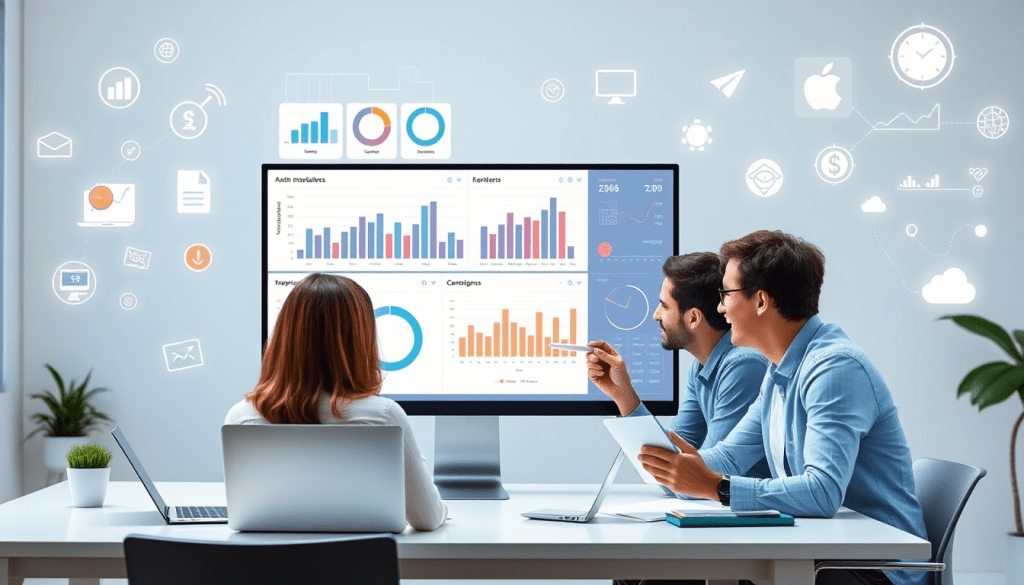
Performance Marketing Reporting Software: Automate Campaign Analytics
Performance marketing reporting software is the backbone of data-driven advertising teams, empowering marketers to automate campaign analytics, track ROAS, and uncover digital advertising insights across every paid channel. Instead of wrestling with spreadsheets or siloed dashboards, modern performance platforms deliver unified, real-time views into what’s driving results—so teams can optimize spend, boost efficiency, and impress clients with transparent, actionable reporting. This guide covers how performance marketing automation streamlines reporting, what to look for in a robust platform, and how to leverage analytics to maximize your campaign ROI.
What is Performance Marketing Reporting Software?
Performance marketing reporting software is a specialized type of analytics platform designed to automatically gather, analyze, and visualize performance data from paid media campaigns across digital channels. Its core purpose is to provide marketers, agencies, and brands with a unified, real-time view of campaign effectiveness—tracking key metrics such as impressions, clicks, conversions, and return on ad spend (ROAS)—without the need for manual data wrangling or siloed spreadsheets.
Traditionally, campaign reporting was a tedious, manual process: marketers would log into multiple ad platforms (Google Ads, Facebook, LinkedIn, programmatic DSPs), export spreadsheets, normalize and merge data, and then build custom reports, often in Excel or PowerPoint. This approach was not only time-consuming but also prone to errors and delays, making it difficult to gain timely insights or optimize campaigns effectively.
Modern performance marketing reporting software automates this entire workflow. By integrating directly with dozens—or even thousands—of advertising and analytics platforms, it pulls in live campaign data, standardizes metrics across channels, and presents results through interactive dashboards and scheduled reports. This automation transforms reporting from a monthly headache into an always-on, insight-driven process.
Centralized platforms for paid media analytics offer significant value: they eliminate data silos, ensure consistency in reporting, and empower teams to spot trends, optimize budgets, and demonstrate ROI to stakeholders or clients with transparency and confidence.
Related concepts you might encounter include performance analytics tools, which often focus on deeper analysis and predictive insights, and paid media dashboards, which are customizable interfaces displaying marketing KPIs in real time. The best performance marketing reporting solutions combine these elements, making data accessible, actionable, and automated—so marketers can focus on strategy, not spreadsheets.
To learn more about how unified marketing operations platforms are transforming performance reporting, visit TapClicks.
Key Features to Look For in Automated Campaign Reporting
Choosing the right performance marketing reporting software can make or break your analytics workflow. To truly empower your team and impress your clients, look for these must-have features:
1. Cross-Channel Campaign Tracking
Modern marketing rarely happens in a silo. Your reporting platform should seamlessly integrate data from Google Ads, Facebook, programmatic display, native, and more—delivering a unified view across all paid channels. This cross-channel visibility is critical for identifying which campaigns drive real results and for allocating budget with confidence.
2. ROAS Tracking Platform
Return on Ad Spend (ROAS) is the north star metric for most digital marketers. The software you choose should provide robust ROAS tracking, allowing you to compare performance across campaigns, platforms, and time periods—all without manual calculation. Automated ROAS dashboards help surface the most profitable channels and spot underperformers instantly.
3. Conversion Rate Analytics
Beyond spend and impressions, conversion rate is the ultimate indicator of campaign effectiveness. Look for platforms that can ingest conversion data and visualize trends, segment by channel or creative, and flag anomalies. Advanced reporting will even allow you to drill down into specific actions—like purchases, signups, or calls—so you can optimize creative and targeting accordingly.
4. Digital Advertising Insights
Actionable insights are what set leading platforms apart. AI-powered analytics and smart visualization tools should automatically highlight trends, anomalies, or opportunities—without hours of manual analysis. Features like AI agents can surface key takeaways and recommendations, while automated insight emails keep stakeholders informed. (See more on dashboard automation and reporting efficiency.)
5. Ad Spend Optimization Dashboards
Effective reporting software should offer dynamic dashboards that not only track current spend but also provide budget pacing, forecasting, and optimization recommendations. This allows marketers to proactively shift dollars toward high-performing campaigns and avoid overspending.
6. Customizable Client Performance Reports and Branded Dashboards
Every client is different. The ability to tailor dashboards and reports—whether by region, product line, or campaign objective—makes your agency or in-house team stand out. Look for drag-and-drop dashboard builders, white-labeling options, and automated report scheduling that delivers branded insights directly to stakeholders.
7. Automation, Accuracy, and Scalability
Finally, the best tools minimize manual work and maximize reliability. Automated data pulls, scheduled reporting, and error-checking features not only save time but also reduce the risk of costly mistakes. Scalability is key—your platform should handle reporting needs for a handful of clients or thousands, without breaking a sweat.
For a platform that brings all these features together and more, explore TapClicks—designed for agencies and brands that demand unified data, actionable insights, and automated reporting at scale.
The Benefits of Cross-Channel Campaign Tracking
In today’s fragmented digital landscape, marketing teams juggle a mosaic of platforms—Google Ads, Facebook, Instagram, programmatic display, and more. Without a unified lens, it’s impossible to see the true story behind your campaigns. That’s where cross-channel campaign tracking becomes a game-changer, delivering comprehensive visibility, transparency, and actionable insights across all your performance marketing initiatives.
Unified Reporting for Smarter Decisions
Cross-channel reporting centralizes data from every paid source, eliminating guesswork and time-consuming manual aggregation. Instead of toggling between siloed dashboards or exporting endless CSV files, marketers can access a single, real-time view of campaign performance. This holistic perspective empowers teams to:
- Identify what’s driving conversions: Instantly compare channels, creatives, and audience segments to spot top performers—and underachievers.
- Allocate spend intelligently: With all data in one place, it’s easier to shift budgets to the channels delivering the best return, maximizing overall ROAS.
- Provide clients and stakeholders with transparency: Unified dashboards foster trust by showing exactly where every dollar goes, and the precise impact of every campaign.
Automating Multi-Channel Analytics
Performance marketing automation multiplies these benefits by connecting to platforms like Google, Facebook, and programmatic exchanges, ingesting campaign data automatically and updating dashboards in real time. This seamless data flow means marketers no longer have to worry about missed updates, reporting delays, or human error. Instead, they can focus on strategy and optimization, confident that their analytics are always accurate and up to date.
For agencies and brands handling dozens—or even thousands—of campaigns, platforms like TapClicks streamline multi-channel analytics at scale. TapClicks’ automated data integration and reporting centralize every touchpoint, so teams can move from data wrangling to insight-driven action faster than ever. For a deeper dive on the advantages of marketing dashboard automation, learn about TapClicks’ automation and how it transforms cross-channel reporting.
Driving Performance and Efficiency
Ultimately, cross-channel campaign tracking isn’t just about visibility—it’s about agility. With unified, automated reporting, marketers can react to trends in real time, optimize campaigns on the fly, and deliver impactful results with less manual effort. Whether you’re managing a handful of paid channels or orchestrating enterprise-scale campaigns, cross-channel automation ensures your analytics are always connected to what matters most: performance.
ROAS, Conversion Rate, and Ad Spend Optimization Dashboards
Tracking Return on Ad Spend (ROAS) and conversion rates is at the core of any successful paid media strategy. These metrics reveal not just whether your campaigns are reaching audiences, but whether they’re truly driving business results. ROAS, for instance, quantifies the revenue generated for every advertising dollar spent, offering a clear lens into campaign profitability. Conversion rate analytics go a step further, showing how effectively your ads are turning interest into meaningful actions—such as purchases, signups, or downloads.
Ad spend optimization dashboards take these insights even further by providing a live, holistic view of budget allocation and performance across all your paid channels. With these dashboards, marketers can instantly spot which campaigns are delivering the highest returns and which need adjustment. Instead of reacting to last month’s results, teams can reallocate spend in real time, capitalizing on top-performing channels while containing underperforming investments. This dynamic approach not only maximizes impact but also ensures that every dollar works harder for your business.
Consider the use cases: Agencies can easily generate branded client performance reports that highlight exactly how budgets are being optimized for better ROAS and conversion rates. In-house marketing teams can compile executive summaries that visualize spend, performance trends, and recommendations for next steps—all without hours of manual calculation. With platforms like TapClicks, these dashboards and reports are not only automated and customizable, but also scalable for agencies managing dozens or hundreds of client accounts. The result? Stakeholders at every level gain transparency, actionable insights, and the confidence to make smarter, faster marketing decisions.
How Performance Marketing Reporting Software Drives Efficiency
One of the most transformative benefits of performance marketing reporting software is the dramatic boost in operational efficiency it delivers for both in-house marketing teams and agencies. By automating the mundane yet critical tasks of data collection, normalization, and report generation, these platforms free up countless hours that would otherwise be spent wrangling spreadsheets or manually pulling numbers from disparate ad platforms.
Time Savings Through Automation
Instead of logging into multiple ad accounts—Google, Facebook, LinkedIn, programmatic platforms—and copying data into a master report, teams can rely on automated data pipelines that pull campaign metrics into a unified dashboard. This not only slashes reporting time (often by 50+ hours per analyst each month) but also accelerates the feedback loop necessary for optimizing campaigns in real time.
Reduced Manual Work and Error Risk
Manual data entry is prone to mistakes, especially when dealing with high volumes of campaign data. Automation ensures accuracy and consistency, minimizing errors that could lead to reporting discrepancies or misguided optimization decisions. With performance marketing reporting software, marketers can trust that their dashboards and client reports are always up-to-date and error-free.
Faster Turnaround and Insight Delivery
Speed is essential in digital advertising, where timely insights can mean the difference between capitalizing on trends and missing out. Automated reporting platforms empower teams to deliver executive summaries and client performance reports on demand, often with same-day turnaround. For instance, agencies using TapClicks have been able to streamline their entire reporting workflow, allowing them to provide clients with fresh insights at a moment’s notice (see TapClicks in action).
Whether you’re managing dozens of campaigns or hundreds of clients, performance marketing reporting software delivers efficiency gains that translate into better service, faster optimization, and a clear competitive edge.
Integrating Digital Advertising Insights with Existing Tools
Today’s marketing ecosystem is rarely isolated—data flows through a complex web of platforms, teams, and processes. That’s why leading performance marketing reporting software is designed to integrate seamlessly with your existing business intelligence (BI) platforms, customer relationship management (CRM) systems, and finance tools. The right solution acts not just as a dashboard, but as a connective tissue, ensuring your analytics deliver value across the entire organization.
A key capability of modern reporting platforms is flexible data export and robust API integration. This means you can automatically push campaign insights, performance metrics, and attribution data directly into widely used BI tools like Tableau, Power BI, and Looker. For example, TapClicks allows marketers to use its unified data pipeline to feed cleaned, normalized marketing data into these visualization tools, enabling deeper analysis while maintaining a single source of truth.
Additionally, integrating performance marketing reporting software with CRMs ensures that lead, sales, and revenue data connect directly with campaign metrics. This holistic view empowers teams to attribute spend accurately, track customer journeys, and justify ad budgets to finance stakeholders with real-time numbers. Many platforms—including TapClicks—offer pre-built connectors and open APIs, making it straightforward to automate data flows between marketing, sales, and finance systems.
Ultimately, the ability to blend digital advertising insights with your existing stack not only increases transparency and collaboration, but also supports more strategic, ROI-focused decision-making at every level of your organization.
Choosing the Right Performance Analytics Tool for Your Business
Selecting the right performance marketing reporting software is a pivotal decision that can transform how your team measures, optimizes, and communicates campaign success. With a crowded landscape of solutions—ranging from specialized point tools to robust all-in-one platforms—it’s essential to evaluate your options methodically. Here’s what to consider as you shortlist and test solutions:
1. Scalability and Volume Handling
Can the platform support your current and future scale? Agencies and brands managing dozens (or thousands) of campaigns need a solution that can ingest, process, and report on high volumes of data without bottlenecks. Look for evidence of large-scale deployments, multi-client management, and efficient data handling.
2. Breadth and Depth of Data Connectors
A top-tier performance analytics tool will offer a deep library of data connectors—not just for the major channels like Google Ads, Meta, and programmatic, but also for niche publishers, CRMs, and offline sources. Flexible integration options (including custom connectors and APIs) are crucial for comprehensive, unified analytics.
3. Customization and Branding
Your clients and stakeholders expect insights tailored to their business. Choose software that allows for customizable dashboards, branded client reports, and flexible data visualizations. This ensures your analytics aren’t one-size-fits-all and can reflect unique KPIs by client, product, or region.
4. Automation, Support, and User Experience
Automation is at the heart of performance marketing efficiency. Evaluate platforms not only for their automation capabilities (like scheduled reporting and AI-driven insights) but also for onboarding resources, customer support, and overall usability. Responsive support and clear documentation make a significant difference in long-term success.
5. Transparent Pricing and ROI
As you compare platforms, be wary of hidden costs for connectors, users, or report volumes. Seek transparent, scalable pricing that aligns with your anticipated usage—and don’t hesitate to request ROI case studies or references from similar businesses.
6. Point Solution vs. All-in-One Platform
Point solutions (like single-channel reporting tools or standalone dashboard builders) can be appealing for narrow needs, but they often introduce data silos and manual work as you scale. All-in-one platforms, such as TapClicks, offer unified data integration, analytics, and workflow in one system—reducing complexity and enabling end-to-end visibility.
7. Pilot, Demo, and Test
Finally, always pilot or demo your shortlist of solutions. Set up sample dashboards, import your own data, and test integrations with your BI, CRM, or finance systems. This hands-on approach ensures the tool fits your team’s workflow, scales to your data volume, and delivers the actionable insights you need.
In summary: The right performance analytics tool should scale with your business, unify your data, and empower your team with automation and actionable insights. By evaluating platforms on these core criteria, you’ll be positioned to drive better marketing outcomes and deliver value to clients and stakeholders alike.
Getting Started with Performance Marketing Automation
Transitioning from manual reporting to automated performance marketing analytics unlocks immediate efficiency gains, but a smooth rollout is key to realizing the full benefits. Here’s how to get started:
1. Integrate Your Data Sources
Begin by connecting your paid media platforms (Google Ads, Facebook, LinkedIn, programmatic DSPs, and more) to your performance marketing reporting software. Most modern platforms offer an extensive library of native connectors or flexible Smart Connectors for custom data sources. This step ensures all your campaign, spend, and performance data flows into one unified environment—no more copy-pasting between spreadsheets.
2. Build and Customize Dashboards
Next, set up dashboards tailored to your business goals and reporting audiences. Drag-and-drop report builders make it easy to track ROAS, conversion rates, channel performance, and budget pacing. Customize visuals and layouts for clients, executives, or internal teams—most platforms also support branded dashboards and scheduled PDF/PowerPoint exports.
3. Automate Report Scheduling and Delivery
Leverage automated scheduling to send recurring reports (weekly, monthly, or custom intervals) directly to stakeholders’ inboxes. This eliminates manual report pulls and ensures everyone gets the latest insights—on time, every time. Many advanced tools, like those from TapClicks, can even generate automated insight summaries, highlighting trends or anomalies that warrant attention.
4. Train Your Team and Establish Processes
Ensure your team is comfortable with the new reporting workflows. Most vendors provide onboarding resources, training sessions, and customer support. Set up SOPs for data review, dashboard maintenance, and client communication to maximize consistency and efficiency.
5. Start with a Free Trial or Demo
Before fully committing, take advantage of a free trial or demo to explore the platform’s features, test data integrations, and experiment with dashboard customization. This hands-on experience helps validate that the software aligns with your team's requirements and reporting cadence.
Next Steps for Modern Marketing Teams
If you’re still wrangling with spreadsheets or juggling multiple reporting tools, now is the time to upgrade. An automated performance marketing reporting platform empowers you to focus on strategy, optimize campaigns faster, and deliver higher-value insights to clients or stakeholders. Explore leading solutions, request a personalized demo, and map out your transition plan—your team’s next level of efficiency is just a few clicks away.
Start Automating Your Marketing Data Today!
No Credit Card Required.

