

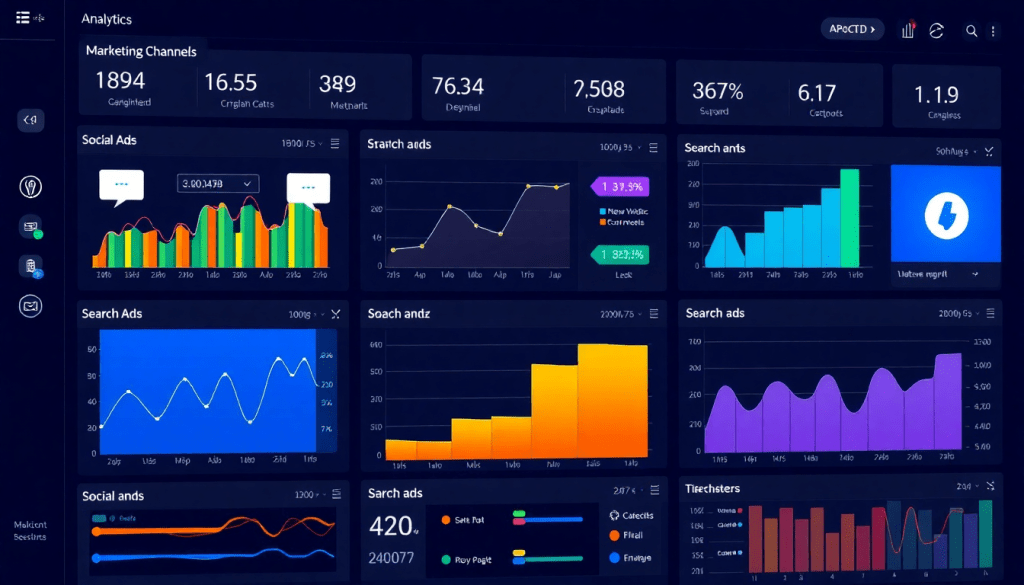
Multi-Channel Analytics Dashboard: Unified Marketing Insights
A multi-channel analytics dashboard is more than a reporting tool—it’s the nerve center for modern marketing teams, agencies, and brands that need complete visibility across every campaign, platform, and data source. By bringing together fragmented metrics into a single, integrated view, these dashboards empower marketers to analyze performance, spot cross-channel trends, and optimize for ROI—all with far less manual effort. Whether you manage dozens of clients or orchestrate enterprise-scale campaigns, the right unified reporting platform reveals actionable insights you’d miss in siloed analytics.
What Is a Multi-Channel Analytics Dashboard?
A multi-channel analytics dashboard is a centralized platform that aggregates, visualizes, and analyzes marketing data from multiple channels—such as paid search, social media, display, email, and more—into one unified view. Instead of toggling between siloed analytics tools for Google Ads, Facebook, programmatic, or CRM platforms, marketers can see all their campaign metrics, KPIs, and trends in one place. This centralized approach transforms the dashboard from a simple reporting tool into a strategic “mission control” for marketing performance.
The shift from single-channel analytics to omnichannel solutions has been driven by the complexity of today’s customer journeys. Consumers interact with brands across numerous touchpoints before converting, and marketing teams run campaigns on a growing number of platforms. Relying on isolated, channel-specific dashboards leads to fragmented insights, making it nearly impossible to get a true picture of what’s working—and what’s not. Multi-channel analytics dashboards solve this by unifying data streams, enabling marketers to identify cross-channel synergies, spot wasted spend, and double down on what drives ROI.
Within these dashboards, you’ll typically find a diverse array of marketing metrics, including:
- Impressions, clicks, and conversions from search, social, and display channels
- Website engagement and behavioral analytics
- Email open and click-through rates
- Attribution data showing how channels work together to drive results
- Budget pacing and spend across platforms
- Multi-location or multi-client performance stats for agencies and brands
The true power of a multi-channel analytics dashboard lies in integrated marketing metrics. By blending campaign data from every channel, marketers can make informed, data-driven decisions—optimizing budgets, adjusting creative, and proving ROI to stakeholders with confidence. Ultimately, a unified dashboard empowers teams to move faster, collaborate better, and outpace the competition in today’s omnichannel marketing landscape. To explore how these unified dashboards work in practice, visit TapClicks for a deeper dive into real-world solutions.
Why Unified Reporting Matters for Modern Marketers
In today’s data-driven landscape, marketing teams are drowning in metrics scattered across countless platforms—Google Ads, Facebook, email, programmatic, and more. Each channel brings its own analytics, dashboards, and export formats, making it nearly impossible to get a holistic view of campaign performance without hours of manual work. This data fragmentation not only slows decision-making but also increases the risk of errors, inconsistent reporting, and missed opportunities for optimization.
A unified reporting platform solves these headaches by centralizing data from all sources into a single, intuitive dashboard. For agencies, this means no more juggling dozens of logins or wrangling spreadsheets to build client reports. Brands—especially those managing multiple locations or business lines—can instantly compare results across channels and regions, uncovering insights that would otherwise remain buried. The shift from manual data compilation to automated, consolidated dashboards enables marketers to focus on strategy and creative problem-solving rather than data wrangling.
The benefits extend beyond efficiency. Unified dashboards foster a culture of collaboration and transparency, making it easy for teams to share key findings and align on goals. When everyone—from account managers to executives—works from the same set of real-time data, it builds trust and accelerates decision-making. Clients also appreciate the clarity and professionalism of consistent, visually engaging reports, which elevates satisfaction and retention.
Modern platforms take automation a step further, reducing reporting workloads by 50+ hours per analyst each month and enabling agencies to scale effortlessly. To see how dashboard automation streamlines reporting processes and boosts operational efficiency, explore this in-depth guide on marketing dashboard automation.
Ultimately, unified reporting isn’t just a technical upgrade—it’s a strategic advantage, unlocking faster insights, stronger collaboration, and better outcomes for marketers and their clients.
Core Features of a Multi-Channel Analytics Dashboard
A best-in-class multi-channel analytics dashboard is defined by its ability to unify, visualize, and automate the insights marketers need to drive strategy—no matter how complex the data landscape. Here’s what to look for in a platform that delivers true cross-channel clarity:
1. Cross-Channel Marketing Analytics
At its core, a multi-channel dashboard consolidates data from all your key marketing channels—search, social, display, email, programmatic, and more—into a single, readable interface. This enables marketers to analyze campaign performance holistically, spot trends across platforms, and understand the full impact of their efforts without toggling between disparate tools.
2. Performance Tracking Dashboard
Real-time performance tracking is essential for optimizing campaigns on the fly. Leading dashboards provide up-to-date metrics on spend, impressions, clicks, conversions, and other KPIs, with customizable views to help users zero in on what matters most. Whether you’re tracking dozens of clients or global brand initiatives, these dashboards eliminate manual data pulls and make performance management effortless.
3. Campaign Performance Visualization
Clear, intuitive data visualization is non-negotiable. The best solutions offer drag-and-drop widgets, custom charts, and branded reports that bring campaign results to life. Visualizing results by channel, creative, or audience segment allows marketers to tell a compelling story—both internally and to clients—while identifying optimization opportunities at a glance.
4. ROI Tracking Dashboard
A unified dashboard should do more than report on activity; it should quantify impact. ROI tracking dashboards integrate spend data with outcome metrics (such as leads, sales, or revenue) to reveal true marketing effectiveness. This empowers teams to justify budgets, allocate resources efficiently, and demonstrate value to stakeholders with concrete numbers.
5. Marketing Data Aggregation
Multi-platform reporting software relies on powerful data aggregation capabilities. Look for platforms that support a wide variety of connectors—enabling you to pull in data from sources like Google Ads, Meta, LinkedIn, programmatic DSPs, and CRMs—then normalize and blend that data for apples-to-apples analysis.
6. Automated Marketing Insights
Manual analysis can only take you so far, especially at scale. Modern dashboards leverage AI and machine learning to surface actionable insights automatically—flagging anomalies, identifying winning campaigns, and even recommending optimizations. This not only saves analysts dozens of hours per month, but also ensures that no critical trends or opportunities slip through the cracks.
To see these features in action, explore TapClicks’ analytics dashboard capabilities, which combine cross-channel data integration, advanced visualization, and AI-powered insights into a single, scalable platform for agencies and brands. By centralizing all your marketing intelligence, a robust multi-channel analytics dashboard becomes the foundation for smarter, faster, and more impactful decision-making.
How to Aggregate and Visualize Marketing Data Across Channels
A unified multi-channel analytics dashboard hinges on robust marketing data aggregation and compelling visualization. Seamlessly collecting and presenting data from disparate platforms—like Google Ads, Facebook, LinkedIn, and email platforms—enables marketing teams to gain a comprehensive, real-time view of campaign performance. Here’s how to master the process:
Best Practices for Marketing Data Aggregation
Start by identifying the most valuable data sources for your business goals. This often includes paid media channels, organic search, social media, CRM, and web analytics tools. The next step is to establish reliable data connections using native integrations or smart connectors that can automate data pulls on a regular cadence. Platforms built for scale, such as TapClicks, offer pre-built connectors for thousands of marketing, advertising, and business data sources, reducing manual effort and the risk of errors.
The ETL Process: Extract, Transform, Load
At the core of unified dashboards is the ETL process:
- Extract: Pull data from various platforms and sources, ensuring you capture all relevant metrics and dimensions.
- Transform: Standardize and enrich data by normalizing naming conventions, formats, and metrics. This step is essential for meaningful cross-channel comparisons—imagine aligning Facebook “engagements,” Google Ads “clicks,” and email “open rates” into a cohesive performance story.
- Load: Feed the cleansed data into your analytics dashboard or BI tool, ready for analysis and reporting.
Automated ETL pipelines not only save time but also ensure data integrity and consistency, especially when managing multi-location or multi-client reporting.
Visualizing Campaign Performance and Integrated Metrics
Once aggregated, the real power comes from visualizing this data effectively. Look for dashboards with customizable widgets and drag-and-drop interfaces, allowing you to tailor the presentation for each user—whether it’s a high-level executive summary or a granular, channel-specific deep dive. For example, you might build a dashboard that overlays paid social, search, and email campaign metrics in a single view, highlighting total conversions, spend by channel, and ROI trends.
Integrated marketing dashboards also enable the visualization of composite KPIs, such as customer acquisition cost (CAC), lifetime value (LTV), or media mix performance, that would be impossible to calculate with siloed analytics.
Customization and User-Centric Visualization Tools
Every stakeholder—from agency analysts to brand managers to end clients—has different reporting needs. Choose a dashboard platform that offers both out-of-the-box templates and flexible customization. This ensures you can deliver executive snapshots, detailed channel breakdowns, or role-based access, all from the same unified system.
In summary, successful cross-channel analytics requires a disciplined approach to data aggregation, a streamlined ETL process, and advanced yet approachable visualization tools. When executed well, these practices transform complex marketing data into clear, actionable insights for every team and client.
TapClicks Analytics Dashboard: A Deep Dive
TapClicks stands out as a leading omnichannel analytics solution designed for the realities of modern marketing operations. Far more than a simple reporting tool, the TapClicks analytics dashboard unifies data from over 10,000 marketing, advertising, and business sources—enabling agencies, brands, and enterprise teams to bring all their campaign metrics, performance data, and ROI insights into a single, scalable view.
Automated Insights and Smart Visualization
TapClicks leverages built-in AI agents and advanced visualization tools to do the heavy lifting for your team. Automated insights surface key trends, anomalies, and optimization recommendations without hours spent sifting through data. With drag-and-drop dashboards and customizable widgets, users can quickly build branded reports or deep-dive into granular campaign analytics. This smart visualization layer not only saves time but also delivers clarity—turning complex, cross-channel data into actionable, client-ready stories.
Scalable Reporting for Agencies and Brands
One of TapClicks’ core strengths is scale. Whether you’re an agency managing reporting for hundreds of clients or a multi-location brand coordinating campaigns across dozens of channels, TapClicks handles thousands of dashboards and scheduled reports without breaking a sweat. Role-based access ensures the right teams and clients see exactly what they need—enabling secure collaboration and transparency at every level.
AI-Powered Recommendations and Predictive Analytics
TapClicks goes beyond static dashboards with AI-driven recommendations for budget pacing, performance optimization, and even predictive modeling. Features like SmartEmail deliver automated, succinct insight summaries directly to stakeholders, while customizable AI agents help teams spot opportunities and risks in real time.
How TapClicks Compares
When evaluating unified reporting platforms, TapClicks shines in both breadth and intelligence. For example, in TapClicks vs. Funnel.io: A Head-to-Head Comparison, TapClicks is recognized for combining robust data integration with actionable insights and workflow management—while competitors often specialize in either data piping or lightweight dashboarding. This makes TapClicks uniquely suited for organizations that need both unified analytics and operational efficiency at scale.
Real-World Use Cases
- Agencies: Streamline reporting across hundreds of clients, automate repetitive tasks, and deliver white-labeled, insight-rich reports with minimal manual effort.
- Brands: Unify digital, traditional, and offline metrics for a true 360° marketing view, supporting accurate budget oversight and cross-team collaboration.
- Enterprise Teams: Use TapClicks as a central marketing data hub, feeding clean, enriched data into BI tools, CRMs, or finance systems—all while maintaining consistent, accessible dashboards.
Whether you’re seeking to eliminate reporting silos, reduce manual workload, or unlock the power of marketing AI, TapClicks’ analytics dashboard offers a future-proof solution for unified, insight-driven marketing. Discover more about how TapClicks can elevate your analytics and reporting at TapClicks.com.
Measuring ROI and Performance with Unified Dashboards
Unified dashboards are game-changers when it comes to tracking marketing ROI and performance across every channel. Traditionally, marketers have struggled with piecing together results from disparate systems—Google Ads in one tab, Facebook metrics in another, and spreadsheets for everything else. A unified dashboard eliminates this siloed approach by aggregating all your campaign data into a single, coherent view, making ROI tracking both comprehensive and actionable.
ROI Tracking Dashboard Essentials:
A robust unified dashboard offers clear visibility into spend vs. return across campaigns, channels, and even client portfolios. By standardizing metrics like cost per acquisition, customer lifetime value, and return on ad spend, marketers can quickly determine which campaigns are delivering—and which aren’t. Customizable widgets and real-time data feeds mean you always have the latest performance numbers at your fingertips, supporting rapid decision-making and agile optimization.
Performance Tracking for Budget Pacing & Goal Achievement:
With unified dashboards, tracking progress toward KPIs and budget pacing is not just possible—it’s automated. Marketers can set up alerts for underperforming campaigns or overspending, visualize pacing against monthly or quarterly goals, and identify budget reallocation opportunities on the fly. This level of transparency empowers marketing teams to justify spend, optimize resource allocation, and proactively address any gaps in performance before they impact the bottom line.
Automated Intelligence for Real-Time Optimization:
Perhaps the greatest value lies in automated marketing intelligence reporting. Unified dashboards powered by AI—like those offered by TapClicks—do more than just display numbers; they analyze them, surfacing actionable insights and optimization recommendations without manual intervention. Imagine receiving instant notifications about which channels are exceeding ROI benchmarks or where budget shifts could yield better results. This real-time intelligence enables faster, smarter decisions and can dramatically improve campaign outcomes.
By centralizing marketing analytics and automating intelligence, unified dashboards transform ROI measurement from a tedious monthly exercise into a dynamic, ongoing process. The result? Marketers, agencies, and brands have the clarity they need to maximize impact, prove value to stakeholders, and continually improve their strategies.
Choosing the Right Multi-Platform Reporting Software
Selecting the ideal multi-platform reporting software is a pivotal decision for marketers, agencies, and enterprises aiming to unify data and streamline analytics. With a flood of options on the market, it’s critical to evaluate platforms not only for current needs but also for future growth and innovation. Here’s a checklist to guide your selection process:
1. Integration Breadth:
Look for platforms that offer a vast range of built-in data connectors, covering major advertising, social, CRM, and analytics platforms. The more sources you can bring together—think Google Ads, Meta, email, programmatic, and offline data—the more complete your reporting will be. Solutions like TapClicks excel here, supporting over 10,000 connectors and custom “Smart Connectors” for niche or proprietary data sources.
2. Scalability:
Can the solution support your business as it grows? Evaluate how easily the platform handles increasing dashboard volumes, more clients or locations, and rising data complexity. Scalable platforms should allow you to manage hundreds (or thousands) of dashboards and reports without performance bottlenecks or manual labor.
3. Automation Capabilities:
Automation is a game-changer. Prioritize software that automates data extraction, cleansing, transformation, and scheduled reporting. Advanced platforms further reduce manual work by automatically surfacing insights and generating smart recommendations, freeing up time for strategy rather than spreadsheet wrangling.
4. Visualization Options:
Effective data storytelling hinges on robust visualization tools. Seek platforms with drag-and-drop dashboards, customizable widgets, and branded reporting capabilities. The ability to tailor dashboards to different stakeholders—executives, marketing teams, or clients—ensures everyone sees what matters most to them.
5. Support and Training:
Strong customer support, onboarding resources, and ongoing training are essential, especially for teams new to unified analytics. Responsive support and a rich knowledge base help you overcome hurdles and unlock the platform’s full value.
6. Future-Proofing with AI and Predictive Analytics:
Marketing analytics is rapidly evolving. Choose a solution that not only aggregates and visualizes data but also leverages AI for automated insights, predictive modeling, and optimization recommendations. Platforms investing in AI—such as TapClicks with its SmartPilot and SmartEmail—position you to stay ahead of the curve as analytics technology advances.
By weighing these factors, you’ll find a multi-platform reporting software that not only centralizes your data today but also equips your organization to thrive in a dynamic, data-driven marketing landscape.
Ready to Launch a Multi-Channel Analytics Dashboard? Here’s How to Set Yourself Up for Success
Rolling out a new analytics platform doesn’t have to be overwhelming. By breaking the process into manageable steps, you’ll set your team—and your clients—up for a smooth transition and lasting marketing ROI.
1. Map Out Where You Stand (and Where You Want to Go)
- Inventory your data sources: List every platform you use—ad channels, CRM, website analytics, social media, and more.
- Spot the friction: Where do manual processes slow you down? Which reports are hardest to produce?
- Clarify your goals: Are you aiming to unify client reporting, improve campaign optimization, or centralize analytics for a multi-location brand?
2. Make Data Integration Your Top Priority
- Choose a dashboard that connects everywhere you need: Look for support for all major ad networks, CRM, programmatic, and specialty platforms.
- Normalize and enrich: Clean, standardized data is the foundation for reliable insights. Invest up front in getting this right.
- Trust = accuracy: The more apples-to-apples your cross-channel data, the more confident your team and clients will be.
3. Bring Stakeholders Into the Process From Day One
- Get buy-in early: Include both leadership and hands-on users in tool selection and dashboard design.
- Solicit feedback: What views, KPIs, and visualizations matter most to different teams?
- For agencies: Ask clients about branding needs and preferred report delivery schedules.
4. Start Small With a Pilot
- Pick a test case: Select one campaign, business unit, or client to try the new dashboard.
- Iterate quickly: Use the pilot to refine data flows, dashboard layouts, and automation settings.
- Share wins: Early success stories help overcome resistance and build momentum.
5. Automate, Analyze, Improve—Then Repeat
- Automate reporting: Use scheduled reports and AI insights to cut manual workload.
- Surface trends fast: Let the platform highlight what’s working—and what isn’t.
- Keep evolving: Regularly add new data sources, adjust metrics, and refine the user experience as your strategy matures.
6. Empower Your Team to Be Data-Driven
- Make training a priority: Offer onboarding, how-to guides, and ongoing support.
- Celebrate analytics wins: Showcase how data-driven decisions move the needle.
- Embed dashboards into daily workflows: The more your team uses them, the more value you’ll unlock.
Want to see how TapClicks can streamline this journey?
Check out this comprehensive overview or schedule a demo to experience unified marketing analytics in action.
By following these steps, you’ll not only launch your new dashboard with confidence—you’ll foster a collaborative, insight-driven culture that delivers measurable business impact.
Start Automating Your Marketing Data Today!
No Credit Card Required.

