

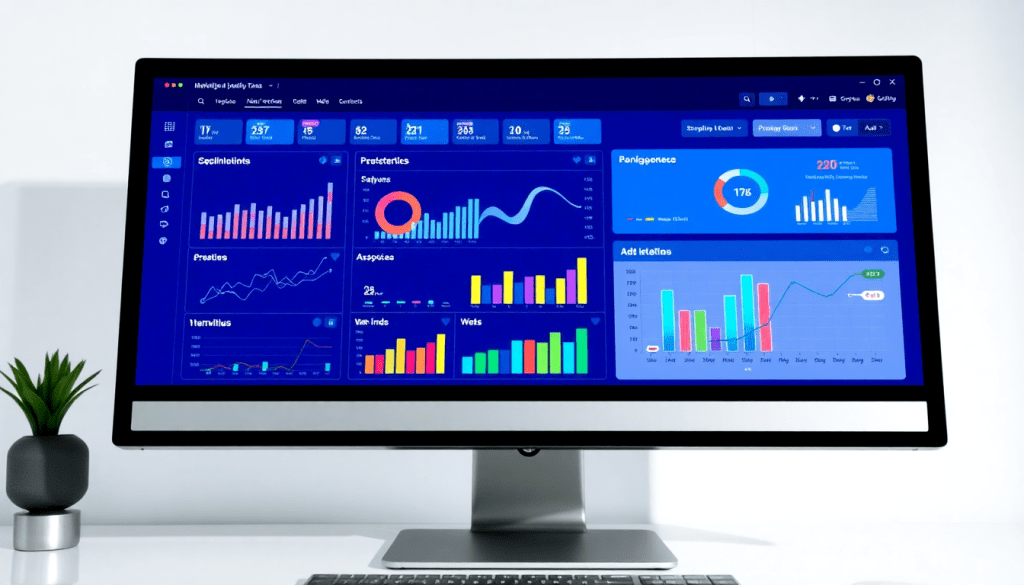
Multi-Channel Analytics Dashboard: Unified Marketing Insights
Managing marketing performance across multiple platforms can quickly get complicated—and messy. A multi-channel analytics dashboard brings all your campaign data, KPIs, and insights into one unified view, making it easier to compare, analyze, and optimize your marketing programs for maximum ROI. In this guide, you’ll discover how a unified reporting platform—like the TapClicks analytics dashboard—can streamline data aggregation, automate insights, and help you visualize campaign performance with clarity and confidence.
What is a Multi-Channel Analytics Dashboard?
A multi-channel analytics dashboard is a centralized platform that consolidates marketing data from all your channels—think search, social, email, display, and more—into a single, intuitive interface. Its core function is to aggregate, organize, and visually present key performance metrics from disparate sources, so marketers and stakeholders can quickly assess campaign effectiveness across the entire digital ecosystem.
With today’s marketing landscape more fragmented than ever, businesses are running campaigns on a multitude of platforms, each with their own analytics and reporting tools. Siloed data makes it nearly impossible to get a true picture of overall performance, leading to blind spots and missed opportunities. That’s why cross-channel marketing analytics has become essential: it empowers organizations to evaluate what’s working (and what’s not) holistically, rather than in isolated silos.
At the heart of a multi-channel dashboard is marketing data aggregation—the process of collecting, cleaning, and unifying data from various platforms, networks, and tools. This enables marketers to track integrated metrics, such as total conversions, ROI, and customer journeys, no matter where those touchpoints happen. By providing a comprehensive, real-time overview, a multi-channel analytics dashboard eliminates guesswork and allows for data-driven decisions that boost marketing ROI and drive business growth.
Why Unified Reporting Platforms Are a Game-Changer
Unified reporting platforms aren’t just about convenience—they fundamentally transform how marketing teams operate, collaborate, and drive results. Here’s how:
See Everything, All at Once
Centralized Data Means Complete Visibility
- Aggregate KPIs, budgets, and results from every channel—search, social, display, email, and more—into a single dashboard.
- No more logging into multiple ad managers or manually stitching together spreadsheets.
- Eliminate data silos and reduce manual errors.
- Everyone works from the same, up-to-date numbers—no confusion, just clarity.
Automation: The Time Saver
Manual Reporting Is Out. Automation Is In.
- Automated data ingestion and report generation replace hours of repetitive work.
- Marketers and analysts can reclaim dozens of hours each month.
- Focus shifts from wrangling spreadsheets to analyzing trends and optimizing campaigns.
- Learn how dashboard automation boosts reporting efficiency.
Trust Your Numbers
Accuracy and Data Integrity, Guaranteed
- Automated pipelines reduce human error and keep data fresh.
- Stakeholders make confident, real-time, data-driven decisions—no more second-guessing.
AI: Your Built-In Analyst
From Dashboards to Actionable Insights
- Platforms like TapClicks use AI to:
- Surface actionable insights
- Flag anomalies
- Recommend optimizations
- Get proactive suggestions—often before you know there’s an issue—so your marketing stays agile.
Collaboration, Simplified
Everyone on the Same Page
- A single source of truth streamlines teamwork across marketing, sales, and leadership.
- Role-based access delivers the right insights to the right people—account managers, analysts, or executives.
- Fosters open communication and alignment across departments.
The Bottom Line
Unified reporting platforms provide the clarity, speed, and agility that modern marketing demands. With everyone working from the same trusted data and AI surfacing what matters most, your teams can focus on what actually drives growth—no more chasing numbers, just delivering results.
Essential Features to Look for in a Performance Tracking Dashboard
Choosing the right performance tracking dashboard is crucial for marketing teams seeking to cut through data chaos and drive measurable results. To ensure your reporting platform truly empowers smarter decisions, prioritize these essential features:
1. Real-Time Data Updates
In the fast-paced world of digital marketing, yesterday’s data isn’t enough. A modern dashboard must provide real-time or near real-time updates, giving you immediate visibility into campaign performance across all channels. This enables teams to quickly spot trends, address underperforming campaigns, and seize new opportunities as they emerge.
2. Customizable Dashboards
No two organizations track marketing performance in exactly the same way. Look for dashboards that offer drag-and-drop customization, flexible layouts, and branded themes. This allows users to tailor views for different stakeholders—executives, account managers, or clients—and focus on the metrics that matter most to each audience.
3. Automated Report Scheduling
Manual reporting is time-consuming and prone to human error. Automated report scheduling eliminates repetitive tasks by generating and delivering up-to-date reports to relevant stakeholders on a set cadence—be it daily, weekly, or monthly. This not only saves valuable analyst hours but also ensures everyone stays informed without chasing down the latest numbers.
4. Campaign Performance Visualization
Numbers alone don’t tell the whole story. Robust dashboards offer advanced visualization tools—charts, graphs, heatmaps, and more—to make campaign insights instantly understandable. These visualizations help teams quickly interpret data, compare channel effectiveness, and communicate results clearly across the organization.
5. Multi-Platform Reporting & Integration Flexibility
The best dashboards act as a central hub, seamlessly aggregating data from a wide range of platforms—search, social, display, email, and beyond. Look for solutions with extensive native connectors and support for custom integrations, so you can unify all your marketing data in one place without manual stitching or data silos.
6. ROI Tracking and Budget Optimization
A top-tier dashboard should do more than report clicks and impressions; it should empower you to track ROI across channels and campaigns. Integrated budget pacing, spend tracking, and performance benchmarking help teams allocate spend intelligently and optimize for maximum return.
For agencies and marketing teams managing multiple clients or campaigns, these features aren’t just “nice-to-haves”—they’re non-negotiable for scaling operations, improving collaboration, and demonstrating value. To see how unified reporting platforms can automate and elevate your marketing analytics, explore marketing dashboard automation for efficiency or visit TapClicks for a closer look at a leading solution.
See How TapClicks Analytics Dashboard Delivers Automated Marketing Insights
The TapClicks analytics dashboard isn’t just another reporting tool—it’s a unified command center designed to automate and elevate your marketing intelligence. Here’s how it transforms the way agencies, brands, and enterprise teams operate:
Unified Data, Zero Manual Hassle
- Connects to 10,000+ Data Sources: Instantly pull in metrics from Google Ads, Meta, programmatic, email, local media, and more.
- Automated Aggregation: No more downloading spreadsheets or reconciling exports—TapClicks normalizes data across all your marketing and advertising platforms.
- Real-Time, Cross-Channel Views: Campaign performance, lead gen, and spend data are always up-to-date in a single dashboard.
Beyond Numbers: Automated, Actionable Insights
With TapClicks, you get more than just charts and graphs. AI-powered features like TapInsights and SmartPilot take your analytics further:
- Proactive Trend Detection: AI agents scan your dashboards to surface important shifts or anomalies—before you even ask.
- Campaign & Channel Benchmarking: Instantly see which campaigns are over- or under-performing across all accounts and locations.
- Smart Recommendations: Get AI-driven suggestions for budget allocation, channel rebalancing, and optimization opportunities.
| AI-Driven Feature | What It Does | Who Benefits |
|---|---|---|
| TapInsights | Surfaces trends, outliers, and key shifts | All users |
| SmartPilot | Suggests optimizations and budget changes | Agencies & Brands |
| SmartEmail | Auto-sends insight summaries to stakeholders | Executives & Clients |
Effortless Reporting and Stakeholder Communication
No more scrambling to create manual reports or chasing down the latest numbers:
- Automated Report Scheduling: Set and forget delivery of branded client reports, executive summaries, and more.
- Customization & Branding: Tailor dashboards and exports to match your agency or brand identity.
- Consistent, Accurate Insights: Everyone gets the same story, every time.
Why Teams Rely on TapClicks
TapClicks empowers you to:
- Monitor cross-channel performance from a single source of truth.
- Unlock hidden opportunities with automated AI analysis.
- Act faster with data-driven recommendations and scheduled reporting.
For more on transforming your analytics operations, explore TapClicks or see how dashboard automation boosts analytics reporting.
Ready to swap spreadsheets for automated insights? TapClicks is your marketing intelligence engine—at scale.
Visualizing Campaign Performance Across Channels
One of the greatest challenges in modern marketing is keeping a clear, cohesive view of campaign performance when your efforts span multiple channels—social, search, display, email, and beyond. Unified dashboards solve this by consolidating disparate data streams into a single, visually intuitive interface, enabling marketers to see the big picture without losing sight of individual channel metrics.
Simplified Multi-Channel Visualization
With a multi-channel analytics dashboard, you can quickly compare how each campaign is performing across platforms. Whether you’re looking at impressions, clicks, conversions, or ROAS, unified dashboards break down silos and present data side by side. This eliminates the need to juggle spreadsheets or log into countless ad platforms—everything is presented in real-time, so you can spot trends and anomalies at a glance.
Take, for example, an integrated view showing Facebook ad conversions next to Google Ads spend and organic search traffic. You can immediately identify which channels are driving the best results, where budget reallocation could boost ROI, and how campaigns influence each other over time. This holistic visualization is critical for optimizing multi-channel strategies and ensuring every marketing dollar works harder.
Real-World Examples of Integrated Metrics
Agencies and brands using platforms like TapClicks consistently cite the power of unified dashboards for tracking key integrated marketing metrics:
- Cross-channel conversion rates: See how users interact with multiple touchpoints before converting.
- Budget pacing vs. performance: Instantly visualize if your spend across channels is aligning with goals and outcomes.
- Attribution modeling: Compare first-touch, last-touch, and multi-touch attribution models to better understand campaign influence.
For instance, a retail brand may observe that customers who engage with both display ads and email campaigns have a higher lifetime value. By visualizing this correlation in a unified dashboard, marketers can adjust future strategies to reinforce high-performing cross-channel combinations.
The Importance of Customizable, Clear Visualizations
Not all dashboards are created equal. The ability to customize views—by campaign, channel, timeline, or KPIs—ensures that every stakeholder gets the insights most relevant to their role. TapClicks, for example, supports drag-and-drop widgets, branded reporting, and granular filtering, giving marketing teams and clients clarity over exactly what matters most.
Clear visualizations don’t just make reporting easier—they empower smarter, faster decision-making. Marketers can pivot strategies in real time, executives can track ROI at a glance, and clients can see the direct impact of their investment, all thanks to transparent, customizable analytics views.
For a deeper dive into how TapClicks enables dashboard automation and analytics reporting, check out TapClicks dashboard automation for analytics reporting.
Streamlining ROI Tracking and Optimization
In today’s complex marketing ecosystem, understanding the real return on investment (ROI) for every channel and campaign is non-negotiable. A dedicated ROI tracking dashboard is the linchpin for marketers managing multi-channel initiatives. Instead of sifting through siloed spreadsheets or toggling between disparate platforms, a unified dashboard provides a holistic, real-time snapshot of spend versus performance across all your marketing efforts.
Automated marketing insights make it possible to pinpoint which campaigns are driving the greatest value—without the manual number crunching. With an ROI tracking dashboard, you can quickly identify underperforming channels, shift budgets where they’ll have the most impact, and ensure every marketing dollar is working harder. TapClicks takes this a step further through its AI-powered analytics, which not only aggregate and normalize data from thousands of sources but also surface actionable insights and optimization opportunities.
For example, TapClicks leverages predictive analytics to forecast future performance and recommend budget reallocations, helping marketers make faster, data-backed decisions. Whether you’re an agency running hundreds of client campaigns or an enterprise brand with complex multi-location needs, TapClicks’ unified platform continuously monitors cross-channel KPIs, benchmarks campaign effectiveness, and proactively suggests optimizations. This means you’re not just tracking ROI—you’re actively improving it, campaign after campaign.
To see how TapClicks automates ROI tracking and drives ongoing optimization, explore their dashboard automation for analytics reporting or visit the TapClicks website for a closer look at their unified marketing operations platform.
Getting Started: Steps to Build Your Unified Reporting Platform
Launching a unified marketing analytics dashboard doesn’t have to be overwhelming. With a strategic approach, you can transform fragmented data into a single source of truth that empowers your team. Follow these key steps to get your unified reporting platform up and running:
1. Set Up Data Connectors
Begin by identifying all the marketing, advertising, and business platforms you use—whether it’s Google Ads, Facebook, LinkedIn, email automation tools, or CRMs. Choose a dashboard solution that offers broad connector support (like TapClicks, with 10,000+ integrations) to ensure seamless, automated data ingestion. Advanced platforms allow you to set up smart connectors and automate real-time marketing data collection for up-to-the-minute performance tracking.
2. Customize Your Dashboards
Tailor your reporting environment to your organization’s needs. Start with pre-built templates or create fully custom dashboards to highlight the KPIs, metrics, and visualizations that matter most to your stakeholders. Look for drag-and-drop editors, branded elements, and flexible reporting modules that let you surface cross-channel insights at a glance.
3. Automate Workflow and Reporting
Leverage workflow automation tools to schedule recurring reports, manage campaign orders, and streamline collaboration between teams. Automated reporting minimizes manual effort, reduces errors, and ensures all stakeholders receive timely, consistent updates. TapClicks’ workflow features, for example, let you centralize order management and automate report distribution for both internal teams and clients.
4. Enable Stakeholder Access and Collaboration
Assign role-based access to dashboards and reports so that executives, marketers, and clients see exactly what they need—no more, no less. A unified platform should support secure, scalable sharing and granular permissions, making it easy to keep everyone aligned and informed.
5. Drive Adoption with Training and Support
Onboarding is critical for maximizing adoption. Provide hands-on training, quick-start guides, and ongoing support to help your team and stakeholders get comfortable with the new platform. Encourage regular check-ins and feedback loops to refine dashboard configurations as your needs evolve.
By following these steps—and prioritizing automation and real-time data integration—you’ll be well on your way to a unified analytics environment that delivers visibility, efficiency, and actionable marketing intelligence. To see how an all-in-one solution like TapClicks can accelerate your analytics journey, explore their robust integration and workflow capabilities today.
Why Omnichannel Analytics Solutions Are the Future of Marketing Intelligence
The marketing landscape is evolving at a breakneck pace. As brands expand across more channels—search, social, display, video, OTT, retail media, and beyond—so does the complexity of understanding what truly drives performance. The days of siloed data, manual reporting, and guesswork optimization are rapidly fading. Instead, businesses are embracing omnichannel analytics solutions that unify, automate, and scale their approach to marketing intelligence.
Integrated, automated reporting platforms are no longer a luxury—they’re a competitive necessity. By aggregating data from every campaign and channel into a single source of truth, marketers gain instant clarity on what’s working, what’s not, and where to invest next. Automated dashboards and AI-driven insights not only eliminate hours of tedious manual work but also surface optimization opportunities that might otherwise go unnoticed.
Platforms like TapClicks empower teams to move beyond fragmented tools and cumbersome spreadsheets. TapClicks delivers scalable, cross-channel analytics, workflow automation, and predictive insights—all designed to maximize ROI and improve collaboration. This unified approach helps agencies, brands, and enterprise teams deliver smarter strategies, faster reporting, and measurable business outcomes.
As marketing channels proliferate and data volumes grow, only omnichannel analytics solutions will provide the agility, accuracy, and intelligence needed to stay ahead. To future-proof your marketing operations and unlock your full data potential, explore how a unified reporting platform like TapClicks can transform your approach to marketing intelligence.
Start Automating Your Marketing Data Today!
No Credit Card Required.

