

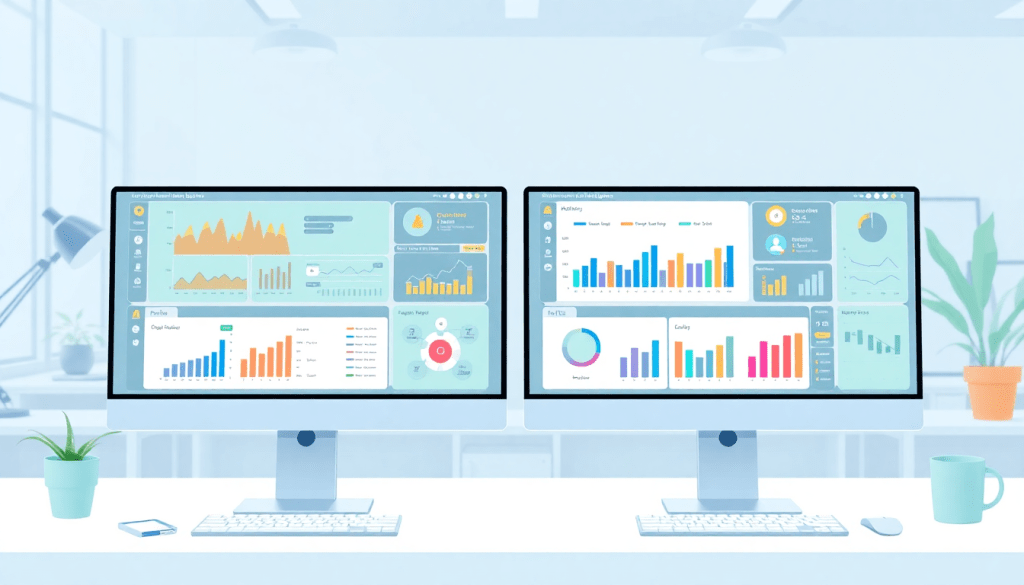
Marketing Dashboard Automation: TapClicks vs Funnel.io
Selecting the right marketing dashboard automation platform can define the efficiency, clarity, and impact of your agency’s or brand’s analytics and reporting. TapClicks and Funnel.io are two top contenders—each promising to unify campaign data, automate reporting, and provide actionable insights at scale. This guide compares these platforms across core areas such as data integration, reporting automation, visualization capability, and workflow, helping you determine which solution aligns best with your needs for performance marketing KPIs and client dashboard insights.
What is Marketing Dashboard Automation?
Marketing dashboard automation refers to the process of automatically collecting, consolidating, and visualizing marketing data across multiple channels—such as search, social, email, and display—into a unified, real-time dashboard. For agencies and brands, this automation is transformative: it eliminates the manual drudgery of pulling data from disparate platforms, formatting spreadsheets, and generating repetitive reports. Instead, marketing dashboard automation delivers up-to-date, actionable analytics directly to stakeholders, enabling faster, more informed decision-making.
At its core, a marketing analytics dashboard is a dynamic interface that aggregates key performance indicators (KPIs), campaign metrics, and budget data. When automated, these dashboards continuously refresh with the latest data, ensuring that performance insights are never out-of-date. Automated performance reports take this a step further by scheduling and distributing branded reports to clients or internal teams—without human intervention—saving hours every week and reducing the risk of errors.
Cross-channel analytics is a critical capability within marketing dashboard automation. It means marketers can see the full picture: how campaigns perform across Google Ads, Facebook, programmatic platforms, email, and beyond—all in one place. This consolidated view is essential for identifying trends, optimizing spend, and measuring ROI holistically rather than in silos.
Perhaps most importantly, visualizing digital marketing data through automated dashboards empowers strategic decision-making. Leaders can quickly spot which campaigns are driving results, where budget adjustments are needed, and what channels offer the highest return. Automation doesn’t just make reporting more efficient—it turns raw marketing data into a strategic asset, fueling growth and delivering a competitive edge for agencies and brands alike.
To learn more about how marketing dashboard automation can streamline your reporting and analytics workflows, visit TapClicks.
TapClicks Overview: Unified Marketing Reporting Platform
TapClicks stands out as a comprehensive marketing reporting automation solution designed for agencies, media companies, multi-location brands, and enterprise marketing teams. At its core, TapClicks delivers a unified platform that brings together scalable data integration, automated performance reports, and deep cross-channel analytics—all within a single, intuitive interface.
One of TapClicks’ defining strengths is its unparalleled data integration capability. With over 10,000 marketing, advertising, and business data connectors, TapClicks enables users to seamlessly pull data from virtually any source, whether it’s social media, search, programmatic, CRM, or offline channels. Built-in ETL/ELT pipelines automatically extract, transform, and load campaign data, reducing manual work and ensuring marketers always have the latest insights at their fingertips.
Beyond aggregation, TapClicks offers powerful automated reporting that saves teams hundreds of hours each month. Drag-and-drop dashboards, fully branded reporting studios, and scheduled report delivery streamline the process of sharing results with stakeholders—whether internally or with clients. The platform’s cross-channel analytics simplify performance tracking across campaigns, regions, or client portfolios, making it easy to visualize KPIs and uncover trends.
TapClicks takes marketing dashboard automation a step further with advanced features like AI-powered insights and workflow management. AI agents (TapInsights and SmartPilot) proactively analyze dashboards to surface optimization recommendations, performance anomalies, and predictive trends. SmartEmail functionality delivers automated, AI-generated summaries of campaign performance directly to stakeholders’ inboxes, keeping teams and clients informed without additional effort.
For agencies and large marketing teams, TapClicks’ role-based access and robust workflow tools (TapOrders and TapWorkflow) support collaboration across sales, operations, and fulfillment. This ensures that order management, client onboarding, and reporting remain seamless—even at scale.
To explore a more detailed assessment of TapClicks' capabilities and how it compares to other solutions, check out this detailed TapClicks platform review. Or, learn more about the platform’s full suite of features at the official TapClicks website.
Funnel.io Overview: Data Piping for Marketing Analytics
Funnel.io positions itself as a dedicated data aggregation and transformation engine for marketing teams. Its core strength lies in extracting data from a wide array of advertising, analytics, and CRM sources, then cleaning and standardizing it for seamless delivery into your analytics dashboards—be it Google Data Studio, Tableau, Looker, or other BI tools.
Rather than serving as a full marketing operations platform, Funnel.io’s primary mission is to act as a robust “data pipe” for marketing reporting automation. Agencies and brands typically turn to Funnel.io when they need to automate the collection and normalization of campaign metrics across dozens or even hundreds of marketing channels without the manual headaches of spreadsheet wrangling. By centralizing data flows, Funnel.io enables marketers to spend less time gathering numbers and more time analyzing trends.
For most users, the platform is leveraged to automate performance report updates, power custom dashboards, and feed client-facing analytics portals. Funnel.io’s interface makes it straightforward to map and transform disparate datasets to match your internal reporting schema, and its automation tools can refresh and deliver this data on a schedule.
However, it’s important to note that while Funnel.io efficiently moves and preps data, it does not natively provide advanced data visualization or dashboarding capabilities. Instead, users must push their transformed data into external tools for actual visualization. This approach gives teams flexibility in choosing their preferred BI stack, but may require additional steps for those seeking an all-in-one solution. To see how Funnel.io stacks up against unified platforms, check out this detailed TapClicks platform review.
Side-by-Side Feature Comparison: TapClicks vs Funnel.io
When evaluating marketing dashboard automation tools, it’s essential to weigh how each platform addresses the specific needs of agencies and brands—especially around data integration, reporting, visualization, and workflow. Here’s a detailed comparison of TapClicks and Funnel.io across critical categories, with highlights of their unique strengths and potential limitations. For a deeper technical breakdown, see this in-depth comparison article.
Data Connectors and Supported Channels
TapClicks leads in the breadth of native integrations, offering access to over 10,000 marketing, advertising, and business data sources. Its Smart Connectors and automated ETL/ELT pipelines allow users to extract, transform, and load data not just into TapClicks, but also into external destinations. This is particularly beneficial for agencies managing complex, multi-channel campaigns or brands with diverse data sources. TapClicks also enables dataset blending and normalization across channels and locations—streamlining unified reporting for enterprise-scale operations.
Funnel.io is recognized for robust data piping capabilities, focusing on collecting, transforming, and exporting data to analytics and BI tools. It supports hundreds of marketing and advertising platforms, making it suitable for organizations prioritizing data movement over advanced in-platform analytics. However, Funnel.io’s connector library is more limited compared to TapClicks, especially when handling niche or non-standard sources.
Automated Reporting and Scheduling Options
TapClicks offers fully automated, scheduled reporting—empowering users to generate, customize, and distribute branded reports at scale. Its drag-and-drop dashboard builder and reporting studio allow users to automate regular updates for internal teams and clients, reducing manual workload by 50+ hours per analyst per month. Advanced scheduling options, white-labeling, and role-based access are natively supported.
Funnel.io automates data pipelines but relies on external visualization tools (like Google Data Studio or Tableau) for report creation and scheduling. While it can push data to dashboards for scheduled updates, the automation of report generation and distribution is less centralized compared to TapClicks.
Visualization and Dashboard Customization
TapClicks incorporates a powerful, intuitive dashboard studio. Users enjoy granular customizability—drag-and-drop widgets, tailored KPI views, and smart visualizations for campaign performance, budget pacing, and more. TapClicks’ dashboards are fully white-labeled and designed for multi-client, multi-location reporting, making them ideal for agencies and enterprise brands.
Funnel.io provides basic visualization within its platform, but its primary role is data aggregation. Most users export data into external BI or reporting tools for advanced dashboarding and visualization. This means customization options depend on the third-party tool chosen, resulting in less cohesion and more manual setup.
Performance Marketing KPI Tracking
TapClicks is purpose-built for performance marketing. It enables users to define, track, and benchmark KPIs across channels, campaigns, and clients—all within a single interface. AI-driven features like SmartPilot and TapInsights surface actionable recommendations, predictive models, and real-time budget pacing to optimize campaign outcomes.
Funnel.io supports KPI tracking through its data transformation layer, but the analysis and benchmarking are generally handled outside the platform. Users must rely on their chosen BI or dashboard tool to visualize and interpret performance metrics, making the insights process less seamless.
Workflow and Collaboration Tools
TapClicks stands out with built-in workflow management (TapOrders, TapWorkflow), enabling agencies and brands to centralize campaign order management, collaborate across sales, ops, and fulfillment teams, and provide role-based client access. This workflow integration eliminates the need for separate project management or ticketing tools, streamlining marketing operations from order to analytics.
Funnel.io does not offer workflow or collaboration features natively. Teams must integrate additional tools for project tracking, client approvals, or cross-team communication, which can introduce complexity and siloed processes.
In summary, TapClicks is the all-in-one platform for agencies and brands seeking unified data integration, robust report automation, advanced visualization, and seamless workflow—all at scale. Funnel.io excels as a data aggregation and piping tool, especially for organizations that want to move data into existing BI environments but may lack the depth of automation, reporting, and workflow tools found in TapClicks. For further details and nuanced pros/cons, visit the TapClicks vs Funnel.io comparison or explore TapClicks’ full capabilities directly.
Which Platform Really Delivers for Agency Reporting Automation?
For agencies juggling dozens—or even hundreds—of clients, reporting automation isn’t just a convenience; it’s the backbone of operational efficiency and client satisfaction. Let’s see how TapClicks and Funnel.io stack up when it comes to automating marketing dashboards, streamlining workflows, and scaling your agency’s success.
What Agencies Need in Reporting Automation
Before diving into the platforms, here’s what agencies typically look for:
- Scalable reporting: Can you manage reporting for 50, 100, or 500+ clients without adding headcount?
- White-label dashboards: Does every client see their own brand and data in a secure, dedicated portal?
- Automated delivery: Are reports sent automatically—on time and error-free?
- Internal collaboration: Can sales, ops, and fulfillment work together smoothly?
- Workflow integration: Is campaign fulfillment, approval, and status all tracked in one place?
How TapClicks Simplifies Agency Reporting
TapClicks is engineered for agencies with complex, multi-client needs. Here’s how it makes life easier:
Branded Client Experience
- White-label dashboards let you deliver fully branded, client-specific portals.
- Role-based access ensures each client only sees their own campaign data.
Automated Report Generation & Delivery
- Schedule recurring, individually branded reports for every client.
- Automated delivery slashes manual workload—saving 50+ hours per analyst, per month.
Centralized Collaboration & Workflow
- Internal teams across sales, ops, and fulfillment collaborate in one environment.
- Order management and workflow tools track campaign fulfillment, approvals, and status—all in one place.
"With TapClicks, we scaled from 30 to over 200 managed clients without increasing our reporting headcount. Automated dashboards and scheduled reports have become a key selling point for our agency’s value proposition."
— Leading Digital Agency
What Funnel.io Brings (and What’s Missing)
Funnel.io focuses on robust data aggregation and transformation, but leaves much of the client-side experience to you:
| Funnel.io Strengths | Funnel.io Gaps |
|---|---|
| Aggregates and transforms data from many sources | No native white-labeling or client portals |
| Flexible, customizable output for BI tools | No automated client-facing report delivery |
| Integrates with Google Data Studio, Tableau, etc. | Client access and controls managed externally |
- Customization: Great if you have an in-house BI/analytics team.
- Complexity: Scaling introduces more tools, more manual setup, and more to manage.
- Client Automation: You’ll need to build or integrate your own systems for white-label dashboards, access controls, and scheduled delivery.
Which Solution Fits Your Agency?
- TapClicks is ideal if you want to grow your agency fast, automate client communications, and minimize manual work.
- Funnel.io may suit smaller agencies or those deeply invested in custom BI stacks who don’t mind extra setup.
Ready for a deeper dive into agency-focused automation?
Check out this in-depth feature breakdown for all the details.
Digital Marketing Data Visualization & Insights
When it comes to digital marketing data visualization and actionable insights, TapClicks and Funnel.io take markedly different approaches—each with strengths and trade-offs that directly impact how agencies and brands turn raw data into strategic decisions.
TapClicks is purpose-built to deliver not just unified dashboards, but a true analytics command center. With its drag-and-drop dashboard builder, users can create highly customized, branded visualizations that span every major digital channel, campaign, and location—no code required. TapClicks excels at blending cross-channel data, normalizing metrics, and enabling multi-client views, making it ideal for agencies and multi-location brands seeking a single source of truth.
Where TapClicks truly differentiates is its AI-powered analytics layer. The platform’s AI Agents automatically scan dashboards and datasets to surface actionable insights—think anomaly detection, budget pacing recommendations, and campaign scoring. SmartEmail takes this a step further by sending automated, plain-English insight summaries directly to stakeholders, dramatically reducing manual analysis time. TapClicks also offers predictive models for benchmarking and optimization, helping teams not just understand what happened, but why—and what to do next.
In contrast, Funnel.io focuses primarily on moving, transforming, and piping marketing data into the analytics or BI tool of your choice. Its native visualization capabilities are intentionally lightweight: basic tables and charts for quick data checks, but little in the way of interactive dashboards or advanced visual storytelling. Most Funnel.io users export their cleansed data into tools like Looker, Tableau, or Google Data Studio for deeper visualization and insights. This approach suits organizations with robust in-house analytics resources, but puts extra burden on teams to build and maintain their own reporting environments.
For ease of use, TapClicks offers a more out-of-the-box solution: pre-built dashboard templates, granular permissioning, and role-based client access. Its visualization engine supports everything from high-level executive summaries to drill-downs on granular KPIs, all within a single platform. Funnel.io, by contrast, offers more flexibility in where your data ends up, but less guidance or automation for visualization and insight generation.
Bottom line: If your goal is to empower teams and clients with automated, AI-enhanced visual insights—without the overhead of manual dashboard building—TapClicks stands out as the more fully realized solution. Funnel.io is a strong choice for organizations seeking best-in-class data piping and transformation, but visualization and insights will require additional tools and effort.
For a visual side-by-side comparison of how each platform handles data visualization and actionable insights, check out this visualization and insights comparison.
Pricing, Onboarding, and Support
When choosing between TapClicks and Funnel.io, understanding the nuances of pricing, onboarding, and customer support is essential for ensuring a smooth implementation and long-term value.
Pricing Models and Contract Flexibility
TapClicks offers a highly customizable pricing structure designed to scale with agencies, media companies, and enterprise brands. Pricing is typically based on the number of users, data connectors, and dashboards required, with options for both monthly and annual contracts. This flexibility allows organizations to select a plan that aligns with their growth trajectory and reporting needs, avoiding unnecessary costs as requirements evolve. TapClicks also provides all-in-one packages that bundle data integration, reporting, workflow, and AI insights—making it easier to budget for end-to-end marketing operations.
Funnel.io, on the other hand, is structured around a “pay for what you use” model, pricing based on the number of data sources, accounts, and monthly data rows processed. While this can be cost-effective for teams with limited data volumes or narrow reporting needs, costs can rise quickly as you scale up data sources or client accounts. Contracts are typically annual, though some flexibility exists for larger clients.
Onboarding Experience and Resources
TapClicks distinguishes itself with a white-glove onboarding process. New clients benefit from dedicated implementation specialists who guide setup, data mapping, connector configuration, and dashboard customization. Extensive documentation, live training, and a robust knowledge base further accelerate time-to-value, ensuring teams are up and running quickly—often within weeks, even at scale.
Funnel.io’s onboarding is largely self-serve, supported by a comprehensive help center, video tutorials, and email support. While this approach works for teams with in-house data expertise, agencies or brands new to marketing data automation may face a steeper learning curve, particularly when creating custom data transformations or integrations.
Customer Support and Platform Accessibility
TapClicks provides multi-channel customer support, including live chat, phone, and email, with SLAs tailored to enterprise needs. Advanced users gain access to a customer success manager and priority support, while all clients benefit from ongoing training webinars and product update briefings. The TapClicks website offers direct access to resources and support channels.
Funnel.io delivers responsive email and chat support during business hours, with dedicated account managers available for premium customers. While support is generally well-reviewed, the platform’s focus is on enabling users to self-solve through documentation rather than high-touch guidance.
Accessibility for Agencies and Enterprise Teams
TapClicks’ combination of flexible pricing, guided onboarding, and enterprise-grade support makes it especially accessible for agencies managing dozens—or hundreds—of client dashboards, as well as enterprise teams seeking a unified reporting hub. The platform’s ability to scale operations, paired with robust customer engagement, ensures ongoing success as reporting needs evolve.
Funnel.io’s data-centric, self-serve model is ideal for analytics-savvy teams focused on data movement rather than full-service reporting automation. Agencies or brands requiring extensive support or platform customization may find TapClicks a more comprehensive and accessible solution as they grow.
In summary, TapClicks delivers superior value for organizations seeking scalable pricing, hands-on onboarding, and enterprise-grade support, while Funnel.io’s model is best suited for teams with specialized data needs and in-house expertise.
Choosing the Best Marketing Dashboard Automation Platform
Selecting between TapClicks and Funnel.io ultimately depends on your organization’s unique requirements for scale, workflow, and actionable insights. TapClicks stands out as a unified marketing operations platform, designed not only to centralize cross-channel data at enterprise scale but also to automate reporting and deliver AI-powered insights within a collaborative workflow environment. Its robust feature set—including drag-and-drop dashboards, role-based client access, and advanced enrichment tools—caters to agencies and brands managing complex, high-volume marketing operations. TapClicks’ strengths in workflow, white-labeling, and automated analytics make it a compelling choice for teams prioritizing efficiency, deep insights, and scalable reporting.
Funnel.io, on the other hand, excels as a powerful data-piping solution, making it ideal for organizations seeking to aggregate, transform, and push marketing data into external visualization or BI tools. Its flexibility in data movement and transformation appeals to technical teams wanting to build custom analytics stacks, but it may require additional resources or platforms to achieve the same level of workflow automation and client-ready reporting that TapClicks provides out-of-the-box.
When deciding which platform to adopt, consider the following:
- Scale & Complexity: If you manage hundreds of dashboards, multi-client reporting, or require granular access controls, TapClicks is purpose-built for high-volume, agency-style operations.
- Workflow Needs: For teams seeking end-to-end campaign order management, automated report delivery, and collaborative tools, TapClicks offers a comprehensive solution.
- Analytics Goals: If your focus is primarily on data aggregation and custom BI visualizations, and you have existing dashboard tools, Funnel.io may fit your needs.
- Time Savings: TapClicks’ automation can dramatically reduce manual reporting hours, freeing your team to focus on strategy and performance optimization.
To make the most informed decision, request a demo or start a trial with both platforms. Dive deeper into the differences by exploring the detailed TapClicks platform review, the side-by-side feature comparison, and the visualization and insights breakdown. By aligning your choice with your team’s scale, workflow, and analytics ambitions, you’ll set the stage for smarter, more efficient marketing reporting—now and as your business grows.
Start Automating Your Marketing Data Today!
No Credit Card Required.

