

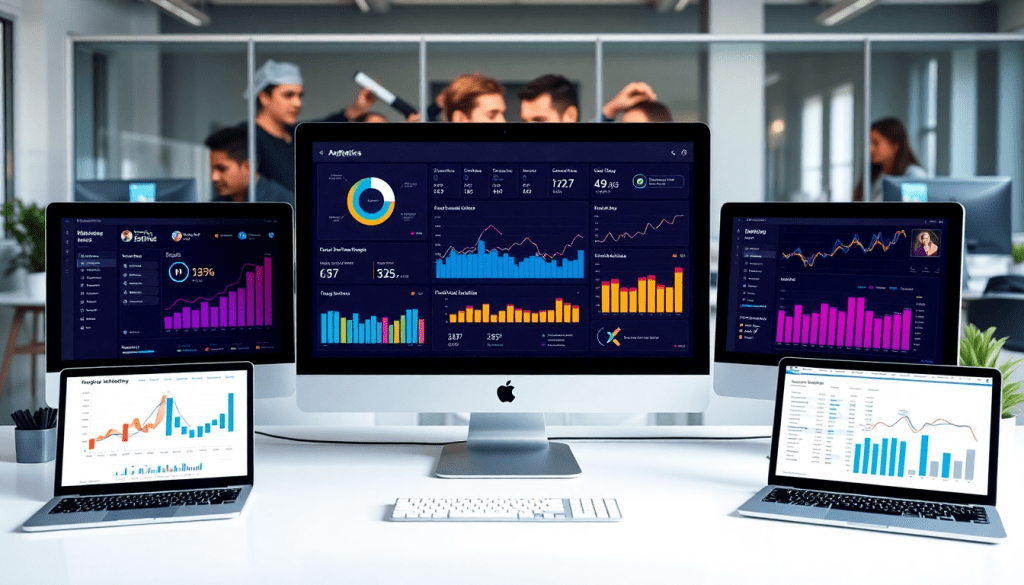
Marketing Dashboard Automation: Smarter Analytics & Reporting
Marketing dashboard automation is transforming how agencies, brands, and marketing teams manage analytics, reporting, and campaign insights. By streamlining data collection, visualization, and automated performance reports, platforms like TapClicks empower teams to make faster, more informed decisions—without the manual grunt work. In this guide, we'll explore the essentials of marketing dashboard automation, how it drives agency reporting automation and cross-channel analytics, and what to look for in a modern reporting platform.
The Foundations of Marketing Dashboard Automation
Marketing dashboard automation is the process of transforming raw marketing data from multiple channels into dynamic, real-time dashboards—without the need for repetitive manual updates. For agencies and brands managing dozens (or even hundreds) of campaigns, this automation isn’t just a convenience; it’s a necessity. By automating data aggregation, visualization, and reporting, teams gain a single, always-accurate view of performance that empowers faster, smarter decision-making.
To understand the true impact, consider the difference between static and automated dashboards. Static dashboards are typically built in spreadsheets or legacy BI tools. They require manual data pulls, copying and pasting, and constant attention to keep information current—making them prone to errors and quickly outdated. Automated dashboards, on the other hand, connect directly to marketing platforms (like Google Ads, Facebook, and programmatic ad exchanges), updating in real time or on a set schedule. This not only eliminates tedious, error-prone processes but also ensures that every stakeholder—from account managers to clients—always has access to the most up-to-date insights.
The key benefits of marketing dashboard automation are hard to overstate. First, there’s substantial time savings: by automating routine reporting, agencies often reclaim 50+ hours per analyst per month. This frees up teams to focus on strategy, optimization, and client service. Automation also reduces the risk of costly errors—when dashboards update instantly, there’s no risk of using stale or incorrect data in client meetings or campaign reviews. Most importantly, automated dashboards allow agencies and brands to deliver a consistently high level of service, with every client dashboard reflecting the latest campaign performance at any given moment.
A leading solution in this space is the TapClicks reporting platform. TapClicks offers robust, automated dashboard tools that unify data from over 10,000 marketing, advertising, and business sources. Its drag-and-drop dashboards, AI-powered insights, and automated report scheduling make it a powerful choice for agencies and brands seeking scalable, error-free marketing analytics. With TapClicks, the foundations of marketing dashboard automation become a launchpad for smarter, more efficient, and more impactful marketing operations.
Key Features of a Modern Marketing Analytics Dashboard
To unlock the true potential of marketing dashboard automation, a platform must deliver more than just pretty charts. The most effective marketing analytics dashboards provide a comprehensive toolkit that combines cross-channel analytics, seamless real-time data integration, and intuitive, customizable visualizations—all designed to elevate both internal operations and client-facing experiences.
Cross-Channel Analytics
Modern marketing campaigns span search, social, display, email, and more. A robust dashboard must unify these data streams, allowing you to analyze performance across every channel in a single, consolidated view. This empowers users to spot trends, allocate budgets more efficiently, and deliver holistic campaign narratives to stakeholders.
Real-Time Data Integration
Gone are the days of waiting hours (or days) for updated reports. With real-time data integration, teams can access the freshest campaign metrics—instantly. This not only enhances decision-making agility but also ensures that both internal teams and clients are always working from the latest, most accurate data.
Customizable Visualizations
No two agencies or brands operate exactly alike, and neither should their dashboards. Customizable widgets, drag-and-drop layouts, and branded design options let you tailor dashboards to specific team needs, campaign goals, or client expectations. This flexibility ensures that users see the KPIs and insights that matter most, without distraction.
Automated Performance Reports
Reporting automation is a game changer for agencies and brands alike. Instead of manually compiling slide decks or spreadsheets, automated reporting tools generate and distribute scheduled reports—directly to clients or stakeholders. This streamlining not only saves hours each week but also reduces the risk of human error, supporting more transparent and consistent client communication.
Simplified Workflows for Agencies
For agencies managing dozens or even hundreds of clients, efficient workflows are critical. Modern dashboards integrate seamlessly with order management and workflow tools, enabling easy collaboration between sales, ops, and fulfillment teams. This means faster campaign launches, fewer bottlenecks, and a smoother client experience from start to finish.
For a deeper dive into how these features deliver powerful marketing insights, explore TapClicks analytics reporting, which covers practical use cases, visualization examples, and more. Leading platforms like TapClicks are designed to handle this level of scale, flexibility, and automation—so your team can focus on strategy, not spreadsheets.
How Automated Reporting Transforms Agency Operations
For agencies juggling dozens—or hundreds—of client campaigns, manual reporting is a notorious resource drain. Teams often find themselves lost in spreadsheet chaos, copying and pasting data across sources, battling version control issues, and racing against deadlines to deliver reports. Not only does this introduce the risk of human error, but it also leaves less time for valuable analysis and client strategy. Late-night scrambles and missed deadlines become all too common, eroding client trust and team morale.
Agency reporting automation eliminates these headaches by streamlining the entire process from data aggregation to report delivery. With an automated platform like TapClicks, agencies can pull real-time data from 10,000+ sources, instantly populate branded dashboards, and schedule recurring reports—freeing analysts from repetitive grunt work. This shift doesn’t just save time (often 50+ hours per analyst each month); it transforms the client experience. Automated, always up-to-date dashboards foster transparency and let clients track performance on their own terms—no more waiting for the monthly update.
Key features like role-based access and white-label reporting further elevate agency operations. With TapClicks, agencies can grant clients tailored portal access, manage permissions by user or team, and deliver reports under their own branding. Multi-client management at scale is seamless, meaning agencies can onboard new accounts or roll out campaign updates across hundreds of dashboards in just a few clicks.
Ultimately, agency reporting automation isn’t just about efficiency—it’s about unlocking the ability to scale, improve communication, and deliver a higher standard of client service. For a deeper dive into the time-saving and operational benefits, check out these agency reporting efficiency insights.
Cross-Channel Analytics: Unifying Your Data Story
In today’s fragmented digital marketing landscape, cross-channel analytics is the glue that brings your entire data story together. But what exactly does cross-channel analytics mean, and why is it so vital for agencies, brands, and multi-location marketers?
At its core, cross-channel analytics is the practice of integrating data from all your marketing channels—search, social, display, email, video, and more—into a single, cohesive view. Rather than analyzing Google Ads, Facebook, and programmatic campaigns in silos, automated dashboards allow you to see how these channels interact, overlap, and contribute to your broader marketing KPIs. This holistic approach reveals the true impact of your efforts, uncovers cross-channel synergies, and helps optimize budgets for maximum ROI.
Automated dashboard platforms like TapClicks make this unification seamless. With thousands of built-in data connectors, TapClicks pulls real-time data from virtually any source and blends it into unified dashboards—no manual exports or spreadsheet wrangling required. Whether you’re tracking conversions from paid search, engagement from social, or impressions from connected TV, TapClicks’ cross-channel analytics capabilities ensure every data point is accounted for and visualized in context.
For agencies and brands managing campaigns across multiple locations or clients, the challenge multiplies. TapClicks addresses this with powerful data aggregation and normalization tools, allowing you to roll up results by region, franchise, or client portfolio. This means you can compare performance across markets, benchmark KPIs, and deliver consistent, apples-to-apples reporting—at scale.
The result? Faster, more accurate insights that fuel better decision-making and campaign optimization. To dive deeper into how real-time data collection and automated dashboards unlock cross-channel performance, check out these real-time marketing automation strategies.
With cross-channel analytics powered by automation, your marketing story is no longer fragmented—it’s unified, actionable, and ready to drive results. Learn more about how TapClicks can help you master unified analytics at tapclicks.com.
Digital Marketing Data Visualization That Drives Action
In digital marketing, dashboards are more than just pretty charts—they’re the launchpad for smarter, faster decisions. The most effective dashboards surface actionable insights, not just raw metrics, empowering teams and clients to instantly identify trends, troubleshoot issues, and capitalize on new opportunities.
Turning Data Into Action: What Sets Great Visualizations Apart
Actionable data visualization is all about clarity and focus. Overloading users with every metric under the sun leads to confusion—not insight. Instead, impactful dashboards:
-
Emphasize high-value KPIs
Focus on metrics that directly impact performance, such as:- Conversions
- Cost per Acquisition (CPA)
- Return on Ad Spend (ROAS)
- Engagement rates
-
Use intuitive design elements
- Clear, contrasting colors
- Legible labels and logical groupings
-
Enable at-a-glance understanding
- Users should be able to instantly spot what’s working—and what’s not.
Building Dashboards That Actually Get Used
Want dashboards that inspire action, not just admiration? Try the following:
1. Start with “Why?”
Ask: What business question does each chart answer?
Examples:
- Are paid social campaigns outperforming organic?
- Which channels are delivering the highest ROI?
2. Match the Chart to the Message
| Use Case | Best Chart Type |
|---|---|
| Trends over time | Line or Area Chart |
| Channel performance compare | Bar or Column Chart |
| Share-of-voice/budget split | Pie Chart (sparingly!) |
3. Make Key Insights Pop
- Conditional formatting: Color-code metrics that hit/exceed/fall short of benchmarks.
- Goal thresholds: Visually flag underperformance or significant wins.
4. Embrace Interactivity
- Let users filter by channel, timeframe, or audience segment.
- Enable drill-downs for self-serve exploration.
The Little Things That Make a Big Difference
-
Context matters:
Add benchmarks, targets, or year-over-year comparisons to help viewers interpret results. -
Less is more:
Remove unnecessary gridlines, 3D effects, or redundant legends to reduce clutter. -
Tell a story:
Organize dashboards so users naturally move from big-picture summaries to detailed insights.
Why TapClicks Makes Visualization Effortless (and Impactful)
With TapClicks, you get more than beautiful dashboards—you get a strategic advantage:
-
Drag-and-drop dashboard builder:
Create, customize, and rearrange widgets in seconds. -
Automated data refreshes:
Always work with the latest campaign metrics. -
Smart visual cues:
Built-in alerts and conditional formatting spotlight what matters most. -
Seamless report delivery:
Schedule and automate insights to land in decision-makers’ inboxes, right when they need them.
When dashboards are designed for action—not just aesthetics—agencies and marketers can make better decisions, faster.
That’s the TapClicks difference: actionable data, always ready for your next move. Learn more here.
TapClicks vs. Funnel.io: Which Reporting Platform Wins?
When choosing a marketing dashboard automation platform, the decision often comes down to TapClicks vs. Funnel.io. Both are recognized leaders in marketing data integration and reporting, but their strengths diverge significantly when it comes to scalability, automation, integration depth, and AI-powered insights. Let’s break down these essential points to help you select the right solution for your agency or brand.
Scalability:
One of TapClicks’ key differentiators is its ability to handle massive scale—think thousands of dashboards, scheduled reports, and multi-client environments without breaking a sweat. Agencies and media companies managing hundreds of clients praise TapClicks for its robust multi-tenant architecture and role-based access, making it easy to deliver individualized, white-labeled dashboards at scale. Funnel.io, while capable for smaller teams, can struggle when complexity and client volume increase, often requiring additional manual work to manage reporting for large account portfolios.
Automation & Workflow:
TapClicks is purpose-built to automate not just data collection and transformation, but also every stage of reporting and campaign workflow. Users benefit from scheduled, fully branded reports, automated client communications, and seamless collaboration between sales, ops, and fulfillment teams—all from a unified platform. In contrast, Funnel.io primarily serves as a powerful “data pipe,” automating data extraction and normalization, but leaving much of the dashboarding, visualization, and reporting processes to be handled in external BI tools or spreadsheets.
Integration Depth:
With over 10,000 marketing, advertising, and business data connectors—including Smart Connectors for custom sources—TapClicks leads the industry in integration breadth and depth. It not only pulls in data from virtually any channel but also allows users to enrich, blend, and normalize cross-channel datasets for holistic analytics. Funnel.io is also strong in data connectivity, but users often cite TapClicks’ built-in enrichment and cross-client aggregation as a game-changer for complex, multi-location, or multi-brand environments.
AI-Powered Insights:
TapClicks sets itself apart with embedded AI features like TapInsights and SmartPilot, which automatically analyze your dashboards and surface actionable recommendations—no data science degree required. SmartEmail even summarizes key campaign insights and delivers them directly to stakeholders’ inboxes. Funnel.io currently lacks native AI analytics, leaving users to interpret raw data or build their own models externally.
Which Platform is Best for You?
- Choose TapClicks if you need enterprise-grade scalability, end-to-end workflow automation, advanced AI insights, and a single system of record for all your marketing operations. It’s ideal for agencies, media companies, and brands seeking to streamline operations and deliver always-on client dashboard insights.
- Choose Funnel.io if your primary need is simple, reliable data extraction and you prefer to handle visualization and reporting in separate tools.
For a deeper dive into this comparison and to see how TapClicks can transform your agency’s efficiency, check out the Funnel.io comparison or visit the TapClicks website to learn more.
Measuring Success: Tracking the KPIs That Matter Most
Every winning marketing dashboard starts with the right KPIs—metrics that link directly to your business goals and make campaign performance clear, actionable, and measurable.
What Should You Be Tracking?
Let’s break down the essential performance marketing KPIs you’ll want to keep front and center:
-
Return on Ad Spend (ROAS):
How much revenue do you generate for every dollar spent on advertising?
The gold standard for campaign profitability. -
Cost Per Acquisition (CPA):
What does it cost to gain a customer or lead?
Perfect for optimizing where your budget goes. -
Click-Through Rate (CTR):
Are your ads and messaging compelling enough to drive clicks?
A quick read on creative effectiveness. -
Conversion Rate:
Are users taking the desired action—like making a purchase or completing a form?
Essential for tracking bottom-line results. -
Impressions & Reach:
How many people actually see your campaigns?
Key for understanding brand exposure. -
Customer Lifetime Value (CLV):
Which customers are worth the most over time?
Helps shape long-term growth strategies.
Why Automate KPI Tracking?
Manual reporting is time-consuming, error-prone, and often outdated by the time it’s ready. Platforms like TapClicks eliminate those headaches by automating every step:
Here’s how automation changes the game:
| Benefit | What It Means for You |
|---|---|
| Consistency | KPIs are measured and visualized the same way every time, across all channels. |
| Reliability | Automated data pulls mean no more missed updates or spreadsheet errors. |
| Timeliness | Get real-time KPI reports—make decisions when it matters most. |
Giving Everyone the Right View
Different stakeholders need different insights. With a modern dashboard platform, you can:
- Customize dashboards for every user—executives, managers, clients, and more.
- Set automated alerts when KPIs go above or below target.
- White-label reports to match your agency’s or brand’s look, building trust and transparency.
The Bottom Line
By combining the right KPIs with automated reporting, agencies and brands can:
- Tell a compelling, data-driven story to clients and leadership
- Make faster, smarter optimizations
- Spend less time on manual tasks—and more on growing your business
Getting Started with Marketing Dashboard Automation
Ready to leave behind manual reporting, scattered spreadsheets, and last-minute data pulls? Implementing marketing dashboard automation can feel daunting, but with a structured approach, agencies and marketing teams can rapidly unlock efficiency and insight. Here’s a step-by-step plan to set your organization up for automated reporting success.
1. Audit Your Current Reporting Processes
Start by mapping out how your team currently collects, aggregates, and presents marketing data. Identify common bottlenecks—is it manual data entry, inconsistent formats, or lag between campaign activity and reporting? This audit will help clarify which pain points automation should solve first.
2. Define Your Core Reporting Needs
Outline the essential data sources (Google Ads, Facebook, CRM, programmatic, etc.), performance metrics, and KPIs your dashboards must deliver. Consider both internal needs (campaign optimization) and client-facing requirements (white-label reports, custom branding).
3. Choose the Right Automation Platform
Seek out a unified platform that offers robust data integration, real-time dashboarding, and scheduled reporting capabilities. Solutions like TapClicks stand out for high-volume support, cross-channel analytics, and customizable workflow tools—ensuring future scalability as your agency or team grows.
4. Integrate and Normalize Your Data
Connect your marketing, advertising, and business data sources using built-in connectors or smart ETL/ELT tools. Prioritize platforms that normalize and enrich your data automatically, so your dashboards always reflect the most accurate, apples-to-apples metrics across channels.
5. Build, Customize, and Automate Dashboards
Leverage drag-and-drop dashboard editors to design visualizations tailored to your team’s or clients’ goals. Set up automated report scheduling to deliver insights on your cadence—whether it’s weekly, monthly, or in real time. Take advantage of role-based access to control who sees what.
6. Onboard Stakeholders and Refine Workflows
Train your team and clients on how to access, interpret, and act on automated dashboard insights. Encourage feedback, iterate on dashboard layouts, and use workflow tools to streamline campaign orders, approvals, and fulfillment.
7. Monitor, Optimize, and Scale
Review adoption rates and dashboard engagement—are users finding the insights they need? Use built-in AI features to surface optimization opportunities and continually improve your reporting approach as new channels and campaigns come online.
Best Practices for a Smooth Rollout:
- Start with a pilot group or a few high-priority clients to test and refine dashboards.
- Document dashboard templates and data mapping standards to ensure consistency.
- Communicate benefits early and often—focus on saved hours, error reduction, and faster insights.
Ready to accelerate your analytics and reporting workflows? Discover how the TapClicks reporting platform can unify your marketing data, automate your dashboards, and transform client communication. Or, book a personalized demo with TapClicks to see automation in action for your agency or brand.
Start Automating Your Marketing Data Today!
No Credit Card Required.

