

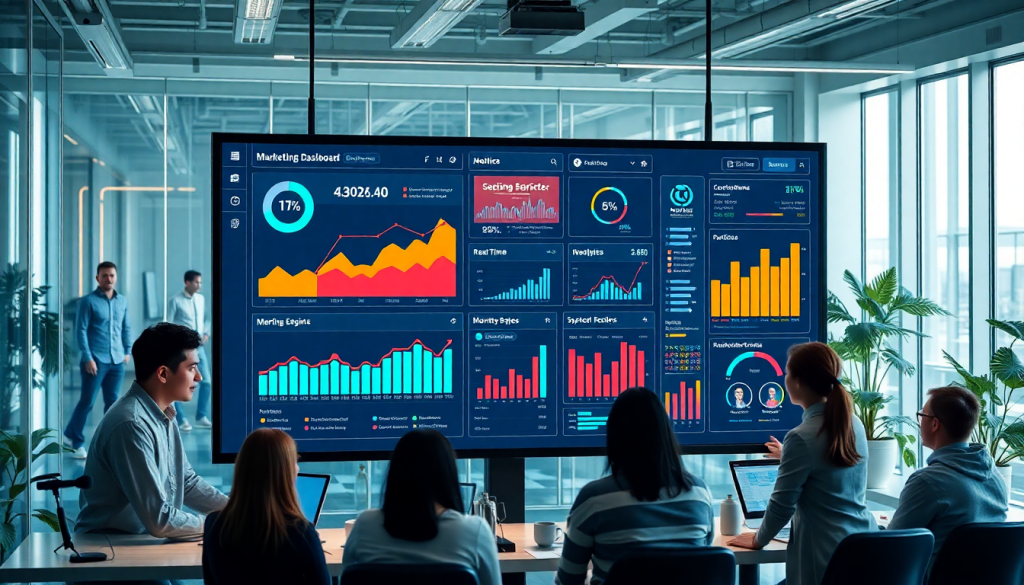
Marketing Dashboard Automation: Real-Time Insights & AI Tools
Today’s marketing teams need more than a simple dashboard—they need a centralized platform that brings together real-time analytics, automated workflows, and AI-powered insights to drive smarter decisions at scale. Marketing dashboard automation is changing how agencies, brands, and enterprise teams centralize data, build cross-platform dashboards, and streamline reporting. This guide explores the essential features of automated marketing dashboards, the benefits of AI-driven reporting, and how TapClicks leads the way with scalable, intelligent solutions for marketing data centralization.
What Is Marketing Dashboard Automation?
Marketing dashboard automation is the process of using technology to automatically collect, aggregate, and visualize marketing data from multiple sources within a single, centralized dashboard. Traditional reporting often requires marketers to manually pull data from various platforms—like Google Ads, Facebook, CRMs, or email tools—then clean, format, and combine it in spreadsheets or presentation decks. Dashboard automation replaces these repetitive, time-consuming tasks with a system that continuously ingests data, updates dashboards in real time, and delivers up-to-date insights without manual intervention.
The core functions of marketing dashboard automation include automated data integration, cross-channel reporting, and scheduled report delivery. With automation in place, teams can set up rules and schedules so that dashboards refresh themselves with the latest campaign performance, budget pacing, or ROI metrics. This not only reduces the risk of human error and data delays but also frees up marketers to focus on strategic analysis instead of routine data wrangling.
For agencies, the value is clear: automated dashboards allow them to scale client reporting—managing hundreds of client accounts with consistent, branded reports delivered on time, every time. Brands, especially those with multiple locations or business units, benefit from a consolidated view of marketing performance, making it easier to compare campaigns, regions, or channels at a glance. Marketing operations teams, meanwhile, gain a reliable system that supports collaboration, transparency, and faster decision-making across the organization.
In short, marketing dashboard automation is about working smarter, not harder—turning marketing data chaos into clarity with a few automated clicks. To dive deeper into how this technology is transforming marketing teams and the essential components of a modern solution, see TapClicks’ overview of dashboard automation.
Essential Features of an Automated Marketing Dashboard
An effective automated marketing dashboard goes far beyond simple data display—it’s engineered to unify, automate, and empower. For agencies, brands, and enterprise teams, these must-have features separate best-in-class solutions from basic reporting tools:
1. Multi-Channel Data Aggregation
The heart of dashboard automation is the ability to bring together data from every marketing touchpoint—search, social, display, email, SEO, and beyond—into a centralized view. Automated dashboards must support deep integration with a wide array of marketing, advertising, and business platforms, eliminating the need for manual data pulls. This allows marketers to analyze performance holistically and uncover cross-channel insights that would otherwise remain hidden.
2. Real-Time Analytics
Speed matters in modern marketing. Automated dashboards continuously refresh data, ensuring decision-makers always have access to the most current metrics. Real-time analytics enable teams to monitor campaign performance, track spend, and identify trends the moment they arise. This agility is crucial for optimizing campaigns, reallocating budgets, and addressing issues before they impact ROI.
3. Report Scheduling Automation
Manual report building is time-consuming and prone to error. With automated report scheduling, teams can set up recurring delivery of dashboards and custom reports—daily, weekly, monthly, or triggered by specific events. Automated scheduling ensures stakeholders always receive the latest insights without repetitive manual work, freeing analysts to focus on strategy rather than data wrangling.
4. Cross-Platform Dashboard Builder
Today’s marketing stack is more diverse than ever. A robust dashboard builder must allow users to create custom, cross-platform views—combining metrics from Google Ads, Facebook, programmatic platforms, CRM systems, and more. Drag-and-drop interfaces and tailored branding enable both technical and non-technical users to create dashboards that suit their unique needs, making data accessible across the organization.
5. Seamless Data Centralization and Performance Dashboards
Automated dashboards should serve as a single source of truth, blending, enriching, and normalizing data from disparate sources. This centralization enables detailed campaign performance dashboards, where marketing teams can drill down into specific channels or roll up to executive-level summaries—all within a unified platform. The result is greater transparency, consistency, and trust in the data that drives marketing decisions.
Solutions like TapClicks are designed to deliver these essential features at scale. By unifying multi-channel data, offering real-time analytics, automating report delivery, and supporting flexible, cross-platform dashboard creation, TapClicks empowers agencies and brands to make smarter, faster, and more impactful marketing decisions.
The Power of AI-Powered Dashboard Creation
AI is transforming the way marketing teams create, analyze, and act on dashboard data. Instead of manually configuring widgets, building charts from scratch, or sifting through endless performance metrics, AI-powered dashboard creation leverages machine learning to automate setup, surface insights, and drive smarter decision-making from day one.
With TapClicks, for example, AI agents can rapidly assemble dashboards based on campaign goals, data sources, and KPIs—minimizing setup time and ensuring dashboards are tailored to each user’s needs. TapClicks’ AI-powered dashboard creation streamlines the entire process: it auto-selects the most relevant visualizations, normalizes cross-channel data, and highlights key performance drivers without human intervention.
But AI goes beyond visual automation—it plays a strategic role in optimization. TapClicks’ AI-driven recommendations provide actionable insights on budget pacing, channel allocation, and campaign adjustments, helping marketers identify at-risk campaigns or high-performing segments in real time. SmartPilot, TapClicks’ intelligent recommendation engine, benchmarks performance against historical data and industry standards, empowering teams to make proactive changes instead of reactive fixes.
Ultimately, AI-powered dashboards don’t just make reporting easier—they unlock a new level of intelligence, allowing marketers to focus on strategy and creative work while the platform handles the heavy lifting of data integration, analysis, and insight generation. This is the future of marketing dashboard automation, and it’s available today with TapClicks.
Automated Reporting Workflows: Save Time and Reduce Errors
One of the most transformative aspects of marketing dashboard automation is the shift to fully automated reporting workflows. Traditionally, marketers and analysts spent countless hours manually pulling data from disparate sources, updating spreadsheets, and assembling reports for stakeholders. Not only was this process time-consuming, but it also introduced opportunities for human error—misaligned dates, overlooked metrics, and copy-paste mistakes that could undermine the credibility of marketing insights.
Automated reporting workflows replace these tedious manual steps with streamlined, rule-based processes. With solutions like TapClicks, marketing teams can set up scheduled or event-triggered reports that are delivered automatically to internal teams or clients. Whether you need daily campaign performance snapshots, weekly budget pacing updates, or monthly executive summaries, these reports are generated and distributed without lifting a finger. This automation not only accelerates delivery—enabling faster response to campaign trends and client needs—but also ensures consistency and accuracy across all reports.
Beyond time savings, automated workflows dramatically reduce errors. By centralizing your data and automating the report generation process, you minimize the risk of data mismatches or omissions. Reports are always up-to-date, pulling directly from unified, real-time sources. This shift empowers marketers to focus on strategic analysis and optimization rather than repetitive administrative work.
For a deeper dive into the tangible benefits of real-time, automated reporting—including how it enhances transparency and decision-making—explore this overview of real-time reporting advantages. Ultimately, automated reporting workflows are a game-changer for marketing operations, delivering speed, accuracy, and peace of mind to agencies, brands, and enterprises alike.
Real-Time Marketing Analytics for Smarter Decisions
In the fast-paced world of digital marketing, timing is everything. The ability to access up-to-the-minute data isn’t just a luxury—it’s a necessity for making agile campaign pivots, optimizing budgets, and seizing new opportunities as they arise. Real-time marketing analytics empower teams to move beyond static, outdated spreadsheets and deliver instant, actionable insights that drive smarter, more impactful decisions.
Centralized marketing dashboards are at the heart of this transformation. Instead of toggling between siloed data sources and waiting days for manual report updates, marketers can now view holistic campaign performance at a glance. With unified metrics across channels—search, social, display, email, and more—teams can quickly identify what’s working, spot underperforming areas, and respond proactively to changing trends or market conditions.
TapClicks excels in delivering this instant, unified reporting experience. By integrating thousands of marketing and advertising data sources into a single platform, TapClicks ensures that analytics are always current and accessible. Powerful visualizations and AI-driven insights surface key trends and opportunities the moment they happen, enabling marketing leaders to reallocate budgets or adjust creative strategies in real time. Whether you’re tracking multi-location campaigns or managing complex agency portfolios, TapClicks’ real-time analytics keep your entire team aligned, informed, and ready to act.
To see how real-time analytics can power smarter decisions for your organization, explore the full capabilities of TapClicks’ marketing dashboard automation.
Multi-Channel Data Aggregation and Centralization
Modern marketers face a mounting challenge: data is scattered across dozens—sometimes hundreds—of platforms, from Google Ads and Facebook to email, programmatic display, and beyond. Without a unified view, making sense of performance, attribution, and ROI is nearly impossible. This is where marketing dashboard automation delivers its most transformative value: seamlessly aggregating and centralizing cross-channel data into a single source of truth.
By connecting to all your marketing, advertising, and business data sources, automated dashboards eliminate the manual hassle of logging into multiple platforms, downloading CSVs, and manually stitching reports together. Instead, data from search, social, display, email, and countless other channels flows automatically into one unified dashboard. The result is real-time visibility into campaign performance, audience engagement, and spend—across every channel and client.
Centralizing marketing data is more than just a time-saver; it’s a strategic advantage. With all campaign metrics in one place, marketers can identify trends, optimize budget allocation, and measure ROI with unprecedented clarity. Comparing cross-channel performance or drilling down into multi-location analytics becomes effortless, empowering teams to make smarter, data-driven decisions.
TapClicks is built to excel at this scale and complexity. With over 10,000 data connectors and flexible Smart Connectors, TapClicks enables agencies, brands, and enterprises to unify even the most complex data environments. Whether you’re managing hundreds of clients, dozens of locations, or a mix of digital and offline campaigns, TapClicks ensures your dashboards are always accurate, up-to-date, and ready for analysis. This level of data aggregation and centralization is what sets leading marketing operations apart—and it’s the foundation for truly actionable insights. To learn more about how TapClicks powers unified marketing data at scale, visit TapClicks.
Real-World Wins: How Automated Campaign Dashboards Change the Game
Automated marketing dashboards are more than just data visualizations—they’re a catalyst for efficiency, transparency, and smarter decision-making. Here’s how different organizations are putting them to work:
1. Agencies: Effortless Client Reporting at Scale
The Challenge:
Juggling dozens (or even hundreds) of client accounts, each requiring tailored reports across channels like search, social, and display.
How Dashboards Help:
- Aggregate multi-channel data into branded, client-specific views
- Schedule automated reports—no more manual spreadsheets
- Deliver error-free, timely insights directly to clients
Example in Action:
A digital agency supporting 75 local businesses sets up TapClicks dashboards for each client. Reports are auto-generated and delivered on schedule, freeing analysts from repetitive tasks and boosting client satisfaction with fast, transparent reporting.
2. Multi-Location Brands: Unifying Performance Across Regions
The Challenge:
National and global brands need oversight for campaigns running in hundreds of locations, with both high-level and granular data.
How Dashboards Help:
- Centralize data from all locations and channels
- Present roll-up views for executives and detailed breakdowns for local managers
- Enable real-time monitoring of KPIs like ROAS, cost per lead, and more
Example in Action:
A retail chain tracks campaign performance across 250 stores. TapClicks dashboards spotlight the highest-ROI locations and flag regions needing extra budget—empowering quick, data-driven decisions at both the local and corporate level.
3. Enterprise Teams: Streamlined Ops and Collaboration
The Challenge:
Cross-functional teams (marketing, sales, ops) need a single source of truth to drive alignment and action.
How Dashboards Help:
- Centralize analytics, budget tracking, and workflow status
- Trigger alerts for underperforming campaigns or budget anomalies
- Enable secure, role-based access for different stakeholders
Example in Action:
A large enterprise uses TapClicks to automate campaign summary emails, keep everyone in the loop, and cut down on miscommunication. This transparency accelerates decision-making and streamlines collaboration across departments.
Why It Matters: The TapClicks Advantage
| Benefit | Impact for Your Team |
|---|---|
| Automated Reporting | Save analyst hours every month |
| Unified Data Visibility | Spot trends & opportunities faster |
| Actionable Insights | Optimize campaigns in real time |
| Scalable Collaboration | Keep everyone aligned, everywhere |
With TapClicks, organizations gain the agility to scale reporting, improve teamwork, and act on insights—delivering smarter campaigns and freeing up time for big-picture strategy.
Choosing the Right Marketing Automation Software
Selecting the ideal marketing automation software for dashboard automation is crucial for unlocking the full benefits of centralized analytics, streamlined reporting, and actionable insights. To ensure your solution meets your organization’s current and future needs, start by evaluating the following areas:
1. Scalability:
Can the platform handle your volume—whether that’s dozens or thousands of dashboards, clients, or campaigns? Ask about performance with large datasets, multi-location brands, and high-frequency reporting schedules.
2. Integrations:
Does the software connect natively with your most important marketing, advertising, and business data sources? Look for a solution with extensive, up-to-date connectors across search, social, programmatic, CRM, and analytics platforms. The ability to add custom integrations as your stack evolves is also essential.
3. AI Capabilities:
How does the platform leverage AI for dashboard creation, insights, and optimization? Consider whether it offers automated data analysis, predictive recommendations, and AI-generated reporting summaries that save time and highlight opportunities.
4. Workflow Automation:
Does the software support automated report scheduling, approval workflows, and role-based access for different teams or clients? Automation here minimizes manual effort, reduces errors, and accelerates delivery.
5. Customization & Flexibility:
Can you tailor dashboards, reports, and data transformations to match your brand, clients, or stakeholders’ needs? Flexibility is key for organizations managing multi-channel, multi-client environments.
To make an informed decision, ask software vendors questions such as:
- “How many native data connectors do you provide—and can you add new sources as needed?”
- “What AI features are available for data analysis, reporting, and campaign optimization?”
- “How does your platform support collaboration between sales, ops, and marketing teams?”
- “What are your options for white-labeling and custom branding?”
- “Can data be exported or piped into other BI tools if needed?”
For organizations seeking a robust, future-ready solution, the TapClicks marketing dashboard stands out. TapClicks is designed for high-volume users—agencies, brands, and enterprises—who need unified data integration, powerful automation, and AI-driven insights at scale. Its platform brings together 10,000+ connectors, customizable workflows, and advanced analytics, making it a leading choice for teams looking to optimize marketing operations and reporting.
For more information on how TapClicks can centralize and automate your marketing dashboards, visit TapClicks.
Conclusion
Marketing dashboard automation has fundamentally transformed the way modern marketing teams operate, delivering unparalleled efficiency, accuracy, and actionable insight at scale. By centralizing multi-channel data, automating tedious reporting workflows, and harnessing the power of AI for real-time analytics, organizations can make smarter decisions faster, pivot campaigns with confidence, and consistently demonstrate ROI to stakeholders. The result? Teams spend less time wrangling data and more time optimizing strategy and driving growth.
TapClicks stands out as a leader in this space, offering a unified platform that seamlessly brings together data integration, workflow automation, and AI-powered insights—all designed to scale with your business needs. If you’re ready to take your marketing operations to the next level, explore TapClicks, schedule a personalized demo, or start automating your marketing dashboards today. Empower your team with the tools to deliver real-time, intelligent reporting—and turn your marketing data into your most valuable asset.
Start Automating Your Marketing Data Today!
No Credit Card Required.

