

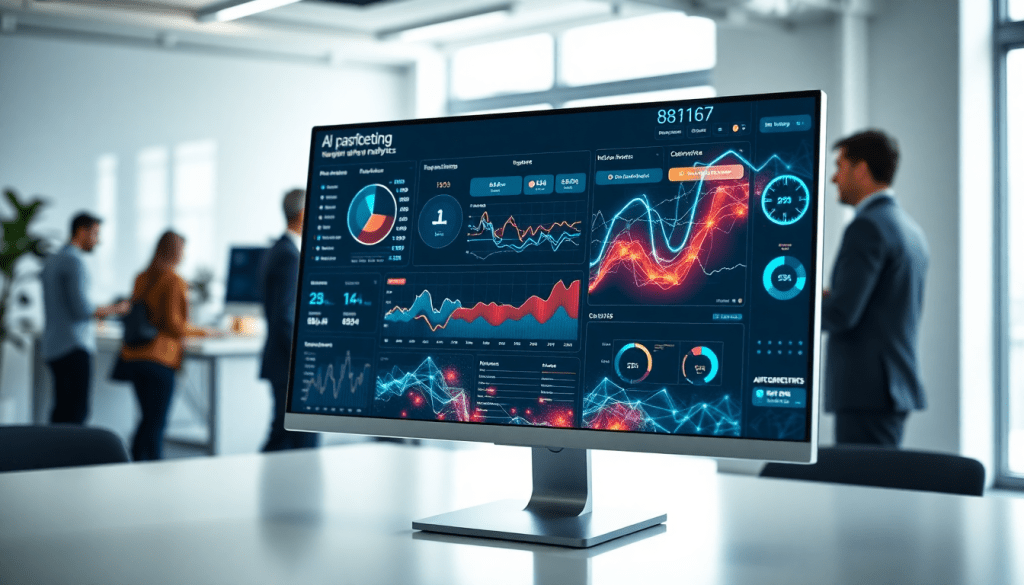
Marketing Dashboard Automation: Real-Time Analytics & AI Insights
Marketing dashboard automation is reshaping how teams analyze, report, and act on their data. By centralizing information from every channel into unified dashboards, marketers can see the big picture—and granular details—in real time. With the right tools, like TapClicks marketing dashboard, organizations automate reporting workflows, uncover AI-powered insights, and drive better outcomes across campaigns. This guide breaks down how automated dashboards supercharge analytics, what features set the best platforms apart, and how to get your team running on real-time, actionable data.
What is Marketing Dashboard Automation?
Marketing dashboard automation is the process of using software to automatically aggregate, visualize, and report on marketing data from multiple sources—all in one centralized dashboard. In today’s fast-paced marketing environment, teams manage campaigns across a dizzying array of digital channels: search, social, programmatic, email, and more. Manually collecting and compiling this data is not only time-consuming, but also prone to errors and delays.
Automated marketing dashboards solve these challenges by connecting to all your marketing platforms, pulling fresh data in real time, and presenting it through interactive visualizations. This streamlines reporting, ensures data consistency, and provides marketers with immediate visibility into campaign performance, ROI, and budget pacing.
The benefits of automating data collection, visualization, and reporting go beyond time savings. Automated dashboards eliminate the tedious work of downloading spreadsheets and updating charts, freeing up analysts and managers to focus on strategy and optimization. They also reduce the risk of data silos and inaccuracies, since all teams work from a single source of truth.
A key component of marketing dashboard automation is multi-channel data aggregation. By consolidating data from every advertising and analytics platform, teams gain a holistic view that supports cross-channel insights and smarter decision-making. When combined with real-time analytics, marketers can spot trends, identify issues, and act on opportunities as they happen—not days or weeks later.
To dive deeper into the mechanics and advantages of this approach, read more about Marketing Dashboard Automation & Real-Time Analytics.
Key Benefits of Automated Reporting Workflows
Automated reporting workflows revolutionize the way marketing teams handle data, offering far-reaching advantages that go well beyond simply saving time. By eliminating manual data pulls and report creation, teams dramatically reduce the risk of human error—a key factor when juggling dozens or even hundreds of active campaigns. With automation in place, marketers and analysts can refocus their energy on strategy and optimization, rather than repetitive tasks.
One of the most immediate impacts is a significant boost in productivity. Instead of spending hours sifting through spreadsheets or building presentations from scratch, marketers access real-time dashboards and scheduled reports that update automatically. This streamlined process accelerates the delivery of insights, empowering teams to spot trends and act on opportunities as they emerge. The result? Faster, more informed decision-making that keeps campaigns agile and effective.
Automated workflows also enhance collaboration both within marketing departments and with external stakeholders. With centralized dashboards and scheduled report delivery, everyone—from account managers to clients—stays on the same page. Role-based access ensures that each user sees the most relevant data for their needs, reducing confusion and duplication of effort. This clarity leads to improved client satisfaction, as agencies and brands can deliver timely, transparent reporting with minimal lag.
Specific benefits include:
- Faster Insights: Data is always up to date, so teams can identify wins—or areas for improvement—without delay.
- Easier Collaboration: Centralized dashboards and automated report sharing foster alignment across teams and with clients.
- Improved Campaign Oversight: Real-time visibility into performance metrics enables proactive adjustments and more effective budget allocation.
- Reduced Errors and Manual Work: Automation eliminates tedious, error-prone manual processes, freeing up analyst resources for higher-value work.
In sum, automated reporting workflows aren’t just about working faster—they’re about working smarter, driving better outcomes, and delivering a superior experience to both internal stakeholders and clients. To learn more about how unified, automated reporting can transform your marketing operations, visit TapClicks.
Features to Look for in a Marketing Dashboard Platform
Choosing the right marketing dashboard platform is critical to unlocking the full potential of your data and maximizing operational efficiency. Today’s leading solutions go far beyond simple visualizations—they empower teams with AI-driven intelligence, seamless automation, and flexible customization. Here are the essential features to prioritize:
1. AI-Powered Dashboard Creation & Insights
A modern marketing dashboard should do more than just aggregate numbers. Look for platforms with embedded AI that can analyze your data, surface patterns, and even generate actionable recommendations automatically. Solutions like TapClicks leverage AI not only for visualization but also for predictive modeling, benchmarking, and automated insight delivery. This means your team spends less time hunting for answers and more time acting on them. To explore these capabilities in depth, check out this overview of AI-powered reporting features.
2. Cross-Platform Dashboard Builder
With campaigns running across multiple channels—search, social, display, email, and beyond—a robust dashboard builder must effortlessly connect to all your data sources. Seek out platforms that offer a wide array of connectors (TapClicks boasts over 10,000) and support blending, normalizing, and visualizing data from disparate systems in one unified view. This cross-platform capability is vital for agencies and brands managing diverse portfolios or multi-location operations.
3. Report Scheduling & Automation
Manual report creation is time-consuming and error-prone. The best dashboard platforms provide automated, scheduled reporting workflows. This ensures stakeholders receive up-to-date performance summaries—daily, weekly, or monthly—without intervention from your team. Automated alerts and AI-curated summaries (such as TapClicks’ SmartEmail) keep everyone informed and proactive.
4. Centralized Marketing Data Hub
Centralization is key for marketing analytics at scale. Choose a platform that not only ingests data from every relevant source but also enriches, blends, and stores it in a single location. This unified data hub serves as your “source of truth,” enabling consistent reporting and reliable analytics across teams and clients.
5. Customizable Dashboards & Role-Based Access
Different users need different insights. The ideal platform must offer granular customization—allowing you to tailor dashboards by user, department, or client. Role-based access controls ensure the right people see the right data, supporting both transparency and data security.
By prioritizing these core features, marketers can streamline their analytics, elevate reporting accuracy, and empower every stakeholder with timely, actionable insights. To see how TapClicks delivers on these essentials and more, visit TapClicks.
Real-Time Marketing Analytics for Smarter Decisions
The true power of marketing dashboard automation reveals itself in real-time analytics. When campaign data flows instantly into a unified dashboard, marketers aren’t just looking at yesterday’s results—they’re seeing what’s happening right now. This immediacy empowers teams to make faster, more informed decisions, whether it’s reallocating budget mid-campaign, pausing underperforming ads, or doubling down on creative that’s gaining traction.
Imagine a digital agency running multi-channel campaigns across search, social, and display. With real-time dashboards, the team can monitor performance minute-by-minute—tracking metrics like CTR, conversions, and spend as they occur. If a Facebook campaign’s cost-per-acquisition suddenly spikes, the dashboard flags it instantly, prompting the team to investigate and adjust before budget is wasted. Likewise, when a new creative set outperforms expectations, the team can scale it up on the fly, maximizing impact while the window of opportunity is open.
Up-to-the-minute data is no longer a luxury; it’s a necessity for campaign optimization. Automated dashboards eliminate the lag time of manual data pulls and static reports, so insights are always current. This agility is especially critical for high-volume marketers—agencies managing dozens of client accounts, or brands running hundreds of local campaigns—where every hour can mean thousands of dollars gained or lost.
By leveraging real-time analytics, marketing teams move from reactive to proactive. They catch issues before they snowball, capitalize on trends as they emerge, and deliver measurable results that keep clients and stakeholders confident. For organizations seeking this level of agility and insight, platforms like TapClicks make it possible to put real-time data at the heart of every marketing decision.
TapClicks Marketing Dashboard: Unified Data, Powerful Automation
When it comes to automating and unifying marketing analytics, TapClicks stands out as a leader in the marketing operations platform space. Designed to simplify the complexities of modern marketing, TapClicks brings together data from over 10,000 marketing, advertising, and business sources—offering seamless multi-channel data aggregation that eliminates the headaches of disparate tools and manual data pulls.
What sets TapClicks apart is its deep commitment to workflow automation and actionable intelligence. With TapClicks, teams can centralize all campaign data in one place, powering scalable, cross-platform dashboards that deliver real-time visibility into every aspect of performance. The platform’s AI-powered agents continuously analyze your dashboards, surfacing smart insights, budget pacing recommendations, and optimization opportunities—so you’re not just viewing data, but acting on it.
TapClicks also automates the reporting process from start to finish. Customizable dashboards and branded reports can be scheduled and delivered automatically, freeing marketers from repetitive manual tasks and ensuring every stakeholder gets precisely the information they need. Role-based access controls support collaboration across agencies, brands, and enterprise teams, while advanced enrichment tools blend and normalize data for multi-location, cross-channel, and multi-client analysis.
By integrating all these capabilities, TapClicks empowers organizations to move beyond basic dashboards and into a new era of data-driven marketing operations. For a deeper look at how TapClicks elevates dashboard automation—with real-time reporting, AI insights, and powerful workflow management—explore this in-depth TapClicks dashboard guide. Or, to experience the platform firsthand, visit the official TapClicks website.
Launching Automated Dashboards Without the Headaches
Automated dashboards don’t have to be intimidating. With platforms like TapClicks, getting up and running is faster and more scalable than ever. Here’s how to transform your reporting workflow step-by-step—no data science degree required.
1. Connect All Your Marketing Data
- Link Your Channels: Bring together ad platforms, social accounts, CRMs, web analytics, and more—TapClicks offers 10,000+ plug-and-play connectors.
- Handle Custom Data: Use Smart Connectors to integrate unique or proprietary data sources.
- Why This Matters: Unified data means fewer blind spots and a single source of truth from day one.
2. Pick (and Personalize) Your Dashboard Templates
- Browse Templates: Choose from pre-built layouts designed for campaign tracking, lead gen, multi-location rollups, and more.
- Customize Your View:
- Rearrange widgets with drag-and-drop
- Add or remove charts, tables, and graphs
- Apply filters for brands, locations, or channels
- Set Permissions: Control who sees what with robust role-based access.
3. Automate Report Scheduling & Delivery
- Set It and Forget It: Schedule automated report sends (daily, weekly, or monthly) to stakeholders, execs, or clients.
- Choose Your Format: Deliver insights via interactive dashboards, PDFs, or automated email summaries.
- Reduce Risk: Eliminate manual errors and make sure everyone gets the latest data—on time, every time.
4. Fine-Tune for Every Audience
| Stakeholder | Dashboard Focus | Features to Highlight |
|---|---|---|
| Executives | High-level trends, KPIs | Summaries, quick-glance visuals |
| Analysts | Deep-dives, granular filters | Drill-downs, custom widgets |
| Clients | Branded, easy-to-read reports | White-label, clear layouts |
- Clone & Filter: Quickly duplicate dashboards and adjust filters for each client, brand, or location.
- Control Access: Use TapClicks’ permissions system to manage views and data privacy.
5. Onboard Your Team for Maximum Adoption
- Kickoff Training: Run launch sessions or webinars.
- Quick-Start Guides: Share resources and cheat sheets.
- Dashboard Champions: Assign power users to help others and gather feedback.
- Iterate: Regularly update dashboards as needs evolve.
Pro Tips for Dashboard Success
- ✅ Start simple—focus on your core KPIs, then layer on complexity.
- ✅ Take advantage of AI-powered TapClicks insights to spot trends and outliers.
- ✅ Review and refresh dashboards regularly to keep them aligned with business goals.
Following this process, your organization will build a foundation for real-time, automated reporting—unlocking smarter marketing decisions and freeing up your team’s time for strategy (not spreadsheets).
Common Use Cases: From Campaign Performance to Executive Reporting
Automated marketing dashboards are revolutionizing reporting and analytics across the entire marketing ecosystem. Whether you’re an agency juggling dozens of client accounts, a brand managing multi-channel campaigns, or an enterprise team seeking holistic visibility, dashboard automation streamlines operations and delivers actionable insights exactly when and where they’re needed.
Campaign Performance Dashboards:
At the heart of dashboard automation is the ability to monitor campaign performance in real time. Marketers can instantly visualize key metrics—such as impressions, clicks, conversions, and ROI—across every channel. For example, an agency might use automated dashboards to compare paid search, social, and programmatic campaigns side-by-side, quickly spotting underperforming channels and reallocating budget for maximum impact.
Budget Pacing & Spend Optimization:
Automated dashboards make budget tracking effortless. By unifying spend data from platforms like Google Ads, Facebook, and DSPs, marketers can set up budget pacing widgets that alert them to overspending or underspending. This proactive approach ensures campaigns stay on track, prevents costly overruns, and maximizes return on ad spend.
Multi-Client Reporting at Scale:
Agencies and media companies often manage hundreds of clients, each with unique reporting needs. Automated dashboards enable the creation of templated, branded reports that can be customized for each client and delivered on a schedule—eliminating manual data pulls and repetitive slide-building. Clients receive up-to-date, transparent performance summaries, boosting satisfaction and retention.
Cross-Channel & Multi-Location Analytics:
For brands with multiple locations or product lines, automated dashboards aggregate data from disparate sources into unified views. This level of centralization makes it easy to compare performance across regions, products, or business units, and to spot trends that may be invisible in siloed reports.
Executive & Board-Level Reporting:
C-suite leaders demand high-level insights without the noise. Automated executive dashboards distill complex datasets into clear, visual summaries—think KPIs, growth trends, and high-level attribution. These dashboards can be scheduled for delivery ahead of board meetings, ensuring decision-makers always have the latest numbers at their fingertips.
How Organizations Use Dashboard Automation:
- Agencies: Streamline multi-client reporting, automate campaign insights, and improve operational efficiency.
- Brands: Monitor cross-channel marketing efforts, track multi-location performance, and optimize budgets in real time.
- Enterprise Teams: Centralize analytics across business units, unify data for BI tools, and deliver executive-ready reports.
For more real-world examples and practical applications of dashboard automation, explore TapClicks’ marketing dashboard automation resources. Whether your goal is faster campaign optimization, seamless client reporting, or strategic executive insights, automated dashboards are the backbone of modern marketing operations.
Where AI Is Taking Dashboard Automation Next
The days of static charts and passive dashboards are over. AI is rapidly turning marketing dashboards into interactive, real-time strategy centers—making every marketer’s life easier, more productive, and a lot more data-driven. Here’s how the landscape is changing (and what to expect next):
Predictive Analytics: Seeing Around Corners
No longer limited to historical reporting, modern dashboards now predict what’s coming next.
- Forecasting Performance: AI models analyze historical and cross-channel campaign data to project outcomes and ROI.
- Proactive Budgeting: Get recommendations for budget allocation before you overspend—or miss an opportunity.
- Automatic Alerts: Surface underperforming segments and get realignment suggestions, so issues are fixed before they escalate.
With TapClicks, predictive models are built right in, making your analytics not just reactive, but forward-looking.
Plain English Insights: No Data Science Degree Required
Interpreting dashboards shouldn’t require a translator. Thanks to natural language processing (NLP):
- Smart Summaries: Platforms like SmartEmail in TapClicks auto-generate executive summaries and key findings.
- Custom Stakeholder Reports: Get insights tailored for clients, executives, or internal teams—delivered straight to your inbox.
- Conversational Analytics: Ask questions in plain English and get back actionable answers, not just raw numbers.
Meet Your New AI Sidekicks
Customizable AI agents are poised to revolutionize how marketers interact with their data.
- Continuous Monitoring: Agents watch campaign data 24/7, surfacing anomalies as soon as they appear.
- Personalized Recommendations: Get suggestions for optimizing channel mix, adjusting pacing, or even creative tweaks—specific to your goals or client needs.
- Workflow Automation: TapClicks lets you configure AI agents that don’t just analyze, but can actually trigger actions or tasks.
Staying Ahead of the Curve
Adopting platforms committed to ongoing AI innovation is your best bet for long-term success.
Why it matters:
- Automate More: Reduce manual reporting and free up your team for strategy.
- Deeper Insights: Uncover trends and opportunities no human could spot alone.
- Better Outcomes: Drive measurable business results with less guesswork.
| Old School Dashboards | Next-Gen AI-Powered Dashboards |
|---|---|
| Static reports | Predictive analytics |
| Manual interpretation | Automated, plain-English insights |
| Reactive | Proactive, with AI agents & alerts |
| Siloed data | Unified, cross-channel intelligence |
Looking Forward
The next wave of dashboard automation is intelligent, conversational, and seamlessly integrated with your workflow. With platforms like TapClicks, dashboards become strategic partners—empowering smarter decisions, faster pivots, and bigger marketing wins at scale.
Ready for the future? Your dashboard is, too.
Start Automating Your Marketing Data Today!
No Credit Card Required.

