

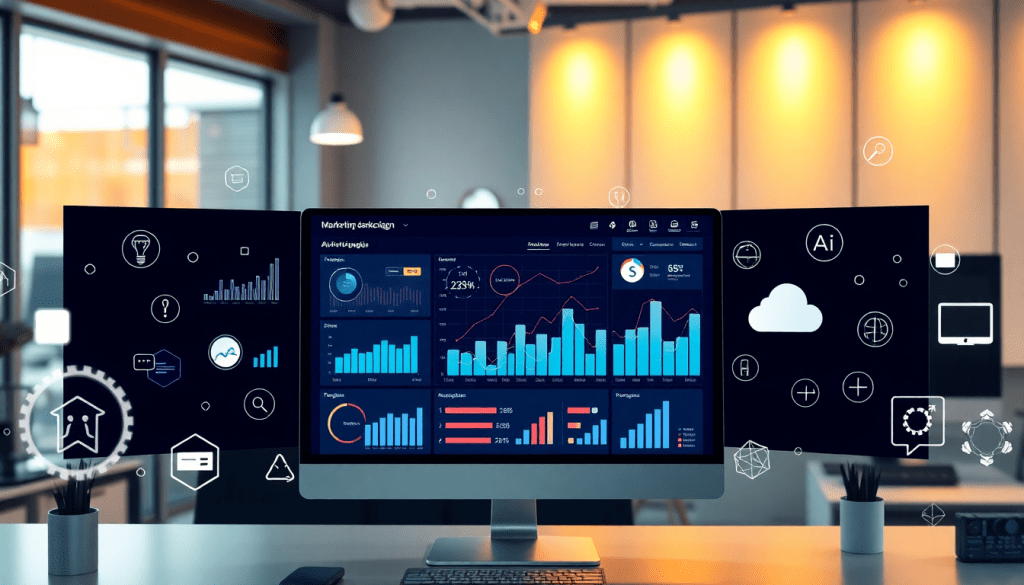
Marketing Dashboard Automation: Real-Time Analytics & AI
Keeping up with the pace of modern marketing means more than just collecting data—it’s about turning that data into fast, actionable insights. Marketing dashboard automation delivers exactly that, unifying real-time analytics, automated reporting workflows, and AI-powered dashboards to centralize your data and streamline campaign measurement. With a solution like the TapClicks marketing dashboard, organizations can finally bridge the gap between multi-channel data aggregation and meaningful decision-making—all while saving hours on manual reporting. This guide breaks down what dashboard automation really means, its advantages for marketers, and how to harness AI and automation for better, faster results.
What Is Marketing Dashboard Automation?
Marketing dashboard automation is all about using technology to take the pain out of reporting. Instead of juggling dozens of spreadsheets or waiting for manual updates, automated dashboards bring all your marketing data together—automatically, in real time, and in one place.
Why Manual Dashboarding Slows You Down
Traditional dashboard creation usually involves:
- Downloading reports from every ad platform (Google, Facebook, LinkedIn, etc.)
- Copy-pasting data into spreadsheets
- Reconciling mismatched metrics (what's a "conversion" here vs. there?)
- Manually building charts, graphs, or slides
- Repeating this process for every client or campaign
This approach is:
- Time-consuming – hours (or even days) lost on repetitive tasks
- Error-prone – human mistakes creep in, especially at scale
- Reactive – insights arrive too late for agile campaign tweaks
How Automation Changes the Game
With marketing dashboard automation, you get:
- Automated Data Collection: Instantly pull data from all your platforms (ads, analytics, CRM, etc.)
- Data Unification: ETL (Extract, Transform, Load) processes automatically blend and normalize metrics
- Live Visualization: Dashboards update in real time—no more waiting for the weekly report
- Scalable Reporting: Handle hundreds (or thousands) of campaigns and clients effortlessly
What You Gain with Automated Dashboards
Here’s what sets automated dashboards apart:
| Benefit | What It Means for You |
|---|---|
| Speed | Move from data to insight in minutes, not hours |
| Accuracy | Consistent, reliable data—goodbye, manual errors |
| Scalability | Effortlessly report across clients, brands, or locations |
| Real-Time Action | Optimize campaigns as soon as trends emerge |
Why It Matters for Modern Marketing Teams
- Free up analyst time for strategic work, not data wrangling
- Deliver clients faster, more reliable reporting (no more chasing numbers)
- Empower data-driven decisions—everyone has access to the latest KPIs
Ready to see how dashboard automation can transform your reporting?
- Learn more about Marketing Dashboard Automation on the TapClicks Blog
- Or visit TapClicks for a full platform overview!
Key Features of an Automated Marketing Dashboard
An automated marketing dashboard is more than just a place to visualize data—it’s the operational core for any team seeking faster insights, streamlined workflows, and effective multi-channel management. Here are the essential features that power the modern, automated dashboard:
1. Real-Time Analytics
Real-time analytics ensure your marketing data is always up to date, empowering teams to spot trends, seize opportunities, and address issues the moment they arise. With live data feeds, marketers can optimize campaigns on the fly instead of reacting to outdated reports.
2. Automated Reporting Workflows
Manual reporting is time-consuming and prone to error. Automated reporting workflows eliminate repetitive tasks by scheduling and distributing reports to stakeholders—both internal teams and clients—at set intervals, ensuring everyone always has the latest insights without lifting a finger.
3. Campaign Performance Dashboards
Centralized campaign dashboards bring together KPIs from every channel—social, search, display, email, and more—into a unified view. This makes it easy to compare performance, allocate budgets, and double down on what’s working, all from a single interface.
4. Report Scheduling Automation
Report scheduling automation takes the guesswork out of recurring analytics. Marketers can pre-configure daily, weekly, or monthly reports tailored to different audiences, streamlining communication and keeping teams aligned around shared goals.
5. Cross-Platform Dashboard Builder
Today’s marketing strategies span countless platforms. An effective automated dashboard offers a cross-platform builder, enabling users to blend data from multiple sources—Google Ads, Facebook, CRM systems, and more—into custom, branded dashboards that suit each client or campaign.
TapClicks: Setting the Standard for Dashboard Automation
TapClicks stands out by combining these core features with advanced capabilities that drive marketing operations at scale. TapClicks’ AI-powered dashboard creation intelligently recommends visualizations and insights, helping users build powerful dashboards in minutes. Its platform centralizes marketing data from over 10,000 data sources, making it one of the most robust solutions for marketing data integration and reporting in the market. With TapClicks, agencies, brands, and enterprise teams can automate every step of their analytics workflow, reduce manual reporting by 50+ hours per month, and unlock meaningful, actionable insights across all their marketing efforts.
To dive deeper into what makes marketing dashboard automation essential, check out "What is Marketing Dashboard Automation?", or learn more about TapClicks’ advanced features at tapclicks.com.
The Power of Real-Time Marketing Analytics
Real-time marketing analytics has moved from “nice-to-have” to absolutely essential for today’s marketers. With instant access to campaign data, you gain the power to react and optimize while it actually matters—not days or weeks later.
Why Real-Time Analytics Changes the Game
Traditional reporting is slow:
- Delayed insights: Teams often wait days or weeks for static reports.
- Missed opportunities: Trends, issues, or budget anomalies might go unnoticed until it’s too late.
With real-time analytics, you can:
- Spot underperforming channels immediately
- React to shifting audience behaviors on the fly
- Catch and correct budget anomalies in the moment
Imagine This Scenario
A retail brand runs a multi-channel campaign. Using real-time analytics, they notice:
| Channel | Conversions (Live Data) | Trend |
|---|---|---|
| Social Ads | 150 | 📈 Up |
| Display Ads | 50 | 📉 Down |
With TapClicks, they can:
- Instantly see social ads outperforming display.
- Immediately reallocate budget to maximize ROI.
- Optimize creative assets based on live audience feedback.
No more waiting for a weekly report—adjustments happen in real time.
How TapClicks Makes It Possible
TapClicks delivers real-time analytics at scale by:
- Ingesting data from 10,000+ sources
- Automatically blending and normalizing data
- Updating dashboards continuously—no manual work needed
Key Features That Set TapClicks Apart
- Cross-channel performance monitoring: Instantly compare results across channels, clients, or regions.
- Budget pacing dashboards: Track spend and performance hour-by-hour.
- Real-time alerts: Get notified of trends, anomalies, or KPIs that need attention.
- AI-powered insights: Surface what matters most—no digging required.
Why It Matters for Your Team
With real-time marketing analytics:
- Data becomes a dynamic driver of campaign success—not just a static record.
- Teams are empowered to act within hours, not days.
- You’re always one step ahead in a fast-paced digital landscape.
Ready to transform your marketing operations?
Platforms like TapClicks arm you with the live insights you need to optimize performance—right when it counts.
AI-Powered Dashboard Creation & Reporting
Artificial intelligence is revolutionizing the way marketers build and leverage dashboards, making automated reporting smarter, faster, and more strategic than ever before. Instead of spending hours manually configuring dashboards, marketers now benefit from AI-driven features that streamline every step—from data visualization to insights delivery.
AI-powered dashboard creation simplifies setup by automatically suggesting the most relevant metrics, visualizations, and layouts based on your campaign goals and historical data. With platforms like TapClicks, AI agents analyze your data streams in real time, recommending the best ways to highlight performance trends or spot anomalies. This not only accelerates the dashboard building process, but also ensures your reports are tailored to what matters most.
Automated insights are another game changer. Rather than combing through endless charts, marketers receive AI-generated summaries that surface the most important findings—like significant shifts in engagement, underperforming channels, or unexpected budget trends. TapClicks’ SmartEmail capability, for instance, delivers curated insight briefs directly to your inbox or your clients, transforming raw data into clear, actionable recommendations.
Predictive analytics and optimization recommendations are where AI truly elevates marketing reporting. By analyzing historical patterns and current performance, AI can project future outcomes, flagging potential risks or opportunities before they impact your campaigns. Imagine knowing in advance if a campaign is likely to overspend or underperform, and receiving smart suggestions for budget reallocation or creative adjustments—all within your dashboard.
The impact is twofold: AI not only boosts the accuracy and consistency of your marketing reporting, but also empowers teams to make more strategic decisions, faster. It reduces the risk of human error, eliminates manual data wrangling, and frees up marketers to focus on creative strategy and growth.
To explore more about how AI is transforming reporting, check out "AI-Powered Reporting Made Easy" or discover how TapClicks can help your team harness the full power of AI in marketing operations at TapClicks.
Multi-Channel Data Aggregation & Centralization
In today’s digital landscape, marketers juggle campaigns across an ever-expanding mix of platforms—search, social, programmatic, email, and more. Each channel generates its own siloed data, making it nearly impossible to get a unified view without significant manual effort. That’s where multi-channel data aggregation comes into play: it refers to the process of collecting, normalizing, and centralizing marketing data from all those disparate sources into a single platform.
Centralization matters because it transforms fragmented metrics into a cohesive, actionable narrative. With a marketing automation platform like TapClicks, all your campaign data—from Google Ads and Facebook to CRMs and offline media—flows into one dashboard. This not only eliminates the tedious work of manual data pulls but also ensures data consistency, accuracy, and up-to-the-minute reporting.
The result? Marketing teams operate from a single source of truth. This unified view allows for faster, more confident decision-making: you can instantly compare performance across channels, spot under- or over-performing segments, and optimize spend in real time. Plus, centralized data is the foundation for advanced analytics and AI-powered insights, making it easier to surface trends or anomalies that would otherwise go unnoticed in isolated spreadsheets.
To learn more about how real-time data aggregation and AI-powered centralization can transform your reporting, check out Real-Time Reporting with AI.
Streamlining Workflows with Report Scheduling Automation
One of the most transformative aspects of marketing dashboard automation is report scheduling automation—the ability to automatically generate and distribute reports on a set cadence, without manual intervention. This not only eliminates repetitive, time-consuming tasks but also minimizes the risk of human error, ensuring stakeholders always receive accurate, up-to-date performance insights.
With TapClicks, for example, marketing teams can set up recurring reports and dashboards tailored for different audiences—whether it’s daily executive summaries, weekly campaign performance reviews for clients, or monthly ROI rollups for internal teams. By configuring these schedules in advance, agencies and brands guarantee that the right people receive the right data at the right time, freeing analysts and account managers to focus on deeper optimization and strategic initiatives.
Setting up automated report scheduling typically involves:
- Selecting the Report or Dashboard: Choose which dashboard or data view is most relevant for each stakeholder group.
- Defining the Audience: Assign recipients based on internal teams, clients, or senior leadership.
- Customizing the Schedule: Set frequency (daily, weekly, monthly) and timing, ensuring reports arrive when they’re most actionable.
- Personalizing Content and Branding: Use platform tools (like TapClicks’ custom branding options) to tailor both the look and the messaging for each audience.
- Monitoring and Improving: Use delivery logs and feedback to refine schedules, ensuring maximum value and clarity.
Best Practices for Automated Reporting Workflows:
- Segment Your Audiences: Not all stakeholders need the same level of detail. Create report templates for executives, clients, and campaign managers to avoid information overload.
- Leverage AI-Generated Summaries: Use solutions with AI-powered features—such as TapClicks SmartEmail—to automatically highlight key insights and trends, making reports more actionable.
- Centralize Scheduling: Manage all recurring reports from a single dashboard to avoid duplication and ensure consistency.
- Maintain Flexibility: Allow recipients to adjust frequency or opt out, ensuring reports remain relevant and valued.
By automating report scheduling, marketing teams reclaim hours every week, reduce the bottlenecks of manual reporting, and deliver a superior experience to both clients and internal teams. For more on how TapClicks can simplify and automate your reporting workflows, visit the TapClicks website.
Measuring Campaign Performance with Dashboards
A campaign performance dashboard is the nerve center for tracking marketing effectiveness, aggregating key performance indicators (KPIs) from every channel into a single, easily digestible view. Rather than sifting through siloed spreadsheets or logging in and out of multiple ad platforms, marketers can instantly see which campaigns are delivering results and where adjustments are needed. With real-time, automated updates, these dashboards ensure that performance data is always current—eliminating guesswork and enabling timely optimization.
Visualization Best Practices for Actionable Insights
The true power of a campaign performance dashboard lies in its ability to turn raw data into actionable insights through thoughtful visualization. Charts, graphs, and heatmaps should be designed for clarity and narrative flow, making it simple to spot trends, outliers, and opportunities at a glance. For example, a line graph tracking conversions over time can quickly highlight the impact of a new creative, while a multi-channel comparison bar chart reveals which platforms are driving the highest ROI. It’s not just about displaying numbers—it’s about telling a story that prompts action.
Best practices include:
- Prioritizing key metrics: Focus on KPIs that align with business objectives (e.g., cost per acquisition, click-through rate, ROAS).
- Using consistent color schemes: This aids quick comprehension and reduces cognitive overload.
- Layering context: Add benchmarks, budget pacing indicators, or goal lines to show not just what’s happening, but how it compares to expectations.
How TapClicks Empowers Deep Performance Analysis
TapClicks elevates campaign performance monitoring by centralizing data from thousands of sources—search, social, display, email, and beyond—into unified, customizable dashboards. This enables marketers to drill down from high-level summaries into granular channel, campaign, or even creative-level insights. TapClicks’ AI-powered features take it a step further, automatically surfacing trends, anomalies, and optimization opportunities that might otherwise go unnoticed.
With TapClicks, you can:
- Monitor budget pacing in real time to ensure campaigns stay on track and resources are allocated efficiently.
- Compare multi-channel performance side by side, identifying top- and under-performing segments.
- Automate scheduled reporting for internal teams or clients, ensuring everyone gets the right insights at the right time.
By leveraging TapClicks’ marketing dashboard automation, organizations not only streamline campaign measurement but also empower teams to make faster, smarter decisions—turning data into a strategic advantage.
Choosing the Right Marketing Automation Software
Selecting the right marketing dashboard automation platform is a critical decision with long-term implications for your team’s efficiency and impact. To ensure your investment delivers maximum value, focus on these essential criteria:
1. Integration Capabilities:
Your dashboard solution must seamlessly integrate with all the marketing, advertising, and business platforms you use—today and tomorrow. Look for robust out-of-the-box connectors (like TapClicks’ 10,000+ integrations) and flexible options for custom data sources. Strong integration ensures you can centralize multi-channel data and eliminate data silos.
2. Scalability and Performance:
Consider whether the platform can handle your current and future needs. High-volume agencies and enterprise brands, for example, need a system that supports thousands of dashboards, reports, and users without performance bottlenecks. TapClicks is purpose-built for scale, making it ideal for organizations managing complex, multi-client or multi-location operations.
3. AI-Driven Features:
AI is quickly becoming table stakes. Prioritize solutions that go beyond static dashboards to deliver actionable insights, automated recommendations, and predictive analytics. TapClicks’ AI Agents and SmartEmail features, for example, proactively surface campaign optimizations and send clients AI-curated summaries—saving analysts hours each week. For a deeper dive into AI-powered reporting, see AI-Powered Reporting Made Easy.
4. Ease of Use and Customization:
A platform should empower both technical and non-technical users. Drag-and-drop dashboard builders, branded templates, and role-based access controls are must-haves. TapClicks offers intuitive interfaces and workflow automations that streamline onboarding and daily use for agencies, brands, and media companies alike.
5. Cross-Platform Dashboard Builder:
Ensure the solution supports truly cross-platform dashboards—combining data from search, social, programmatic, email, and offline sources into unified, visually compelling reports. TapClicks excels here, enabling users to build dashboards that span every marketing touchpoint for holistic performance analysis.
6. Data Centralization and Single Source of Truth:
A single source of truth for marketing analytics is crucial for accurate reporting and informed decision-making. TapClicks’ centralized data warehouse and enrichment tools make it easy to blend, normalize, and analyze data across all channels and clients.
Comparing TapClicks to Other Solutions:
While competitors like Funnel.io, Adverity, and Supermetrics focus on data piping, and others like Agency Analytics cater to lighter use cases, TapClicks stands out with its unified approach: deep integration, scalable reporting, actionable AI insights, and workflow automation—all under one roof. This makes it uniquely positioned for agencies and enterprise teams seeking both power and flexibility.
Piloting and Scaling Your Solution:
Start with a pilot phase—connect your key data sources, automate a handful of core reports, and gather feedback from end users. Evaluate performance, user adoption, and the time savings realized. Once you’re confident in the platform’s fit, scale up to automate additional workflows and onboard more teams or clients. For more information or to schedule a demo, visit TapClicks.
By prioritizing integration, scalability, AI innovation, and ease of use, you’ll set your organization up for faster, smarter marketing operations that drive measurable results.
Start Automating Your Marketing Data Today!
No Credit Card Required.

