

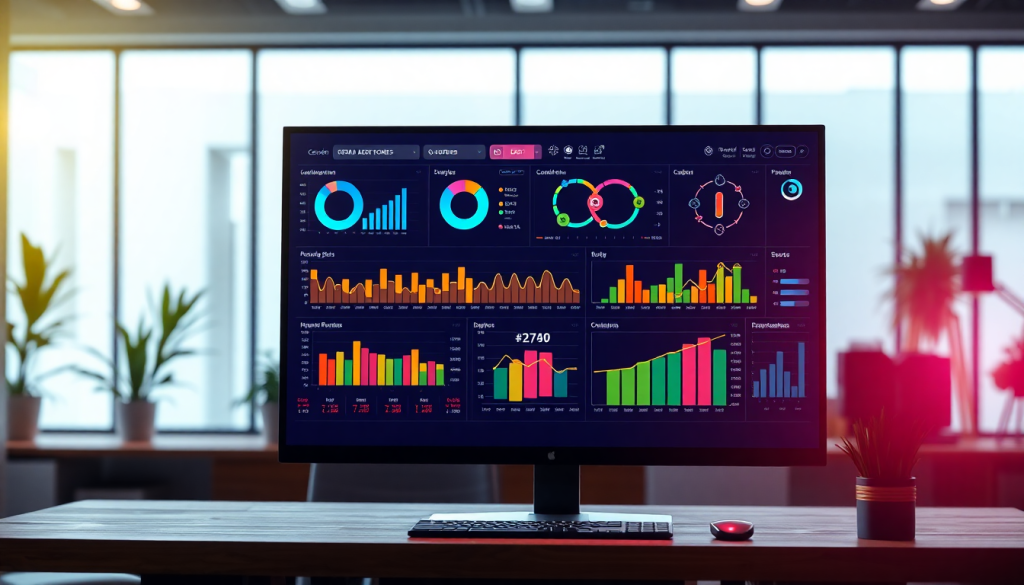
Marketing Dashboard Automation: Real-Time Analytics & AI
Marketing dashboard automation is changing how brands and agencies track, analyze, and share performance data. By combining AI-powered dashboard creation, automated reporting workflows, and real-time analytics, teams can centralize their multi-channel marketing data, uncover actionable insights faster, and save countless hours on manual processes. This guide explores the essential components, benefits, and best practices for building a scalable, intelligent dashboard ecosystem—highlighting how solutions like the TapClicks marketing dashboard lead the way in marketing data centralization and reporting efficiency.
What Is Marketing Dashboard Automation?
Marketing dashboard automation refers to the use of technology to seamlessly collect, organize, and visualize marketing performance data from multiple channels—all in real time and with minimal manual effort. In today’s fast-paced digital landscape, marketing teams are tasked with monitoring campaigns across a growing array of platforms: paid search, social, programmatic, email, and more. Manually pulling reports from each source, standardizing metrics, and building presentations is not only labor-intensive, but it also introduces delays and the risk of human error. Automated dashboard solutions eliminate these bottlenecks by consolidating disparate data streams into unified, interactive dashboards that update automatically.
At the heart of marketing dashboard automation are two key pillars: automated reporting workflows and AI-powered dashboard creation. Automated workflows handle the repetitive tasks of extracting data, transforming it for consistency, and loading it into dashboards or reports. This ensures that analytics are always up to date—whether for daily pulse checks or monthly executive reviews. Meanwhile, AI-driven features accelerate dashboard setup, intelligently suggest visualizations, and proactively surface actionable insights, helping teams move from raw data to decision-making faster than ever.
Real-time marketing analytics is a cornerstone of this approach. When marketers can see campaign performance as it happens, they can respond swiftly to trends, optimize spend, and capture opportunities before they pass. This agility is especially critical in multi-channel environments, where even a small delay in analysis can mean missed revenue or wasted budget.
Solutions like the TapClicks marketing dashboard exemplify the next generation of automated, cross-platform marketing analytics. TapClicks empowers agencies, brands, and enterprise teams to centralize their marketing data, automate complex reporting workflows, and leverage AI-powered insights—all from a single, scalable platform. By unifying data, streamlining reporting, and enabling real-time decision-making, marketing dashboard automation is transforming how modern marketing operations achieve results at scale.
Key Benefits of Automated Reporting Workflows
Automated reporting workflows are revolutionizing marketing analytics by delivering significant time savings, increased accuracy, and unmatched scalability to agencies and brands alike. Instead of spending countless hours on manual data pulls, spreadsheet wrangling, and repetitive report building, marketing teams can now leverage automation to streamline the entire reporting cycle.
Time Savings: One of the most immediate benefits is the dramatic reduction in manual effort. Automated workflows eliminate the need to download, consolidate, and format data from multiple sources. Users report saving upwards of 50 hours per analyst per month—time that can be reinvested in strategy, optimization, and client service.
Accuracy and Consistency: Manual reporting is prone to human error and version control issues. Automated workflows ensure that every report is generated from the latest, most accurate data, using standardized calculations and visualizations. This consistency not only improves trust in the data but also simplifies compliance and performance reviews.
Scalability: As marketing operations grow—whether by adding more channels, clients, or campaigns—the ability to scale reporting quickly becomes a competitive advantage. Automated systems like the TapClicks marketing dashboard are designed to handle thousands of dashboards and deliver scheduled, branded reports to any number of stakeholders, without additional manual lift.
Impact of Report Scheduling Automation: Scheduled reporting means key stakeholders receive up-to-date performance summaries on their preferred cadence, whether daily, weekly, or monthly. This timely distribution supports agile decision-making, improved transparency, and stronger client relationships. Agencies using automated scheduling have cited faster onboarding and higher client satisfaction, as clients receive timely, professional reports with zero lag.
Centralized Data Reduces Silos and Errors: By centralizing marketing data within a unified platform, teams break down information silos and avoid discrepancies caused by disparate data sources. This enables holistic performance analysis and reduces the risk of manual errors that can occur when piecing together cross-channel data by hand.
Real-World Impact: For example, agencies like those featured in TapClicks case studies have reported not only improved operational efficiency but also the ability to deliver proactive insights to clients—transforming reporting from a burden into a value-driving service.
Automated reporting workflows are more than a convenience—they’re a catalyst for growth, accuracy, and smarter marketing decisions at scale.
Centralizing Multi-Channel Data with TapClicks
Today’s marketing landscape is defined by complexity: campaigns run across platforms from Google Ads to Facebook, programmatic display to email, and beyond. Aggregating this wealth of cross-channel data into one coherent view is a persistent challenge for agencies, brands, and enterprise teams alike. Siloed data leads to fragmented insights, manual errors, and hours lost to repetitive data-wrangling—ultimately slowing down decision-making and campaign optimization.
This is where the TapClicks marketing dashboard excels, transforming data chaos into clarity by centralizing all your marketing data streams into a single source of truth. TapClicks leverages a robust library of over 10,000 smart connectors, enabling seamless integration with virtually any marketing, advertising, or business data source. Whether your team needs to pull performance data from paid search, social, display, programmatic, or offline sources, TapClicks automates the extract, transform, and load (ETL) process—no manual exports, no patchwork spreadsheets.
Once data is ingested, TapClicks’ enrichment tools go to work, blending and normalizing datasets across channels, locations, and even clients. This means your dashboards aren’t just consolidated—they’re consistent and accurate, providing apples-to-apples comparisons for true multi-channel performance analysis. Customizable dashboards allow you to slice, dice, and visualize metrics in the ways that matter most to your business, all without technical expertise.
For agencies managing hundreds of clients or brands running distributed campaigns, the impact is transformative: marketing teams can finally operate from a unified, always-up-to-date dataset, reducing reporting bottlenecks and empowering more agile, data-driven decisions. For a deeper exploration of how TapClicks centralizes real-time reporting with AI, check out this in-depth resource on marketing dashboard automation.
Ready to see how TapClicks can unify your marketing data and reporting workflows? Learn more at TapClicks.com.
Real-Time Marketing Analytics and AI-Powered Insights
Real-time marketing analytics have redefined how teams monitor, optimize, and maximize the impact of every campaign. Instead of waiting for end-of-week or monthly reports, marketers leveraging automation platforms like TapClicks can access up-to-the-minute performance data across all channels. This empowers faster, more confident decision-making and enables immediate course corrections when trends shift or anomalies arise.
At the core of this evolution is the seamless integration of AI-powered dashboard creation. TapClicks, for example, uses AI Agents and smart algorithms to automatically scan vast, cross-channel datasets—surfacing trends, pinpointing outliers, and highlighting opportunities that would otherwise require hours of manual analysis. With predictive modeling and smart visualization tools built into the dashboard, marketers can not only see what’s happening now, but also forecast future performance, anticipate budget pacing issues, and receive data-driven recommendations for campaign optimization.
One of the most impactful features is AI-driven insight generation. TapClicks’ SmartPilot and SmartEmail capabilities go beyond static charts—automatically summarizing key findings, flagging underperforming segments, and suggesting actionable next steps for teams or clients. For example, an agency running multi-location campaigns can instantly spot which regions are exceeding engagement benchmarks or where ad spend needs to be reallocated for better ROI.
Real-time analytics and AI-powered insights turn the dashboard from a passive reporting tool into an active, always-on marketing advisor. By automating trend detection and delivering predictive, prescriptive insights directly to stakeholders, teams can reduce missed opportunities, improve campaign agility, and drive continuous performance improvement.
For practical, actionable tips on implementing real-time analytics and AI-powered dashboards in your own marketing operations, explore our internal guide.
Building and Customizing Your Campaign Performance Dashboard
Creating a campaign performance dashboard that’s both insightful and easy to navigate doesn’t have to be complicated—especially with the right platform. Here’s a step-by-step guide to crafting a dashboard that goes beyond pretty charts and actually powers marketing decisions. TapClicks makes every phase of this process faster, more flexible, and more impactful.
1. Start with the Outcomes You Care About
Before diving into widgets and charts, clarify what success looks like:
- Set Your Goals: Decide which objectives are most important—brand awareness, lead generation, conversions, retention, or something else.
- Pick the Right Metrics: Common choices include:
- Impressions
- Clicks and CTR
- Conversions and CPA
- ROAS (Return on Ad Spend)
- Engagement rates
Pro Tip: Map your metrics to each stage of the marketing funnel (Awareness → Consideration → Conversion) to get a full-funnel view.
2. Make It Easy to Slice and Dice Your Data
A great dashboard is interactive, not static. Enable users to:
- Filter by:
- Date range
- Campaign/channel (search, social, display, email, etc.)
- Audience segment
- Location or geo
- Segment results to see what’s driving performance in different groups.
With TapClicks:
Use drag-and-drop widgets and dynamic connectors to add granular filters in minutes—no IT bottlenecks required.
3. Tell the Story with the Right Visuals
Not all data needs to be shown the same way. Choose visuals that make patterns and insights leap out:
| Visualization | Best For |
|---|---|
| Line charts | Trends over time |
| Bar charts | Comparing metrics by category |
| Pie charts | Share of voice/budget split |
| Geo maps | Location-driven performance |
- Prioritize clarity over volume—less is often more.
- Brand your dashboard: TapClicks lets you customize colors, logos, and layouts for a professional finish.
4. Customize for Every Stakeholder
Make sure everyone gets what they need without being overwhelmed:
- Role-based views:
- Executives: High-level KPIs, budget pacing
- Channel managers: Granular, channel-specific data
- White-label branding:
- Agencies can easily add client logos and color schemes.
- Permission controls:
- With TapClicks, set user permissions so the right people see the right data.
5. Connect Everything in Your Marketing Stack
A dashboard is only as powerful as the data it brings together. Make sure yours:
- Integrates with:
- Marketing automation platforms
- CRMs
- Finance/accounting systems
- Centralizes all campaign, sales, and budget data for a single source of truth.
TapClicks Advantage:
10,000+ data connectors mean you can unify data across all your channels and clients—no manual exports required.
Ready to Go Further?
Want to see how real-time, AI-powered dashboards can automate reporting and surface actionable insights?
👉 Check out this deep dive on marketing dashboard automation and real-time reporting with AI.
By following these steps, you’ll build dashboards that do more than just report—they drive action, foster collaboration, and scale as your marketing operations grow.
Streamlining Report Scheduling and Delivery
Automating report scheduling and delivery is a cornerstone of modern marketing dashboard automation, eliminating repetitive manual tasks and ensuring that the right insights reach stakeholders precisely when they’re needed. With powerful platforms like TapClicks, marketing teams can set up automated workflows to generate, customize, and distribute branded reports to clients, executives, or internal teams—on any schedule, with just a few clicks.
Setting the Frequency and Customization:
TapClicks offers flexible scheduling options, allowing you to automate reports on a daily, weekly, monthly, or custom cadence. Users can tailor each report’s content, visualizations, and branding based on recipient role or client preferences. This ensures that every stakeholder receives only the most relevant data, presented in their preferred format—whether that’s a high-level executive summary or deep-dive analytics.
Branded, Professional Reporting:
Not only does TapClicks support white-labeled reports, but its drag-and-drop dashboard builder makes it easy to create visually consistent, on-brand presentations. Automated delivery can include interactive dashboards, static PDFs, or embedded reports, all sent directly via email or accessible through personalized portals.
Seamless Communication and Executive Summaries:
TapClicks’ AI-powered SmartEmail functionality takes automation a step further by generating and sending insight-rich summaries to clients and internal stakeholders. These executive summaries distill complex performance data into clear, actionable points—helping teams and clients make faster, more informed decisions without sifting through endless spreadsheets or slides.
Reducing Manual Workload and Accelerating Insights:
By automating report scheduling and delivery, TapClicks users routinely reclaim 50 or more hours per analyst each month that would otherwise be spent pulling data, formatting slides, and manually emailing updates. This not only accelerates the time-to-insight for clients and executives but also frees up marketing teams to focus on strategy, optimization, and growth.
With TapClicks, the entire cycle of reporting—data aggregation, visualization, customization, and delivery—is streamlined from end to end. To learn more about how TapClicks can transform your report scheduling and client communication, check out this in-depth resource on real-time dashboard automation.
Choosing the Right Marketing Dashboard Automation Platform
Selecting the right marketing dashboard automation platform is a strategic decision that can make or break your data-driven marketing operations. The best platforms do more than just aggregate data—they empower teams to extract actionable insights, streamline workflows, and scale effortlessly as business needs evolve. Here’s what to consider when evaluating solutions:
1. Data Connectors and Integration Flexibility
A robust platform should offer extensive data connectors—enabling you to pull data from thousands of marketing, advertising, and business sources without manual intervention. Look for automated ETL/ELT pipelines that not only extract and load data, but also blend, normalize, and enrich datasets for a unified view. This flexibility is critical for agencies juggling multi-client portfolios or brands managing campaigns across numerous channels.
2. Scalability and Performance
Your dashboard solution must handle growth, whether that means onboarding new clients, adding campaign channels, or generating thousands of custom reports. Platforms like the TapClicks marketing dashboard are designed for high-volume users, offering the ability to manage hundreds or thousands of dashboards, reports, and clients simultaneously. This ensures analytics remain fast and reliable, even as your operations expand.
3. Advanced AI Capabilities
Modern marketing demands more than static dashboards; AI-powered features set the leading platforms apart. Prioritize solutions that use AI agents to analyze performance, surface trends, and deliver predictive recommendations. TapClicks, for example, leverages smart AI-driven insights and automated summaries—transforming raw data into strategic guidance for campaign optimization and budget pacing.
4. Workflow Automation and Collaboration
Effective marketing dashboard automation extends beyond analytics. Look for platforms with built-in workflow modules, enabling order management, task assignments, and seamless collaboration between sales, operations, and fulfillment teams. Centralized workflow tools help eliminate silos, reduce manual errors, and accelerate campaign execution.
5. Customization and Support
Every business has unique reporting needs. The ideal platform offers flexible dashboard customization—by role, client, or channel—alongside robust branding and permission controls. Dedicated support and onboarding resources are equally important, ensuring your team can maximize the platform’s capabilities from day one.
TapClicks: The Unified Solution for Modern Marketing Teams
TapClicks stands out as a comprehensive marketing dashboard automation platform, combining unified scale, workflow automation, and AI-powered insights within a single ecosystem. Unlike lightweight dashboard tools or pure data pipelines, TapClicks bridges data integration and operational workflows—making it the platform of choice for agencies, brands, and enterprises aiming to future-proof their marketing analytics.
For a deeper dive into how TapClicks’ unique differentiators can transform your marketing operations, explore the TapClicks marketing dashboard.
Next Steps: Getting Started with TapClicks Marketing Dashboard
Marketing dashboard automation isn’t just about keeping up with the latest tech—it’s about transforming how your team works, communicates, and grows. With real-time analytics and AI-powered insights at your fingertips, you can centralize data, accelerate reporting, and drive smarter decisions across every campaign. As you consider your next move, here’s how to unlock the full benefits of TapClicks marketing dashboard automation:
1. Assess Your Reporting and Data Needs
Start by identifying your primary pain points. Are you struggling with manual data pulls, fragmented reporting, or slow turnaround for client updates? Map out the platforms you use (social, search, programmatic, CRM, etc.) and determine which metrics are most critical for your team.
2. Explore TapClicks in Action
Dive into a detailed overview of marketing dashboard automation with TapClicks. This resource will show you how TapClicks unifies cross-channel data, automates report scheduling, and leverages AI for actionable insights—all in a scalable, user-friendly interface.
3. Request a Personalized Demo
Schedule a walkthrough tailored to your unique environment. A TapClicks expert can showcase how features like Smart Connectors, customizable dashboards, and automated workflows address your specific requirements. You’ll see firsthand how to streamline agency-client communication and maximize efficiency.
4. Review Case Studies and Best Practices
See how organizations like yours have achieved greater accuracy, consistency, and time savings with TapClicks. Check out additional real-world guides and success stories to learn how others have modernized their marketing analytics and reporting operations.
5. Plan Your Onboarding and Integration
TapClicks is designed for flexible deployment—whether you need a standalone marketing dashboard or a data hub that feeds your existing BI stack. The onboarding process includes data connector configuration, dashboard setup, and role-based access controls. For a smooth rollout, work with TapClicks’ support and solutions teams to map out integrations and user training.
6. Connect with TapClicks Experts
Ready to see how TapClicks can power your marketing operations? Contact TapClicks to schedule a consultation or request a custom demo. Their team will help you evaluate your needs, outline an implementation plan, and answer any questions about real-time analytics, AI insights, and workflow automation.
By following these steps, you can move from manual, fragmented reporting to a unified, intelligent dashboard ecosystem—empowering your team and clients with the data they need, when they need it. For even more insights and resources, explore the TapClicks blog and knowledge base to stay ahead in the evolving world of marketing analytics.
Start Automating Your Marketing Data Today!
No Credit Card Required.

