

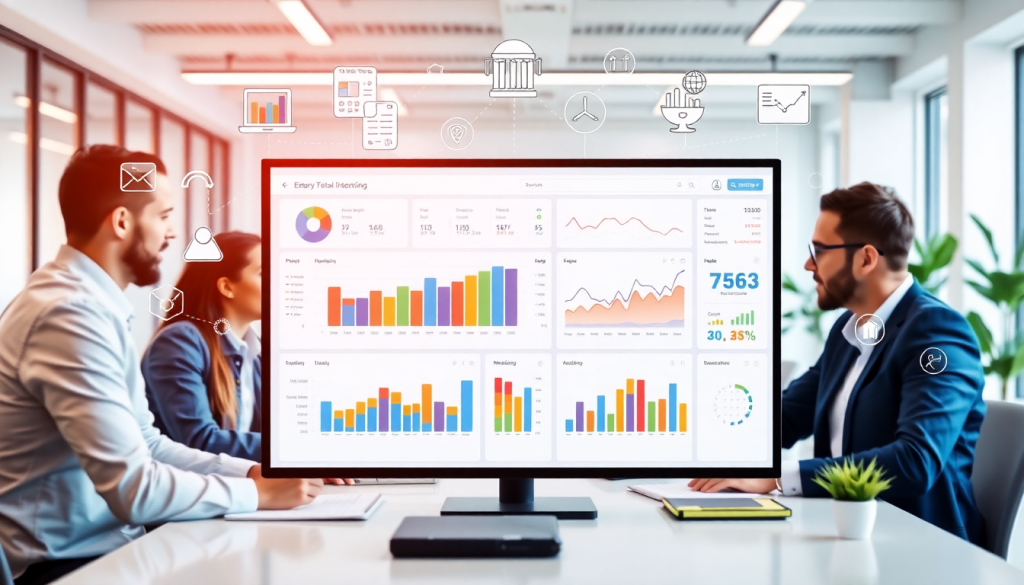
Marketing Dashboard Automation: Boost Analytics & Reporting
Automating your marketing dashboards can transform the way agencies and in-house teams manage campaign data, track KPIs, and deliver insights to clients. With the right dashboard automation platform, you can move beyond manual data pulls and static reports—unlocking real-time analytics, cross-channel visibility, and scalable reporting workflows. This guide explores the essentials of marketing dashboard automation, including the benefits for agency reporting, key features to look for in a platform, and a side-by-side comparison of TapClicks and Funnel.io. Whether you’re aiming to improve client satisfaction, reduce analyst workload, or simply gain deeper, faster insights, you’ll find actionable steps for choosing and implementing the best solution for your needs.
What Is Marketing Dashboard Automation?
Imagine replacing hours of manual spreadsheet downloads, PowerPoint edits, and repetitive campaign summaries with a system that does it all for you—automatically, in real time. That’s the promise of marketing dashboard automation.
Why Manual Reporting No Longer Works
- Time Sink: Downloading CSVs from multiple ad platforms, copying data into slides, and updating reports eats up hours every week.
- Error-Prone: Manual entry increases the risk of mistakes, version control issues, and data inconsistencies.
- Not Scalable: As your campaigns, clients, or locations grow, manual workflows quickly become unmanageable.
What Dashboard Automation Does Differently
With marketing dashboard automation, you get:
- Automatic Data Collection: The platform continuously pulls in data from dozens—or thousands—of marketing and ad sources.
- Unified, Real-Time Dashboards: Metrics update instantly as new results arrive, making reports always-on and always accurate.
- Interactive Visualizations: Stakeholders can filter, drill down, and view insights without waiting for an analyst’s weekly update.
- Full Scalability: Whether you have 5 dashboards or 5,000, automation grows with you.
Key Benefits at a Glance
| Benefit | What It Means for You |
|---|---|
| Efficiency | Save hours each week by eliminating repetitive data tasks |
| Accuracy | Reduce manual errors and ensure consistent reporting |
| Real-Time Insights | Make faster, more confident decisions with up-to-date data |
| Scalability | Effortlessly support hundreds or thousands of clients |
What Gets Automated?
- Data extraction from ad, web, CRM, and analytics platforms
- Data normalization and blending across channels
- Dashboard and report creation
- Scheduled report delivery for clients, execs, or teams
How TapClicks Powers Automation
With platforms like TapClicks:
- 10,000+ data connectors feed your dashboards automatically
- No more copy-paste—just real-time, unified campaign views
- Automated workflows and reporting scale as you grow
In short: If you want to spend less time wrangling data and more time acting on insights, marketing dashboard automation is a game-changer—and TapClicks is built to make it happen.
Why Agencies and Brands Are Automating Their Marketing Dashboards
Marketing dashboard automation isn’t just a technical upgrade—it’s a game-changer for agencies and brands seeking efficiency, insight, and a stronger client experience. Here’s how automation is delivering measurable value:
1. Say Goodbye to Manual Data Wrangling
- Dramatically reduce manual workload: No more endless spreadsheets or repetitive, error-prone data pulls.
- Faster reporting turnaround: Instantly deliver client-ready dashboards without the bottlenecks.
- Focus on strategy: Free up your team to work on high-impact initiatives, not busywork.
2. Unify Performance Insights Across Every Channel
- Automated, cross-channel analytics: Get a holistic view of all campaigns, platforms, and KPIs in a single dashboard.
- Accelerate actionable insights: Identify optimization opportunities that would be missed in static, manual reports.
- Eliminate data silos: Make every key metric accessible to the right stakeholders—fast.
3. Build Transparency and Stronger Partnerships
- Live, interactive dashboards: Give clients on-demand access to the metrics that matter to them.
- Proactive insights: Surface recommendations and trends, shifting from reactive reporting to true consultative partnership.
- Strengthen trust: Continuous transparency leads to longer, more collaborative client relationships.
4. Reduce Costs and Minimize Errors
| Challenge | Manual Reporting | Automated Dashboards |
|---|---|---|
| Error Risk | High (copy-paste mistakes) | Low (automated data flows) |
| Analyst Time | 10+ hours/week | <2 hours/week |
| Resource Allocation | Routine busywork | Strategic planning & ops |
| Cost | High (labor intensive) | Lower (more efficient) |
5. Unlock a Real Strategic Advantage
- Sharper analytics: Make data-driven decisions faster and with greater confidence.
- Improved margins: Spend less on reporting prep, more on growth and innovation.
- Elevated client satisfaction: Deliver premium service with less overhead.
Ready to Transform Your Reporting?
Marketing dashboard automation with TapClicks empowers your agency or brand to do more with less—delivering better insights, happier clients, and a measurable edge in a competitive market.
Must-Have Features in a Marketing Analytics Dashboard
Choosing the right marketing analytics dashboard is about more than just pretty charts. To truly streamline operations and deliver value—both to your team and your clients—there are a handful of essential features your dashboard solution must deliver.
1. Comprehensive Data Integration
The backbone of any automated dashboard is robust data integration. Look for a platform that connects seamlessly with all your marketing, advertising, and business data sources—whether that’s Google Ads, Facebook, programmatic platforms, or CRM systems. The best solutions, like TapClicks, offer thousands of built-in connectors and flexible options (like smart connectors) for custom integrations. This ensures you have a single source of truth, no matter how complex your marketing stack.
2. Powerful Data Visualization
Effective data visualization turns raw numbers into actionable insights. Your dashboard should support drag-and-drop widgets, customizable layouts, and a range of chart types—making it easy to track campaign performance, spot trends, and answer client questions visually. Prioritize platforms that let you build branded, client-ready dashboards without heavy manual work.
3. Customizable KPIs & Metrics
Every agency and brand has unique goals. Your dashboard should allow you to define and track the KPIs that matter most—such as ROAS, conversion rates, or multi-channel attribution. Flexible metric configuration and calculated fields enable tailored reporting for each client or department.
4. Automated Scheduling & Report Delivery
Automated report scheduling is non-negotiable for scaling client communications. Leading platforms let you set up recurring reports—daily, weekly, or monthly—that are automatically generated and delivered to stakeholders’ inboxes. This not only saves hours of manual work but guarantees consistent, timely updates for clients.
5. Role-Based Access & Permissions
As teams and client rosters grow, so does the need for granular control over who can view, edit, or share dashboards. Role-based access ensures sensitive data is only visible to the right people—whether they’re internal analysts, account managers, or external clients.
6. Cross-Channel Analytics
Modern marketing lives across dozens of channels. Your dashboard must support cross-channel analytics, letting you blend and normalize data from paid, owned, and earned channels into cohesive, apples-to-apples views. This holistic lens is crucial for understanding true ROI and optimizing spend.
Pro Tip:
Before selecting a platform, map out the specific needs of your agency or client base. Do you need advanced white-labeling? Is multi-location reporting critical? Will you require support for complex data transformations or predictive analytics? By identifying must-have features upfront, you’ll ensure your dashboard investment pays off in efficiency, insight, and client satisfaction.
TapClicks: The Unified Reporting Platform
When it comes to marketing dashboard automation, TapClicks stands out as a comprehensive solution purpose-built for agencies, media companies, and brands seeking unified, scalable analytics. Unlike point solutions that only address a single step in the reporting workflow, TapClicks is a true all-in-one platform—integrating data collection, dashboard creation, analytics, workflow management, and even AI-driven insights.
Unmatched Scale and Automation
TapClicks is engineered for high-volume users, easily supporting thousands of dashboards and client reports in parallel. With over 10,000 pre-built data connectors, TapClicks automates the entire ETL (extract, transform, load) process, eliminating the need for manual data pulls and spreadsheet wrangling. Automated, scheduled reporting ensures clients and internal teams always have up-to-date, accurate insights—saving marketing analysts upwards of 50 hours per month compared to manual methods.
AI-Driven Insights and Smart Workflows
What truly differentiates TapClicks is its robust AI layer. Features like TapInsights and SmartPilot automatically surface actionable recommendations—such as underperforming campaigns or budget pacing alerts—directly in your dashboards. The TapClicks analytics blog highlights real-world stories, including agencies that have used AI-powered reporting to grow client retention and drive more proactive optimizations.
Integrated workflow modules (TapOrders and TapWorkflow) further streamline campaign management, order processing, and cross-team collaboration. With role-based access and centralized asset management, agencies and brands can manage hundreds of clients and campaigns efficiently—all within a single, secure environment.
Why Agencies and Brands Choose TapClicks
TapClicks is more than just a reporting tool; it’s a marketing operating system designed for flexibility and future growth. Customers use TapClicks as both a “single source of truth” for marketing data and as a clean data hub for feeding BI tools like Tableau and Power BI. This flexibility enables marketing organizations to break down silos, standardize metrics, and deliver visually compelling, branded dashboards at scale.
For a deeper dive into how TapClicks outperforms other platforms, see this head-to-head comparison with Funnel.io. Or, to explore TapClicks’ full range of capabilities, visit the TapClicks website.
Funnel.io vs TapClicks: Platform Comparison
When it comes to marketing dashboard automation, both TapClicks and Funnel.io are prominent names, especially for agencies and multi-brand organizations seeking to streamline analytics and reporting. However, these platforms differ substantially in their approach to data integration, dashboard flexibility, automation capabilities, and scalability.
Data Integration:
TapClicks stands out with its massive library of over 10,000 marketing, advertising, and business data connectors, making it ideal for agencies managing diverse client portfolios or brands with multi-location needs. Its automated ETL/ELT processes not only pull data from virtually any source, but also blend, normalize, and enrich that data within the platform or send it to other BI tools. Funnel.io, while strong in data aggregation, offers fewer native connectors and generally acts as a “data pipeline” that channels marketing data into external visualization tools rather than an all-in-one analytics environment.
Dashboard Capabilities:
TapClicks provides a robust, drag-and-drop dashboard studio with extensive customization, cross-channel visualizations, and role-based access controls—ideal for agencies that need to deliver branded, client-specific dashboards at scale. Automated, scheduled reports further reduce manual effort. Funnel.io, on the other hand, focuses primarily on data preparation and requires users to build dashboards in third-party BI platforms, adding complexity and potentially slowing insights.
Automation & AI:
TapClicks takes automation further with AI-driven features like SmartPilot and SmartEmail, which surface actionable insights, generate automatic performance summaries, and even deliver predictive recommendations directly to stakeholders. Funnel.io’s automation is mostly limited to scheduled data refreshes and exports, lacking native AI analytics or workflow automation.
Scalability:
TapClicks is engineered for scale, reliably supporting thousands of dashboards, clients, and reporting workflows—a key advantage for large agencies and enterprise marketing teams. Funnel.io is better suited for smaller teams or those only needing to centralize data before pushing it elsewhere for visualization and reporting.
For a quick side-by-side overview:
| Feature | TapClicks | Funnel.io |
|---|---|---|
| Data Connectors | 10,000+ native, automated ETL/ELT, enrichment, cross-channel blending | 500+ native, data aggregation and export |
| Dashboards/Reporting | Drag-and-drop studio, scheduled/branded reports, white labeling | Requires external BI tools (Looker, Tableau, etc.) |
| AI & Automation | AI insights, auto-generated summaries, predictive models, workflow tools | Basic data refresh/export automation |
| Workflow Integration | Campaign/order management, role-based permissions, sales-to-ops workflow | Limited/no workflow features |
| Scalability | Built for thousands of dashboards, users, and clients | Best for smaller teams or lighter data needs |
For an in-depth breakdown of strengths, weaknesses, and use cases, check out this TapClicks vs Funnel.io comparison guide.
Ultimately, if your agency or brand needs unified analytics, scalable reporting, and actionable insights—all within a single platform—TapClicks delivers broader functionality and long-term efficiency compared to Funnel.io’s data pipeline approach.
Automating Performance Marketing KPIs & Insights
Automating the tracking and visualization of performance marketing KPIs is a game-changer for agencies and brands striving to stay competitive in an increasingly data-driven landscape. Modern dashboard automation platforms make it possible to seamlessly monitor critical metrics such as cost per acquisition (CPA), return on ad spend (ROAS), total ad spend, and multi-channel conversions—all in real time, without the tedious manual updates that once bogged down marketing teams.
Let’s break down how this works in practice:
1. Centralized KPI Tracking Across Channels
With automated dashboards, data from disparate advertising platforms—Google Ads, Facebook, programmatic, email, and more—flows directly into a unified reporting environment. This means you can visualize CPA, ROAS, and conversions from every channel side by side, with custom KPIs tailored to your campaign goals. No more juggling spreadsheets or logging into multiple platforms; your key performance indicators are always up-to-date and ready to share with stakeholders.
2. Practical Examples in Action
Imagine an agency managing dozens of client campaigns. Instead of manually compiling last month’s cost per acquisition from each ad network, an automated dashboard pulls the data nightly, blends it, and calculates a blended CPA for each client or campaign. Similarly, ROAS can be tracked at both the channel and aggregate levels, instantly highlighting which campaigns are driving the highest returns. For multi-channel conversions, automation provides a holistic view: see how search, social, and display work together to drive a single customer journey—insights that would take hours to piece together manually.
3. Enabling Smarter, Faster Decisions
The real power of automating KPI tracking isn’t just in saving time—it’s about enabling better decision-making. Marketers and analysts get immediate access to accurate, actionable insights, enabling rapid optimization of budgets and creative. If a campaign’s CPA suddenly spikes, or if ROAS dips below target, automated alerts or AI-driven recommendations can trigger immediate action. Automated dashboards also make it easy to share insights with clients or internal teams, fostering transparency and trust.
Platforms like TapClicks take this a step further with AI-powered analysis and predictive modeling. Their dashboards not only automate KPI visualization but also surface optimization opportunities, budget pacing recommendations, and campaign anomalies—so you’re not just seeing what happened, but what to do next.
By automating performance marketing KPIs and insights, agencies and brands unlock a scalable, efficient way to track what matters most, respond faster to changes, and ultimately drive better marketing outcomes.
Implementation Best Practices for Dashboard Automation
Successfully rolling out marketing dashboard automation requires more than just choosing the right platform. It’s a holistic process that combines thoughtful planning, cross-team alignment, and ongoing optimization to maximize ROI and ensure smooth adoption. Here’s how agencies and brands can set themselves up for dashboard automation success:
1. Secure Stakeholder Buy-In Early
Begin by engaging key stakeholders across marketing, analytics, sales, and client services. Present the value of automation—reduced manual effort, faster insights, and improved client satisfaction. Run workshops or demos to showcase how automated dashboards will address pain points and unlock time savings, making it easier to get organizational alignment before implementation begins.
2. Select the Right Automation Tool
Evaluate platforms based on your core requirements: data connector breadth, report customization, AI-driven insights, and workflow integration. Consider how solutions like TapClicks can support your current and future needs with scalable automation, robust cross-channel analytics, and flexible integration with existing tools. Don’t overlook role-based access, which is essential for agencies managing multiple clients.
3. Map and Cleanse Your Data
A critical step is mapping out all marketing data sources and ensuring their quality. Standardize naming conventions, clean up inconsistent data fields, and establish clear data flow diagrams. This foundation prevents headaches down the road and enables seamless, automated reporting across campaigns, channels, or client portfolios.
4. Plan for Customization and Training
Work closely with your automation platform’s onboarding team to customize dashboards and reports to your agency’s KPIs, branding, and workflows. Set up training sessions for analysts and account managers, focusing on both technical usage and best practices for data storytelling. Make resources and documentation easily accessible to encourage adoption.
5. Address Common Challenges Proactively
- Data Silos: Use platforms that consolidate data across sources, breaking down silos and enabling a unified marketing view.
- Adoption Hurdles: Involve end users in the setup phase, gather feedback, and iterate dashboard designs to fit real-world workflows.
- Customization Limits: Choose platforms that allow deep customization, so users aren’t forced into rigid templates.
6. Optimize and Scale Over Time
Dashboard automation is not “set it and forget it.” Regularly review dashboard usage, gather stakeholder feedback, and refine visualizations or KPIs as client needs evolve. Leverage features like automated insights and scheduled reporting to further reduce manual overhead and ensure clients always have up-to-date analytics. As your agency or brand grows, ensure your platform can scale—adding new data sources, clients, or campaign types without missing a beat.
By following these best practices, agencies and brands can avoid common pitfalls, ensure successful adoption, and fully realize the efficiency and insight advantages of marketing dashboard automation.
Conclusion & Next Steps
In today’s data-driven marketing world, automating your dashboard reporting isn’t just a luxury—it’s a necessity for agencies and brands looking to stay competitive, efficient, and client-focused. By eliminating manual data pulls, reducing reporting errors, and enabling real-time, cross-channel insights, marketing dashboard automation unlocks new levels of transparency and performance optimization for your team and your clients.
As you consider your analytics and reporting workflows, now is the perfect time to assess where manual processes are slowing you down or limiting your visibility. Evaluate your current pain points: Are you spending too many hours each month on repetitive reporting tasks? Are your clients asking for deeper, more actionable insights? If so, it’s time to explore automation solutions that align with your needs.
Platforms like TapClicks offer a unified, scalable approach to marketing dashboard automation, combining robust data integration, AI-driven insights, and workflow management all in one place. To experience firsthand how the right platform can transform your reporting and analytics, start with a demo, free trial, or a pilot project that targets your most time-consuming reporting challenges.
Ready to dive deeper? Check out more resources on reporting automation and analytics in this comprehensive blog on powerful TapClicks insights, and take the next step toward smarter, faster, and more impactful marketing measurement.
Start Automating Your Marketing Data Today!
No Credit Card Required.

