

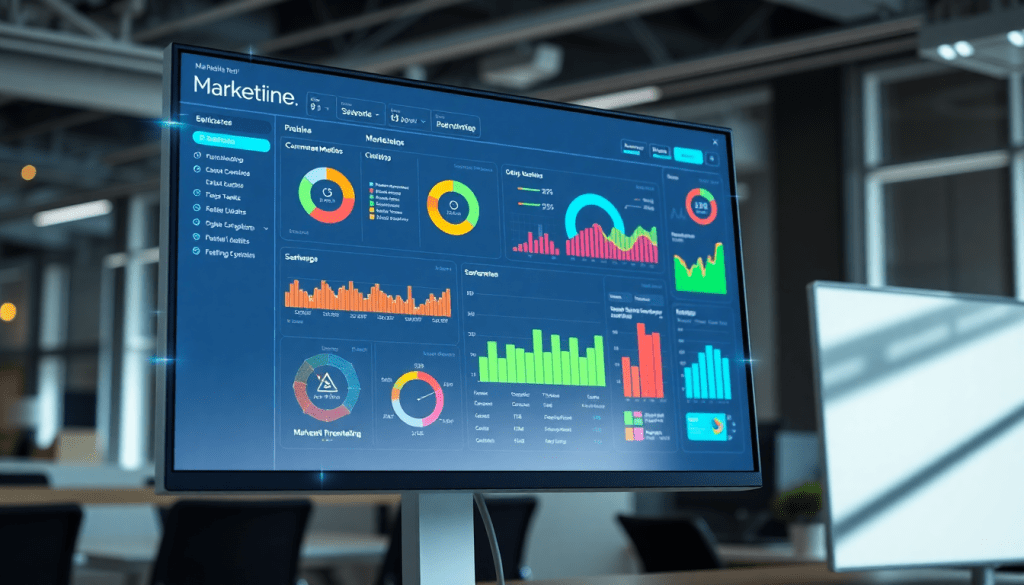
Digital Marketing KPI Dashboard: Visualize Metrics & ROI Fast
Tracking the right marketing KPIs across channels is the difference between flying blind and steering your campaigns with clarity. A digital marketing KPI dashboard pulls all your metrics into one interactive workspace—so you can visualize performance, monitor ROI, and translate data into actionable insights without the manual grind. Whether you’re leading an agency, in-house team, or managing multi-channel campaigns, a modern dashboard makes it easier to spot trends, optimize spend, and prove the value of your marketing efforts.
What is a Digital Marketing KPI Dashboard?
A digital marketing KPI dashboard is a centralized, interactive platform designed to aggregate, visualize, and monitor your most important marketing metrics in real-time. Think of it as your marketing mission control: instead of toggling between spreadsheets, disparate analytics tools, and scattered reports, a KPI dashboard brings all your campaign data—across every channel—into a single, easy-to-understand view.
At its core, this dashboard tracks key performance indicators (KPIs) such as impressions, conversions, cost per acquisition (CPA), and return on investment (ROI). But it goes beyond static reporting. With live data integrations, customizable widgets, and powerful visualizations, a modern KPI dashboard lets you spot trends, identify outliers, and act on insights as they emerge. This real-time visibility is crucial for making informed, agile decisions—whether you’re reallocating budget, refining targeting, or demonstrating marketing’s impact to stakeholders.
The importance of visualizing your marketing data cannot be overstated. Real-time dashboards eliminate guesswork and manual reporting delays, empowering you to prove campaign effectiveness, justify spend, and quickly pivot strategies when performance drops. Agencies use dashboards to automate reporting for hundreds of clients, ensuring consistency and transparency. Brands—especially those with multiple locations or product lines—rely on them to consolidate analytics, manage budgets, and optimize campaigns at scale. Enterprise marketing teams benefit from having a unified data hub that feeds insights into BI tools, CRMs, and executive dashboards.
For a deeper dive into how a best-in-class dashboard works in practice, check out TapClicks’ digital marketing KPI dashboard. As an industry leader, TapClicks offers a robust platform that integrates 10,000+ data sources, automates reporting, and leverages AI-driven insights—all designed to help marketers visualize metrics and ROI faster, with less manual effort.
Key Metrics Every Marketing Dashboard Should Track
A high-impact marketing dashboard isn’t just a place to park data—it’s a strategic hub for tracking the KPIs that drive business outcomes. But which metrics matter most? While the optimal mix will vary by channel and objective, there are core KPIs every digital marketing dashboard should feature to deliver actionable clarity:
1. Impressions: This foundational metric shows how often your ads or content are displayed, offering a top-level view of campaign reach. Tracking impressions across platforms helps you gauge brand visibility and assess your share of voice in competitive spaces.
2. Click-Through Rate (CTR): CTR measures the percentage of people who click on your ad or link after seeing it. As a key indicator of creative effectiveness and audience engagement, a healthy CTR signals that your messaging resonates and your targeting aligns with user intent.
3. Conversions: Ultimately, you want to know how many users take your desired action—whether it’s a sale, a lead form submission, or a download. Conversion tracking ties marketing efforts directly to tangible outcomes, making it a must-have KPI for proving ROI.
4. Cost Per Acquisition (CPA): This metric reveals how much you’re spending for each new customer or lead acquired. Monitoring CPA enables marketers to optimize budgets, adjust bids, and improve campaign efficiency over time.
5. Return on Investment (ROI): The gold standard of marketing measurement, ROI quantifies the financial return generated by your campaigns. By comparing revenue to spend, you can identify which channels and strategies deliver the most value.
Aligning KPIs with Campaign Goals
Not all metrics are created equal for every initiative. For example, an awareness campaign may prioritize impressions and reach, while a lead generation effort will focus on conversions and CPA. Start by clarifying your campaign objectives, then choose KPIs that map directly to those goals. This ensures your dashboard delivers insight, not just data overload.
Tips for Prioritizing Metrics
- Channel-Specific KPIs: Social campaigns might emphasize engagement rate or follower growth, while paid search should track quality score and cost-per-click.
- Funnel Position: Early funnel campaigns benefit from visibility metrics; bottom-funnel efforts require conversion and ROI tracking.
- Business Impact: Always prioritize KPIs that tie to revenue, cost, or customer value.
The Power of Automated, Cross-Channel KPI Tracking
Modern dashboards—like those powered by TapClicks—automate KPI collection across all your marketing channels, eliminating manual work and reducing error. This cross-channel view lets you compare performance apples-to-apples, spot emerging trends, and make smarter, faster decisions. By surfacing the most critical metrics in one place, a unified dashboard transforms raw numbers into actionable marketing intelligence.
Marketing Metrics Visualization: Turning Data into Insight
Staring at endless rows of numbers rarely sparks strategic “aha” moments. That’s why marketing metrics visualization is essential: transforming raw data into clear, compelling visuals accelerates understanding and action. Dashboards that leverage charts, graphs, heatmaps, and dynamic scorecards allow marketers to instantly spot patterns, track progress, and pinpoint both opportunities and red flags.
For example, trend lines and bar charts quickly reveal shifts in campaign performance over time—helping you identify which channels are surging or stalling. Heatmaps can highlight geographic or demographic pockets of engagement, while scorecards distill complex KPIs into digestible at-a-glance summaries for stakeholders. By visualizing data, teams can move from reactive reporting to proactive optimization, uncovering trends and anomalies that would be lost in spreadsheets.
Effective visualization not only democratizes data, making it accessible to non-analysts, but also bridges the gap between high-level business goals and granular marketing activities. Whether you’re comparing cost per acquisition across platforms or tracking conversion rates by funnel stage, visualization turns scattered metrics into actionable intelligence. For a deeper dive into how visualization drives marketing performance, check out this guide to marketing metrics visualization.
Automated KPI Reports: Save Time & Boost Accuracy
Manual reporting is a notorious time drain for marketing teams—every cycle spent wrangling spreadsheets is time not spent optimizing campaigns or delivering value to clients. Automated KPI reporting transforms this process, enabling marketers to generate, schedule, and deliver accurate reports with minimal effort. Instead of building presentations from scratch, you can set up recurring, branded templates that pull fresh data directly into your dashboards and client-ready reports.
With automation, you ensure every stakeholder always has access to the latest performance metrics—no more outdated numbers or last-minute data scrambles. Scheduled reports can be customized by frequency (daily, weekly, monthly), tailored to the right audience, and automatically distributed by email or portal access. This consistency not only saves dozens of hours per month but also eliminates the risk of manual errors, formula mishaps, or missed updates that can erode trust in your data.
Further, platforms like TapClicks take automated reporting to the next level by allowing marketers to create visually engaging, white-labeled report templates that update instantly as new data flows in. This means you can deliver real-time insights, highlight wins, and surface areas for improvement—all without lifting a finger each reporting cycle. For agencies and multi-location brands, this scalable automation is a game changer, supporting hundreds of clients and campaigns simultaneously.
By embracing automated KPI reporting, marketers free up analyst time for deeper strategy, improve data accuracy, and strengthen their credibility with clients and executives alike. Discover more about the power of automated reporting in TapClicks’ digital marketing KPI dashboard and see how leading teams are slashing reporting workloads while boosting insight delivery.
Performance Tracking Dashboard: Monitor Campaigns in Real Time
Today’s fast-paced marketing landscape demands more than just periodic performance snapshots—real-time monitoring is essential for agile, data-driven decision-making. A performance tracking dashboard acts as a living, breathing command center for your team, surfacing the latest campaign metrics as they happen, not hours or days later. This immediacy empowers marketers to adapt strategies on the fly, catch issues before they escalate, and seize opportunities as soon as they arise.
Real-Time Dashboards: The Nerve Center of Modern Campaigns
When your dashboards update in real time, you can actively manage campaign budgets, creative assets, and audience targeting with confidence. For example, if a campaign’s cost-per-acquisition (CPA) suddenly spikes, automated alerts and AI-driven insights can flag the anomaly instantly—allowing your team to pause, adjust, or reallocate budget before wasted spend accumulates. Conversely, if an ad set is resonating in a new geographic market, you can quickly scale investment to maximize results.
Use Cases: From Budget Pacing to Multi-Location Rollouts
A real-time performance dashboard is invaluable for:
- Budget Pacing: Instantly see whether spend is tracking ahead or behind plan, so you can reallocate funds and avoid end-of-month surprises.
- Creative Testing: Monitor which headlines, visuals, or calls-to-action are driving engagement, and pivot quickly to top performers.
- Multi-Location Management: Agencies and brands with multiple locations or clients can track granular performance by region, store, or market—ensuring localized campaigns hit their targets.
Proactive Alerts & AI Insights
Beyond raw data, modern dashboards leverage AI agents to provide proactive recommendations and surface unexpected trends. Instead of combing through dozens of reports, your team can rely on automated detection of anomalies, pacing issues, or underperforming channels—so you can act decisively. These smart insights transform the dashboard from a passive reporting tool into an active participant in your campaign’s success.
The Command Center Advantage
Ultimately, a real-time performance dashboard unifies all your marketing efforts under one digital roof. It becomes the single source of truth for campaign health, accessible by every stakeholder—whether they’re in analytics, creative, sales, or client services. This shared visibility accelerates collaboration, streamlines approvals, and keeps everyone aligned on what’s working, what’s not, and where to focus next.
To see how a unified platform can bring this vision to life, explore the TapClicks digital marketing KPI dashboard—purpose-built for real-time performance tracking, automated insights, and scalable marketing operations.
Cross-Channel Analytics: Unified View of All Campaigns
Today’s marketers rarely operate in a single channel—it’s the norm to run campaigns on search, social, display, email, and even offline channels simultaneously. But with each channel generating its own metrics and reporting style, the real challenge is bringing all that data together in a way that delivers a true, apples-to-apples comparison of performance. This is where unified cross-channel analytics becomes essential.
A digital marketing KPI dashboard with cross-channel capabilities acts as your single source of truth, automatically aggregating data from all your marketing platforms. Instead of toggling between siloed reports or spreadsheets, marketers can instantly view how Google Ads, Facebook, email campaigns, and even out-of-home or call center data stack up against each other—side by side, and in real time.
Integrating data from such a wide array of sources isn’t just about convenience; it’s about empowering teams to make smarter, faster decisions. For example, if your dashboard reveals that paid social is driving more conversions than display, you can quickly shift budget to maximize ROI. Or, if a multi-location campaign is underperforming in a specific region, you’ll spot the trend early and adjust tactics accordingly.
With a cross-channel analytics dashboard, you also gain the ability to track customer journeys holistically, identifying where prospects are engaging, converting, or dropping off across platforms. This unified view lets you optimize campaigns as a whole, not just channel by channel—leading to more efficient spend and stronger business outcomes.
Modern platforms like TapClicks’ digital marketing KPI dashboard are purpose-built for this level of integration and analysis. By supporting thousands of data connectors and advanced data blending, TapClicks enables true cross-channel reporting and visualization, so you can move beyond isolated metrics to actionable, strategic insights. In a marketing landscape defined by complexity and speed, unified analytics isn’t just a “nice-to-have”—it’s the key to staying ahead.
Supercharging Your Decisions with AI and Smart Insights
Today’s marketing dashboards aren’t just pretty charts—they’re your co-pilot for smarter, faster decisions. AI is the key to making dashboards not just informative, but truly actionable.
How AI Turns Data Into Action
Forget manual number crunching. AI-driven dashboards, like TapClicks’ digital marketing KPI dashboard, transform your data into prioritized, real-time insights. Here’s what that looks like in action:
-
Always-On Analysis: AI agents continuously scan campaign data for:
- Emerging trends you might miss
- Hidden opportunities for optimization
- Anomalies and outliers that need attention
-
Smart Recommendations: Get proactive alerts and suggestions, such as:
- Flagging underperforming ad sets
- Suggesting budget reallocations across channels
- Notifying your team of sudden spikes in cost-per-acquisition or CPC
-
Insight, Not Information Overload: Instead of digging through endless spreadsheets and tables, you get clear, prioritized takeaways.
Anomaly Detection: Your Early Warning System
With dozens (or hundreds) of campaigns in motion, it’s easy for unusual shifts to slip through the cracks. AI changes that:
- Continuous Monitoring: AI tracks every metric, across every channel
- Instant Alerts: Get notified if there’s:
- A sudden dip in conversions
- A spike in click-through rates
- Any metric moving outside your expected range
This means you can troubleshoot issues or seize opportunities before they impact performance.
Effortless Communication with AI-Generated Summaries
Keeping everyone in the loop just got easier:
- AI-Powered Email Summaries: Tools like TapClicks’ SmartEmail automatically generate and send concise insight recaps to stakeholders
- No More Manual Reporting: Account managers, executives, and clients get the highlights—without hours spent building decks
Looking Forward: Predictive Models for Proactive Planning
AI isn’t just about the present. Predictive models built into platforms like TapClicks help you:
- Forecast future performance based on historical data
- Set smarter benchmarks and KPIs
- Pace budgets with confidence
Why This Matters
By integrating AI into your marketing KPI dashboard, you’re turning it from a static report into a dynamic decision engine. With TapClicks, you get:
| Old Way | New Way with TapClicks AI |
|---|---|
| Manual data pulls | Automated, real-time updates |
| Reactive reporting | Proactive, actionable insights |
| Siloed, static dashboards | Unified, dynamic decision platform |
| Guesswork on optimizations | AI-driven recommendations & alerts |
Bottom line:
With TapClicks, marketers get a consolidated, AI-powered view of their KPIs—and the intelligent guidance needed to drive results at scale, with less effort.
Getting Started with a Digital Marketing KPI Dashboard
Launching an effective digital marketing KPI dashboard doesn’t have to be overwhelming. By following a practical, step-by-step approach, marketers can quickly gain a unified view of their performance, saving time and driving better results. Here’s how to get started:
1. Integrate Your Data Sources
The first step is connecting all the marketing, advertising, and business platforms you use—think Google Ads, Facebook, LinkedIn, email, CRM, and even offline channels. Modern solutions like TapClicks offer thousands of pre-built connectors, making it simple to aggregate data without IT headaches. Ensure your dashboard platform supports automated data extraction, transformation, and loading (ETL) to keep your metrics current and reliable.
2. Select and Prioritize Your KPIs
Identify the key performance indicators that matter most to your team or clients. Start with core metrics such as impressions, clicks, conversions, CPA, and ROI, and tailor your dashboard to your campaign goals—whether that’s lead generation, sales, or brand awareness. Remember, less is often more: focus on the KPIs that directly tie to business outcomes and adjust as your strategy evolves.
3. Set Up User Access and Custom Views
A great dashboard empowers collaboration. Assign role-based permissions so the right stakeholders—executives, analysts, clients—see only the data relevant to them. Customize views by team, location, or client, ensuring everyone gets actionable insight without information overload.
4. Customize Visualizations and Reporting
Leverage the dashboard’s visualization tools to display your KPIs in the most meaningful way—using charts, graphs, scorecards, and tables. Set up automated reports and branded templates for streamlined sharing. TapClicks, for example, enables scheduled reporting and real-time dashboard refreshes, so your team is always working with the latest data.
5. Maintain and Evolve Your Dashboard
Regularly review and refine your dashboard setup. As campaigns shift and new channels emerge, update your data connections and KPIs to reflect what matters most. Periodic feedback from users can uncover new needs or opportunities to enhance clarity and actionability.
Take the First Step
Ready to simplify reporting and unlock smarter marketing decisions? Start by mapping your current data sources and KPIs, then explore dashboards that unify these elements under one roof. For a comprehensive, scalable solution, TapClicks offers everything you need to build a high-impact digital marketing KPI dashboard—backed by automation, powerful analytics, and AI-driven insights.
Start Automating Your Marketing Data Today!
No Credit Card Required.

