

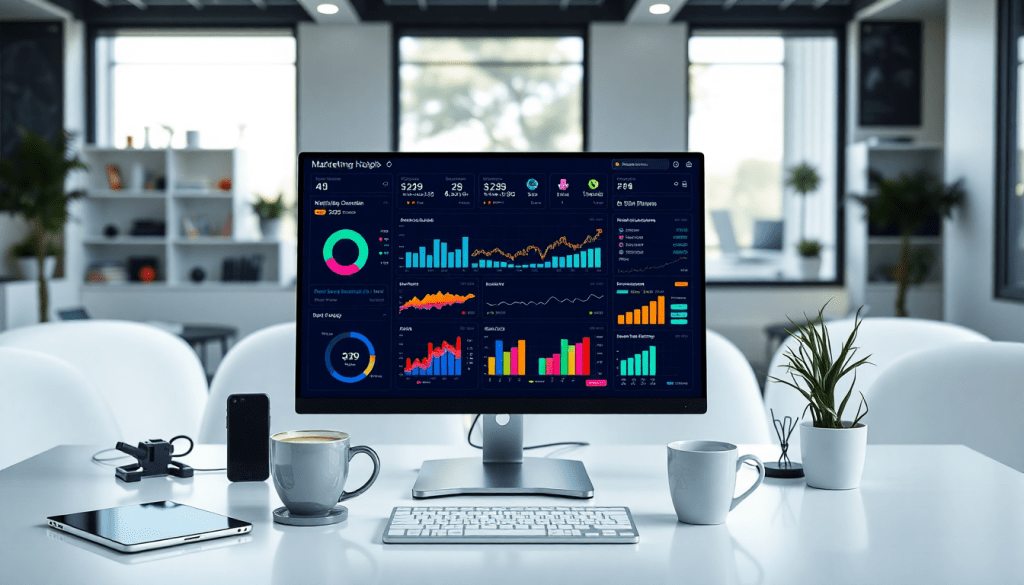
Digital Marketing KPI Dashboard: Visualize Campaign Metrics Fast
A digital marketing KPI dashboard streamlines how marketers track, analyze, and present campaign performance—all in one centralized hub. With a modern dashboard, marketing teams can automate data collection, visualize multi-channel metrics, and surface actionable insights in real time. This guide explores how to choose and build an effective dashboard, which KPIs to prioritize, and how AI-powered features can take your reporting to the next level.
What is a Digital Marketing KPI Dashboard?
A digital marketing KPI dashboard is a centralized, interactive platform designed to track, visualize, and analyze the most important metrics—key performance indicators (KPIs)—related to your marketing campaigns. Unlike traditional spreadsheets or static reports, which require manual data gathering and lack real-time updates, a KPI dashboard automatically aggregates data from multiple marketing channels (such as social media, search, email, and display ads) and presents it in a visually intuitive format.
The core purpose of a digital marketing KPI dashboard is to give marketers, agencies, and stakeholders a single source of truth for campaign performance. By centralizing marketing metrics visualization, teams gain immediate visibility into what’s working, what needs attention, and where opportunities for optimization lie. This unified view eliminates the time-consuming process of logging into separate ad platforms or exporting CSV files, replacing them with automated, always-updated dashboards that provide a holistic perspective across all channels.
The distinction between static reports and interactive performance metrics dashboards is critical. Static reports are typically generated periodically and quickly become outdated, offering only a snapshot in time. In contrast, interactive dashboards let users drill down into specific campaigns, filter by date ranges, and compare multi-channel performance on the fly. This interactivity empowers marketing teams to move beyond reporting and into real-time decision-making, supporting agile campaign adjustments and data-driven strategy.
Ultimately, a well-designed digital marketing KPI dashboard acts as both a control center and a communication tool—helping marketers visualize essential metrics, demonstrate ROI, and align teams around shared goals. To learn more about how TapClicks can help you unify your marketing data and reporting, visit TapClicks.
Core Features of an Effective Performance Tracking Dashboard
The backbone of any successful digital marketing KPI dashboard lies in its ability to bring clarity and agility to campaign measurement. A modern dashboard is more than a static report—it’s a dynamic workspace that empowers marketers to visualize, analyze, and act on their data in real time. Here’s what to look for in an effective performance tracking dashboard:
Customizable Widgets and Layouts
Every marketing team has unique priorities, whether it’s lead generation, brand awareness, or e-commerce conversions. Your dashboard should feature customizable widgets that let you tailor the interface to showcase the metrics that matter most. With drag-and-drop functionality, users can arrange charts, tables, and KPIs in a way that aligns with their workflow and reporting needs. This flexibility ensures that both high-level overviews and granular details are just a click away.
Real-Time Data Sync
Timely decision-making depends on up-to-date information. Leading dashboards offer real-time data synchronization, automatically pulling the latest metrics from connected platforms—be it Google Ads, Facebook, programmatic display, or email marketing tools. This eliminates manual data entry and ensures that your reports reflect current performance, enabling agile optimization and swift response to emerging trends.
Interactive Visualizations
Static charts can only tell part of the story. Interactive visualizations—such as filterable graphs, time-series analysis, and drill-down capabilities—help marketers uncover what’s driving performance. For example, you might click into a spike in conversions to see which channel, campaign, or creative fueled the surge. These visual tools make it easier to spot outliers, compare trends, and share insights with stakeholders who may not be data experts.
Automated KPI Reports
Routine reporting can eat up hours of valuable time. That’s why automated KPI report generation is a must-have feature. With scheduled delivery and customizable templates, dashboards can send branded, client-ready reports straight to stakeholders’ inboxes—daily, weekly, or monthly. This streamlines workflow, reduces manual errors, and allows teams to focus on analysis and strategy instead of data wrangling.
Cross-Channel Analytics
Today’s digital campaigns rarely live in silos. The best dashboards consolidate marketing data from across social, search, display, video, and more, providing a holistic view of performance. With unified cross-channel analytics, you can compare results, attribute conversions, and allocate budget more effectively. This comprehensive view is especially valuable for agencies and brands juggling multiple campaigns or locations.
AI-Enhanced Insights and Anomaly Detection
Modern dashboards are raising the bar with AI-powered features. Automated insights go beyond surface-level reporting, surfacing hidden trends, opportunities, and anomalies that might otherwise be missed. For instance, TapClicks leverages AI agents to analyze your data, flagging sudden changes in spend, audience shifts, or underperforming creatives. These intelligent recommendations help marketers act faster and optimize more precisely.
In short, an effective digital marketing KPI dashboard combines customization, real-time access, and advanced analytics to transform raw data into actionable intelligence. By leveraging these core features, marketing teams can visualize campaign metrics quickly, collaborate more effectively, and drive better performance across every channel.
Essential KPIs to Monitor for Campaign Success
To maximize the impact of your digital marketing campaigns, it’s critical to track the right key performance indicators (KPIs). The right KPIs provide a clear picture of campaign health, illuminate optimization opportunities, and ensure accountability across marketing teams. Here’s a breakdown of the most high-impact marketing KPIs and how a dashboard helps you harness their full value:
1. Return on Investment (ROI):
ROI is the ultimate measure of campaign effectiveness, showing how much revenue your marketing generates compared to its cost. By tracking ROI in real time, you can quickly identify which channels and tactics deliver the greatest value—and shift budgets accordingly.
2. Cost Per Acquisition (CPA):
CPA reveals how much you’re spending to acquire each new customer or lead. Monitoring CPA helps marketers set realistic budget expectations and spot inefficiencies in their funnel or targeting strategies.
3. Click-Through Rate (CTR):
CTR measures how often people click your ads or content after seeing them. A healthy CTR indicates engaging creative and relevant targeting, while dips can signal the need for creative refreshes or better segmentation.
4. Impressions & Reach:
Impressions track the number of times your content is shown, while reach counts unique viewers. These metrics help gauge brand visibility and awareness, especially in upper-funnel campaigns.
5. Conversions & Conversion Rate:
Conversions measure valuable actions—like form submissions, purchases, or downloads. Conversion rate (conversions divided by clicks or visits) pinpoints how efficiently you’re turning interest into results.
6. Engagement Metrics:
Metrics such as likes, shares, comments, and video views reflect audience interaction and content resonance. High engagement often correlates with stronger brand loyalty and organic reach.
Driving Optimization and Accountability
Consistent campaign KPI monitoring isn’t just about reporting numbers—it’s about enabling smarter decisions. When your dashboard puts critical metrics front and center, teams can quickly spot underperforming areas, double down on what’s working, and demonstrate marketing’s impact to stakeholders. Interactive dashboards allow you to prioritize KPIs by campaign, channel, or client, ensuring everyone’s focused on the metrics that matter most.
Contextualizing Metrics for Better Insights
A robust digital marketing KPI dashboard like TapClicks doesn’t just display numbers—it provides context. For example, you can benchmark current performance against historical trends, filter by region or demographic, and layer in cross-channel data for a holistic view. This helps marketers move beyond surface-level stats to uncover the “why” behind the numbers, leading to more effective optimization and campaign success.
Automating KPI Reports for Efficiency and Scale
For agencies and brands managing a high volume of campaigns, manual KPI reporting is a notorious time sink—one that also increases the risk of data errors and inconsistent insights. Automating KPI reports through a digital marketing dashboard streamlines the entire reporting workflow, transforming a traditionally tedious process into a scalable, error-resistant engine for marketing intelligence.
Automated KPI reporting platforms, such as TapClicks, enable you to schedule recurring reports, instantly pull the latest cross-channel data, and deliver custom dashboards to stakeholders without a single spreadsheet export or copy-paste. This automation doesn’t just save time; it ensures that everyone—from account managers to clients—always sees the most up-to-date metrics and trends.
According to marketing dashboard automation best practices, automated workflows empower agencies to deliver reporting at scale, freeing up analysts for higher-value strategic work instead of repetitive data wrangling. With scheduled report delivery and real-time dashboard updates, agencies can support hundreds of clients or campaigns simultaneously—eliminating bottlenecks and reducing reporting workload by dozens of hours per month.
In addition, automated KPI reporting enhances data accuracy and consistency. By eliminating manual entry, you reduce the risk of human error and maintain a single source of truth across all marketing channels. This reliability not only builds trust with clients but also fosters a culture of data-driven decision-making within marketing teams.
Ultimately, KPI report automation is a game-changer for efficiency, scale, and data quality—empowering marketers to focus on optimization and strategy, not just data collection and formatting. To see how leading platforms like TapClicks put this into practice, visit TapClicks.
Real-Time and Cross-Channel Analytics: Why They Matter
In today’s fast-paced digital landscape, the ability to access real-time analytics and cross-channel performance data is no longer a luxury—it’s a necessity. Marketers need to monitor campaign metrics as they happen, not days or weeks later, to make timely optimizations and maximize ROI. Real-time data enables teams to spot emerging trends, respond instantly to underperforming channels, and capitalize on high-performing content before competitors do. This agility is especially critical during time-sensitive campaigns, such as product launches or seasonal promotions, where every minute counts.
Cross-channel analytics dashboards take this a step further by unifying data from multiple marketing platforms—social, search, display, video, email, and more—into a single, holistic view. Rather than toggling between siloed reports, marketers can see the complete customer journey and understand how touchpoints interact to drive conversions. This integrated perspective not only highlights channel-specific performance but also reveals how channels amplify each other, uncovering opportunities for smarter budget allocation and campaign strategy.
To dive deeper into the benefits of real-time data collection and the transformative impact it has on campaign reporting, check out this resource on real-time marketing automation. By leveraging a dashboard that combines real-time updates with cross-channel analytics, marketers can ensure their reporting is always current, comprehensive, and actionable—empowering data-driven decisions that fuel better outcomes.
Unlocking the “Why” with AI-Powered Dashboards
Modern marketers know that just collecting data isn’t enough—you need to understand what’s driving the numbers. That’s where AI-driven dashboards come into play: they don’t just show metrics; they provide context, uncover trends, and recommend next steps, all with minimal manual effort.
What Makes AI Dashboards Different?
Here’s how AI marketing dashboards like TapClicks go beyond basic reporting:
- Automated Trend Detection:
AI agents monitor campaign data in real time. They can instantly flag:- Sudden drops in engagement
- Unusual spikes in cost per acquisition
- Underperforming channels
- Proactive Recommendations:
Instead of waiting for manual reviews, marketers receive alerts and suggestions for optimization, allowing quick adjustments before small issues become big problems.
Interactive Visualizations: Telling the Full Story
Advanced dashboards don’t just analyze—they engage. Key features include:
- Drill-Down Capabilities:
Dive into performance by region, channel, campaign, or timeframe with just a click. - Dynamic Filters:
Instantly slice and dice data to answer ad hoc questions, spot outliers, or isolate high-ROI opportunities. - Custom Visualizations:
Tailor dashboards to highlight what matters most—whether that’s budget pacing, channel mix, or creative performance.
| Feature | What It Does | Why It Matters |
|---|---|---|
| AI Agents | Analyze data for trends & anomalies | No more manual hunting for issues |
| Dynamic Filters | Customize views on the fly | Faster answers for stakeholders |
| Automated Reporting | Schedule & distribute insights | Keeps teams and clients in sync |
| Drill-Downs | Explore metrics at any level of detail | Pinpoint causes, not just symptoms |
How TapClicks Elevates Analytics
Platforms like TapClicks blend machine learning with automated reporting to shift analytics from a static snapshot to a living, intelligent conversation. Here’s what you gain:
- Faster, Smarter Decisions
Automated alerts mean teams can act in real time—not after the fact. - Always-On Optimization
Recommendations and insights are delivered directly to stakeholders, via dashboards or SmartEmail. - Seamless Collaboration
Centralized data and insights keep sales, ops, and marketing aligned without endless back-and-forth.
When you combine AI-powered insights with flexible, interactive dashboards, you don’t just track performance—you unlock the real reasons behind your results and continuously refine your strategy for greater impact.
How to Build and Customize Your Marketing Metrics Visualization Dashboard
Creating a high-impact digital marketing KPI dashboard starts with a strategic approach—one that blends technical setup with thoughtful customization. Here’s how to build a dashboard that delivers clarity, value, and real-time insight for your team or clients:
1. Integrate Your Marketing Data Sources
Start by connecting all relevant data sources to your dashboard platform. This could include channels like Google Ads, Facebook, LinkedIn, SEO tools, email marketing platforms, and CRM systems. Modern solutions like TapClicks offer thousands of pre-built connectors, making it easy to unify campaign data from multiple platforms without tedious manual imports. Look for ETL (extract, transform, load) capabilities to ensure your data is not only gathered in one place, but also cleaned, normalized, and ready for analysis.
2. Select and Prioritize KPIs
Identify the core KPIs that align with your business goals or client objectives. For some, ROI and cost per acquisition (CPA) are top priorities; for others, metrics like click-through rate (CTR), impressions, or engagement may be more critical. Keep dashboards focused by highlighting the most actionable and relevant metrics for each campaign or audience. This focus helps prevent information overload and keeps stakeholders zeroed in on what matters most.
3. Design an Intuitive Layout
Map out your dashboard’s layout with usability in mind. Group related KPIs together (e.g., awareness, conversion, retention), use customizable widgets, and leverage visualizations like line graphs, bar charts, or heat maps to make trends instantly recognizable. Interactive features such as filters, time-range selectors, and drill-downs empower users to explore data at their own pace and uncover deeper insights without switching tools or tabs.
4. Automate Reporting and Insights
Set up automated data refresh schedules and reporting workflows to ensure your dashboard stays current—no more manual updates or version control headaches. Many leading platforms allow you to schedule branded reports or client updates, and some, like TapClicks, enable marketing dashboard automation that streamlines delivery across multiple accounts. Consider activating AI-powered features that proactively surface anomalies, trends, or optimization recommendations, reducing time spent on analysis and accelerating decision-making.
5. Customize for Teams and Clients
Not every stakeholder needs the same view. Tailor dashboards by user role, department, or client. For example, executives may prefer high-level summaries and ROI snapshots, while campaign managers need granular, channel-by-channel breakdowns. Use role-based access controls to ensure sensitive data stays secure and that each viewer gets the most relevant information.
6. Optimize and Evolve Your Dashboard
A dashboard isn’t a set-it-and-forget-it tool. Regularly review usage patterns, solicit feedback, and iterate on your setup. Add new KPIs as strategies evolve, refine visualizations for clarity, and update automated workflows to reflect changing reporting needs. Continuous optimization ensures your dashboard remains a trusted, valuable resource as your marketing operation grows.
By following these steps and leveraging the right technology, you can build a digital marketing KPI dashboard that not only visualizes campaign performance but also transforms how teams collaborate, optimize, and drive results.
Choosing the Right Dashboard Platform for ROI Tracking
Selecting the best digital marketing KPI dashboard platform can make or break your ability to drive ROI—and scale results across campaigns, clients, or locations. With a crowded marketplace of reporting tools, it’s essential to weigh several key factors to ensure your dashboard meets both current and future needs.
Scalability: As your campaigns grow in complexity and volume, your dashboard should keep pace effortlessly. Look for platforms built to handle thousands of dashboards, clients, and reports simultaneously—without degrading performance. Solutions like TapClicks are engineered for high-volume agencies, media companies, and multi-location brands, ensuring you won’t outgrow your reporting infrastructure.
Integration Options: Seamless data integration is a must-have. The best platforms offer native connectors to a wide range of marketing, advertising, and business data sources—think Google Ads, Facebook, programmatic, CRM, and more. This enables unified, cross-channel analytics and eliminates manual data wrangling. Additionally, consider flexibility: Can the platform serve as both a single source of truth and a data hub that feeds your existing BI stack?
AI Capabilities: Modern dashboards go beyond static charts. Evaluate how the platform leverages AI to automate insights, anomaly detection, and predictive modeling. Features such as AI agents, automated insight summaries, and optimization recommendations transform raw data into actionable strategies—giving marketers a competitive edge.
User Experience: Intuitive interfaces, drag-and-drop customization, and branded reporting are vital for adoption and efficiency. Your dashboard should be easy to tailor for different teams, clients, or executive stakeholders, and support automated report delivery on your schedule.
When evaluating digital marketing dashboard solutions for long-term growth, prioritize those that unify data, reporting, analytics, and workflow in one place. This not only accelerates ROI tracking but also supports strategic decision-making and operational efficiency. By selecting a platform built for scale, flexibility, and AI-powered insights, marketers can deliver greater value, optimize spend, and align reporting with overarching business objectives.
Start Automating Your Marketing Data Today!
No Credit Card Required.

