

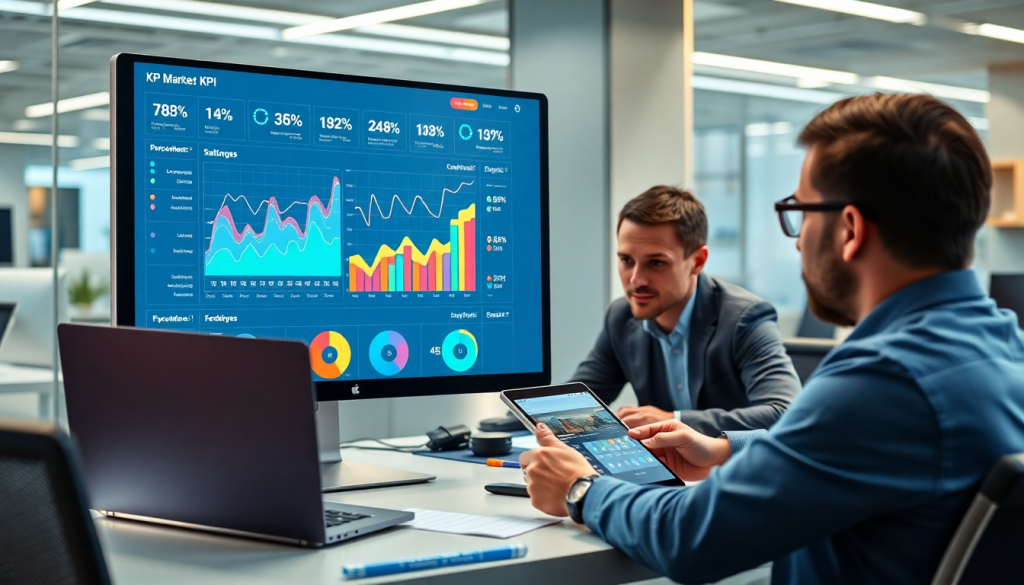
Digital Marketing KPI Dashboard: Visualize and Track Metrics
A digital marketing KPI dashboard is much more than just a collection of charts and numbers—it’s your marketing team’s command center for understanding performance, optimizing campaigns, and communicating results. By bringing together key metrics from every channel into one interactive view, these dashboards empower marketers to make smarter decisions, respond to trends in real time, and demonstrate ROI with confidence. Whether you’re an agency managing hundreds of clients or an in-house team tracking multi-channel efforts, the right dashboard turns raw data into actionable insights.
What is a Digital Marketing KPI Dashboard?
A digital marketing KPI dashboard is an interactive, real-time tool that consolidates your most important marketing metrics—your key performance indicators (KPIs)—into a single, visual interface. Unlike traditional static reports, which provide a snapshot in time and often require manual updates, a KPI dashboard continuously pulls data from multiple channels and platforms, giving marketers instant access to the information that matters most.
At its core, a digital marketing KPI dashboard acts as the mission control for your marketing efforts. It brings together data from paid search, social media, email, SEO, and other channels, allowing you to monitor campaign performance, track ROI, and quickly identify which strategies are driving results. This consolidated view is essential for modern marketers who manage increasingly complex, cross-channel campaigns and need to make agile, data-driven decisions.
The difference between static reports and dynamic dashboards is more than just frequency of updates—it’s about empowerment. Static reports often lead to delayed insights and reactive strategies. In contrast, dynamic dashboards enable proactive optimization: marketers can spot emerging trends, diagnose underperforming campaigns, and communicate results efficiently to stakeholders, all in real time.
By consolidating cross-channel metrics and surfacing actionable marketing data insights, a digital marketing KPI dashboard turns overwhelming volumes of data into a clear, strategic advantage. Platforms like TapClicks are purpose-built for this, offering unified dashboards that not only visualize performance but also automate reporting and deliver AI-powered recommendations. For agencies and brands alike, the right dashboard isn’t just a reporting tool—it’s the foundation for smarter, faster, and more impactful marketing.
Key Metrics to Track on Your Marketing Dashboard
Choosing the right KPIs for your digital marketing dashboard is fundamental to understanding, optimizing, and demonstrating the impact of your campaigns. The most effective dashboards don’t just present every data point—they focus on the metrics that matter to your goals, clients, or stakeholders. Here’s how to get it right:
The Essential Digital Marketing KPIs
Certain metrics are universally valuable for most digital campaigns, regardless of channel or industry. These include:
- Conversions: Track the number of desired actions users take (purchases, sign-ups, downloads) to directly link marketing efforts to business outcomes.
- Cost per Acquisition (CPA): Understand how much it costs to acquire a customer or lead from each channel, campaign, or tactic.
- Click-Through Rate (CTR): Gauge ad or email effectiveness by measuring the percentage of users who click on your content after seeing it.
- Return on Investment (ROI): Calculate the revenue generated compared to marketing spend to determine campaign profitability.
- Engagement Metrics: Monitor likes, shares, comments, and time on site to assess audience interest and brand interaction.
Aligning Metrics with Campaign Objectives
No two dashboards should be identical—what’s most important is that your KPIs align with your unique campaign objectives. For example, a brand awareness campaign may emphasize impressions, reach, and engagement, while a lead generation campaign will prioritize conversions and CPA. Regularly reviewing your objectives ensures your dashboard evolves with your strategy, keeping teams focused on what drives value.
Channel-Specific vs. Cross-Channel Metrics
Digital marketing is rarely confined to a single channel, so your dashboard should bring together both channel-specific and cross-channel KPIs. For instance:
-
Channel-Specific Metrics:
- Google Ads: Quality Score, Ad Position, Cost per Click (CPC)
- Facebook Ads: Relevance Score, Frequency, Cost per Result
- Email Marketing: Open Rate, Unsubscribe Rate, Bounce Rate
-
Cross-Channel Analytics:
- Customer Lifetime Value (CLV): Track customer value across multiple touchpoints.
- Attribution Modeling: Understand which channels contribute most to conversions, not just last-click wins.
- Multi-Touch Engagement: See how users interact with multiple platforms before converting.
The key is to blend these metrics to gain a holistic view—understanding not just how each channel performs in isolation, but how they work together to move customers through the funnel.
With a well-constructed dashboard that highlights the most meaningful KPIs, marketers can quickly spot performance trends, make informed optimizations, and communicate impact clearly to stakeholders. For teams managing high volumes of data or multiple clients, leveraging a platform like TapClicks can simplify the process, offering customizable dashboards that unify all your essential metrics in one place.
Benefits of Marketing Metrics Visualization
Visualizing marketing metrics does more than simply present data—it transforms complex numbers into intuitive, actionable stories. When teams use visualization tools within their digital marketing KPI dashboards, they unlock the ability to spot trends, outliers, and opportunities much faster than they could by combing through spreadsheets or static reports. For example, a sudden spike in cost per acquisition (CPA) or a dip in engagement rates stands out immediately on a well-designed graph, empowering marketers to take swift, informed action.
The true power of visualization lies in its ability to provide context. Charts, heatmaps, and interactive dashboards don’t just show what’s happening—they help explain why. A performance tracking dashboard that maps campaign spend against conversions across multiple channels can quickly reveal which tactics are delivering the best ROI and where optimization is needed. This clarity makes it easier for marketers to communicate findings to stakeholders, align teams around shared goals, and justify budget decisions with confidence.
Moreover, visual dashboards enhance efficiency and collaboration. Instead of sifting through disparate data sources, teams can rally around a single source of truth that updates in real time. Agencies, in particular, benefit from automating these visualizations to streamline client reporting and reduce manual effort—a process explored in depth in “Boost Agency Reporting Efficiency with Automation”.
Ultimately, marketing metrics visualization is about turning information overload into insight. By making data visual and accessible, organizations empower everyone—from analysts to executives—to make smarter, faster decisions that drive better results. To see how unified dashboards and powerful visualization can transform your marketing operations, explore TapClicks.
Campaign KPI Monitoring and Automated Reporting
In today’s fast-paced digital ecosystem, real-time campaign KPI monitoring is a game-changer for marketing teams and agencies alike. By continuously tracking key performance indicators as campaigns unfold, marketers gain immediate visibility into what’s working and what isn’t—enabling swift optimization, budget reallocation, and issue resolution before minor problems become costly setbacks. This level of responsiveness is crucial for maximizing ROI and delivering better results to clients or stakeholders.
However, maintaining up-to-date KPI reports across multiple campaigns and channels can quickly become overwhelming if done manually. That’s where automated reporting transforms the process: by streamlining data aggregation, visualization, and report delivery, marketing teams can focus on strategic analysis instead of repetitive tasks. Automated KPI reports not only save valuable hours each week, but also ensure consistency, accuracy, and timeliness—minimizing the risk of human error and data lag.
For actionable strategies on how to implement automation in your campaign reporting, check out "Boost Reporting with TapClicks Automation". You’ll discover how platforms like TapClicks help agencies and brands automate the entire reporting workflow—from pulling metrics via thousands of data connectors to scheduling branded reports for clients or internal teams. With automated campaign KPI monitoring and reporting, you empower your team to respond faster, make smarter decisions, and deliver more value from every marketing dollar.
Cross-Channel Analytics Dashboard: A Unified View
In today’s fragmented digital landscape, marketers rarely rely on just one channel to reach their audiences. Paid search, social media, email, programmatic display, and more all contribute to the customer journey—but when data lives in silos, gaining a true picture of performance becomes impossible. This is where a cross-channel analytics dashboard proves invaluable.
A cross-channel dashboard integrates data from multiple sources—think Google Ads, Facebook, LinkedIn, programmatic DSPs, and even offline channels—into a single, cohesive view. This unified approach allows marketers to see the full story: how budget allocation across platforms impacts conversions, where customer journeys intersect, and which channels deliver the best ROI. For example, agencies managing dozens (or hundreds) of clients can instantly compare performance across all channels and accounts, quickly identifying which campaigns are driving results and which need attention.
The benefits go beyond convenience. Unified dashboards empower teams to:
- Track ROI holistically by attributing conversions and revenue across all touchpoints, not just last-click or single-source metrics.
- Spot trends and correlations that would be missed in isolated reports, such as how a social media push affects branded search or email engagement.
- Optimize spend and strategy in real time, reallocating budgets to the channels and campaigns delivering the strongest returns.
However, integrating data from dozens—or even hundreds—of sources isn’t without challenges. Disparate data formats, inconsistent naming conventions, and varying update frequencies can create headaches for marketing teams. Leading platforms like TapClicks address these hurdles with automated data connectors, normalization tools, and enrichment features that streamline the entire process. By blending and standardizing data behind the scenes, TapClicks enables marketers to focus on insights and action, not data wrangling.
In short, a cross-channel analytics dashboard isn’t just a reporting luxury—it’s a strategic necessity. Unifying your data sources delivers the clarity, agility, and confidence required to maximize marketing ROI in a multi-channel world.
AI-Driven Insights and Interactive Performance Metrics
Today’s digital marketing landscape moves faster than ever—so the ability to surface insights in real time has become a game-changer. AI-driven marketing dashboards are leading this revolution by not only aggregating performance data but also analyzing it to deliver actionable recommendations. Rather than sifting through endless spreadsheets or static charts, marketers get instant answers to pressing questions: Which campaigns are underperforming? Where are budget optimizations possible? What new growth opportunities are emerging?
With AI-powered features like TapClicks’ SmartPilot and TapInsights, dashboards automatically scan your campaign data, detect patterns, and highlight anomalies or optimization opportunities. This proactive approach empowers teams to focus on strategy rather than manual analysis. For example, AI agents can benchmark your KPIs against industry standards, predict campaign outcomes, and even recommend budget shifts—moving your dashboard from a passive reporting tool to a dynamic decision engine.
Interactivity is just as crucial. Interactive performance metrics let users drill down from high-level overviews into granular data with just a click. Marketers can customize views, filter by channel or timeframe, and instantly visualize the impact of tactical adjustments. This hands-on exploration not only streamlines reporting but also helps teams uncover trends and outliers that might otherwise go unnoticed.
By combining automation, AI, and interactivity, modern dashboards deliver both the “what” and the “why” behind your metrics. To learn more about how automated data collection and AI can unlock real-time marketing intelligence, check out "Unlocking Real-Time Marketing with Automated Data Collection". For teams seeking to elevate their analytics and performance tracking, leveraging TapClicks’ unified platform ensures you stay ahead with smart, actionable insights at every step.
How to Build an Effective Digital Campaign Reporting Dashboard
Designing a digital marketing KPI dashboard that truly drives impact isn’t just about choosing a few charts or plugging in data sources—it's a strategic process that ensures your dashboard becomes a vital asset for your team and stakeholders. Here’s a step-by-step approach to building a dashboard that delivers clarity, actionability, and results.
1. Start with Goal Setting
Before you select metrics or design visualizations, clarify your campaign objectives. Are you aiming to increase conversions, reduce cost per acquisition, drive engagement, or boost ROI? Align your dashboard’s focus with these goals to ensure every metric displayed supports your strategy and decision-making.
2. Select the Right Metrics
Choose KPIs that matter most to your business and campaign objectives. For example, if your goal is lead generation, prioritize metrics like cost per lead (CPL), conversion rate, and lead quality. For brand awareness, track impressions, reach, and engagement rates. Ensure you’re capturing both channel-specific KPIs (like click-through rate for paid search or engagement rate for social) and aggregated, cross-channel metrics for a holistic view.
3. Design with Visualization Best Practices
Effective dashboards use visual hierarchy and clear layouts to make insights pop. Group related metrics, use consistent color schemes, and opt for visualizations (like bar charts, line graphs, or heat maps) that best represent the data’s story. Prioritize clarity—each chart should answer a specific question or illustrate a trend. Avoid clutter by focusing on actionable metrics and providing drill-down options for deeper analysis.
4. Automate Data Collection and Reporting
Manual data gathering is time-consuming and error-prone. Leverage automation tools to pull in data from all your marketing platforms—whether it’s paid channels, social media, web analytics, or CRM systems. Platforms like TapClicks enable seamless data integration, real-time updates, and scheduled reporting, drastically reducing manual workload and ensuring accuracy.
5. Ensure Dashboard Usability and Stakeholder Alignment
Build with your audience in mind. Tailor dashboards for different stakeholder needs: executives may want high-level summaries, while campaign managers need granular, actionable data. Make navigation intuitive and provide context with annotations or benchmarks. Regularly solicit feedback from users to refine dashboard structure and content.
6. Choose the Right Dashboard Platform
Select a platform that matches your scale, integration needs, and analytical ambitions. Look for solutions that offer flexible data connectors, robust visualization options, automation features, and secure, role-based access. For agencies and enterprise teams, a platform like TapClicks excels at unifying multi-channel data, automating reporting, and providing advanced, AI-powered insights at scale.
By following these steps, you’ll create a digital campaign reporting dashboard that not only visualizes performance but empowers your team to optimize, communicate, and drive measurable marketing success.
Smarter Dashboards: The Key to Better Marketing Results
Modern digital marketing dashboards are game-changers for agencies and brands alike. By translating scattered data into clear, actionable insights, they empower you to:
- Monitor cross-channel campaigns in real time
- Spot trends and opportunities faster
- Make confident, data-driven decisions
- Clearly demonstrate ROI to clients and stakeholders
- Spend less time on manual reporting and more time strategizing
Why Smarter Dashboards Matter More Than Ever
As marketing grows more complex, the demand for intelligent, flexible reporting tools only increases. Here’s how upgraded dashboards can transform your workflow:
- Boost Transparency: Give clients and internal teams a unified view of performance.
- Enhance Efficiency: Automate tedious data wrangling and report generation.
- Unlock Deeper Insights: Use AI-driven analytics to surface optimization opportunities and predict outcomes.
- Drive Growth: Focus on strategic initiatives, not spreadsheet management.
Is Your Reporting Ready for What’s Next?
Ask yourself:
- Are you still cobbling together data from multiple sources manually?
- Do you have instant access to campaign performance across every channel?
- Can you easily share insights, not just numbers, with your team or clients?
- Are you leveraging automation and AI to get ahead, not just keep up?
If any answer is “no,” now’s the perfect time to upgrade.
Discover What TapClicks Can Do
Ready to turn your marketing data into your biggest strategic advantage?
- Explore TapClicks to unify your data, automate reporting, and unlock actionable insights.
- Or, visit the TapClicks blog for the latest best practices and strategies.
Smarter dashboards aren’t just a luxury—they’re the new foundation for marketing success.
Start Automating Your Marketing Data Today!
No Credit Card Required.

