

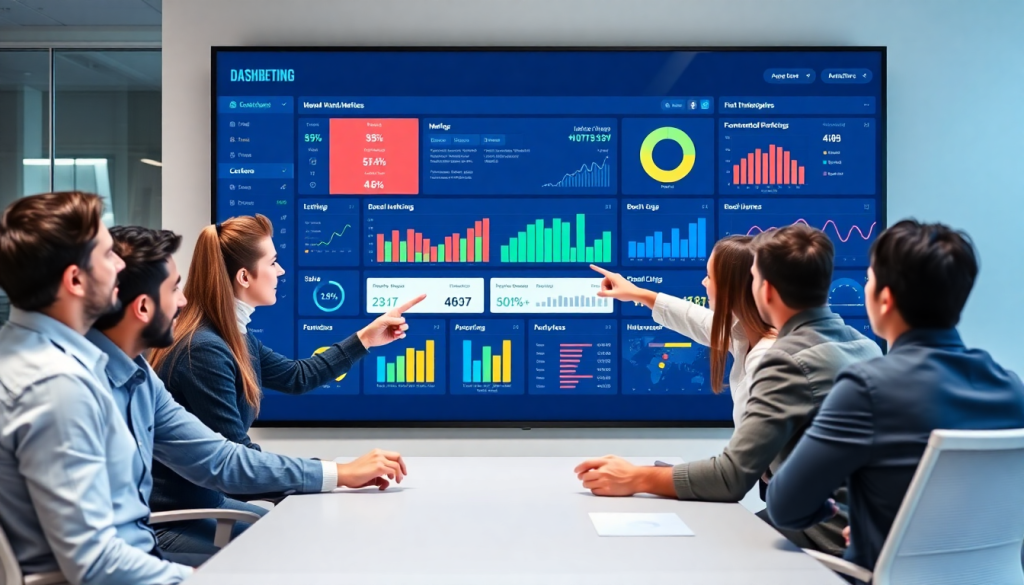
Digital Marketing KPI Dashboard: Metrics & Performance Insights
A digital marketing KPI dashboard brings together your most important campaign data, visualizes marketing metrics in real time, and empowers teams to make smarter, faster decisions. Instead of juggling siloed reports or manually cobbling together spreadsheets, marketers can monitor performance, analyze ROI, and share insights across channels—all in one interactive view. Whether you're running campaigns for clients, managing multi-channel efforts for a brand, or overseeing agency operations, a robust dashboard transforms raw data into actionable intelligence. This guide explores how to leverage a digital marketing KPI dashboard for better reporting, deeper insights, and more confident optimization.
What is a Digital Marketing KPI Dashboard?
A digital marketing KPI dashboard is more than just a reporting tool—it's the command center for your marketing data. Here’s how it transforms the way teams track and act on performance metrics:
Why Use a KPI Dashboard Instead of Spreadsheets?
- Unified View:
See all your campaign metrics (paid search, social, email, and more) in one place—no more hopping between tabs or tools. - Real-Time Data:
Instantly monitor marketing effectiveness as campaigns run, not days or weeks later. - Interactive Visuals:
Swap static charts and manual calculations for dynamic, interactive dashboards.
What Does a KPI Dashboard Actually Do?
A great digital marketing KPI dashboard empowers your team to:
- Track progress toward marketing goals
- Spot trends and anomalies as they happen
- Identify what’s working—and what’s not—across every channel
- Optimize campaigns proactively, not reactively
- Share actionable data with stakeholders (without the spreadsheet wrangling)
Why Centralization Matters for Marketers
With campaigns running across multiple platforms, centralizing your metrics isn’t just convenient—it’s essential:
| Without a Dashboard | With a KPI Dashboard |
|---|---|
| Scattered data sources | Unified, single source of truth |
| Manual report building | Automated, on-demand insights |
| Delayed decisions | Real-time, confident action |
The Power of Automation
Automated KPI dashboards eliminate the manual drudgery:
- No more copy-pasting data from ten different platforms
- Automated, scheduled reports for clients and teams
- More time for analysis and strategy, less on data prep
See how marketing dashboard automation boosts agency reporting efficiency.
The Bottom Line
A digital marketing KPI dashboard is your:
- Nerve center for data-driven marketing
- Transparency and accountability engine
- Continuous improvement toolkit
It’s the tool that empowers marketers and stakeholders to move faster, make smarter decisions, and optimize performance—across every channel, every day.
What Performance Metrics Should Your Dashboard Track?
A marketing dashboard is only as valuable as the metrics it surfaces. With campaigns running across multiple channels, it’s crucial to focus on the KPIs that matter most—those that align both tactical execution with strategic business impact.
Let’s break down what your performance dashboard should always include:
Your Must-Have Marketing KPIs
| Metric | What It Tells You | Why It Matters |
|---|---|---|
| Impressions | How often your ad/content is shown | Measures reach and brand visibility |
| Clicks & CTR | Who engages, and how compelling your message is | Indicates creative/targeting effectiveness |
| Conversions | Completed purchases, leads, downloads, etc. | Direct link to business outcomes |
| CPA & CPC | Cost per acquisition/click | Monitors budget efficiency and ROI |
| ROAS | Revenue generated per ad dollar spent | Crucial for profit-focused optimization |
| Engagement (Likes, Shares) | Audience interaction: likes, comments, shares, opens | Reveals content resonance beyond clicks |
| Channel-Specific KPIs | Email opens, SEO rankings, social followers, etc. | Tracks unique drivers in each channel |
| Funnel Metrics | Lead-to-customer rates, MQLs, SQLs | Shows how well you move prospects to sale |
Beyond the Basics: What a Unified Dashboard Delivers
-
360° Channel Visibility:
Integrate data from all major channels—paid, organic, email, social, and more—for a truly holistic view. -
Easy Attribution:
See which channels drive results and allocate budget for maximum impact. -
Smarter Optimization:
Use consolidated KPIs to identify trends, spot bottlenecks, and adjust campaigns in real time.
Quick Checklist: Is Your Dashboard Covering All the Bases?
- Impressions and Reach
- Clicks & CTR
- Conversions
- CPA & CPC
- ROAS
- Engagement Metrics (likes, shares, opens, etc.)
- Channel-Specific KPIs
- Funnel Metrics (MQLs, SQLs, lead-to-customer rates)
Why ROI Tracking is Non-Negotiable
Ultimately, tracking these metrics lets you:
- Prove marketing’s impact on revenue
- Justify budgets with real performance data
- Make faster, smarter campaign decisions
A well-designed dashboard doesn’t just collect data—it tells the story of your marketing success, all in one place. Want to see how easy it can be to unify, automate, and report on every critical metric?
👉 Explore the TapClicks all-in-one marketing operations platform.
Why Automated KPI Reporting Is a Game-Changer
Manual reporting is yesterday’s news for modern marketing teams. Automated KPI reporting unlocks speed, accuracy, and strategic focus—so you can spend less time wrangling data and more time making an impact.
What Automated Reporting Delivers
Let’s break down the ways automation transforms your reporting workflow:
-
Time Savings
- No more manual data pulls or spreadsheet headaches
- Save hours each week to reinvest in strategy, creativity, and client engagement
-
Accuracy & Consistency
- Eliminate human error
- Ensure reliable, up-to-date metrics every time
-
Real-Time Visibility
- Instantly monitor campaign performance through live dashboards
- Catch spikes or dips in KPIs before they become problems
How It Works in Practice
Picture this for a multi-location brand:
| Channel | Location A | Location B | Location C |
|---|---|---|---|
| Spend | $10,000 | $8,500 | $12,000 |
| Conversions | 500 | 430 | 570 |
| ROAS | 4.2x | 3.7x | 4.5x |
- All your paid search, social, and programmatic data flows into a single, unified dashboard.
- Stakeholders see campaign spend, conversions, and ROAS by channel or location—no data silos, no delays.
- Monthly or weekly reports are scheduled and branded, delivering insights directly to clients.
For Agencies & Brands: The Real Impact
-
Scalability
- Effortlessly manage dozens (or hundreds) of client accounts
- Automated, branded reports sent directly to clients—no bottlenecks
-
Actionable Agility
- React quickly by reallocating budget to top performers
- Address underperforming creatives before they impact results
-
Trust & Transparency
- Clients receive timely updates, reinforcing your value as a strategic partner
- One unified source of truth eliminates confusion
The TapClicks Advantage
Platforms like TapClicks make this all possible with:
- Drag-and-drop dashboard creation
- Automated, scheduled report delivery
- Real-time data integration from 10,000+ sources
All designed to help agencies and brands focus on what matters most: growth and results.
Ready to ditch manual reporting? Automation is your new backbone for transparent, high-performance marketing.
Interactive Visualization & Custom Dashboards
Effective marketing doesn’t just rely on collecting data—it thrives on understanding it. That’s where interactive visualization and custom dashboards become game-changers for digital marketing teams. Visualizing marketing metrics transforms raw numbers into clear, intuitive stories, helping you quickly spot patterns, trends, and outliers that might otherwise go unnoticed in static spreadsheets. Whether it’s a sudden spike in paid search traffic or a dip in social media engagement, visual cues make it easier to diagnose performance and act fast.
Customizable dashboards are especially valuable for marketing organizations that serve diverse audiences—think agencies juggling multiple clients with unique KPIs, or brands managing campaigns across various channels and regions. With drag-and-drop interface options, marketers can easily tailor dashboards to each stakeholder’s needs: sales teams might focus on lead generation metrics, while executives want a high-level ROI snapshot. Role-based access ensures everyone sees the right data in the right context, streamlining collaboration and communication.
Today’s leading platforms, such as TapClicks, provide dynamic, interactive dashboards that go far beyond static charts. Users can filter results in real time, drill down into specific campaigns, compare historical periods, and even annotate charts for deeper discussions. Automated data refreshes keep every visualization current, so teams are always working from the latest insights. This level of interactivity empowers marketers—not only to monitor performance, but also to experiment, iterate, and optimize on the fly.
Ultimately, interactive visualization and custom dashboards are more than just reporting tools; they’re engines for smarter decision-making and agile marketing execution. By making complex data actionable and accessible, these dashboards pave the way for better results and more impactful campaigns.
AI Insights: Smarter Analytics for Marketers
Today’s digital marketers face a relentless flood of data from every campaign, channel, and customer touchpoint. Sifting through it all to spot trends, uncover issues, and discover new opportunities can be overwhelming—unless you have AI-powered analytics on your side. An AI marketing dashboard goes beyond basic reporting; it automatically analyzes performance metrics, flags anomalies, and surfaces actionable insights in real time.
With AI-driven insights, marketers no longer have to hunt for the proverbial needle in a haystack. Instead, the dashboard acts as a proactive partner, alerting you to sudden drops in conversion rates, unusual spikes in ad spend, or shifts in audience engagement that might otherwise go unnoticed. For example, AI can quickly identify which campaigns are underperforming across channels, recommend budget reallocations, or even forecast future results based on historical trends.
This level of automated intelligence transforms the way teams approach optimization. Rather than reacting after the fact, marketers can make informed, timely decisions to improve ROI and capitalize on emerging opportunities. Modern platforms like TapClicks analytics and insights showcase how integrated AI agents can analyze dashboards, generate plain-language summaries, and deliver personalized recommendations—either directly in the platform or via automated emails to stakeholders.
The result? Marketers spend less time wrangling data and more time driving strategy. By embedding AI insights into your digital marketing KPI dashboard, your team gains a competitive edge—unlocking smarter analytics, faster optimizations, and ongoing campaign success.
Cross-Channel Analytics & Unified Data
In today’s digital landscape, marketing is rarely confined to just one channel. Campaigns stretch across search, social, display, email, and emerging platforms—making it tough to see the big picture.
So, how do marketers unify all those metrics into a single, actionable view? The answer: a cross-channel analytics dashboard.
Why Cross-Channel Dashboards Matter
A unified dashboard provides:
- One Place for All Your Data: No more switching between Google Ads, Facebook, LinkedIn, email platforms, or programmatic tools.
- Real-Time KPIs: Instantly access impressions, clicks, conversions, CPA, ROAS, and more without manual data stitching.
- Side-by-Side Comparisons: Easily compare channel performance to spot winners, laggards, and trends.
- Faster, Smarter Decisions: Quickly identify what’s working—and where to optimize campaigns.
What Does a Cross-Channel Dashboard Enable?
Here’s what you can achieve with unified data:
| Challenge | With Cross-Channel Analytics |
|---|---|
| Siloed reporting across teams | One consolidated view for all stakeholders |
| Manual data collection | Automated pulls from all channels |
| Inconsistent KPIs and metrics | Standardized, normalized data for apples-to-apples comparison |
| Slow, error-prone analysis | Fast, reliable insights for real-time decisions |
| Difficulty proving ROI | Clear attribution and performance measurement |
Benefits Beyond Convenience
When all your marketing data lives in one place, you unlock:
- A Single Source of Truth: Trustworthy data for reporting and analysis.
- Accurate Optimization: Confidently answer strategic questions—like which channels deserve more budget, or how reallocations impact ROI.
- Holistic Intelligence: See how every piece of your marketing puzzle fits together.
How TapClicks Delivers Unified Analytics
TapClicks takes cross-channel analytics to the next level:
- Connects with 10,000+ Data Sources: Google Ads, Facebook, LinkedIn, programmatic, email, and more.
- Automates Data Normalization: No more manual wrangling—just clean, consistent data.
- Scales for Agencies, Brands, and Enterprises: Manage reporting for hundreds of clients, locations, and campaigns—all in one platform.
With TapClicks, you move from fragmented reporting to streamlined, actionable marketing intelligence—at scale.
Use Cases: From Agencies to Enterprise Teams
A digital marketing KPI dashboard isn’t a one-size-fits-all solution—it flexes to meet the unique needs of agencies, in-house marketing teams, and enterprise organizations. Here’s how diverse teams leverage dashboards to drive better outcomes across the marketing spectrum:
Agencies:
For agencies managing dozens or even hundreds of client accounts, a centralized dashboard is essential for streamlining client reporting, campaign monitoring, and performance analysis. With the ability to automate data pulls from multiple platforms, agencies can deliver timely, customized reports that showcase ROI and campaign impact without hours of manual spreadsheet work. This not only frees up analysts for higher-value tasks but also elevates the agency’s value proposition. Discover how advanced dashboards transform agency operations in this guide to TapClicks reporting solutions for agencies.
In-House Marketing Teams:
Brand marketers, especially those managing multi-location or multi-product portfolios, use dashboards to unify data from paid, organic, social, and email channels. This single source of truth enables teams to quickly spot trends, attribute conversions, and adjust budget allocations based on real-time performance. Instead of waiting for lagging reports, marketers can move with agility—testing creative, optimizing messaging, and demonstrating clear marketing ROI to stakeholders.
Enterprise Stakeholders:
Large organizations often face the complexity of scattered marketing data across regions, products, and business units. Dashboards help consolidate this information, providing leadership with high-level overviews and granular drill-downs as needed. Executives gain instant access to key KPIs, while regional teams can track local performance and benchmarks. Integration with existing BI tools and CRMs ensures that marketing insights flow seamlessly into strategic planning and forecasting.
Across all these scenarios, a robust KPI dashboard not only supports digital campaign reporting but also strengthens communication—whether it’s sharing interactive dashboards with clients, presenting insights to the C-suite, or aligning cross-functional teams around shared goals. By bridging data silos and automating insight delivery, dashboards empower every stakeholder to make more informed, confident decisions.
Choosing the Right Digital Marketing KPI Dashboard
Selecting the right digital marketing KPI dashboard is pivotal for marketers aiming to maximize performance, streamline workflows, and drive ROI. With a crowded landscape of reporting tools, agencies and brands must look beyond surface-level features and evaluate solutions that fit both their current needs and future growth. Here’s a checklist and guidance to help you make a confident, informed choice.
Checklist: What to Look For
-
Scalability:
Can the platform handle your current volume of campaigns, clients, and channels—and grow as your organization expands? Look for dashboards built for high-volume use and multi-client management. -
Integrations:
Does the solution offer robust, native connectors to your essential marketing, advertising, and business tools? The best dashboards support seamless data integration from paid media, organic, social, email, CRM, and beyond. -
Customization:
Will you be able to tailor dashboards and reports for different teams, clients, or business units? Drag-and-drop functionality and branded reporting are key for delivering relevant insights to stakeholders. -
AI & Analytics Features:
Does the dashboard go beyond visualization to provide actionable insights, anomaly detection, and optimization recommendations? AI-powered features can surface trends you might otherwise miss. -
Support & Training:
Consider the level of onboarding, customer support, and educational resources offered. Reliable support ensures your team can fully leverage the platform’s capabilities.
Point Solutions vs. Unified Platforms
While point solutions like Supermetrics or Agency Analytics may excel at one piece (such as pulling data or simple visualizations), unified platforms like TapClicks combine data integration, reporting, AI insights, and workflow management in a single “marketing OS.” This holistic approach eliminates the headaches of stitching together multiple tools, reduces manual effort, and provides a true single source of truth for marketing data.
Questions to Ask When Evaluating Dashboard Tools
- How many native data connectors are available, and can I add custom sources if needed?
- Can I automate report scheduling and delivery for both internal teams and clients?
- Does the platform support role-based access and white-labeling for client-facing dashboards?
- What AI or predictive analytics features are included to help optimize performance?
- How easy is it to customize dashboards for different use cases or audiences?
- Can I export or pipe cleaned data into my existing BI stack if required?
- What are the onboarding and customer support options?
Choosing the right digital marketing KPI dashboard means investing in a tool that not only visualizes your data but also empowers your team with timely insights and operational efficiency. Take the time to assess your needs against these criteria, and you’ll be equipped to select a platform that drives measurable business value—today and as you scale.
Start Automating Your Marketing Data Today!
No Credit Card Required.

