

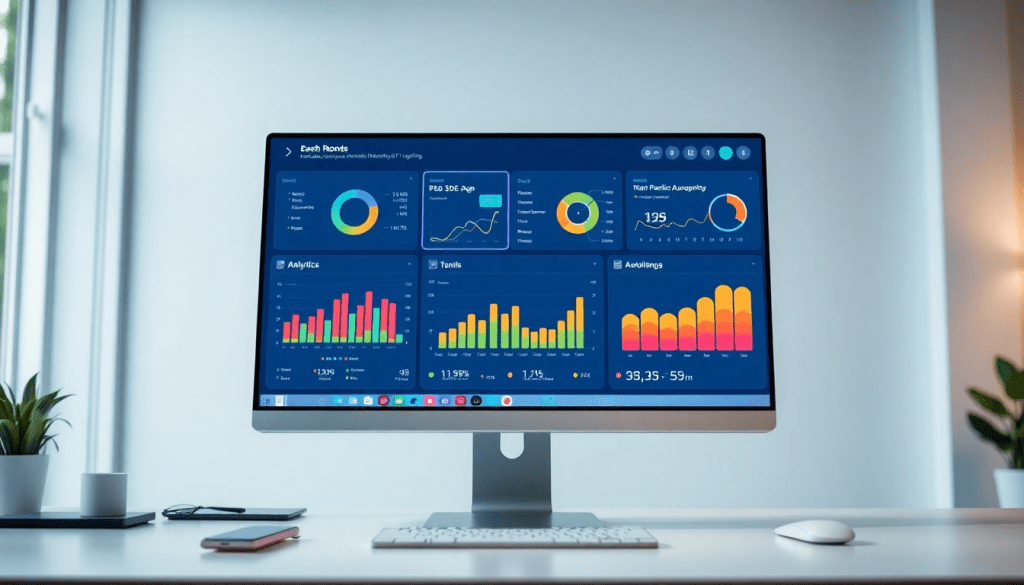
Automated KPI Reporting Dashboard: Real-Time Marketing Insights
An automated KPI reporting dashboard is the backbone of modern, data-driven marketing. With tools like TapClicks, marketers can unify campaign data, visualize real-time performance, and automate analytics workflows—eliminating manual reporting and surfacing actionable insights instantly. This guide covers how automated KPI dashboards transform marketing operations, the essentials for implementation, and how to leverage AI-driven analytics for smarter, faster decision-making across digital campaigns.
What is an Automated KPI Reporting Dashboard?
An automated KPI reporting dashboard is a centralized digital workspace that continuously aggregates, analyzes, and visualizes key performance indicators (KPIs) crucial to marketing success. Unlike manual spreadsheets or fragmented tools, an automated dashboard pulls real-time data from multiple sources—think social ads, web analytics, CRM platforms, and more—presenting a unified, always-updated view of campaign performance. The core functions extend beyond simple data display: these dashboards sync data automatically, apply business logic to normalize metrics across channels, and surface actionable insights through customizable visualizations and scheduled, branded reports.
Automation in KPI reporting is now essential for marketing teams facing increasing complexity and speed. As digital campaigns expand across channels and platforms, the volume and velocity of data can easily overwhelm manual processes. Automated dashboards eliminate tedious data pulls and error-prone Excel work, freeing analysts to focus on strategy and optimization. With up-to-the-minute accuracy and instant reporting, marketers gain the agility to respond to opportunities or issues as they arise—no more waiting days for monthly reports.
TapClicks is a recognized leader in this space, delivering a robust marketing operations platform that unifies data integration, analytics, and reporting at scale. As highlighted in this overview of TapClicks’ dashboard capabilities, the platform connects to thousands of data sources, automates performance tracking, and leverages AI to generate deeper insights—making it a powerful solution for agencies, brands, and enterprise teams seeking to modernize their KPI reporting. With automation at the core, TapClicks empowers marketers to move from reactive to proactive decision-making, all within a single, unified dashboard environment.
Key Benefits of Marketing KPI Automation
Automating KPI reporting delivers transformative benefits for marketing teams, agencies, and enterprises striving for operational excellence and strategic agility. Here’s why leading organizations are turning to automated dashboards:
1. Significant Time Savings
Manual reporting is time-consuming, often requiring hours of data extraction, spreadsheet wrangling, and repetitive dashboard updates. Automated KPI dashboards, like those offered by TapClicks, slash the reporting workload by automatically pulling, processing, and visualizing cross-channel data. Many teams report saving over 50 hours per analyst each month—time that can be redirected to optimizing campaigns, developing strategy, or serving clients.
2. Improved Data Accuracy and Consistency
Human error is an inherent risk in manual data handling. Automated processes dramatically reduce the chance of copy-paste mistakes, outdated figures, or inconsistent reporting periods. With real-time data integrations and validation rules, marketing teams can trust that every dashboard and report reflects the latest, most accurate information—establishing a reliable single source of truth.
3. Real-Time Insights for Faster Decision-Making
In today’s fast-paced digital landscape, waiting days or weeks for performance reports can mean missed opportunities. Automated KPI dashboards update in real time, surfacing actionable insights as soon as new data arrives. This empowers marketers to identify trends, spot anomalies, and pivot campaigns immediately—maximizing ROI and competitive edge.
4. Streamlined Workflows and Collaboration
Automation doesn’t just speed up reporting; it also unifies workflows across teams. TapClicks’ dashboards allow agencies, brands, and multi-location enterprises to centralize campaign data, standardize reporting templates, and automate stakeholder communications. This streamlining reduces friction between sales, ops, and analytics teams, making collaboration seamless and freeing up bandwidth for high-value strategic work.
5. Strategic Advantage for Agencies and Marketing Teams
With more time, cleaner data, and instant access to insights, marketing professionals can shift their focus from reactive reporting to proactive strategy. Automated KPI dashboards enable teams to benchmark performance, optimize budget allocation, and enhance transparency with clients or internal stakeholders. Ultimately, this gives agencies and brands a clear edge in delivering measurable, data-driven results.
By embracing automated KPI reporting, organizations not only eliminate the pain points of manual processes but also unlock a new level of marketing intelligence—enabling smarter, faster, and more impactful decisions at scale.
Essential Features of a Real-Time Performance Dashboard
An effective real-time performance dashboard isn’t just a collection of charts—it’s a command center for your marketing operations. To truly empower teams and drive results, your dashboard must offer a set of core features that provide both high-level overviews and deep-dive analytics, all in real time. Here’s what to look for:
1. Cross-Channel Performance Analytics
Modern marketing is multi-channel by nature, spanning search, social, display, email, and beyond. A must-have feature of any robust dashboard is the ability to integrate and unify data from all relevant platforms. This means seeing Google Ads clicks, Facebook engagement, programmatic impressions, and organic traffic—all in one place. TapClicks excels here, offering over 10,000 marketing, advertising, and business data connectors, so you get a holistic view of campaign performance without manual data wrangling.
2. Customizable Metrics and KPIs
No two marketing teams are identical, and neither are their success metrics. Your dashboard should let you choose which KPIs to track, set custom goals, and create unique metric calculations tailored to your business. Whether you’re monitoring cost per acquisition, conversion rates, or share of voice, the ability to customize your dashboard ensures you’re always tracking what matters most.
3. Intuitive Data Visualizations
Raw data can be overwhelming. The right dashboard translates complex numbers into easy-to-understand visualizations—think interactive charts, graphs, geo-maps, and scorecards. Drag-and-drop interfaces, like those found in TapClicks’ reporting studio, allow users to quickly build dashboards that surface trends, opportunities, and anomalies at a glance.
4. Real-Time Data Syncing
Timeliness is crucial in digital marketing. Your dashboard should refresh automatically, pulling in new data as soon as it’s available. Real-time syncing means you’re always working with the latest insights, enabling rapid pivots and informed decision-making without waiting for end-of-month reports.
5. AI-Powered Analytics and Reporting
Today’s leading dashboards go beyond static reporting. AI-driven analytics—like TapClicks’ SmartPilot—automatically surface actionable insights, flag anomalies, and even recommend optimizations. Automated summaries and scheduled reports ensure that both teams and clients stay in the loop without extra manual effort.
For a deeper dive into these capabilities and how TapClicks brings them together, check out this detailed platform guide.
By prioritizing these essential features, marketers and agencies can transform their dashboards from simple reporting tools into engines for growth and efficiency. Explore how TapClicks can unify your data and accelerate your marketing operations at tapclicks.com.
How Automated Analytics Workflows Drive Smarter Decisions
Automated analytics workflows are transforming how marketers access, interpret, and act on data. At the core of this transformation is a seamless flow—from data integration, through automated reporting, to actionable insights—that accelerates and elevates decision-making across campaigns.
The process begins with powerful data integration. Platforms like TapClicks connect to thousands of marketing and advertising sources, ingesting campaign metrics, audience data, spend, and engagement figures into a unified data layer. This eliminates silos and manual data pulls, ensuring that every stakeholder works from a single source of truth.
Once data is centralized, automated reporting takes over. Pre-configured dashboards and scheduled reports deliver up-to-date performance snapshots directly to teams and clients—no more copy-pasting or spreadsheet wrangling. Marketers can focus on strategy, while reliable, real-time dashboards keep everyone aligned on KPIs and progress.
But the real game-changer is the integration of AI-driven analytics. Machine learning algorithms and AI agents continuously scan dashboards and datasets to surface trends, flag anomalies, and identify optimization opportunities. For example, TapClicks’ AI can automatically highlight underperforming channels, detect sudden shifts in audience behavior, or recommend budget reallocations to maximize ROI. These smart insights are delivered instantly, often via automated emails or in-dashboard alerts, enabling teams to pivot campaigns proactively rather than reactively.
This streamlined workflow—automated from data capture to decision-ready insights—empowers marketers to act faster and smarter. Instead of manually parsing spreadsheets or waiting for end-of-month reports, teams can spot issues in real time, capitalize on emerging trends, and optimize campaigns with a few clicks. The result: greater agility, improved campaign outcomes, and a culture of data-driven decision-making that keeps brands and agencies ahead in a competitive landscape.
Implementing an Automated KPI Dashboard: Step-by-Step
Launching an automated KPI reporting dashboard may seem daunting, but the right approach and technology make it a straightforward—and highly rewarding—process. Here’s a step-by-step guide to implementing a dashboard that delivers the real-time insights your marketing team needs:
1. Define Clear Objectives and KPIs
Start by outlining your campaign goals and identifying the key performance indicators that matter most to your business. Whether you’re tracking conversions, impressions, ROI, or multi-channel engagement, selecting the right metrics is foundational. Remember: Less is often more. Focus on actionable KPIs that directly align with your business objectives.
2. Connect and Integrate Your Data Sources
Modern platforms like TapClicks offer thousands of native data connectors, allowing you to bring together ad platforms, CRM data, analytics tools, and more—all in one place. Ensuring seamless integration across your marketing stack eliminates data silos and guarantees your dashboard reflects the full picture.
3. Configure Data Transformation and Normalization
Automated dashboards are only as accurate as the data that feeds them. Use built-in ETL (extract, transform, load) or enrichment tools to standardize and blend datasets from different channels. This step is essential for maintaining data integrity and supporting apples-to-apples comparisons across campaigns.
4. Build and Customize Your Dashboard
Leverage drag-and-drop interfaces to design dashboards that suit your reporting needs. Organize widgets, charts, and data tables to highlight your critical KPIs. Customization options allow you to tailor dashboards for different stakeholders—executives, clients, or channel managers—ensuring everyone gets relevant, digestible insights.
5. Automate Reporting and Scheduling
Set up automated report deliveries and update schedules. With platforms like TapClicks, you can trigger recurring, branded reports to internal teams or clients, drastically reducing manual effort and turnaround times. Scheduling ensures stakeholders always have access to the latest data without chasing down spreadsheets.
6. Layer in AI-Driven Insights
Modern dashboards go beyond static reporting. Tap into AI features that analyze your data in real time, surfacing trends, anomalies, and optimization recommendations. This empowers marketers to act quickly on new opportunities and course-correct underperforming campaigns.
7. Test, Iterate, and Evolve
After launch, continuously review dashboard performance and user feedback. Fine-tune metrics, add or remove visualizations, and adapt to evolving business goals. A good dashboard is never static—it grows with your organization.
For a deeper dive into each phase of setup, including best practices for metric selection and data quality assurance, check out TapClicks’ step-by-step implementation guide. With the right foundation, automated KPI dashboards unlock new levels of efficiency, accuracy, and insight for modern marketing teams.
Real-World Use Cases: From Campaign Tracking to Client Reporting
Automated KPI reporting dashboards are not just theoretical tools—they’re transforming the day-to-day operations of agencies, brands, and enterprise marketing teams. Let’s explore how organizations leverage these dashboards to drive efficiency, transparency, and measurable ROI at scale.
1. Agencies: Streamlining Multi-Client Reporting
For digital agencies managing dozens or even hundreds of client campaigns, manual reporting is a bottleneck. Automated dashboards like those offered by TapClicks enable agencies to unify data from all client campaigns—across Google Ads, Facebook, programmatic, and more—into a single, centralized view. With customizable templates and automated report scheduling, agencies can deliver branded, real-time KPI updates to clients without the repetitive spreadsheet work. This not only improves client satisfaction but also frees up analysts to focus on optimization rather than data wrangling.
2. Brands: End-to-End Campaign Performance Tracking
Multi-location and enterprise brands face unique challenges in tracking KPIs across regions, teams, and channels. Automated KPI dashboards pull together data from disparate sources—search, social, display, email, and offline channels—enabling marketing leaders to visualize campaign performance holistically. With TapClicks, brands can monitor spend, engagement, and ROI in real time, quickly identify underperforming channels, and reallocate budgets on the fly for maximum impact.
3. Enterprise Teams: Executive Visibility and ROI Visualization
CMOs and executive stakeholders need big-picture visibility without the noise. Automated dashboards offer high-level rollups and executive summaries, translating granular campaign data into actionable business insights. TapClicks’ robust ROI visualization tools make it easy to track marketing contribution to overall business outcomes, ensuring alignment with sales and finance objectives.
4. Unique TapClicks Applications: Cross-Channel Analytics in Action
What sets TapClicks apart is its ability to unify, normalize, and analyze data from over 10,000 sources. Agencies and brands use TapClicks to blend cross-channel performance data—such as combining paid search and paid social metrics for a unified cost-per-acquisition calculation, or visualizing the true impact of omnichannel campaigns on lead generation. TapClicks also enables advanced multi-location reporting, so franchise brands or regional teams can benchmark performance and share best practices across their networks.
Whether it’s automating client KPI reporting, tracking digital campaign effectiveness, or visualizing ROI across every channel, TapClicks provides the infrastructure and intelligence for marketing teams to operate at peak efficiency. To learn more about what’s possible with an all-in-one marketing operations platform, visit TapClicks.
Maximizing Insights with TapClicks AI Reporting
The true power of an automated KPI reporting dashboard comes alive when advanced analytics and AI work behind the scenes—surfacing patterns, anomalies, and opportunities that drive real marketing impact. TapClicks stands out by integrating a suite of AI-driven features that not only automate reporting but also transform data into actionable intelligence for marketing teams.
At the heart of this capability is SmartPilot, TapClicks' AI agent that continuously scans your dashboards and datasets. Instead of sifting through endless charts, users receive instant, prioritized insights—such as identifying an underperforming channel or flagging a surge in conversion rates. This proactive approach means marketers catch trends and issues as they emerge, not weeks later when the window for action has closed.
TapClicks also delivers predictive analytics that go beyond historical reporting. By analyzing past and present campaign data, the platform forecasts future performance, providing budget pacing suggestions and optimization recommendations. Whether you’re managing a multi-location brand or overseeing hundreds of client campaigns, these predictive models help you allocate spend more efficiently and hit your KPIs faster.
Automated recommendations are another game-changer. Instead of raw numbers, TapClicks’ AI translates data into clear next steps—like reallocating budget to high-performing tactics or adjusting creative for better engagement. And thanks to SmartEmail, these insights are automatically packaged into branded, easy-to-read summaries and delivered to stakeholders, ensuring everyone stays aligned and empowered to act.
For a deeper dive into how TapClicks' AI analytics unlocks faster, smarter decision-making, explore these advanced AI analytics insights. By maximizing the use of AI-driven reporting, marketing teams can move from reactive analysis to proactive optimization—turning every campaign into an opportunity for growth. To learn more about how TapClicks can elevate your analytics strategy, visit TapClicks.
Future Trends: The Evolution of Marketing Insights Dashboards
As digital marketing grows ever more complex, the future of KPI reporting dashboards lies in deeper automation, richer intelligence, and seamless integration across the marketing stack. The next generation of dashboards is set to go far beyond simple data aggregation and visualization—ushering in an era of AI-powered agents, adaptive data pipelines, and true marketing orchestration.
AI Agents and Proactive Insights
Emerging platforms are deploying customizable AI agents that don’t just report on KPIs—they actively interpret data, identify trends, and recommend actions. These agents will increasingly surface campaign anomalies, budget pacing issues, and optimization opportunities in real time, allowing marketers to pivot strategies instantly. TapClicks is already pioneering this shift with its SmartPilot and AI-driven insights, empowering teams to spend less time on manual analysis and more on strategic decisioning.
Smarter Data Connectors and Unified Analytics
The proliferation of channels and tools has made data fragmentation a persistent challenge. Future-ready dashboards are meeting this head-on by expanding their libraries of native and custom connectors, ensuring that every data source—from niche ad networks to offline sales—is integrated and normalized automatically. The result: a unified view of marketing performance, regardless of scale or complexity. TapClicks, with over 10,000+ connectors and automated ETL pipelines, exemplifies this commitment to seamless data unification (learn more about TapClicks’ approach).
Workflow Automation and Marketing OS
KPI dashboards are evolving into full-fledged marketing operating systems, managing not just reporting but also workflow, approvals, and order management. This holistic approach streamlines campaign execution, enhances collaboration across teams, and reduces operational friction.
Future-Proofing with Adaptive Platforms
In a landscape where privacy regulations, attribution models, and channel mix are constantly in flux, it’s crucial to invest in dashboards that can adapt and scale. Solutions like TapClicks are continuously enhancing their AI, workflow, and analytics capabilities—not only keeping pace with the industry but setting new benchmarks for what’s possible.
The Bottom Line
As marketing becomes more data-driven and fast-paced, unified automated analytics will be the cornerstone of competitive advantage. Teams that embrace these future trends will find themselves better equipped to deliver real-time insights, act on emerging opportunities, and prove ROI—no matter how the digital ecosystem evolves. Now is the time to future-proof your marketing analytics with platforms designed for where the industry is headed, not just where it is today.
Start Automating Your Marketing Data Today!
No Credit Card Required.

